|
|
|
|
|
|
by worldsoup
830 days ago
|
|
|
Super interesting article, as a native english speaker who lived in Japan for many years and speak Japanese fluently, he pointed out a lot of things I always took for granted in Japanese (and never recognized as unique). One things I was hoping he would point out, and that I always found extremely unique in Japanese, was the giyongo (basically onomatopoeia). Japanese uses these extensively and the sounds can have extremely sensory driven meanings. They use these giyongo to describe physical textures (tsuru-tsuru is something smooth and slippery), hard to describe souns (pera pera is the sound of speaking a foreign language), flutently), actual sounds (tatata is the sound of fast running), a general feeling (bisho bisho is the sound of being soaked), specific actions (gussuri is the sound of being out cold), even specific emotions (zukizuki is the sound of extreme pain). There are hundreds if not thousands of these and I think they also make the language, as the author describes, 'rich and quirky and different'. |
|
|
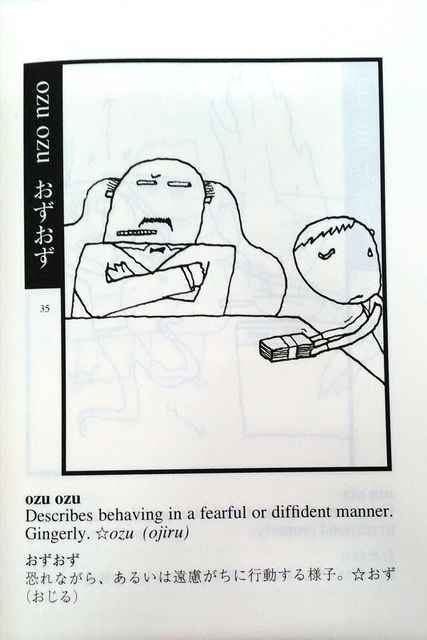
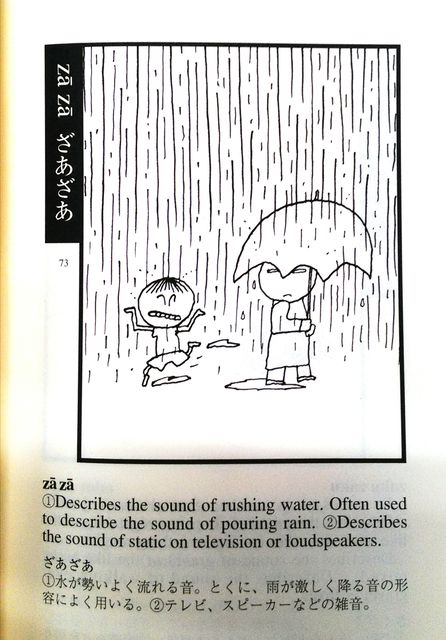
The Japanese-language wikipedia page goes into it in more detail: https://ja.wikipedia.org/wiki/%E6%93%AC%E5%A3%B0%E8%AA%9E