It makes me very happy, as a consumer, knowing that if someone steals my phone, they can't get any value out of it. I don't want them to be able to sell it to a refurbisher for cash. And I don't want them to be able to do it with my laptop either.
And for refurbishers, it's not hard to make it an obvious required step for anyone looking to sell their own legitimately-owned phone. You just make it part of the instructions, and force them to check a couple boxes or popups acknowledging this before they can print the shipping label to send it in. And if the person doesn't follow instructions, you send it back to them.
The headline should really be "...will make it difficult to refurbish stolen Macs". Not a lot of sympathy.
Edit: in response to comments... yes these can still be sold for parts. But it still makes me feel better a thief will get $30, not $300, for my phone -- that's often enough of a difference between it being worth it or not. And if people are dropping these off for recycling, isn't the expectation that they're being used for parts at best anyways? If they're high enough value to actually be refurbished and resold, then it's worth putting the recycling bins behind cashiers or similar, who are trained to first verify they're unlocked before accepting them.
It would be simple for apple to extend the system by allowing recyclers to ask apple to send a message to the previous owner of the device. This would be extremely pro-consumer, because it would allow lost devices to be returned via an official channel. It would also allow users to release their claims on hardware they meant to give away.
The "solution" of just expecting the previous owner to never make a mistake is unreliable and totally unnecessary. Apple can act as the common contact for the system they created.
> It would be simple for apple to extend the system by allowing recyclers to ask apple to send a message to the previous owner of the device. This would be extremely pro-consumer, because it would allow lost devices to be returned via an official channel. It would also allow users to release their claims on hardware they meant to give away.
It would also make recovery of stolen devices easier. Refurbisher has Apple contact the owner, owner says it was stolen, person gets their equipment back.
I don't see the downside here, literally everyone gets what they want - people can sell or dispose of their old devices as they see fit, refurbishers and third-party repair shops can get parts and devices they need to run their business, Apple gets to continue touting the security of the platform, and victims of theft have a better chance of recovering their often expensive gadgets.
This really can't work. They'd get unscrupulous people taking phones they sold back, or a couple who broke up where it's not clear who "owns" the phone. Nobody wants to put himself in the middle of these things.
> They'd get unscrupulous people taking phones they sold back
Money doesn't get paid until activation lock is verified as disabled. T-Mobile does this every time I trade in a phone, it's nothing new.
> or a couple who broke up where it's not clear who "owns" the phone.
There's no good way to ever handle this, ever - even without activation locks. Not worth worrying about, send the device to the registered owner and let the courts deal with it if people want to get bitchy with their former partner.
I mean, people can currently sell phones and make them useless for the new owner (on purpose or on accident) and the new owner has new recourse. Surely allowing communication about it would be better.
Apple could play the go-between. They could alert the previous owner that the device has been found, and provide a grace period where a user could request return, for a fee, including Apple's S&H, and a finders' fee for the reporting agent.
At the expiration of the grace period, Apple could provide a device reset code.
Why is Apple required to act as law enforcement? Moreso, even if they could, why as consumers and technicians should we want them to?
HNers go on and on about big brother Cupertino all the time, but ooh some (well intentioned but misguided) refurb/recycling shop writes an article and all of a sudden critical thinking goes out the window.
And while this is a nice thought, it will never happen. Apple hates 3rd parties that touch their hardware. They're constantly at war with those trying to repair their devices and the right-to-repair movement.
I agree with you assessment of how likely this is.
I also think this system would be even better than Apple's current approach to ensuring that owners retain control of their data and hardware. Preventing misuse and allowing responsible transfer are two sides of the same coin. Though, again, I don't think Apple would see it that way.
The article pretty well lays out why this doesn't work. We're talking about recyclers here. The people sending in these devices have literally thrown them away into a trash bin. There's no return address.
Creating a backdoor might not be the answer, but it sounds like there's no way to send a message to the phone's iCloud account saying "Hey I have your phone, it was recycled. Please remote-wipe and unlock it or give me an address to return it."
> it sounds like there's no way to send a message to the phone's iCloud account saying "Hey I have your phone, it was recycled. Please remote-wipe and unlock it or give me an address to return it."
Apple (and Google, with the Android equivalent) could do this easily, couldn't they? Wouldn't this also be useful for the case of devices that are lost and found, so that they can be returned to the owner?
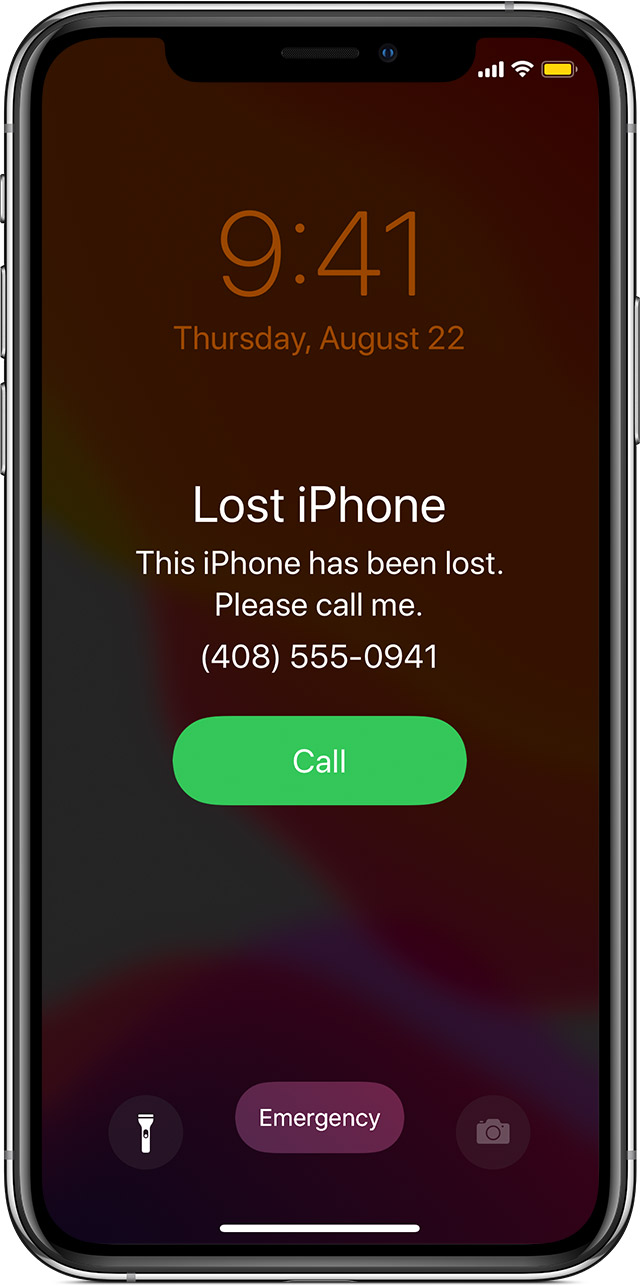
At least on Apple's side (Find my iPhone), the owner can mark the device as lost [0], which will lock it and display a custom message on the lock screen. But a "pull" solution where a finder of the phone can contact the owner would be nice.
The owner can arrange for this, but not whoever finds the device. It would be nice to make this possible - perhaps with some appropriate policy around it, so that the feature can't be abused.
> The article pretty well lays out why this doesn't work. We're talking about recyclers here. The people sending in these devices have literally thrown them away into a trash bin. There's no return address.
It sounds like the system works as designed. Steal a locked-iPhone? Congrats, you just stole a worthless brick. Please illustrate to me how this mechanism "doesn't work" when it seems to defeat 99%+ of folks from re-selling the illegitimately-obtained device for any meaningful amount of money, contrasted to its worth in an unlocked state.
Parent comment knows it works as designed as an anti-theft feature.
They're arguing that it's not designed well because it should accommodate recovering parts from phones that were knowingly disposed of without the owner releasing the activation lock first.
As parent comment points out, this could be a simple matter of the refurbisher requesting a release of the lock, sending a request through Apple, and Apple requesting permission of the phone's owner via the account it's locked to. If the phone was stolen, they click no. If the phone was given for recycling and has parts that can still be used, they click yes.
If Apple really wants to reduce waste (their next big environmental goal after meeting the renewable energy one), they could offer a $5 gift certificate to incentivize people to bother with releasing their old phone's motherboard if it's still usable, but implementing this in the first place would already cost them time and money so I'm not holding my breath.
> They're arguing that it's not designed well because it should accommodate recovering parts from phones that were knowingly disposed of without the owner releasing the activation lock first.
> As parent comment points out, this could be a simple matter of the refurbisher requesting a release of the lock, sending a request through Apple, and Apple requesting permission of the phone's owner via their account. If the phone was stolen, they click no. If the phone was given for recycling and has parts that can still be used, they click yes.
Is that even possible? (Legitimately curious) My understanding is in the current design certain expensive things, like the SoC+Security-Enclave are certed/secure-booted, and I imagine other parts are just generic / "off the shelf" plug in and power up and go.
If it is possible to allow more component level re-use without violating the security goal (deter theft), I'm all for it. The more I think about this I honestly think this is active design decision by Apple to avoid a number of long tail permutations they would otherwise need to test and support.
I think it's possible? The activation lock doesn't happen at the hardware level, it's when you're setting up and activating the phone. It has to ask Apple's servers "can I activate this?" and Apple makes you sign in with the Apple ID that it's locked to before authorizing it. Doesn't seem like there should be any technical reason that a "Request permission from registered owner" option wouldn't work as well.
I think you might be confusing security during your ownership of a device vs what happens to your device after owning it.
Once you’re done using your device, it isn’t as easy to swap parts between macs without triggering the T2 chip where hardware changes must be okayed in an Apple.
That will flush secondary and used Mac markets away and back to Apple to likely do the same at the higher price point.
The used Mac marketplace is invaluable for new and young creators to get into a platform like Mac.
Apple doesn't care if your device gets stolen. This is to prevent 3rd party repairs and refurbishment.
A stolen device has zero effect on apple's profits, but a repaired reused device does.
The sad thing is that others copy such "features" and in the end you will not be able to install or use a device that isn't "safe". How long until a democracy like the US or EU will dictate what is allowed on a device?1984 is coming and we are thinking it's a good thing because we can have a bit more "safety".
At least several years ago those IMEI databases weren't shared internationally. It wasn't uncommon for people to learn that their phone was obtained illegally only when travelling far away.
> But it still makes me feel better a thief will get $30, not $300, for my phone -- that's often enough of a difference between it being worth it or not.
Typically the value of a computer is about the same as the sum of its parts, because otherwise plenty of people would be up for a $270 profit by buying $30 worth of parts and assembling them to sell as a $300 computer.
> And if people are dropping these off for recycling, isn't the expectation that they're being used for parts at best anyways? If they're high enough value to actually be refurbished and resold, then it's worth putting the recycling bins behind cashiers or similar, who are trained to first verify they're unlocked before accepting them.
It's generally the other way around. The less a computer is worth (and so the less the parts are worth), the more you want to try to sell it as a whole unit to minimize transaction overhead because the fixed overhead is a larger percentage of the sale price on less expensive hardware.
> Typically the value of a computer is about the same as the sum of its parts, because otherwise plenty of people would be up for a $270 profit by buying $30 worth of parts and assembling them to sell as a $300 computer.
From another comment: My understanding is in the current design certain expensive things, like the SoC+Security-Enclave are certed/secure-booted, and I imagine other parts are just generic / "off the shelf" plug in and power up and go.
They'll still get value from it. Some crackhead will steal your phone and it can be parted out to use the screen, the glass, the case, etc., even if it can't be activated again. It may be worth $20 instead of $150 to him, but he'll still steal it.
If Apple continues this trend, they can place barriers to parting it out as well. It won't remove all the value, but these practices force everyone to lose.
I understand what you're saying but the problem is that Apple can fix this and make it easy for refurbishers but difficult for thieves without much difficulty at all.
Exactly. This brew-ha-ha is nothing. This is an anti-theft feature. Hard to argue against features designed to reduce the potential for someone to target it for theft.
As someone who has had both a smartphone and a laptop stolen, I would have loved to know that aside from my frustration with the insurance company that the thief walked away with 2 worthless bricks.
And no, right to repair should not ban user-initiated device activation locks.
> This is an anti-theft feature. Hard to argue against features designed to reduce the potential for someone to target it for theft.
And a 9pm curfew for anyone not currently working would prevent a lot of bad behavior too. Also, it would be idiotic. Not all things that have _some_ good aspects are good things.
Most components aren't affected by activation lock, on iphones or on macs. You can still reuse many things that are in demand, like the screen, the speakers, the buttons, the cameras, and so on. It will be the same with macs. THey will throw away the motherboard and sell the rest. Still profitable.
"The parts affected, according to the document, are the display assembly, logic board, top case, and Touch ID board for the MacBook Pro, and the logic board and flash storage on the iMac Pro."
What is stopping a "criminal" from bypassing this activation lock? Time and technical ability? It surely isn't legal recourse or fear of losing the device. It's a matter of time before this is moot.
On top of that, I've left "criminal" in quotes because quite frankly, I don't care if Apple claims breaking this lock is a breach of DMCA, ToS, or anything else. I've paid for the device. It's mine. The data on it is mine. If I want something out of it bad enough, I'm getting to it. Regardless of their corporate philosophy.
On recycling, this is likely a step away from being generally responsible. Apple already has locks in place preventing parts from "non-genuine" repair shops being used. In addition they engineer components to be tightly-coupled to one another. Now they want to lock the entire device?
At best, this can be argued as "pro-customer", but not pro-consumer. Apple has made good decisions in the past; this isn't one of them.
While I agree with the overall idea behind your post, your assumption that the activation lock can be defeated by sheer git and determination is silly. If implemented correctly (and I have no idea if it will be) it's very likely that it won't be bypassed.
Yep. This is awfully close to the staring contest between Apple and the US gov't a while back on unlocking iPhones for criminal investigations.
I know--different context--but the technical implementation is similar. Which would suggest the impact of those discussions is larger than previously thought.
I am a big fan of iFixit and dig their teardowns just as much as the device releases themselves but their "Companies should prioritize on ease of repair even if it makes the devices less portable and less secure" narrative flips me.
I never, ever buy devices for repair purposes or to resell them without bothering to do a factory re-set. The ideal device is one that doesn't need a repair and I do not accept for my devices to be re-purposed without my permission. The whole "this is garbage and this company should make this in a way that we like" is really annoying when it is written in an authoritative tone and rallies a mob.
I think they are stuck in the "When you only have a hammer, everything looks like a nail" mentality. I see a similarly annoying tone in the more techie social media personalities too, they don't just explain what's not working for them, they actually lecture the engineers that made this thing. The number of followers is not an engineering degree’s GPA.
It is like a flavour of anti-intellectualism.
iFixit is great but I don't buy that they are speaking on behalf of the user. I would have been more supportive if they were saying something like "This hurts our business, it would have been great if Apple took some steps to make things more repairable"
> I think they are stuck in the "When you only have a hammer, everything looks like a nail" mentality. I see a similarly annoying tone in the more techie social media personalities too, they don't just explain what's not working for them, they actually lecture the engineers that made this thing.
Fair point.
>The number of followers is not an engineering degree’s GPA. It is like a flavour of anti-intellectualism.
I disagree here though. The engineers and product managers who make this stuff are often so detached from what's going on the ground or how people are actually using these products that someone who speaks for the layman is truly needed. There's also a wide variety of tech influencers out there, some who make cogent arguments about the product (Dieter Bohn comes to mind) and others who parrot those arguments absently mindedly. That latter group could conceivable be called anti-intellectual.
It's not especially shocking that the people doing repairs are the people talking about repairability.
And you're taking it from the perspective of someone buying a new device from Apple who doesn't care about anybody else. Consider the perspective of a low income person who would otherwise buy a refurbished phone which will now be unavailable or more expensive, or the environmental perspective of having to manufacture new phones (future landfill) instead of reusing what already exists. If we care about other people then we should care about the consequences of what Apple is doing here.
No, that person would be able buy a refurbished phone from a source like Gazelle that insures that the rightful owner has deactivated the phone and knows that it isn’t stolen.
There are a zillion phones that come to be refurbished because they originally had corporate owners. The IT department issues new phones and ends up with a giant pile of old phones, many of which are damaged, which aren't worth their time to sort out and resell, so they get thrown on a pallet and go in bulk to an electronics recycler.
The recycler sorts the phones from the PCs from the laser printers and the phones go to a company that refurbishes phones. Now they've got a thousand iPhones from a dozen companies, legally-obtained, which are locked to the personal Apple account of some salesman three deep in the supply chain and they don't even know which specific company they're from, much less which salesman.
So none of those phones can be refurbished, that person can't buy them, and the remaining phones they could buy -- which necessarily can't go to as many people as the larger number of phones -- cost more as a result of supply and demand.
How do you propose you fix that and still keep shady refurbishers from selling stolen phones? Even if the refurbishing company is trustworthy what is to guarantee that all of the employees are and they don’t get kickbacks for mixing in stolen phones with the legitimate ones?
This isn’t far fetched. Many SIM swaps are done by employees of carriers taking bribes to help thieves perform SIM swaps. They aren’t all done by social engineering.
Now suppose none of that occurs and Apple unlocks phones. Now a phone that has user data on it that was formerly encrypted is available to a third party.
Yes Apple could perform a remote wipe, but again why would Apple want to get in the middle of that? What if someone was being malicious and copied someone’s serial number and asked Apple to do a remote wipe?
Long story short, if the phone wasn’t unlocked before it was given to the refurbisher, you have know way of knowing whether the phone was stolen.
My first iPhone was a used one, obtained from a willing seller who unlocked the device upon my purchase.
My purchase was not a freak one, it was not an exception to the rule. The rule is, the willing party unlocks the device when sells or gives it away.
Framing it as if iPhones or Macbooks are tied to the original owner and becomes e-waste after when the original buyer no longer needs it is not honest. Especially with the Apple products, the 2.nd hand market is very healthy and Macbooks and iPhones change hands until they become obsolete.
If we are going to turn into a socialist utopia where we share the resources willingly or not, I don't believe that it's Apple's device lock that's stopping us.
The same goes for the repairs, it is not true that manufacturers make devices unrepairable. In some cases, it might require more skill or equipment than other cases but these devices obey the laws of physics, therefore can be repaired. In some products, the miniaturization is way beyond what manual labour can handle but for those products companies and governments offer proper ways for disposal. IC's took over transistors and made things hard to repair, you throw away billions of perfectly fine transistors just because one transistor in the CPU went bad and this is OK because of the reliability is much better and the miniaturization made the material waste much smaller.
> The whole "this is garbage and this company should make this in a way that we like" is really annoying when it is written in an authoritative tone and rallies a mob.
Don't your whole comment do the same? They are giving their opinion based on their preference. For sure it will be bias toward their goal, just like you want them to stop, so that your goal, keeping the statu quo, win.
I prefer repairability because I want to be able to repair my own things and not depends as much on others. I don't expect them to do it, but I will say it loudly so that people know that my market exist. I also consider that better for the society in general, thus I will also push the government to go toward that too, because I consider the government should work toward the society better. Does it means my position will win? No, but I still have the right to defends it, just like you have the right to defends yours.
Not at all, these are products that I paid for. They were made for me in order to take my money, I have all the rights for strong opinions because of these transactions.
The repair shops are 3rd parties that are trying to inject themselves in the transaction pretending to be on my side when they are actually irrelevant. They advocate for thicker less secure products so that their margins increase if they win my business.
It's simply not true that the devices are not repairable, the issue is that repairing is low margin business. What they want is to have a low touch component business.
Sure, you are also entitled for an opinion! We simply have different expectations and that’s O.K.
And as for repairability, it’s subjective. I have a soldering iron and my dexterity is not bad at all, therefore many things deemed hard to repair by some are easy for me. I bet there are people who are much better than me and have better equipment, so let’s not pretend that there’s an universal repairability score or something like that.
I like taking apart stuff, I always do repair my devices by myself. That being said, what I expect from a device is to excel on its purpose and not compromise on it in the name of repairability. It's simply not true that things are not repairable, just harder. If anyone wants easy disassembly, can buy Lego.
> but their "Companies should prioritize on ease of repair even if it makes the devices less portable and less secure" narrative flips me.
Everything wears out eventually. Nothing made in the past ten years is made to last forever and the trend is accelerating. Everyone uses their devices differently whether they're carefully stored in a laptop bag when not in use or sit out in a machine shop and everything in between.
Processors aren't really getting that much faster so devices can last a lot longer than the did in the past.
To spite this, build quality is getting worse and everyone is gluing batteries into their devices that WILL degrade to uselessness after 2-3 years of regular use.
This mentality has to stop if don't want to create mountains of useless e-waste.
Edit: also, nobody is asking for less security. Device theft isn't that big of an issue. This is just apple trying to screw with the resale market because they're struggling to sell more new devices when their existing ones aren't being obsoleted at the rate they used to.
At least for phones, activation locks had a noticeable impact on reducing device theft (which was rampant for a while earlier in the smartphone era and a real public safety concern in cities).
I'm making that claim on a personal basis. I've never had a device stolen and I know of exactly one such incident with a person I know. I just don't consider it a problem that trumps right to repair and if you do, I hope apple starts potting their devices in epoxy.
Two of my coworkers in the room with me right now have had their phones stolen. I know that's just as anecdotal as your story, but I assure you that phones are stolen. Less so now that activation lock ruins much of their value, thankfully.
Never said I don't believe the data, I just think it's irrelevant. If 10 people had their phones stolen out of 10,000 that doesn't justify draconian anti-consumer measures.
> “People don’t steal a phone to then go run and drop it off at their local recycling center,” he quips. And smartphone thefts have plummeted over the last several years, so stolen phones are becoming less of a problem in the first place.
> Smartphone robberies have plunged 50 percent in the past three years in San Francisco after they soared to epidemic heights and prompted a push for remote “kill switches” to become mandatory in the devices, District Attorney George Gascón announced Thursday.
So the article states that the Activation Lock isn't necessary because device thefts have plummeted. But they plummeted because of Activation Lock and similar features. That's circular reasoning if I ever saw it.
You can't make a security feature with a backdoor, or it's not security feature anymore. I'm with Apple on this. They really have no way of knowing that you're selling/giving away the phone, so they can't have the phone tell you to unlock.
That's really on the buyer. They need to know about getting the seller to reset.
Right now Sprint is running a deal where they give you a new phone if you turn in the old one. In very big bold letters, they explain that if the phone arrives locked, they will send it back and then charge you the full price of your new phone and shipping your old one back.
That's the right way for a reseller to handle this.
> They really have no way of knowing that you're selling/giving away the phone, so they can't have the phone tell you to unlock.
They have a way to contacting the owner to remove the lock. Why don't they do allow that? That would even allow to get back the device for the original owner.
The issue here is that Apple doesn't works toward making it harder to steal, they works toward making it harder to resell.
> You can't make a security feature with a backdoor, or it's not security feature anymore.
Why are you so 100% sure that there's no way that Apple could design a system to keep it secure and allow recycling? There's hundreds of ways they could design their security flow where recycling is possible.
>Why are you so 100% sure that there's no way that Apple could design a system to keep it secure and allow recycling? There's hundreds of ways they could design their security flow where recycling is possible.
Can you list some of them? How would you prevent unscrupulous recylers from turning into fences for stolen macs?
You have a system that allows the recycler to indirectly contact the device owner and offer them a choice of having the device returned or a small iTunes credit provided in return for the device being unlocked.
Everyone wins. More stolen devices returned less electronic waste in the landfill.
In my opinion, the article is wrong. Yes, if you get a mac with activation lock enabled, from someone who is not the person who can disable it, YOU are wrong.
Recyclers etc should simply educate their staff to ask and validate that activation lock/find my is disabled.
Here in .nl when you go to trade in your used phone, they ask, they check, and they tell you how to do it (they go all the way though the process until the step where you have to confirm, and they let the soon-to-be-ex-owner confirm the reset) before they even accept the phone.
The person who wrote the article should stop blaming the wrong party in this 'problem'. It's not up to apple to unlock (or create a backdoor that will render the feature worthless) the devices, but the party that accepts the devices for recycling/resale.
> “We receive four to six thousand locked iPhones per month,” laments Peter Schindler, founder and owner of The Wireless Alliance, a Colorado-based electronics recycler and refurbisher. Those iPhones, which could easily be refurbished and put back into circulation, “have to get parted out or scrapped,” all because of this anti-theft feature.
Maybe 6 thousand people get their phones stolen every month and don't want the theft to get any value out of the phone?
This whole article is pretty stupid. Apple is making iPhone and, now, Macs worthless if they are stolen. It is up to buyers of used iPhones and Macs to make sure their "new" phones are not locked. Apple is just responding to what customers want for the benefit of customers and not thieves.
So you picked up, before you spun up your hauteur engine, that that number is not six thousand stolen iPhones, but six thousand trashed and recycled ones? And that there's no way to communicate to a user that their lock prevents it from being done?
There's no reason why a user can't be asked by Apple "hey, a recycler received this locked iPhone, do you want to wipe and unlock it for recycling?" save for an unwillingness to implement it; as-is, this just and only just generates waste. But it let you get mad, so that's cool, I guess.
I think the (valid if cynical) implication is that a large number of those "trashed and recycled" phones were trashed and recycled by people who are...not the owners.
Which is why a system that allows recyclers to verify if a device was stolen and return stolen devices and get locked non-stolen devices would be good?
How would that help people whose devices were stolen? What would be the "backdoor" of allowing recyclers to prompt users to remotely unlock or authorize apple to issue a signed unlocking code for that particular device?
Based on the anecdotal commentary, it seems like many recyclers and refurbishers do attempt to educate users that devices should be unlocked. It also seems like this doesn't always happen for sundry reasons so there is still a lot of waste.
Perhaps. Thieves don't strike me as the type to be more eco-conscious than average, though. I'm betting they're mostly just thrown out. Many people can't be bothered with the hassle of trying to sell a used device.
I had the buyer of my stolen iPhone 8 on eBay contact me and say "Hey, it says this phone is yours - since you've probably already replaced it, can you help me unlock it so I'm not -also- getting ripped off?".
They "recycle" them by going to Walmart and putting them into a recycling kiosk like [1] and get cash/gift cards instantly. They're not recycling so much as fencing....
Was there no other source for this story besides this piece of hyperbole? Everything is a "nightmare" and "chaos" with "victims" and phones sent to the "shredder". We shouldn't support this garbage writing.
The process for recovering a locked iphone is problematic if the user forgets both the iphone password and the icloud password (because it was only used once a year before).
That happened to a family member recently, I guess they were using face id regularly and changed their pin at one point and by the time they needed it again couldn't remember it.
The part that really pisses me off is the "10 strikes and we wipe your phone bit". That happened to me too on an infrequently used iphone last year. I'm pretty sure I would have remembered the password because it was one a few dozen pins I use, but I didn't get the chance to try all of them because the fscking phone decided to wipe itself first (not attached to icloud).
You have to specifically turn on the "Erase all data on this iPhone after 10 failed passcode attempts" option for that to happen. If you do that without being very confident about remembering your passcode, it's your own dang fault.
> The part that really pisses me off is the "10 strikes and we wipe your phone bit". That happened to me too on an infrequently used iphone last year.
This is an optional setting, and I'm relatively certain it used to be off by default. I think my newest iPhone specifically prompted me about it during setup.
Well, I'm getting a little sick of Apple locking the actual owner of the device out and then telling us to go talk to the phone company who has no clue what Apple is talking about then fax in some documents that might or might not get Apple to unlock the device. The thought of this psychosis being brought to the Mac side of the house is just painful. I can only imagine how a non-technical person feels when their phone rebels on them and they aren't anywhere near an Apple Store. The last phone we had problems with had to be taken to a store some 400 miles away from the place where the person lived because a couple of weeks of BS phone calls didn't do it.
Wish I knew the root cause. It's happened a number of times and passcodes and biometrics don't work and they have receipts. The phone is just locked. I assume there was a change made that they didn't understand or they just put the wrong code in. I just cannot chalk it ALL up to user problems given we hit the half-dozen point.
I feel like most posters here aren't reading the full article, specifically this paragraph:
> When asked what could be done, Schindler suggests Apple implement a bypass that would allow certified recyclers and refurbishers to unlock donated devices if they’re not reported lost or stolen. And Shindler says 99% of the locked devices his facility receives aren’t lost or stolen. “People don’t steal a phone to then go run and drop it off at their local recycling center,” he quips.
Allowing certified (by Apple) refurbishers and recyclers to unlock the phones - iff it's not reported lost or stolen - doesn't seem like an open invitation to theft to me.
The problem is that a certain percentage of users set-up the icloud account with a password, then promptly forget it exists until they need it. Which tends to be when they have also forgotten their pin, because the pin is now similar to the icloud password and not required for every unlock.
> Apple implement a bypass that would allow certified recyclers and refurbishers to unlock donated devices
Sure, and now please tell me how long it will take for the non certified 'recyclers' to also know how to bypass this activation lock?
This bypass will render the whole feature useless, and can be removed the moment this bypass is implemented.
This still leaves a window where it can be abused. If i get robbed it will take some time before i can enter another system to login to icloud and mark my phone/macbook as stolen.
There are plenty of reports that most SIM hijacks are done by employees of the carriers who are doing it for money not social engineering. How can low level Apple employees be more trusted?
So now the mugger has a reason to beat me senseless so they can sell my phone before I wake up and report it stolen. I really don't want to incentivize a crackhead physically attacking me.
Generally it’s not too difficult to get someone to unlock the Mac before returning it.
The upside of the activation lock is amazing. I remember how it was before, I had several friends who had their phones stolen - some were even mugged for it.
These days, criminals don’t bother trying to steal iPhones, because they know they’ll be a useless brick that no fence will pay for. Getting this for the Mac, too, is a massive benefit to Mac-owners.
Why can't the feature include a way to send a message to the user requesting permission to remove the lock? The user could respond by allowing, dismissing which would require an exponential back off before sending another message or deny forever barring all further messages.
If refurbishers were able to bypass the activation lock, what would the point of an activation lock be in the first place? This is perhaps one of the most important use cases, and it's a good sign that iFixit is complaining about it.
So first the attorneys general of the various states begged Android/Apple/etc to implement activation locks to help reduce phone theft. And now the recyclers beg for an easier way to deactivate it to increase recyclable parts content.
Is it any wonder that manufacturers sometimes throw their hands up at how many constraints they're asked to design to?
"Comparing data in the six months before and after Apple released its anti-theft feature, police said iPhone robberies in San Francisco dropped 38 percent. In London, they fell 24 percent.
In New York City, robberies (which typically involve a threat of violence) of Apple products dropped 19 percent and grand larcenies of Apple products dropped 29 percent in the first five months of 2014, compared with the same time period from 2013, according to a report from the New York attorney general’s office, which included data from the New York City Police Department. By comparison, thefts of Samsung products increased 51 percent in the first five months of 2014, compared with the same period a year ago, the report said."
Apple can still unlock these phones. If people are really concerned about the waste generated by unlockable stolen phones, they should try turning it in at an Apple store.
It's pretty satisfying seeing how many perfectly good looking iPhones on Facebook Marketplace in my city have to spell out "parts only". I ended up just buying a $200 iPhone 8 from Amazon Renewed instead of looking for a legit seller.
Repair shops can buy them up for cheap and legitimate owners get cheaper 3rd party repairs, though at the unfortunate expense of the theft victim. But at least the "middle man" doesn't get a huge payoff.
> When asked what could be done, Schindler suggests Apple implement a bypass that would allow certified recyclers and refurbishers to unlock donated devices if they’re not reported lost or stolen.
> In cases when a device is lost or stolen, Schindler says he’s more than happy to hand it off to law enforcement in order to find the owner, but that’s a rare occurrence.
Huh, yeah, because that could never be abused, and all refurbishers are ethical and not incentivized to claim willful ignorance in order to profit from the sale of stolen goods, right?
Umm... does that mean that those Macs can't be repaired in 3rd party shops either now? Since if I remember correctly, on iPhones the repairers can't replace the secure bonded components anymore.
No. Repair means broken parts get replaced but the same owner (thus the person who activated the mac) will get the device back.
This new feature simply means macbook robery will go down like the cellphone robery went down after activation lock became normal.
Thus, a better world.
It makes me very happy, as a consumer, knowing that if someone steals my phone, they can't get any value out of it. I don't want them to be able to sell it to a refurbisher for cash. And I don't want them to be able to do it with my laptop either.
And for refurbishers, it's not hard to make it an obvious required step for anyone looking to sell their own legitimately-owned phone. You just make it part of the instructions, and force them to check a couple boxes or popups acknowledging this before they can print the shipping label to send it in. And if the person doesn't follow instructions, you send it back to them.
The headline should really be "...will make it difficult to refurbish stolen Macs". Not a lot of sympathy.
Edit: in response to comments... yes these can still be sold for parts. But it still makes me feel better a thief will get $30, not $300, for my phone -- that's often enough of a difference between it being worth it or not. And if people are dropping these off for recycling, isn't the expectation that they're being used for parts at best anyways? If they're high enough value to actually be refurbished and resold, then it's worth putting the recycling bins behind cashiers or similar, who are trained to first verify they're unlocked before accepting them.