Hacker News new | ask | show | jobs
by crazygringo 2388 days ago
I'm entirely on Apple's side here.

It makes me very happy, as a consumer, knowing that if someone steals my phone, they can't get any value out of it. I don't want them to be able to sell it to a refurbisher for cash. And I don't want them to be able to do it with my laptop either.

And for refurbishers, it's not hard to make it an obvious required step for anyone looking to sell their own legitimately-owned phone. You just make it part of the instructions, and force them to check a couple boxes or popups acknowledging this before they can print the shipping label to send it in. And if the person doesn't follow instructions, you send it back to them.

The headline should really be "...will make it difficult to refurbish stolen Macs". Not a lot of sympathy.

Edit: in response to comments... yes these can still be sold for parts. But it still makes me feel better a thief will get $30, not $300, for my phone -- that's often enough of a difference between it being worth it or not. And if people are dropping these off for recycling, isn't the expectation that they're being used for parts at best anyways? If they're high enough value to actually be refurbished and resold, then it's worth putting the recycling bins behind cashiers or similar, who are trained to first verify they're unlocked before accepting them.

13 comments

It would be simple for apple to extend the system by allowing recyclers to ask apple to send a message to the previous owner of the device. This would be extremely pro-consumer, because it would allow lost devices to be returned via an official channel. It would also allow users to release their claims on hardware they meant to give away.

The "solution" of just expecting the previous owner to never make a mistake is unreliable and totally unnecessary. Apple can act as the common contact for the system they created.

> It would be simple for apple to extend the system by allowing recyclers to ask apple to send a message to the previous owner of the device. This would be extremely pro-consumer, because it would allow lost devices to be returned via an official channel. It would also allow users to release their claims on hardware they meant to give away.

It would also make recovery of stolen devices easier. Refurbisher has Apple contact the owner, owner says it was stolen, person gets their equipment back.

I don't see the downside here, literally everyone gets what they want - people can sell or dispose of their old devices as they see fit, refurbishers and third-party repair shops can get parts and devices they need to run their business, Apple gets to continue touting the security of the platform, and victims of theft have a better chance of recovering their often expensive gadgets.

> I don't see the downside here

You are an honest person.

>I don't see the downside here

The downside for Apple is that they want people to be forced to buy new phones from them, not one on the secondhand market from someone else.

This really can't work. They'd get unscrupulous people taking phones they sold back, or a couple who broke up where it's not clear who "owns" the phone. Nobody wants to put himself in the middle of these things.
> They'd get unscrupulous people taking phones they sold back

Money doesn't get paid until activation lock is verified as disabled. T-Mobile does this every time I trade in a phone, it's nothing new.

> or a couple who broke up where it's not clear who "owns" the phone.

There's no good way to ever handle this, ever - even without activation locks. Not worth worrying about, send the device to the registered owner and let the courts deal with it if people want to get bitchy with their former partner.

I mean, people can currently sell phones and make them useless for the new owner (on purpose or on accident) and the new owner has new recourse. Surely allowing communication about it would be better.
I do not agree.

Apple could play the go-between. They could alert the previous owner that the device has been found, and provide a grace period where a user could request return, for a fee, including Apple's S&H, and a finders' fee for the reporting agent.

At the expiration of the grace period, Apple could provide a device reset code.

I fail to see why Apple would do this. Is this going to bring them more money?
If they did it, it would probably need to be accounted for as a form of goodwill.
Why is Apple required to act as law enforcement? Moreso, even if they could, why as consumers and technicians should we want them to?

HNers go on and on about big brother Cupertino all the time, but ooh some (well intentioned but misguided) refurb/recycling shop writes an article and all of a sudden critical thinking goes out the window.

Apple is inserting itself as law enforcement. That's what the OP is about. So they should do it right.

Also, please refrain from snide remarks, per HN commenting guidelines. Let your arguments stand on their merits.

And while this is a nice thought, it will never happen. Apple hates 3rd parties that touch their hardware. They're constantly at war with those trying to repair their devices and the right-to-repair movement.
I agree with you assessment of how likely this is.

I also think this system would be even better than Apple's current approach to ensuring that owners retain control of their data and hardware. Preventing misuse and allowing responsible transfer are two sides of the same coin. Though, again, I don't think Apple would see it that way.

The article pretty well lays out why this doesn't work. We're talking about recyclers here. The people sending in these devices have literally thrown them away into a trash bin. There's no return address.

Creating a backdoor might not be the answer, but it sounds like there's no way to send a message to the phone's iCloud account saying "Hey I have your phone, it was recycled. Please remote-wipe and unlock it or give me an address to return it."

> it sounds like there's no way to send a message to the phone's iCloud account saying "Hey I have your phone, it was recycled. Please remote-wipe and unlock it or give me an address to return it."

Apple (and Google, with the Android equivalent) could do this easily, couldn't they? Wouldn't this also be useful for the case of devices that are lost and found, so that they can be returned to the owner?

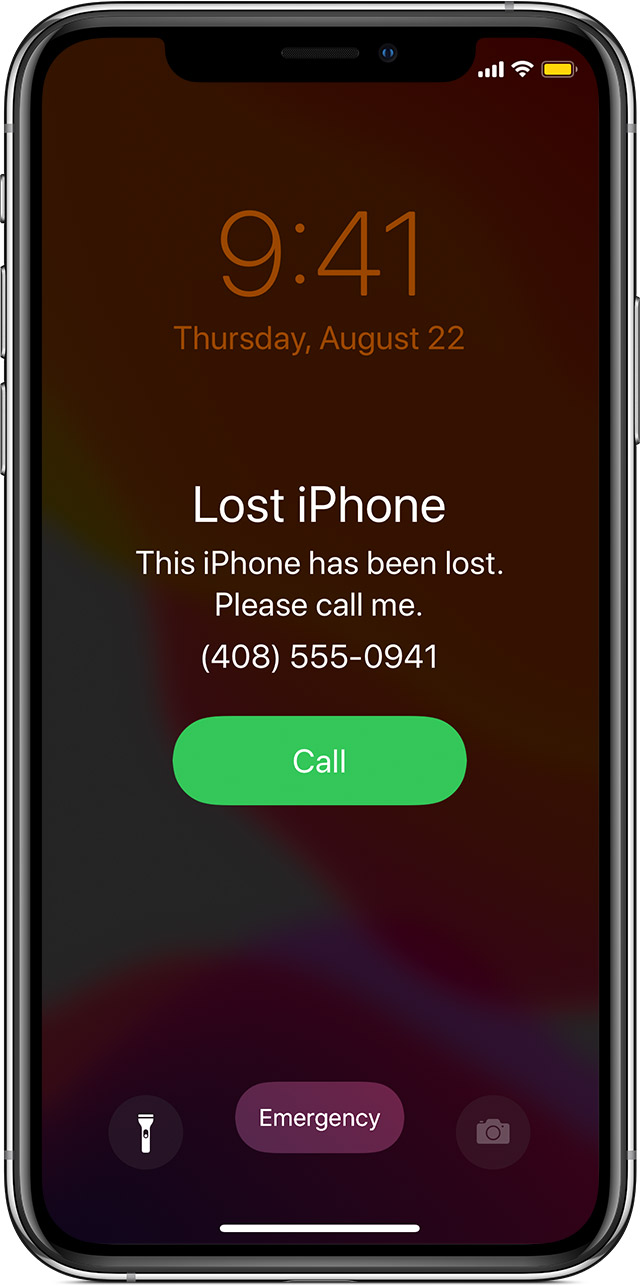
At least on Apple's side (Find my iPhone), the owner can mark the device as lost [0], which will lock it and display a custom message on the lock screen. But a "pull" solution where a finder of the phone can contact the owner would be nice.

[0]: https://support.apple.com/library/content/dam/edam/applecare...

This is already easy to do using Find My Devices in iCloud. You can have the devices put up any message you want.
The owner can arrange for this, but not whoever finds the device. It would be nice to make this possible - perhaps with some appropriate policy around it, so that the feature can't be abused.
> The article pretty well lays out why this doesn't work. We're talking about recyclers here. The people sending in these devices have literally thrown them away into a trash bin. There's no return address.

It sounds like the system works as designed. Steal a locked-iPhone? Congrats, you just stole a worthless brick. Please illustrate to me how this mechanism "doesn't work" when it seems to defeat 99%+ of folks from re-selling the illegitimately-obtained device for any meaningful amount of money, contrasted to its worth in an unlocked state.

Parent comment knows it works as designed as an anti-theft feature.

They're arguing that it's not designed well because it should accommodate recovering parts from phones that were knowingly disposed of without the owner releasing the activation lock first.

As parent comment points out, this could be a simple matter of the refurbisher requesting a release of the lock, sending a request through Apple, and Apple requesting permission of the phone's owner via the account it's locked to. If the phone was stolen, they click no. If the phone was given for recycling and has parts that can still be used, they click yes.

If Apple really wants to reduce waste (their next big environmental goal after meeting the renewable energy one), they could offer a $5 gift certificate to incentivize people to bother with releasing their old phone's motherboard if it's still usable, but implementing this in the first place would already cost them time and money so I'm not holding my breath.

> They're arguing that it's not designed well because it should accommodate recovering parts from phones that were knowingly disposed of without the owner releasing the activation lock first.

> As parent comment points out, this could be a simple matter of the refurbisher requesting a release of the lock, sending a request through Apple, and Apple requesting permission of the phone's owner via their account. If the phone was stolen, they click no. If the phone was given for recycling and has parts that can still be used, they click yes.

Is that even possible? (Legitimately curious) My understanding is in the current design certain expensive things, like the SoC+Security-Enclave are certed/secure-booted, and I imagine other parts are just generic / "off the shelf" plug in and power up and go.

If it is possible to allow more component level re-use without violating the security goal (deter theft), I'm all for it. The more I think about this I honestly think this is active design decision by Apple to avoid a number of long tail permutations they would otherwise need to test and support.

I think it's possible? The activation lock doesn't happen at the hardware level, it's when you're setting up and activating the phone. It has to ask Apple's servers "can I activate this?" and Apple makes you sign in with the Apple ID that it's locked to before authorizing it. Doesn't seem like there should be any technical reason that a "Request permission from registered owner" option wouldn't work as well.
Missed the edit window, but a potential hiccup with this is wiping of user data off of the storage. Once Apple says "yeah you can activate it" I'm not sure if they could enforce a disk wipe. Maybe the data is encrypted with something linked to your Apple ID, and reactivation means the data is junked? Not sure how that works.
I think you might be confusing security during your ownership of a device vs what happens to your device after owning it.

Once you’re done using your device, it isn’t as easy to swap parts between macs without triggering the T2 chip where hardware changes must be okayed in an Apple.

That will flush secondary and used Mac markets away and back to Apple to likely do the same at the higher price point.

The used Mac marketplace is invaluable for new and young creators to get into a platform like Mac.

But what happens if you delete the entire MacOS X and put Linux or Windows on it? Would it still work with the lock?
Apple doesn't care if your device gets stolen. This is to prevent 3rd party repairs and refurbishment.

A stolen device has zero effect on apple's profits, but a repaired reused device does.

The sad thing is that others copy such "features" and in the end you will not be able to install or use a device that isn't "safe". How long until a democracy like the US or EU will dictate what is allowed on a device?1984 is coming and we are thinking it's a good thing because we can have a bit more "safety".

You know you've always had the option to ban the imei number of your phones radio with all the providers. That's making it pretty damn worthless Imo.

What Apple has done just isn't with the trade off.

At least several years ago those IMEI databases weren't shared internationally. It wasn't uncommon for people to learn that their phone was obtained illegally only when travelling far away.
> But it still makes me feel better a thief will get $30, not $300, for my phone -- that's often enough of a difference between it being worth it or not.

Typically the value of a computer is about the same as the sum of its parts, because otherwise plenty of people would be up for a $270 profit by buying $30 worth of parts and assembling them to sell as a $300 computer.

> And if people are dropping these off for recycling, isn't the expectation that they're being used for parts at best anyways? If they're high enough value to actually be refurbished and resold, then it's worth putting the recycling bins behind cashiers or similar, who are trained to first verify they're unlocked before accepting them.

It's generally the other way around. The less a computer is worth (and so the less the parts are worth), the more you want to try to sell it as a whole unit to minimize transaction overhead because the fixed overhead is a larger percentage of the sale price on less expensive hardware.

> Typically the value of a computer is about the same as the sum of its parts, because otherwise plenty of people would be up for a $270 profit by buying $30 worth of parts and assembling them to sell as a $300 computer.

From another comment: My understanding is in the current design certain expensive things, like the SoC+Security-Enclave are certed/secure-booted, and I imagine other parts are just generic / "off the shelf" plug in and power up and go.

Assembling a phone is a lot harder than assembling a tower PC.
Not really. The parts are smaller and less standardized but generally speaking you put the screws in the holes and it turns into a phone.

Moreover, isn't this article about Macs anyway?

They'll still get value from it. Some crackhead will steal your phone and it can be parted out to use the screen, the glass, the case, etc., even if it can't be activated again. It may be worth $20 instead of $150 to him, but he'll still steal it.
> It may be worth $20 instead of $50 to him

The difference between a working phone vs just its parts isn't $30. You should've gone with the parent's $30 vs $300 estimation.

I guarantee there are people willing to violently mug you for $300 but not for $30.

If Apple continues this trend, they can place barriers to parting it out as well. It won't remove all the value, but these practices force everyone to lose.

https://www.ifixit.com/News/apple-is-locking-batteries-to-ip...

I understand what you're saying but the problem is that Apple can fix this and make it easy for refurbishers but difficult for thieves without much difficulty at all.
Well said, security during ownership and refurbishment after ownership have limitless need for relation.
Exactly. This brew-ha-ha is nothing. This is an anti-theft feature. Hard to argue against features designed to reduce the potential for someone to target it for theft.

As someone who has had both a smartphone and a laptop stolen, I would have loved to know that aside from my frustration with the insurance company that the thief walked away with 2 worthless bricks.

And no, right to repair should not ban user-initiated device activation locks.

> This is an anti-theft feature. Hard to argue against features designed to reduce the potential for someone to target it for theft.

And a 9pm curfew for anyone not currently working would prevent a lot of bad behavior too. Also, it would be idiotic. Not all things that have _some_ good aspects are good things.

Most components aren't affected by activation lock, on iphones or on macs. You can still reuse many things that are in demand, like the screen, the speakers, the buttons, the cameras, and so on. It will be the same with macs. THey will throw away the motherboard and sell the rest. Still profitable.
Not any more:

https://www.theverge.com/2018/11/12/18077166/apple-macbook-a...

"The parts affected, according to the document, are the display assembly, logic board, top case, and Touch ID board for the MacBook Pro, and the logic board and flash storage on the iMac Pro."

That doesn't leave much salvageable.

As someone that has parted out his and hers old MacBook Airs to fund their new ones, can confirm.

It was surprising how much value the old parts had.

Sad that old units with a broken X will just be scrapped because Apple will wants $hundreds for any of its specialized parts.

I lost an ipad.

Apple does nothing, zero, nada to unite owners with lost equipment. (grumble, grumble)

Just realize they benefit from this.

No. Simply no.

What is stopping a "criminal" from bypassing this activation lock? Time and technical ability? It surely isn't legal recourse or fear of losing the device. It's a matter of time before this is moot.

On top of that, I've left "criminal" in quotes because quite frankly, I don't care if Apple claims breaking this lock is a breach of DMCA, ToS, or anything else. I've paid for the device. It's mine. The data on it is mine. If I want something out of it bad enough, I'm getting to it. Regardless of their corporate philosophy.

On recycling, this is likely a step away from being generally responsible. Apple already has locks in place preventing parts from "non-genuine" repair shops being used. In addition they engineer components to be tightly-coupled to one another. Now they want to lock the entire device?

At best, this can be argued as "pro-customer", but not pro-consumer. Apple has made good decisions in the past; this isn't one of them.

While I agree with the overall idea behind your post, your assumption that the activation lock can be defeated by sheer git and determination is silly. If implemented correctly (and I have no idea if it will be) it's very likely that it won't be bypassed.
If there's a way to bypass it, it will be used. By the authorized recyclers as well as the thieves (including government agencies).
Yep. This is awfully close to the staring contest between Apple and the US gov't a while back on unlocking iPhones for criminal investigations.

I know--different context--but the technical implementation is similar. Which would suggest the impact of those discussions is larger than previously thought.