Hacker News new | ask | show | jobs
by TechnicolorByte 735 days ago
Have to say, I was thoroughly impressed by what Apple showed today with all this Personal AI stuff. And it proves that the real power of consumer AI will be in the hands of the platform owners where you have most of your digital life in already (Apple or Google for messaging, mail, photos, apps; Microsoft for work and/or life).

The way Siri can now perform actions based on context from emails and messages like setting calendar and reservations or asking about someone’s flight is so useful (can’t tell you how many times my brother didn’t bother to check the flight code I sent him via message when he asks me when I’m landing for pickup!).

I always saw this level of personal intelligence to come about at some point, but I didn’t expect Apple to hit it out of the park so strongly. Benefit of drawing people into their ecosystem.

Nevermind all the thought put into private cloud, integration with ChatGPT, the image generation playground, and Genmoji. I can genuinely see all this being useful for “the rest of us,” to quote Craig. As someone who’s taken a pessimistic view of Apple software innovation the last several years, I’m amazed.

One caveat: the image generation of real people was super uncanny and made me uncomfortable. I would not be happy to receive one of those cold and impersonal, low-effort images as a birthday wish.

27 comments

> I always saw this level of personal intelligence to come about at some point, but I didn’t expect Apple to hit it out of the park so strongly. Benefit of drawing people into their ecosystem.

It's the benefit of how Apple does product ownership. In contrast to Google and Microsoft.

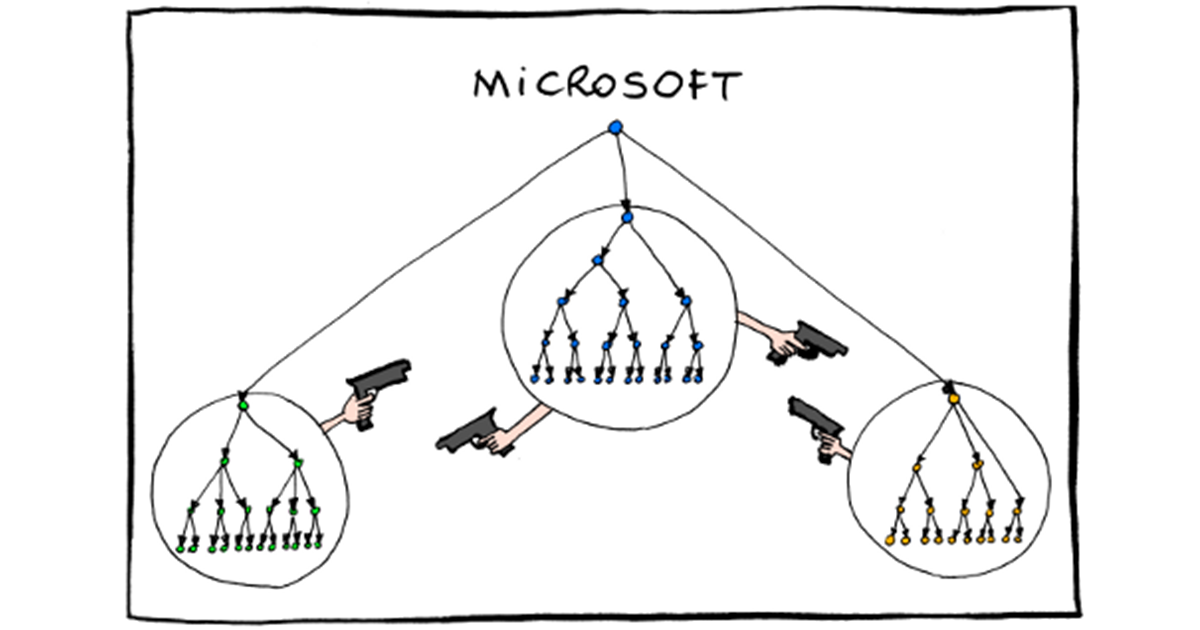
I hadn't considered it, but AI convergence is going to lay bare organizational deficiencies in a way previous revolutions didn't.

Nobody wants a GenAI feature that works in Gmail, a different one that works in Messages, etc. -- they want a platform capability that works anywhere they use text.

I'm not sure either Google or Microsoft are organizationally-capable of delivering that, at this point.

"AI convergence is going to lay bare organizational deficiencies in a way previous revolutions didn't`'

Your quote really hit me. I trust Apple to respect my privacy when doing AI, but the thought of Microsoft or Google slurping up all my data to do remote-server AI is abhorrent. I can't see how Microsoft or Google can undo the last 10 years to fix this.

> "I trust Apple..."

I'm actually a little gobsmacked anyone on this forum can type those words without physically convulsing.

The even more terrible part is I'm sure it's common. And so via network externalities the rest of us who do NOT trust any of these companies on the basis that all of them, time and again, have shown themselves to be totally untrustworthy in all possible ways, will get locked into this lunacy. I now can't deal with the government without a smartphone controlled by either google or apple. No other choice. Because this utter insanity isn't being loudly called out, spat upon, and generally treated with the withering contempt that these companies have so richly and roundly earned this decision is being made for all society by the most naive among us.

I don't think the GP meant "trust" as in "I think Apple has my best interests at heart."

Rather, I think they meant "trust" as in "Apple is observably predictable and rational in how they work toward their own self-interest, rarely doing things for stupid reasons. And they have chosen to center their business on a long-term revenue strategy involving selling high-margin short-lifetime hardware — a strategy that only continues to work because of an extremely high level of brand-image they've built up; and which would be ruined instantly if they broke any of the fundamental brand promises they make. These two factors together mean that Apple have every reason to be incentivized to only say things if they're going to mean them and follow through on them."

There's also the much simpler kind of "trust" in the sense of "I trust them because they don't put me in situations where I need to trust them. They actively recuse themselves from opportunities to steal my data, designing architectures to not have places where that can happen." (Of course, the ideal version of this kind of trust would be a fully-open-source-hardware-and-software, work-in-the-open, signed-public-supply-chain-ledger kind of company. You don't get that from Apple, nor from any other bigcorp. Apple's software is proprietary... but at least it's in your hand where you can reverse-engineer it! Google's software is off in a cloud somewhere where nobody can audit changes to it.)

For me it's more "I think Apples business interests more closely align with my wishes as a customer" as opposed to any other megacorp.
At the heart of it: I feel like I'm Apple's customer in a way that I never feel like Google's customer (in everything they do it always seems like their real customers are Ad Buyers, even when you are ostensibly paying for services). (And Microsoft is in the middle and all over the map where some divisions treat you like a customer and others don't depending on the prevailing winds and the phase of the moon.)
> high-margin short-lifetime hardware

I don't think this applies to their watch or tablet business where the limiting factor on lifetime in the market is security/os updates. Most alternatives in that space have significantly worse support cycles.

This used to be true of their phones as well, but the android market seems to be catching up in ways that tablets/wearables have not (see google's 7 year commitment for pixels).

Not sure if it applies to general purpose. Certainly there are non mac computers that we can throw linux on and use for 10+ years and there are examples of apple laptops getting cut off earlier than I'd like (RIP my beloved 12" macbook), but there are often some pretty serious tradeoffs to machines older than 7 years anyway. Also, I'm not sure if apple's strategy re: support lifecycles on products after the AS migration have shifted. It wouldn't surprise me if the first gen m1 products get 10 years of security updates.

it's not that I blindly trust apple; it's more that they're the one FAANG company where I am the actual customer and their incentives align/depend on keeping me happy. Google/MS could care less how I feel; and I am well aware that I am most certainly not their customer.
> it's more that they're the one FAANG company where I am the actual customer and their incentives align/depend on keeping me happier

Do they though? Battery performance that 'lies' to you intentionally, planned obsolescence, locked in ecosystems, overtly undercutting the alternatives, marketing that hypes up rather bland features...I admit I don't see your point.

Apple, if anything, seem about as user hostile as Microsoft is these days.

> Battery performance that 'lies' to you intentionally, planned obsolescence ...

Everything is relative. Apple generally supports their devices with OS updates for longer than most Android phone makers. Their incentives here are well aligned: they get a decent profit from Apple Store no matter how long you use their phone.

I think a lot of the reporting on Apples actions is very click-baity and lack nuance. Take the case when Apple throttled CPU performance of their phones when the battery got old and degraded. It was reported as a case of planned obsolescence, but it was in fact the exact opposite: by limiting the power consumption of the CPU they avoided unexpected phone shutdown due to battery voltage going too low during bursts of high power consumption. A phone that randomly shuts down is borderline use-less. A phone that is slower can at least be used for a while longer. Apple didn't have to do this. They would have spent less R&D money, and had a much lower chance of bad PR backlash, if they just simply did nothing. Yet they did something to keep old phones useful for longer.

> locked in ecosystems

That's a fine balance. Creating a good ecosystem is part of what makes Apple so user friendly. And it's a lot harder to create open ecosystems than having closed ones. Especially when you factor in security and reliability. If Apple diverted resources to making their ecosystems more open I think their ecosystem integration would have been significantly worse, which would have made them lose the thing most users considers Apples primary advantage.

Apple is a mixed bag. They were one of the first to go all-in on USB-C. Sometimes they push aggressively for new open standards that improve user experience. Yet they held on to Lightning for far too long on their phones. But here you get back to the planned obsolescence factor: there's a HUGE amount of perfectly fine Lightning accessories out there that people/companies are using with iPhones. If they killed Lightning too fast I can guarantee you they would have gotten a lot of hate from people who couldn't use their Lightning accessory anymore. With laptops that wasn't a big issue. Adapters are significantly less convenient to use with phone accessories.

Apple is tinker-hostile, but they’re great at getting-things-done for the majority of people. It’s frustrating when you have the knowledge to build custom workflows, but the happy path and the guardrails work great for many.

Microsoft have no consistency and Google wants you to pray at the altar of advertising.

Shouldn't Microsoft be somewhere between Google and Apple ? After all, they do rely on you buying their software in a way Google does not.
Who do you think is Netflix's customer if not you?
> I'm actually a little gobsmacked anyone on this forum can type those words without physically convulsing.

Apple tells a pretty compelling lie here. Rather than execute logic on a server whose behavior can change moment to moment, it executes on a device you "own" with a "knowable" version of its software. And you can absolutely determine no network traffic occurs during the execution of the features from things announced this week and going back a decade.

The part that Apple also uploads your personal information to their servers on separate intervals both powering their internal analytics and providing training data is also known, and for the most part, completely lost on people.

Are you claiming Apple uses personal user data (e.g someone’s photos or texts) as training data for their server-side models? That’s a massive claim and there are some journalists you should definitely shoot a message to on signal if you have proof of that and aren’t just blowing smoke.
Apple's claim (per public statements) is:

- They upload your data to their servers. This is a requirement of iCloud and several non-iCloud systems like Maps.

- Where analytics is concerned, data is anonymized. They give examples of how they do this like by adding noise to the start and end of map routes.

- Where training is concerned, data is limited to purchased data (photos) and opted-in parties (health research).

My point is that Apple's code executing on device can be verified to execute on device. That concept does not require trust. Where servers are involved and Apple does admit their use in some cases, you trust them (as much as you trust Google) their statements are both perfectly true and ageless. Apple transitions seamlessly between two true concepts with wildly different implications.

Apple's marketing and branding is truly impressive when even Hackernews crowd, who'd you assume are very tech savvy, are eating it up all of the propaganda.
“Wow, so many of these people neck deep into tech, privacy, and law disagree with me. It must be because they’re all suckers.”
Despite your snark - you'll never win an argument where trusting a for profit corporation is some sort of win over transparent secure system. Yes Apple might be better of the lesser evils but is this really where us as a privileged class of people who actually understand all this give up and give in? This is sad.
Uh, friend, this is still just an internet technology enthusiast forum. Popular opinion here is equally as reliable as Reddit. If you are taking hn upvotes as some kind of expert input, you're in for a rough time.
"Wow, so many of these people disagree with me, it might be because they have a huge dangerous blind spot because of a lack of knowledge and/or experience and/or have trouble seeing things from the outside"

...is a thing I experience on a regular basis (and that I only really gained confidence in once I actually saw the mistakes cause problems, e.g. password managers)

I would give multiple upvotes to this, were it possible.

I do not have either Google or Apple accounts and I do not intend to ever open such accounts (despite owning some Android smartphones and having owned Apple laptops).

Because of this, I am frequently harassed by various companies or agencies, which change their interaction metods into smartphone apps and then deprecate the alternatives.

Moreover, I actually would be willing to install such apps, but only if there would be some means to download them, but most of them insist on providing the app only in the official store, from which I cannot install it, because I have no Google account.

I have been forced to close my accounts in one of the banks that I use, because after using their online banking system in the browser for more than a decade, including from my smartphone, they have decided to have a custom app.

In the beginning that did not matter, but then they have terminated their Web server for online banking and they have refused to provide directly their app, leaving the Google store as the only source of it.

I have been too busy to try to fight this legally, but I cannot believe that their methods do not break any law. I am not an US citizen, I live in the European Union, and when an European bank (a Societe Generale subsidiary) refuses to provide its services to anyone who does not enter in a contractual relationship with a foreign US company, such discrimination cannot be legal.

I sympathize with the plight, as I have also occasionally tried to fight this fight.

However, to quibble with your last analysis, you're almost certainly entering an agreement with the EU registered legal entity of a multinational company, and you almost certainly already had to do that to obtain the hardware, run the OS, use the browser, etc. The degree to which any of those contracts are enforceable is another matter.

Even if Google were treated as a local company, that does not change anything.

I find unbelievable that a bank has the arrogance of conditioning their services on whether their customers accept to do business or not with some third party.

I see no difference between the condition of having a Google account and for instance a condition that I should buy my car from Audi or from any other designated company, instead of from wherever I want. It is none of my bank's business what products or services I choose to buy or use (outside of special circumstances like when receiving bank credits).

Could you provide an alternative model where you get what you want, that is economically viable for vendors and manufacturers to invest in, and that does not require me to teach my parents how to sysadmin their phones to keep them safe?

I trust Apple more than I trust Google to not share my data with a large group of corporate entities who want to sell me things I do not wish to buy.

I believe both - and if required, organizations like Mozilla, Ubuntu, Redhat/Oracle, whoever - to comply with law enforcement requests made of them to hand over any data relating to me that they might hold. I'm OK with that. I think Apple has less of that data than Google, and works actively to have less of it. Google works actively to increase the amount of data they have about me.

I think even if you had a functional device using entirely open software, that any organisation you share that data with or use to communicate with using that device - including cloud service providers, network providers, and so on - would also comply with law enforcement.

"Ah!", you say, "But I get to choose which crypto to use! I know it won't have backdoors!". To which I will reply you are unlikely to have read and truly understood the source code to the crypto software you're using, and that such software is regularly shown to have security issues. It's just not true that open source means that all bugs become shallow, and the "many eyes" you're hoping for to surface these issues are likely employed at, err, Apple, Google, Redhat, Ubuntu, Mozilla...

I look at the landscape and I conclude that true open source environments have a ton of issues, Google/Android have far more (for my taste), and that I am more confident in Apple than I am in either myself (even as an experienced tech expert), or Google, or Microsoft, to keep my data private to me to the greatest extent legally permissible.

Do I think "legally permissible" should be extended? Sure. Do I wish a multi-billionaire would throw 50% of the net worth at making open source compete on the same level? Yeah, cool. Do I think any of that is realistic in the next 5 years? No. So, I make my bets accordingly, eyes wide open, balancing the risks...

Do you have any examples of Apple being untrustworthy to back up your rather extreme reaction?
You should remember that in December 2023 it was revealed that the "Apple Silicon" CPUs have some undocumented testing features, which have unbelievably remained enabled in the Apple devices for many years until being notified by the bug finders, instead of being disabled at the end of production.

Using the undocumented but accessible control registers, all the memory protections of the Apple devices could be bypassed. Using this hardware backdoor, together with some software bugs in the Apple system libraries and applications, for many years, until the end of 2023, it has been possible to remotely take complete control of any iPhone, with access to its storage and control of the camera and microphone, in such a way that it was almost impossible for the owner to discover this (the backdoor bugs have been discovered only as a consequence of analyzing some suspicious Internet traffic of some iPhones that were monitored by external firewalls).

It is hard to explain such a trivial security error as not disabling a testing backdoor after production, for a company that has claimed publicly for so long that they take the security of their customers very seriously and that has provided a lot of security theater features, like a separate undocumented security processor, while failing to observe the most elementary security rules.

It is possible that the backdoor was intentional, either inserted with the knowledge of the management at the request of some TLA, or by a rogue Apple employee who was a mole of such a TLA, but these alternative explanations are even worse for Apple than the explanation based on negligence.

I don't think this demonstrates untrustworthiness.
Forgot the "screeching minority" who values privacy quote already?

https://www.howtogeek.com/746588/apple-discusses-screeching-...

> all of them, time and again, have shown themselves to be totally untrustworthy in all possible ways

Sorry, but this seems like a very vague claim to me. Can you specifically point out a time where Apple proved itself untrustworthy in a way that impacts personal privacy?

When Apple says they treat my data in a specific way, then yes I do trust them. This promise is pretty central to my usage of them as a company. I'd change my mind if there was evidence to suggest they're lying, or have betrayed that trust, but I haven't seen any, and your post doesn't provide any either.

It depends on what you'd consider "untrustworthy", but some (myself included) feel it's hypocritical for Apple to position itself as a privacy conscious choice, and use its marketing / PR machine to give the impression it only makes money on devices/subscriptions, when they're silently managing an ads-funded cash cow, with billions of dollars that go directly to the bottom line, as pure profit.

Here's a few pointers, to get you up to speed [1-5]. Of course there's nothing wrong with monetizing their own user base and selling ads based on their 1PD (or, in the case of Safari, monetizing the search engine placement). But I find it ironic that they make a ton of money by selling ads based on the exact same practices they demonize others for -- user behavior, contextual, location, profile.

[1] https://searchads.apple.com/

[2] Apple’s expanding ad ambitions: A closer look at its journey toward a comprehensive ad tech stack - https://digiday.com/media-buying/apples-expanding-ad-ambitio...

[3] Apple’s Ad Network Is The Biggest Beneficiary Of Apple’s New Marketing Rules: Report -- https://www.forbes.com/sites/johnkoetsier/2021/10/19/apples-...

[4] Apple Privacy Suits Claim App Changes Were Guise to Boost Ad Revenue - https://www.hollywoodreporter.com/business/business-news/app...

[5] Apple is becoming an ad company despite privacy claims - https://proton.me/blog/apple-ad-company

> they're silently managing an ads-funded cash cow, with billions of dollars that go directly to the bottom line, as pure profit

Advertising isn't anti-privacy. Apple's fight was with tracking by third parties without user knowledge or consent. That is independent of, but often used for, advertising purposes.

This is different from say Google determining ads on Youtube based on what you are watching on Youtube.com, and from Amazon or Apple promoting products based on your product searches solely within their respective stores.

The fact that Advanced Data Protection on iCloud wasn't forced is sus.
As someone who has to help my father with his personal tech as his mental health deteriorates (several brain tumors), I'm thrilled every time I find something that ISN'T locked down behind pin codes, passwords or other authentication methods that he no longer remembers or can communicate.

His current state really has made me think about my own tech, about what should be locked down and what really should not be - things that we lock down out of habit (or by force) rather than out of necessity.

Not when you understand the tradeoffs being made. If you enable Advanced Data Protection and lose or forget your password, Apple cannot help you recover it. It makes sense that it's opt-in and users make a conscious choice to make that trade-off.
Have you ever done tech support?
Yeah, you’re right. Apple’s approach to privacy is like one of those fairytale genies. On paper, and in many technical aspects, class-leading, but useless because anyone powerful and/or determined enough to hurt you will be able to use the backdoors that they willingly provide.

End to end encryption? Sure, but we’re sending your location and metadata in unencrypted packets.

Don’t want governments to surveil your images? Sure, they can’t see the images - but they’ll send us hashes of illegal images, and we’ll turn your images into hashes, check them against each other, and report you to them if we find enough.

Apple essentially sells unbreakable locked doors while being very careful to keep a few windows open. They are a key PRISM member and have obligations under U.S. law that they will fulfil. Encryption backdoors aren’t needed when the systems that they work within can be designed to provide backdoors.

I fully expect that Apple Intelligence will have similar system defects that won’t be covered properly, and will go forgotten until some dissident gets killed and we wonder why.

For a look at their PR finesse in tricking media, see this, over the CSAM fiasco that has been resolved, in Apple’s favour.

https://sneak.berlin/20230115/macos-scans-your-local-files-n...

> Sure, they can’t see the images - but they’ll send us hashes of illegal images, and we’ll turn your images into hashes, check them against each other, and report you to them if we find enough.

> I fully expect that Apple Intelligence will have similar system defects

Being able to scan devices for CSAM at scale is a "defect" to you?

Yes, it is a defect. For many reasons

- it's anti-user: a device spying on you and reporting back to a centralized server is a bad look

- it's a slippery slope: talking about releasing this caused them to get requests from governments to consider including "dissident" information

- it's prone to abuse: within days, the hashing mechanism they were proposing was reverse engineered and false positives were embedded in innocent images

- it assumes guilt across the population: what happened to innocent by default?

and yes, csam is a huge problem. And btw, apple DOES currently scan for it- if you share an album (and thus decrypt it), it is scanned for CSAM.

Yeah but Google and MS have the same problems.. What your talking about is the reality of using a computer connected to the internet since 2003.
But they don't bullshit about it as much and their offerings are much cheaper and it's easier to not have to pay as much (either with data or money).

There is just a general hypocrisy about Apple that is hilarious.

This is true, but your examples aren't directly trying to pretend they are the better alternatives for that. Apple is doing its best to paint itself as some golden company when reality dictates they are no better (if honestly worse in some categories).
Don't expect balanced objective opinions on Apple on HN, that was never ever the case. Some of it are tech enthusiasts, some are maybe employees or investors, some is paid PR.

Nothing wrong there per se, its just good to realize it.

What government needs you to have a smartphone from Apple or Google?
The Australian Government required you to have an app called MyGovID to do you business taxes and other administrative tasks. This app is only Apple or Android, there is no web interface.
That’s crazy. Why no web interface? In Poland for taxes we have a web interface that is mobile and stationary, and for many other things it’s a choice between an app and web and paper.
Not a requirement, but in Poland a ton of administration things can be done from a dedicated iphone/android app - including using your official ID. It is optional though, and you can alway do the same stuff (ID aside) from the web, or using paper and going places in person.
> Because this utter insanity isn't being loudly called out, spat upon, and generally treated with the withering contempt that these companies have so richly and roundly earned this decision is being made for all society by the most naive among us.

Ah yes, blame the simple-minded plebes who foolishly cast their noses up at Windows Phone. If only Ballmer were still in charge, surely he'd have saved us from this horrible future of personal, privacy-respecting AI at the edge...

Have to agree, apple seems to put a really strong emphasis above all else on your shit is your shit and we don't want to see it.
But this is not true. that's the thing.

Apple is very intrusive. Macos phones home all the time. ios gives you zero control (all apps have internet access by default, and you cannot stop it)

Apple uses your data. you should be able to say no.

And as for your data, they do other things too, a different way. Everything goes to icloud by default. I've gotten new devices and boom, it's uploading everything to icloud.

I've seem privacy minded parents say no, but then they get their kid an iphone and all of their stuff goes to icloud.

I think apple should allow a personal you-have-all-your-data icloud.

> Apple is very intrusive. Macos phones home all the time.

The platform is heavily internet-integrated, and I would expect it to periodically hit Apple servers. There are a lot of people claiming to be security researchers reporting what Little Snitch told them. There are drastically fewer who would introspect packets and look for any gathered telemetry.

I really haven't seen evidence Apple is abusing their position here.

> Everything goes to icloud by default. I've gotten new devices and boom, it's uploading everything to iCloud.

You need to enable iCloud. You are prompted.

Also, a new device should have next to nothing to upload to iCloud, as its hard disk is still in the factory configuration.

> I think apple should allow a personal you-have-all-your-data iCloud

They have desktop backup. Maybe they should allow third party backup Apps on iPhone, although I suspect data would be encrypted and blinded to prevent abuses by third parties, and recovery would be challenging because today recovery is only possible on a known-state filesystem. The recovery aspect is what really has limited it to the handful of approaches implemented directly by Apple.

A key difference is that Apple isn’t then selling the info it has on you to advertisers.

I don’t think any large tech company is morally good, but I trust Apple the most out of the big ones to not do anything nefarious with my info.

None of the tech companies are selling your data to advertisers. They allow advertisers to target people based on the data, but the data itself is never sold. And it would be dumb to sell it because selling targeted ads is a lot more valuable than selling data.

Just about everyone else other than the tech companies are actually selling your data to various brokers, from the DMV to the cellphone companies.

They absolutely are. And they give it to governments upon request.

Their privacy stories are marketing first.

Anyone who disagrees with you about this should buy a Mac and try not enabling iCloud. There's constant nags and as far as I could find, no way to turn them off.
1) Have you tried installing Linux? ;-)

2) I have booted macOS VMs without iCloud. I'm not sure of the nags though. I believe signing out of iCloud will prevent iCloud from contacting Apple.

https://support.apple.com/en-us/104958

I’ve never used iCloud since it came out. I can’t think of a single nag. Where do you see it on your iPhone or Mac?
> all apps have internet access by default, and you cannot stop it

Technically you can by turning off wi-fi and disabling cellular data, bluetooth, location services, etc. for the app.

To your point though, wi-fi data should also be a per-app setting, and it is an annoying omission. macOS has outgoing firewalls, but iOS does not (though you could perhaps fake it with a VPN.)

> Apple is very intrusive

> Apple uses your data.

> they do other things too, a different way

What specifically do you mean? Their frankly quite paranoid security and privacy white papers are pretty comprehensive and I don’t think they could afford to lie in those.

> Apple should allow a personal you-have-all-your-data iCloud

Advanced Data Protection[0] applies e2ee for basically everything, with the exception email, and doesn’t degrade the seamless multi-device experience at all. For most people this is the best privacy option by a long shot, and no other major platform can provide anything close.

They’ve hampered product experience for a long time because of their allergy against modelling their customers on the cloud. The advent of AI seems to have caught them a bit off guard but the integrated ecosystem and focus on on-device processing looks like it may pay off, and Siri won’t feel 5 years behind Google Assistant or Alexa.

[0] https://support.apple.com/en-ca/102651

> What specifically do you mean? Their frankly quite paranoid security and privacy white papers are pretty comprehensive and I don’t think they could afford to lie in those.

A couple of years ago Apple was busted when it was discovered that most Apple first-party apps weren't getting picked up by packet sniffer or firewalls on macOS.

Apple tried deflecting for a while before finally offering up the flimsy claim that it "was necessary to make updates easier". Which isn't a really good explanation when you're wondering why TextEdit.app needs a kernel network extension.

The lack of an iOS setting to deny specific apps network access is absurd. It doesn't feel like much of a privacy-focused platform when every day in my network logs I see hundreds of attempted connections from 'offline' iOS apps.
For what it's worth, those platform investments are the difference between Apple being applauded for this, and Microsoft being pilloried for Recall's deficiencies.
> I trust Apple to respect my privacy when doing AI...

Depends on where you are. Apple will bend over backwards when profits are affected, as you can see in China.

Ironically, the only time a large company took a stand at the cost of profits was in 2010 when Google pulled out of China over hacking and subsequently refused to censor. Google has changed since then, but that was the high watermark for corporates putting principles over profits. Apple, no.

> Google pulled out of China over hacking and subsequently refused to censor

My impression is that they had little chance to survive in a Chinese market, competing with a severely limited product against state-sponsored search products while also being a victim of state-sponsored cyberattacks.

It was the morally correct decision, but I don't know if they were leaving any money on the table doing so. I suspect the Google of today would also decide not to shovel cash into an incinerator.

When enrolling physical security keys to my accounts, only Google's process requested extra, identifiable fields in my key, generating a warning in Firefox, which can anonymize these fields.

Google wants to track even my physical security key across sites to track me.

How can I trust their AI systems with my data?

The attestation on (FIDO certified) security keys is a batch attestation, and meant to correspond to a a batch size of at least 100,000.

So they were effectively asking for the make and model.

There are non-certified authenticators which may have unfortunate behaviors here, such as having attestations containing a hardware serial number. Some browsers maintain a list and will simply block attestations from these authenticators. Some will prompt no matter what.

There is also a bit of an 'Open Web' philosophy at play here - websites often do not have a reason to make security decisions around the make and models of keys. Having an additional prompt in a user conversion path discourages asking for information they don't need, particularly information which could be used to give some users a worse experience and some vendors a strong 'first-mover' market advantage.

In fact, the motivator for asking for this attestation is often for self-service account management. If I have two entries for registered credentials, it is nice if I have some way to differentiate them, such as knowing one of them is a Yubico 5Ci while the other is an iPhone.

Many parties (including Google) seem to have moved to using an AAGUID lookup table to populate this screen in order to avoid the attestation prompt. It also winds up being more reliable, as software authenticators typically do not provide attestations today.

Both devices are Yubikey 5 series, and none of the other services asked for anything similar, or triggered any warnings.

Moreover, none of the service providers auto-named my keys with make/model, etc.

> If I have two entries for registered credentials, it is nice if I have some way to differentiate them, such as knowing one of them is a Yubico 5Ci while the other is an iPhone.

First, Google doesn't differentiate the security keys' name even if you allow for that data to be read, plus you can always rename your keys to anything you want, at any of the service providers I enrolled my keys, so it doesn't make sense.

Moreover, Firefox didn't warn me for any other services which I enrolled my keys, and none of them are small providers by any means.

So, it doesn't add up much.

Google is not trusted because it was an AI company and needed your data. Apple just joined the club.
Since Apple is building ChatGPT integration into its devices, it’s clear that Apple’s users’ data is going to be slurped by Microsoft via ClosedAI servers now.

It’s unlikely latency would permit them to proxy every request to fully mask end-user IPs (it’s unclear what “obscured” means), and they would probably include device identifiers and let Microsoft maintain your shadow profile if that could improve ChatGPT output (it may not require literally storing your every request, so denying that is weasel phrasing).

I’ve been browsing with Private Relay since the day it became available. What’s this intolerable latency you’re talking about?
Browsing is not the same as using a personal assistant.

First, it takes much less compute to serve a page than to run an LLM query. LLMs are slow even if you eliminate all network.

Second, your expectations when browsing are not the same as when using a personal assistant.

Right now even when I simply ask Siri to set a timer it takes more than a couple of seconds. Add an actual GPT in the mix and it’s laughable.

In any case, even with a private relay, Apple’s phrasing does not deny sending device identifiers and allowing ClosedAI/Microsoft to build your shadow profile (without storing requests verbatim).

Nope, you’re moving the goalposts. You were talking about the latency of making a network call. I pointed out that Apple’s current proxying architecture has low latency for web browsing, with orders of magnitude larger requests moving through it. We’re not going to bring GPT slowness into the mix because that’s not what we were discussing.
Ironically, I feel like Apple might have lost me as a customer today. It won't matter to Apple, obviously, but so much of what they showed today I just felt was actively pushing me out of the ecosystem.

I first bought some devices for myself, then those devices got handed off to family when I upgraded, and now we're at a point where we still use all of the devices we bought to date - but the arbitrary obsolescence hammer came down fairly hard today with the intel cut-off and the iPhone 15+ requirement for the AI features. This isn't new for Apple, they've been aging perfectly usable devices out of support for years. We'll be fine for now, but patch support is only partial for devices on less-than-latest major releases so I likely need to replace a lot of stuff in the next couple of years and it would be way too expensive to do this whole thing again. I'll also really begrudge doing it, as the devices we have suit us just fine.

Some of it I can live without (most of the AI features they showed today), but for the parts that are sending off to the cloud anyway it just feels really hard to pretend it's anything other than trying to force upgrades people would be happy without. OCLP has done a good job for a couple of homework Macs, I might see about Windows licenses for those when they finally stop getting patches.

I'd feel worse for anyone that bought the Intel Mac Pro last year before it got taken off sale (although I'm not sure how many did). That's got to really feel like a kick in the teeth given the price of those things.

From rumours of Apple buying lots of GPUs from Nvidia not that long ago I think management got a nice little scare when OpenAI released GPT-3.5 and then GPT-4. It takes several years to bring a CPU to market. Apple probably realised far too late that they needed specific features in their SOCs to handle the new AI stuff, so it wasn’t included in anything before the A17 Pro. For the M1, M2 and M3 I believe that Apple is willing to sacrifice heat and battery to achieve what they want. The A17 Pro is probably very efficient at running LLMs so it can do so in a phone with a small battery and terrible thermal performance. For their Macs and iPads with M1, M2, M3 they will just run the LLMs on the AMX or the GPU cores and use more power and produce more heat.

Could also be a memory problem. The A17 Pro in the iPhone 15 Pro comes with 8 GB of memory while everything before that has 6 GB or less. All machines with the M1 or newer come with at least 8 GB of memory.

PS: The people who bought the Intel Mac Pro after the M1 was released knew very well what they were getting into.

It worth noting that the power of the neural engine doubled between the A16 and A17 chips (17 vs 35 TOPS, according to Wikipedia), while the A15 to A16 was a much more modest increase (15.8 to 17 TOPS). So it does seem like they started prioritizing AI/ML performance with the A17 design.
Apple started including the neural engine back with A11 Bionic. In 2017.
And at .6 TOP/second of performance, that Neural Engine is practically useless today. You can go buy a $50 Rockchip board with an NPU 10x faster.

Which introduces a funny aspect, of the whole NPU/TPU thing. There's a constant stairstepping in capability; the newer models improving only obsoletes older ones faster. It's a bit of a design paradox.

Yes. But I was responding to "Apple probably realised far too late". I think they were in fact way ahead of everyone else, it's just that the hardware of 2017 can't keep up with the demands of today.
I'm genuinely wondering why the NU was added in first place, I can't think of any app that made egregious use of that outside of the Gallery and Photo App. They didn't even allow any access from third parties in a few initial iterations.
You have no idea what you're talking about. This is painful to read.
While I mostly agree with your point of Apple being rather aggressive with forced upgrading, I don't think the device requirements for these features were based solely on the desire to push out people with older devices, but rather due to the hardware requirements for a lot of the ML/AI features being based on the Apple Silicon, at least for the Mac side of things. As to why they drew the line at the iPhone 15, perhaps it's a similar reason regarding performance requirements. While obviously, I'm not intimately knowledgeable of their basis for the device requirements, I'd wait a few more years to see how the device requirements for these new features cascade. If they continue requiring newer and newer devices, only supporting the trailing generation or so, then I'd agree wholeheartedly with your sentiment.
I'm with you here. As a proud owner of an iPhone 13 Mini, I refuse to switch to anything bigger than that, but I do concede that any moderately useful AI pipeline will require more power than my aging phone is capable to provide.
I'll always slightly regret not getting a Mini, but 2020 was a really bad year for it to launch (when I didn't feel like the extra work needed to see one in person) and 2021 I actually needed a better camera.

In retrospect though, it may be best that I don't know what I missed.

It'll get you when the battery life drops to 4 hours screen time.
Yes, it's not arbitrary at all — they're only offering it on devices with at least 8GB of memory.

The iPhone 15 Pros were the first iPhones with 8GB. All M1+ Macs/iPads have at least 8GB of ram.

LLMs are very memory hungry, so frankly I'm a little surprised they support such low memory requirements (especially knowing that the system is running other tasks, not just ML). Microsoft's Copilot+ program has a 16GB minimum.

It's odd...I've gotten along fine without AI in my iPhone 13, and it will continue to work just as I have come to expect with the new iOS.

The new AI features will be available on the iPad Air I just ordered, and on my M1 MacBook Air, and I'll be able to play with them there until I'm ready to upgrade my phone. I think these new features sound great, but I'm not in any hurry to adopt them wholesale.

> I think these new features sound great, but I'm not in any hurry to adopt them wholesale.

And if you don’t like them you don’t have to use them. I don’t use Siri and it doesn’t bother me that Apple includes it on all their machines.

> I don't use Siri

That's likely true. Unless you were careful to do a lot more than just disabling it, it does use you though, slurping up quite a bit of data.

reference? Proof? How is it slurping data if I have it turned off and don't even use it?
How?
I'm not following. What business did they lose if you weren't planning to upgrade? Maybe there is a misunderstanding of what's being gated in the release. I have an iPhone 13, and it was not a surprise to see that AI upgrades would require new hardware. Maybe I'll get a 16 if reviews confirm that it's good.
iOS18 will still be available for older devices right? From the looks of the preview, it’ll go back to phones from 2018 which is fairly standard for Apple. And I’d imagine older iOS versions will continue to receive security updates for several years after they’re dropped from the latest version.

What is it about this release that has lost your support? Specifically gating the Apple Intelligence stuff to the most modern hardware?

I mean, your pushed out to what? Lol your acting like android doesn't obsolete the shit out of their past cycle phones. I don't really get what you wanted them to do here, they're deploying AI in the OS and ecosystem where they can and the features that the hardware supports are being brought in, i don't see where they're implementing features that the hardware supports and are blocking "because"... I don't think anywhere they clarified what part of the cloud tools wont work on older versions. But at the end of the day old hardware is old... its not gonna support everything especially on generational shifts like how much better arm was over intel, or the fact that NPU's don't just manifest inside of old silicon
I'm confused. My understanding is that they didn't drop support for all Intel Macs in Sequoia. My 2018 MBP for example is still supported. The last Intel Mac Pro in your example is also still supported.

My MBP hasn't hasn't been _fully_ supported for many years. The M1-specific features started rolling out in 2021 - ability to run iPad apps being the most obvious one, the ability to get the globe view in maps being the most questionable. IIRC, my MBP did not yet have a M1 Pro/Max version available for sale when they announced the M1-specific features.

The point being, having AI features unavailable doesn't make the Mac unusable any more than it makes an iPhone 15 unusable. Those parts should continue to operate the way they do today (e.g. with today's Siri).

Apple isn’t magic and can’t defy physics. The chips on the older devices aren’t powerful enough to run the new features.

Hardware matters again now in a way it hasn’t for a couple of decades.

Requiring a new device for new features is not the same thing as removing support for older devices.
What? Your phone does everything it did when you bought it and will keep receiving important updates for years to come. How entitled are you to expect to receive every upcoming feature? And where else are you gonna get that? Lol
Not sure this is accurate - a lot of devices have been culled from receiving future updates with these releases. This is not anything new this year, I get that, and I don't really mind not getting the new AI features, but having devices that will stop being supported and which can't have any other software installed because of being locked down is really not a fun situation to be on this side of.

The old Macs can still install Linux/Windows/ChromeOS Flex. iPads/iPhones not so much.

It will be interesting to see if there's an Osborne Effect on iPhone 15 (non-pro) sales now that the model is effectively stuck with brain-dead Siri.
It’s ironic how the one company that is WAY over the top wrt secrecy — not only to the public, but also and especially internally (they’ve even walled the hardware team from the software team while developing the iPhone!) — is at the same time the one company that really nails integration.
The key difference is that Apple (as an organization) appears to have an overarching roadmap (that spans multiple product lines). The secrecy is irrelevant as long as the leadership of each division is aligned (it hurts, but does not prevent success). Google, MS, and others are less organized at the top, so subdivisions of the overall org are left to plan for themselves and between each other, which leads to conflicts. Resolution may be achieved when things get pushed high enough, but only if it surfaces at the top for a leader (if such people exist in their org structure) to declare a resolution and focus for the groups involved.
This reads like a critique of centralized versus decentralized control, but I think it’s more about lack of clear intention.

Apple has a clear intent that allows the subsequent groups to work towards and contribute to it. Google and Microsoft don’t. They have a vague idea, but not something tangible enough for subordinate leaders to meaningfully contribute to.

As the chess players know, ‘a bad plan is better than none at all’. https://www.chesshistory.com/winter/extra/planning.html
Apple is odd in other ways. For example: Calculator on iPad. Once they had a few iPad releases without a calculator, they needed a sufficient _reason_ to release a calculator app for iPad. The product was gated by the narrative.

There was also likely no team on calculator at all (are there bugs that justify a maintenance team?), so it needed a big idea like 'Math Text' to be green-lit or it would simply never come. This is despite missing calculator being an obvious deficiency, and solving it via a port to be a relatively tiny lift.

People will scoff and say "Yeah, but all kinds of companies have internal firewalls, big deal". But no, these were literal walls that would appear over a weekend and suddenly part of the campus was off-limits to those not on the iPhone project.
Wow. Any place to read about that?
I found it in Fred Vogelstein's "Dogfight: How Apple and Google Went to War and Started a Revolution" [0]. Decent read, not amazing IMO, but with fun tidbits about the iPhone / Android launches

[0] https://libgen.is/book/index.php?md5=60B714243482AE3D7B9A83B...

Any book about the development of the iphone or articles in the business press from a few months after product introduction (if any are still online…try Fortune).
I heard they did this for the Amazon Fire Phone, too
Well tbf I’m not sure Google does project ownership… I was shocked how many seemingly important conversations ended with “well, I guess these days that functionality is owned by the community of relevant stakeholders…” (aka: owned by nobody at all). I think they’re only able to do what they’ve done through the sheer concentration of brilliant overpaid engineers, in spite of such “innovation”.

Totally agree on the AI points. Google may have incredible research, but Apple clearly is playing to their strengths here.

Could you please explain ‘lay bare organisational deficiencies’? I ask without skepticism.
Most companies don't have an unified platform they can build this on. And even if they seem to have superficially, the internal organisation is so splintered that it'll never happen.

Like what's going on inside Google, it's getting stupidly political and infighty. If someone tries to build a comprehensive LLM that touches on gmail, youtube, docs, sheets etc, it's going to be an uphill battle.

And even if they did, there'd be five competing efforts, two would be good or at least decent, four would be deployed (not the best one though), and all would be replaced in three years.

None of them would work on-device, all would leak your data into the training set.

And you forgot, if it was Google they would also all have their own internal chat service.
And two of them would be killed within a year and/or renamed/rebranded :)
They did do that. Back in 2013-2015 or so. It was called Google Now, and it was a bit like magic.

It showed you contextual cards based on your upcoming trips/appointments/traveling patterns. E.g. Any tube delays on your way home from work. How early you should leave to catch your flight.

This alongside Google Inbox was among the best and most "futuristic" products.

I was glad to see today Apple implementing something similar to both of these.

But it was a decent new Google product, hence all the past tenses.
Google Then™
Google Now was actually a great idea, it was the only "social" media I actually understood.

No wonder they killed it.

I've always been baffled why those two got canned. They were both really useful.
Canceling Google Inbox was when I started to move off their platform, it was their best product in years and finally got a handle on email chaos, and then they just killed it with no follow up, insane.
Nothing compared to the fighting between whether the Office team or the Platform team at Microsoft owned the AI 'client' work, if we were back in the Windows 7 days.

There'd be constant sabotage.

I assume they mean: expose internal corporate silos/VP-fiefdoms that don't work seamlessly together despite being marketed under the same brand
Google is quite notorious for having this issue from various blog posts and HN comments I've read.

Lots of middle management power groups that would prevent a cohesive top down vision from easily being adopted.

This is the norm, not the exception for big companies.

The more I spend time in mid-large companies, the more I'm amazed that that Apple somehow managed to avoid releasing three different messaging apps that do the same thing.

The same as any enterprise company. It’s all office politics and bureaucracy.

Make no mistake, Google is Enterprise.

Now it makes sense why Elon Musk trims the fat on his companies ruthlessly and regularly
The phenomenon is called “Conway’s Law”: a product reflects the organizational structure.

https://en.wikipedia.org/wiki/Conway%27s_law

Why wouldn't Microsoft be able to?

Anyway, while I see all of your points, none of the things I've read in the news make me excited. Recapping meetings or long emails or suggesting how to write are just...not major concerns to me at least.

Why wouldn't Microsoft be able to?

Microsoft seems to have lost all internal cohesion and the ability to focus the entire company in one direction. It's just a collection of dozens of small fiefdoms only caring about hitting their own narrow KPIs with no overall strategic vision. Just look at the mess of competing interest that Windows 11 and Edge have turned into.

They can’t even get marketing on the same page, such that they counter-productively confuse the hell out of their customers who might be considering giving them more money.

Quick, what’s “copilot”?

Automates the tedious/boring parts of flying between regions in Microsoft Flight Simulator. On higher difficulty levels, can use voice recognition to accept tasks ("Copilot, we are losing fuel, find the nearest airport we can land at", "Copilot, what is the VFR frequency for the airport?", etc.) Sometimes misunderstands tasks and/or will give erroneous information, to increase fidelity to real-world situations.
+ Teams, which includes a feature to build entire apps... inside Teams.
Oh God, when my partner started exploring using Power Apps for Teams to build a platform for running a clinical study, I was intrigued... Then horrified as I tried to help her get it setup. https://learn.microsoft.com/en-us/power-apps/teams/create-fi...
Maybe it's just my overly-cynical ass but when the parent comment said Teams+ lets you build apps inside Teams, I physically shuddered.
The flip side, is that they would not have been able to execute so well with Azure etc if the Windows org had too much of a say about pushing Windows as the OS of choice everywhere. Winning in a brand new space, especially one that might be disruptive to other business units, sometimes necessitates letting the new org do its own thing.
"execute" and "well" in the same sentence when referring to Azure is a bit weird to see.
Only to the ignorant. Tens of billions of dollars a year are spent on the platform. Either all of those customers are misinformed about the capabilities of Azure or you are. I’m going to rely Occam’s Razor here.
Yeah, it's hard to believe that VSCode and Windows are products from the same company. Very different vibes.
Is VS Code the same as Visual Studio? Super confused.

Visual Studio Code, appears to be a code editor with support for C, C#, C++, Fortran, Go, Java, JavaScript, Node.js, Python, Rust, and Julia

Visual Studio, appears to be a code editor with support for 36 languages including C, C++, C++/CLI, Visual Basic .NET, C#, F#, JavaScript, TypeScript, XML, XSLT, HTML, and CSS.

Visual Studio Code, appears to be liked by almost every user and the favorite in a bunch of online polls.

Visual Studio, appears to be unusable junk, widely hated in almost every survey, and unable to even display its own error messages correctly in 2022.

Visual Studio Code is supposedly a "related product" according to Wikipedia: https://en.wikipedia.org/wiki/Visual_Studio#Related_products

How are these related? They seem like Microsoft's internal fiefdoms again.

Definitely different things, I've used them both. Visual Studio is from before they went on their Microsoft <3 Open Source campaign. It has pricey licenses and is pretty much an ad for .net

It's a traditional windows application. .net/WPF I think. Configured via XML

VSCode is free, an electron app, has a plugin store with lots of niche language plugins. Configured via json.

Surely they're using VSCode to exert influence in their Microsofty way, but it feels much less like a prison.

VSCode still feels like a bit much to me (though of a monster than Visual Studio). I'm pretty happy with helix.

> Why wouldn't Microsoft be able to?

they are irrelevant on the mobile ecosystem, a place where almost all this features are most relevant and useful

I've heard Microsoft has gotten better, but I think this still rings true. https://www.reddit.com/r/ProgrammerHumor/comments/6jw33z/int...
>suggesting how to write

As a(n amateur) fiction writer who pays too much for ProWritingAid each year, I'd love to see if this feature is any good for fiction. I take very, very few of PWA's AI-suggested rewrites, but they often help me see my own new version of a bit of prose.

"Anyone serious about software should be making their own hardware - Alan Kay" - Steve Jobs
Microsoft is trying and I feel they are in a much stronger position than Google. The same advantage that Apple has for personal docs and images Microsoft has across business content. Seamless AI integration across teams and outlook and sharepoint and other office products offer huge platform benefits.
What personal data do you have on Microsoft? It doesn’t even know where my photos are as the folder structure is at the end completely arbitrary - how could it execute “call the person on this photo”, and similar level of integration?

This Apple AI presupposes their strong ecosystem, which no one has anything similar to. Google was in a good position years ago, but they are criminally unfocused nowadays.

I know reading comprehension is difficult based on the overall quality of internet content these days. But I explicitly called out the business data Microsoft has in this domain. So why does Microsoft’s control of personal data factor into this at all? Do you have anything of value to add? Did you even bother to read what you are responding to? But sure. Go off on your anti Microsoft rant completely disconnected from the topic at hand.
For Google in particular, this was honestly something they could've done far earlier. They had the Pixel phones, they had the Tensor stuff, and then Gemini came along.

But for some reason, they decided to just stick to feature tidbits here and there and chose not to roll out quality-of-life UI features to make Gemini use easier on normal apps and not just select Google apps. And then it's also limited by various factors. They were obviously testing the waters and were just as cautious, but imho it was a damn shame. Even summarization and key points would've been nice if I could invoke it on any text field.

But yeah, this is truly the ecosystem benefit in full force here for Apple, and they're making good use of it.

Google couldn't figure out which messaging platform of theirs would succeed; imagine if the team working on hangouts or meet v1 had worked on RCS or context first.

RCS isn't fair, Google wanted the carriers to work on that, but in a disparate ecosystem they also couldn't come to a decision

Android CPUs are not playing in the same ballpark as Apple’s, there is always at least one generation difference between - and the core of these AI features is on-device intelligence, possibly by having managed to fit a good chunk of an LLM to an iphone. It being able to determine when to go online is the crucial part.

Also, apple bought up more ML startups than google or microsoft.

How long until the EU decides that making this a platform capability is a fineable offense?
That's actually exactly what you want. No one company should know what you do on all apps.
At this point, I trust {insert megacorp} more than {insert App Dev LLC} + {insert megacorp}.

Neither is great, but at least the megacorp has a financial incentive to maintain some of my privacy.

I don't quite understand this comment. Are you encouraging us to use your comment as some sort of template and insert our own preferred corporate names?

Sounds like some crazy level of meta where your brilliance is applicable to any pair of mega corps...which I don't buy.

Neither is Apple unless one buys wholly into the Apple ecosystem. I want open ai tools that I can truly use with all my text. But I'm not holding my breath.
"Open tools" and "Integration" is really hard to do.

I'd _love_ to be able to pull down my email from Fastmail, Calendars from iCal, notes from Google Notes etc to a single LLM for me to ask questions from, but it would require all of the different sources to have a proper API to fetch the data from.

Apple already has all it on device and targeted by ML models since multiple iPhone versions ago. Now they just slapped a natural language model on top of it.

>I always saw this level of personal intelligence to come about at some point, but I didn’t expect Apple to hit it out of the park so strongly

That's a little premature, let's try not to be so suckered by marketing.

Apple is again going where Google (the world's largest ad company) cannot follow: 100% user privacy.

They really hammered in the fact that every bit is going to be either fully local or publicly auditable to be private.

There's no way Google can follow, they need the data for their ad modeling. Even if they anonymise it, they still want it.

They literally announced their partnership with OpenAI today, and I've seen no sign of this data being "publicly auditable" - can you share this with me?
The OpenAI integration is a side-feature.

All the stuff that works on your private data is Apple models that are either on-device or in Apple's private cloud (and they are making that private cloud auditable).

The OpenAI stuff is firewalled off into a separate "ask ChatGPT to write me this thing" kind of feature.

> I've seen no sign of this data being "publicly auditable" - can you share this with me?

They announced it in the same keynote where they announced the partnership with OpenAI (and stated that sharing your data with OpenAI would be opt-in, not opt-out).

WTF are you talking about, the guy literally said that to connect to Apple Intelligence servers the client side verifies a publically registered audit trail for the server. He then followed up saying no data on chatgpt will keep session information regarding who the data came from.

Apples big thing is privacy, i doubt they'd randomly lie about that

This still runs on external hardware which can be spoofed at the demand of authorities. It may be private as in they themselves won’t monetize it but your data certainly won’t be safe
Ahhh cool encryption doesn't exist, MTLS doesn't exist i forgot
"100% user privacy."

That is a huge stretch and a signal as to how good Apple is with their marketing.

If they are still letting apps like GasBuddy to sell your location to insurance companies then they are no where near "100% privacy".

GasBuddy is an optional app, right? Apple is very up front about what apps are going to get access to things like location, with user prompts to allow/deny. Meaning you are opting in to a lack of privacy, which is very expected behavior?

The default Apple apps (maps, messaging, safari) are solid from a privacy perspective, and I don't think you can say the same about the default apps on competitors phones.

I am sorry I used GasBuddy as an example since I agree it is a stretch, but still not one I disagree with.

But let's get back to Apple...if it was functioning at "100% user privacy" would it be able to give access to your data to law enforcement? As an example, I consider MullvadVPN to be 99% user privacy.

Based on Apple's previous track record, the answer is very likely "no".
Why should apple be in control of what individual apps do with your location data? You explicitly grant the app access to your data, and agreed to the terms.

The difference between that and this is extremely clear is it not?

If I want a device that’s giving me apps on a locked in platform why shouldn’t they care about what the apps do with my information?

Imagine if we had a smart phone maker that Cared about this so we didn’t have to worry about it all the time?

Gas Buddy, like all 3rd party apps, has their privacy practices detailed on their App Store page. It's true that not all vendors are completely truthful with this information, but Gas Buddy (for one) appears to be pretty up-front: everything in the app is shared with the developers or others except (they say) diagnostic information. Apple set up a privacy-disclosure rule, Gas Buddy seems to be following it, and it's the user's choice whether to install Gas Buddy.

Apple has done its privacy work here; now it's up to the end user to make the final choice.

It's the potential for the model. Everyone else is hoovering the internet to model everything and Apple is sticking with their privacy message and saying 'how can I model your stuff to help you.'

That's tangibly different.

I beg to differ.

Example that should be super trivial: try to setup a sync of photos taken on your Iphone to a laptop (Mac or Windows or Linux) without going through Apple's cloud or any other cloud?

With an Android phone and Windows laptop (for example) you simply install the Syncthing app on both and you're done.

My point is not "Apple is worse", instead I'm just trying to point out that Apple definitely seems eager to have their users push a lot of what they do through their cloud. I don't see why their AI will be any different, even if their marketing now claims that it will be "offline" or whatever.

Apple is interested in providing products that they can guarantee will work, and meet actual user requirements.

"Sync my files without using Apple's cloud" is not a user requirement. Delivering features using their cloud is a very reasonable way for Apple to provide services.

Now, "Sync my files without compromising my privacy" is a user requirement. And Apple iCloud offers a feature called 'advanced data protection" [1] that end to end encrypts your files, while still supporting photo sharing and syncing. So no, you can't opt out of using their cloud as the intermediary, but you can protect your content from being decrypted by anyone, including Apple, ooff your devices.

It has the downside that it limits your account recovery options if you lose the device where your keys are and screw up on keeping a recovery key, so it isn't turned on by default, but it's there for you to use if you prefer. For many users, the protections of Apple's standard data protection are going to be enough though.

[1] https://support.apple.com/en-us/102651#:~:text=Advanced%20Da....

I'm a user and I require that feature. Transferring photos over a USB cable to a PC has been a feature in all portable electronics with a camera for the past 25+ years, yet Apple is still getting it wrong.
Wires? Oh yeah, I remember when things had wires. Good times.
> Example that should be super trivial: try to setup a sync of photos taken on your Iphone to a laptop (Mac or Windows or Linux) without going through Apple's cloud or any other cloud?

The first hit on Google makes it look trivial with iPhone too?

https://support.apple.com/guide/devices-windows/sync-photos-...

> With an Android phone and Windows laptop (for example) you simply install the Syncthing app on both and you're done.

And with iPhone you just install the "Apple Devices" app: https://apps.microsoft.com/detail/9np83lwlpz9k

iCloud synchronizes all my stuff between all my devices (windows too) now. They've always been privacy-forward. I could completely see a container that spins up and AI's my stuff in their datacenter, that they don't have visibility into. The impact of them getting it wrong is pretty significant.
> Example that should be super trivial: try to setup a sync of photos taken on your Iphone to a laptop (Mac or Windows or Linux) without going through Apple's cloud or any other cloud?

Install jottacloud and enable the photos backup feature.

I just plug my iphone into my windows laptop and use the photo import tool built into windows. It works completely fine.

I also sync my photos onto my NAS via sftp, using the Photosync app.

Apple Intelligence stuff is going to be very big. iOS is clearly the right platform to marry great UX AI with. Latching LLMs onto Siri have allowed the Siri team to quickly atone for its sins.

I think the private compute stuff to be really big. Beyond the obvious use the cloud servers for heavy computing type tasks, I suspect it means we're going to get our own private code interpreter (proper scripting on iOS) and this is probably Apple's path to eventually allowing development on iPad OS.

Not only that, Apple is using its own chips for their servers. I don't think the follow on question is whether it's enough or not. The right question to ask is what are they going to do bring things up to snuff with NVDIA on both the developer end and hardware end?

There's such a huge play here and I don't think people get it yet, all because they think that Apple should be in the frontier model game. I think I now understand the headlines of Nadella being worried about Apple's partnership with OpenAI.

> allowed the Siri team to quickly atone for its sins.

Are we sure there is a Siri team in Apple? What have they been doing since 2012?

Learning how to write llm function calls.
There is also this thing with Siri and Google Assistant that a lot of the answers are manually entered (the jokes, etc), so the switch to an LLM could be a massive improvement.
I don't get this at all, how does integrating siri with a llm mean you get an interpreter and allowing development?
As much as I hoped for Xcode on the iPad, I still don’t think any of this AI stuff or “private cloud” is related.

Though I don’t know if I would use my iPad for programming even if it was possible, when I have a powerful Macbook Pro with a larger screen.

I do believe much of what they showed was impressive. It actually seems to realize the "personal digital secretary" promise that personal computing devices throughout the decades were sold on.

The most important question to me is how reliable it is. Does it work every time or is there some chance that it horribly misinterprets the content and even embarrasses the user who trusted it.

Yeah, reliability is the crucial bit. Like that example he showed where it checked whether he can make an appointment (by checking driving times), a lot can go wrong there and if the assistant tells you "Yes, you can" but you cannot then I can see lots of people getting angry and not trusting it for anything.
In the context of off-device processing, it's worth keeping in mind that US surveillance laws have recently expanded in their scope and reach:

https://www.theguardian.com/us-news/2024/apr/16/house-fisa-g...

For this reason, I really hope we can self-host our "private cloud" for use with apple devices. That would truly, properly allow end to end privacy. I don't trust Apple given the legislation you've just linked to, both claims obviously can't be correct.
Only a diminishingly small percentage of users have the ability to do this properly. I have 40 years of development experience and I don't trust my self to set up and properly run these types of servers.
Fair, but we could conceivably have an ecosystem of providers, like ProtonMail or whoever the user feels comfortable with. If it's just Apple we're headed for honeypot
I’ve been waiting for Apple to arrive. They bring so much polish and taste.

Two features I really want:

“Position the cursor at the beginning of the word ‘usability’”

“Stop auto suggesting that word. I never use it, ever”

Apple auto suggest can be ducking annoying
legitimately good voice recognition would probably be the "killer feature" to get me to switch from android to iOS after all this time. I'm so frustrated with the current state of voice recognition in android keyboards, but ChatGPT's recent update is amazing at voice recognition. I type primarily by voice transcribing and I would be so happy if I could go from 70% voice 30% I need to type to 95% voice 5% I need to type.
One really powerful use case they demoed was that of meeting conflicts.

"Can you meet tonight at 7?" Me "oh yes" Siri "No you can't, your daughter's recital is at 7"

It's these integrations which will make life easier for those who deal with multiple personas all through their day.

But why partner with an outside company ? Even though it's optional on the device etc, people are miffed about the partnership than being excited by all that Apple has to offer.

The image generation is dalle 2.5 level and feels really greasy to me, beyond that I think the overall launch is pretty good! I also congratulate rabbit r1 for their timely release months before WWDC https://heymusic.ai/music/apple-intel-fEoSb
The generated image of two dice (https://x.com/thomasahle/status/1800258720074490245) was dalle 1 level.

Just randomly sprinkled eyes on the sides. I wonder why they chose to showcase that.

What eyer are you talking about? That’s two “hand-sketched” dice, isn’t it?
Did you look at the eyes/pips?

On the side with 5, they are overlapping. On the side with 4, some of them are half missing. On the side with 3, they are arranged in triangle instead of a straight line.

Not to talk about that 2 and 5 should be on opposing sides, same with 3 and 4.

It's basically like early AI being unable to generate hands, or making 6 fingers.

Yeah, the image generation felt really…cheap?…tasteless? but everything else was really impressive.
Personalization really feels like the missing link here. The images it creates are highly contextual, which increases their value dramatically. Nobody on Reddit wants to see the AI generated T. rex with a tutu on a surfboard, but in a group chat where your dancer buddy Rex is learning to surf, it’s a killer. The image AI can even use photos to learn who a person is. That opens up a ton of cool ways to communicate with friends
> in a group chat where your dancer buddy Rex is learning to surf, it’s a killer.

Maybe, but this class of jokes/riffs is going to get old, fast.

It's what i expected they weren't going to open the pandoras box of realistic photogen on imessage lol, thats why the limit to illustration, cartoon etc, is there to limit the liability of it going wild, they can add more "types" later as they get things more tested, realistically its just prompts hidden behind bubbles, but allows them to slowly roll out options that they've heavily vetted.
I think that basically stretched the limit of what local model can achieve today, which also makes their image API almost useless for any serious generative art developers.
Fwiw I don't think "serious generative art developers" are the target audience at this point, that's probably on the order of .01% of their users
> The way Siri can now perform actions based on context

Given that this will apparently drop... next year at the earliest?... I think it's simply quite a tease, for now.

I literally had to install a keyboard extension to my iPhone just to get Whisper speech to text, which is thousands of times better at dictation than Siri at this point, which seems about 10 years behind the curve

Ooh, which keyboard extension is this?
Auri AI. Note that it's not free, and the way it works is via the clipboard, so it's a bit hacky, but mostly works well.
> the platform owners where you have most of your digital life

Yup! The hardest part of operationalizing GenAI has been, for me, dragging the "ring" of my context under the light cast by "streetlamp" of the model. Just writing this analogy out makes me think I might be putting the cart before the horse.

The UI design part? The integration part? The iteration part?

Apple products tend to feel thoughtful. It might not be a thought you agree with, but it's there.

With other companies I feel like im starving, and all they are serving is their version of grule... Here is your helping be sure to eat all of it.

Whenever I read that expression I have to think about the Porsche commercial from a few years back. I guess it’s not always a bad idea :)

https://assets.horsenation.com/wp-content/uploads/2014/07/dw...

> but I didn’t expect Apple to hit it out of the park so strongly.

No-one is hitting anything out of the park, this is just Apple the company realising that they're falling behind and trying to desperately attach themselves to the AI train. Doesn't matter if in so doing they're validating a company run by basically a swindler (I'm talking about the current OpenAI and Sam Altman), the Apple shareholders must be kept happy.

> No-one is hitting anything out of the park

I kind of feel like their walled garden and ecosystem might just have created the perfect environment for an AI integrated directly to the platform to be really useful.

I’m encouraged, but I am already a fan of the ecosystem…

I have no confidence this will work as intended. The last MacOS upgrade had the horrible UX of guessing which emoji you want and being wrong 95% of the time. I don't expect this to be any better. Demos are scripted.

I also expect it to fail miserably on names (places, restaurants, train stations, people), people that are bilingual, non-English, people with strong accents from English not being their first language, etc.

Do you think Apple could develop an AI so powerful that it would allow me to uninstall Siri from my iPhone?
You can turn it off in settings
>The way Siri can now perform actions based on context from emails

I did not see the announcement. Can Siri also send emails? If so then won't this (like Gemini) be vulnerable to prompt injection attacks?

Edit: Supposedly Gemini does not actually send the emails; maybe Apple is doing the same thing?

It doesn't look like it does. It seems to only write the email for you but not send. At least yet.
It just writes the content, it doesn't actually send anything.

We'll find out later if there's an API to do something like that at all or are external communications always behind some hard limit that requires explicit user interaction.

Some of it will undoubtly be super useful. Things like:

- Proofread button in mail.

- ChatGPT will be available in Apple’s systemwide Writing Tools in macOS

I expect once you'll get used to it, it'll be hard to go without it.

> The way Siri can now perform actions based on context from emails and messages like setting calendar and reservations

I can't think of something less exciting than a feature that Gmail has supported for a decade.

Overall there's not a single feature in the article that I find exciting (I don't use Siri at all, so maybe it's just me), but I actually see that as a good thing. The least they add GenAI the better.

The difference is that this is on-device and private. Gmail just feeds your emails to Google's servers and they do the crunching. And in the meanwhile train their systems to be better using your content.
It changes nothing about the impressiveness (or lack thereof) of the feature.

Detecting an appointment from an email doesn't even require AI.

You're also over-indexing on the fact that some processing will be done on device. The rest will go to Apple's servers just the same as Google. And you will never know how much goes or doesn't.

Apple Mail has been able to detect appointments and reservations from email for years, just like Gmail -- and at least in my experience, Apple Mail pulls more useful information out of the mail when it creates the calendar entry. What they showed today is, in theory, something different. (I presume the difference is integrating it into the Siri assistant, not the mail application.)
The "AI" bit (a word they didn't mention during the keynote BTW) is the processing of a natural language user command to something the existing ML model can understand.

Most of the things shown during the keynote, can already be done with older iPhones - on device, but they need to be "talked to" like a computer, not with natural language that's not completely perfect.

> Most of the things shown during the keynote, can already be done with older iPhones - on device, but they need to be "talked to" like a computer, not with natural language that's not completely perfect.

That's only half true. If you get a text saying "Yo let's meet tomorrow at lunch?" it will offer an option to create an event from it, so even now it's possible in non-perfect scenarios.

Now the real question is: does getting the next 5% that wasn't possible justify sending potentially all you data to Apple's servers? I think the answer is a pretty resounding "fuck no".

Overall the announcement is extremely low value proposition (does anyone really use their stupid Bitmoji thing?) but asks for a LOT from the user (a vague "hey some stuff will be sent to our servers").

It is really “the app” that has to die in order for AI to show its potential in user interfaces. If you want to, say, order from a restaurant, your personal agent should order it for you, any attempt for the restaurant to “own” the consumer by putting an app in his face has to end.
I don’t think I am understanding what you mean, but isn’t one of the potential use cases of AI to say: “Siri order me the thing I always get from _restaurant_ and it navigates the app for you in the background? Potentially this can be done without API integration; the AI synthetically operates the app. Maybe it “watches” how you used the app before (which options you choose, which you dismiss, etc) to learn your preferences and execute the order with minimal interaction with the user. This way annoying, bad, UI can be avoided. AI “solves” UI in this way?

Are you saying this type of scenario kills the app, or are you saying the app needs to die, replaced by an API that AIs can interact with, thus homogenizing the user experience, and avoiding the bad parts of Apps?

Preferably the latter but if the agent can use a crappy app for you (maybe using accessibility APIs in some cases) that’s better than the bad experience that “download our app” usually is.

Better yet the system should know about all the commercial options available to you and be a partner in getting food you like, taking advantage of discounts, all of that.

An interesting consequence: I started to think about how I'll be incentivized to take more pictures of useful information, and might even try setting up a Proton Mail proxy so I can use the iOS Email app and give Siri more context
I’m curious if simply running the proton mail bridge on a Mac at home would allow the native mail app feed “semantic” context across devices to iOS.
The native mail app would have my full inbox, so it could (presumably) do whatever local analysis it would do with a normal email account
Google is doing this as well but they are doing it on single app like gmail assuming all info is there and also across websites with agents but not cross apps like apple is doing across mails, messages, maps etc.
100%. Based on what I've seen so far, unified context is king.

Which at the backend means unifying necessary data from different product silos, into organized and usable sources.

Not to mention tied into their underlying SDK API that basically the whole system is based on, and seems they are using those same API's for the internal integrations so they can feel whats missing themselves as well.
I’ll be thoroughly impressed when Siri learns my wife’s name for good. Yes, I trained it, but somehow the lesson was forgotten.
You can set a relationship type in her contact card. I think Siri uses that data.
Ah, you mean my good friend 'heart emoji wife heart emoji'
We will see, in practice Siri has been pretty much useless even if hyped in demos. I keep pretty low expectations
The willingness you seem to have to sacrifice all your privacy for a few gimmicks is astounding
"brother didn’t bother to check the flight code I sent him via message when he asks me when I’m landing for pickup"

Yeah but what about people going to the wrong airport, or getting scammed by taking fake information uncritically? "Well it worked for me and anyway AI will get better.". Amen.

Even moreso why does brother take the time to bring up Siri if he can't read the flight code? It's the same thing correct?
You do know siri works while driving and other times when you don't want to go fumbling around?
I will believe it when siri isn’t the stupidest decade old idea ever. I’m sorry if I sound anything but snarky, but they have had Star Trek abilities this whole time, nerfed for “safety” and platform product integrity —from my iPhone
I just wanted a folding iPhone
The AI/Cartoony person being sent as a birthday wish was super cringey, like something my boomer father would send me. I'm a fan of genmoji. That looks fun. Less a fan of generated clip art and "images for the sake of having an image here", and way, way less into this "here, I made a cornball image of you from other images of you that I have" feature. It's as lame as Animoji but as creepy as deepfakes.
Aimed at a different demographics. Peepaw and Meemaw are absolutely going to love it.
Yeah, the genmoji feel like a proper Apple feature, but the full images feel cheap and pointless.
LOL you haven't been in group chats with idiot drunk friends apparently shit like that kills, i had a friend who hates iphones, i sent a dozen bing ai images of him as a cartoon doing... things... to the phone... entire chat was dieing for days.
What do you mean into hands of platform owners? The point of having an Apple device is that you can run stuff on your device. The user is in control, not any platforms.
I think what they're getting at is that the platform owners have power because they can actually leverage the data that users give them to be useful tools to those users.

I would contrast this with the trend over the last year of just adding a chatbot to every app, or Recall being just a spicy History function. It's AI without doing anything useful.

I take it as 3rd party alternatives will have a much harder time because they have to ask the user to share their data with them. Apple / Google already have that established relationship and 3rd parties will unlikely have the level of integration and simplicity that the platformers can deliver.
Apple owns the platform. The user owns the device that embodies the platform.
Apple owns the software platform. Can I run my non-Apple Intelligence software on the data in "my" iPhone?
Of course. There will be plenty of APIs that 3rd parties can use access the same data Apple Intelligence has access to.
They did mention they’re adding support for other providers.
>Private Cloud Compute

But it runs in their cloud.