|
|
|
|
|
|
by taeric
4500 days ago
|
|
|
As I stated in a sibling, this still boils down to "this is how current cars are built." I would imagine if you looked at the average vehicle built in, say, the 1940s, you would see a vastly different "optimal" number. Which is all to say, do we expect this to stagnate forever at 55? Is this a hard physical limit? I understand drag gets higher there. Are there no tricks left to us? And again, I fully concede that this is likely not the most pressing fact around. Just one I am curious on. |
|
|

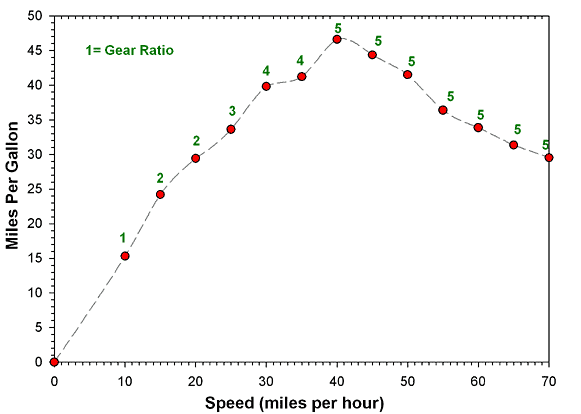

The 'ideal' speed isn't really even 55MPH, but lower if you had all variables at play to get the maximum MPG at any speed (probably 30-40MPH), but manufacturers expect people to cruise on the highway faster so they adjust the gearing. If you're asking how to push out the curve so that going faster than 75MPH doesn't offer a huge loss of speed, lower drag coefficients are the trick. Or switching out of the 4-wheels-on-ground automobile.
[1] http://upload.wikimedia.org/wikipedia/commons/thumb/0/05/Ene...
In this generic diagram, the ratio of drag (air)/rolling (ground) resistance is 11-to-7. As you get to higher speeds, the ratio tips even more in favor of drag.
Fun fact: The Bugatti Veyron gets 2.15MPG at its top speed of 250MPH.