Are you sure? If anything, spelling along makes it hard to read Chinese or Japanese. Examples: can Japanese people correctly understand this: “かんじをせんねんいじょうつかっていたけいいからかんじをはいしするとぶんしょうによるいしのそつうにへいがいがしょうじるからです”? In fact, the following two different sentences both have the same above kana:
Or how about くさくさくさくらくらくさくさくさくさくさくさくらさくさんさくさんくさくさくらんくらくら?
Or how about こうないしゃせい?Is it 校内写生 or 口内射精?
In all seriousness, even Koreans still debate whether they should continue to use some Chinese characters, and they do so in poems and literatures. For instance, 악유원 means shit, yet 乐游原 has layers of meanings. Chinese and Japanese have too many homephones to use a spelling system like Korean. Unlike Chinese, where individual characters correspond closely to morphemes and carry distinct meanings, Japanese is organized around words as the fundamental linguistic units. Furthermore, because Japanese employs a pitch-accent system rather than the kind of lexical tones found in Chinese, writing some native Japanese words (和語) entirely in kana typically does not create confusion.
Also, Japan had at least three major attempts to remove Kanji. First time: The Tale of Genji, the world’s first novel, was written by a woman entirely in kana, with only a small number of Buddhist terms in kanji—terms which, in theory, could also have been rendered in katakana. This demonstrated that early Japanese could be expressed systematically and fully without using any Chinese characters at all. Nevertheless, the Japanese chose to retain kanji.
Second time: During the Meiji Restoration, slogans such as “Abolish kanji, or East Asia will never grow strong” were popular. In the end, Japan found that it could modernize, prosper, and even become one of the five permanent members of the League of Nations while still keeping kanji. The decision was made to continue using them.
Third time: After World War II, General MacArthur commissioned a team of American education specialists to work with Japanese experts to discuss whether to abolish kanji entirely, and to consider the possibility of fully romanizing the Japanese language. Yet, they decided to keep Japanese.
I don't find the argument about homophones very convincing, since people do speak to each other and it works. People will surely be able to adapt.
But, you're basically throwing away the country's history. In just a few years young people wouldn't be able to read any older text anymore. I can see why you wouldn't want that.
It is substantially harder and slower to read a stream of hiragana than to read a stream of hiragana and kanji. I don't know if you know anything about the language, but it's not because of homophones (though that is certainly improved) -- it's chunking.
Japanese written language has the property that when you see kanji followed by one of a very small number of hiragana patterns, you know you're seeing a verb. Stemming and deriving the meaning of the verb is trivial, because it closely follows from the Kanji (e.g. 見る => 'see', and pretty much every noun or verb involving 見 carries that connotation).
Toss in the few particles (を、で、に、へ、が、は), and you've broken a sentence into semantic chunks with very little mental effort -- and along the way, gained much of the meaning at the same time.
Doing the equivalent with a stream of nothing but hiragana requires a kind of parsing that is like depth-first prefix search, but with ambiguous matching at each terminal. It's incredibly tedious.
I can read Japanese, yes, and obviously also find hiragana-only text hard to parse. I think that would be almost completely solved by using spaces and getting more practice though.
I'm much better at reading than speaking/listening, so the Kanji also help as a clue to the meaning, but that is entirely a non-native problem I think.
> the Kanji also help as a clue to the meaning, but that is entirely a non-native problem I think.
Not sure what you mean by that. It's almost a daily occurrence that someone tries to explain a word's meaning by drawing invisible kanji on their palms.
I guess the ultimate question is whether we can have a spelling system that totally mimics how we communicate verbally, so chunking becomes as easy as when we listen to the the spoken language.
I doubt it will happen though. Historical heritage aside, Kanji does pack enough information to make reading very easy. Unless government interferes hard, the new system needs to be way better than the existing one to get adopted.
It doesn't even need to do that. Korean and Vietnamese are easy examples where all the writing is phonetic despite Korean having basically the same structure and problems with Chinese loans as Japanese, and Vietnamese having a ton of Sinitic loans and general properties that are basically the same as Chinese. Yet phonetic writing just works.
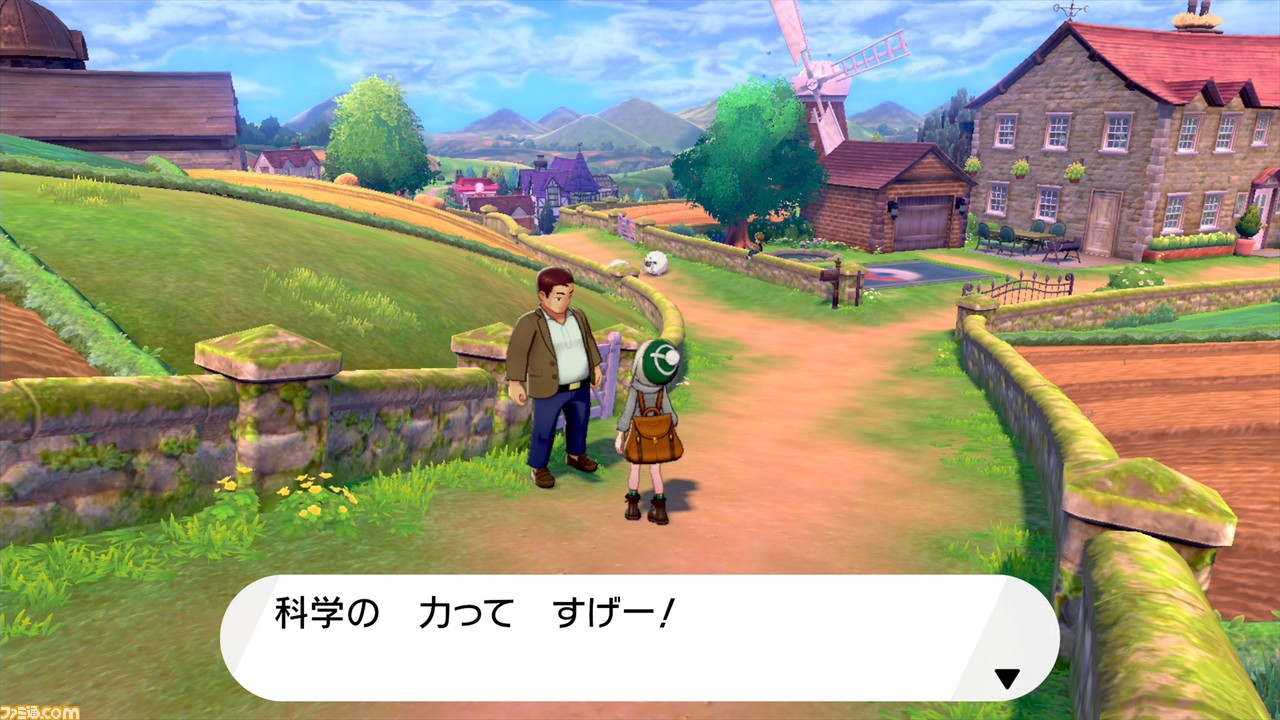
I mean, if they got rid of kanji, presumably they would introduce spaces. It's not an alien concept, it was used in early computers and early computer games, and still get used in games and books aimed at kids:
(Pokemon also has a full kana mode, but due to the number of homonyms in Japanese, I think while it might be easier for actual Japanese children, even with the spaces it's harder for a Japanese learner than the kanji mode unless you're literally in your very first month. There's also things that will be obvious to natives but confusing to learners like that すげー in that screenshot is a slangy すごい)
Yet, that's exactly what you do when you read English - and many of us even read it as a foreign language with different roots and different grammar etc. So I don't understand how it would be more tedious in hiragana; it looks like a "just get used to it" thing to me.
Japanese has fewer sounds and a lot more homophones than English, so purely phonetic writing becomes a lot more ambiguous. Children grow out of it at an early age.
Furthermore, kanji often allows the reader to skip phonetics altogether, because the symbol itself carries the meaning. It’s a bit like how people understand emojis without having to make a sound for them in their heads.
As a result, the Japanese are able to read very fast in their native language, so switching to a different system would carry significant drawbacks.
There's an advocate group for all-kana Japanese that existed since 1920, just decade or two after pseudo-Chinese styles was deprecated and kana-kanji mixed as-spoken text became the standard, before even kana switched from katakana to hiragana, and they don't even use all-kana text on its official propaganda page anymore[0], so there's that.
No you don’t. There’s actually a lot of research showing that native English speakers don’t read letters, they read word shapes. And people who read fastest read in even larger groups of words, to the point of eliding segments of sentences or paragraphs entirely.
Chunking is incredibly important for reading speed, and reading hiragana is much closer to reading letters than words. My reading speed in Japanese is nowhere near native, but the way I’ve gained speed so far is almost exclusively by increasing my minimum comprehension unit: I see word patterns, common grammatical constructions, etc., and I don’t need to read them.
> native English speakers don’t read letters, they read word shapes.
Don't try to teach children to read this way, though: it's a high-level technique that comes with practice and familiarity, with near-instant fallback to lower-level techniques as appropriate, or the resort of dyslexics who cannot read any other way. Teaching children to use the approaches used by struggling readers will tend to produce more struggling readers than necessary.
In the real world nobody is masochistic enough to not adopt spaces if writing without kanji.
Old Japanese videogames couldn't use kanji due to technical limitations. They wrote in all kana but used spaces to make the text easier to read.
Modern Japanese children's books and eg. even Pokemon games still? Same thing, kana and spaces.
When Korean transitioned away from Japanese-style mixed script to purely alphabetic writing, what did they do? They adopted spacing.
The only time "but Japanese doesn't have spaces" comes up, ever, is when people argue against the removal of kanji. It's not a realistic scenario, in light of very recent history and current practice.
In a world where hiragana and katakana are adopted to eliminate characters, it's not that hard to imagine also adopting spacing. Hangul for Korean did not originally have spaces in the language.
It's all solvable. Korean did it. Koreans are fine.
For verbs you could just replace the kanji with katakana so that you still get the pattern recognition of okurigana as a visual aide.
They just don't want to do it, because they don't like to change. A generation educated under a new system wouldn't have difficulty using it. They would however lose access to an abundance of cultural artefacts which play a central role in daily life.
Koreans don't seem entirely fine to me, but besides, Japanese pronunciation is actually more aggressively simplified than the other two CJK languages during Edo era that numbers of homophone is out of control.
There are as many as 50 homophones for koushou due to this, for example[1]. Communication by phonetic transcripts alone just isn't going to work.
It's mostly about lack of practice, frankly. The chief reason people say kana-only writing (like in old videogames for example) is hard to read: People competent at reading any language don't spell things out in detail, even when we subvocalize we first recognize the shape of the scribbles and our brain has a shortcut from a certain set of scribbles to certain morphemes/words, where the solid feeling of meaning comes from. No one actually reads these English posts by vocalizing letter by letter to slowly build the words together.
Every competent reader of Japanese is first and foremost used to the kanji-hiragana mixed script, and has shortcuts for the kanji forms of words and the sounds of those words. The hiragana only forms? Not so much. So when they complain about hiragana only being hard to read, they're not lying. It really is harder. But it's not harder due to any inherent defect in a hiragana-only script, it's just about a lack of exposure to form those shortcuts that make reading feel easy.
Similar arguments used to be made in Korea, yet if you look at Koreans today they have no difficulty in reading hangeul - they have spaces so the words have form, and they have mass exposure to the hangeul forms of words. Ergo, their shortcuts are for the phonetic forms and those are what feels natural, solid, meaningful and easy to read. Same as both of us in English or me in say, Finnish or Swedish or French.
Maybe you're right that it's all just hard-headed stubbornness from fluent people. But I (and all other learners of Japanese) started by reading hiragana, and only later did we move to mixed script -- this is by necessity. Yet even when you factor in the difficulty of learning to read Kanji, reading Kanji is vastly easier than reading kana, even as a beginner.
Would spaces magically solve this problem? I guess it would solve some things -- you'd no longer have to guess where to terminate the prefix search, and I think you're right about word shape -- but it would definitely not provide the additional semantic context you get from having the high-bit-density characters in the mix. This makes reading faster.
I suspect that one could make a kana-only writing system that would be functional enough, but it would still be slower to read than mixed script. Also, the Korean comparison isn't exactly valid -- Korean has more sounds than Japanese. It seems minor, but Japanese has a ton of homonyms because of the tiny phoneme. Expanding that, even slightly, would be a benefit to reading.
Korean faces the exact same problems as Japanese, though - the language structure is similar, they have a ton of Chinese loans, and have in general gone through a largely identical history of writing development. They have somewhat fewer homonyms than Japanese, sure, but they still have tons from Chinese loans (hell, "coffee" and "nosebleed" sound the same, as do "blood" and "rain" in many cases).
It's somewhat hard to believe that Japanese sits in some magic spot where a phonetic script wouldn't work just fine when Korean does it fine, and on the Sinitic side people write books in pinyin, Vietnamese is phonetic, and the Dungan people write their 3-tone Mandarin dialect with cyrillic alphabet without even notating tones.
> Maybe you're right that it's all just hard-headed stubbornness from fluent people.
It's not just hard-headed stubbornness - reading kana really is more difficult to proficient readers of today's Japanese, and change is work.
One of the advantages of Chinese characters is that you can express an emotion using a single character - like "laugh" or "tears" and you don't need emoji for that. Western alphabet cannot do this.
Also the text is more dense and you can write more using limited number of characters, for example, when you have a button in UI with limited size.
You can't possibly count the third time as a real attempt. A language reform initiated by a foreigner and recent enemy at war, who burned your cities and even nuked two of them? If someone knows about successful examples, I'd be curious to hear about them.
Latin script for Vietnamese replaced Chinese-based script under the French colonial government and were helped by the Nguyen Emperors going along with it. (Interestingly this did not take off in neighboring Cambodia or Laos.)
Hanja is also mostly gone in Korea, particularly in North Korea.
The big thing is that both shifts happened before rapid literacy growth. It's much easier to teach new writing systems when the majority of the population can't write anyways. 95% of Vietnamese could not write in 1945; only 22% of Koreans were literate in that time period.
---
One interesting thing I learned while researching this comment was that a big reason Hanja disappeared was because Koreans gained literacy during the typewriting era, but before computer auto-suggested keyboards, and it was just substantially easier to make and use a letter-based typewriter.
> One interesting thing I learned while researching this comment was that a big reason Hanja disappeared was because Koreans gained literacy during the typewriting era, but before computer auto-suggested keyboards, and it was just substantially easier to make and use a letter-based typewriter.
If you look in the right places, you can find people complaining about how it's impossible to dynamically render hangul blocks, which means that a Korean font needs to define glyphs for every possible Korean syllable as opposed to just defining the elements of the system and letting a word processor assemble them as appropriate.
If that's true, I don't see how hangul could have had any typewriter-based advantage over hanja. From the typewriter's perspective, there's no difference.
The Chinese used typewriters by defining a typewriter code. Assuming that that was necessary for hanja, and also for hangul, why would it promote the disappearance of hanja?
If a typewriter code wasn't necessary for hangul, how did we forget how to lay out the blocks in between then and now? Hangul have been in continuous use for all that period.
> If that's true, I don't see how hangul could have had any typewriter-based advantage over hanja. From the typewriter's perspective, there's no difference.
There are mechanical hangeul typewriters that, while more complicated than Latin or katakana typewriters, are still completely usable for normal writing. The reason hangeul fonts are hard is that a hangeul syllable occupies a standard-sized block, and in eg. careful handwriting the writer would adjust the sizes and positions of the characters to be aesthetically nice. For example, in 해 he the ㅎ andㅐ letters are both the same size. When you write 핸 hen, see how the h especially becomes smaller? In typewritten hangeul, that first consonant is always that small, so you can use only one size of initial h and so on.
You can see from the output in this video how the sizes of letters are very standard and somewhat disproportionate, eg. in CV type syllables the vowel lines are somewhat giant compared to the quarter-of-the-block sizeish consonants, etc.
That way you can still write by pressing alphabet buttons, with some controls as to where you want the letter to go in the block. It's a bit more complicated, but nothing compared to the nightmare that are proper Chinese character typewriters.
> For example, in 해 he the ㅎ andㅐ letters are both the same size. When you write 핸 hen, see how the h especially becomes smaller? In typewritten hangeul, that first consonant is always that small, so you can use only one size of initial h and so on.
I see the opposite. As those characters render in whatever font my browser picked, the ㅎ in 해 occupies much less vertical space than the ㅐ does.
In the 핸, it still occupies less vertical space, but the difference is smaller. It's about as tall as the left-hand bar of the ㅐ instead of being significantly less tall than that.
No, it is a problem exactly equal to the other one. No typewriter can produce 98,000 different characters. And no typewriter can produce 11,000 different characters.
With zero difference between hangul and hanja, how can the typewriter favor one over the other?
I've always wondered how some countries manage to drop Chinese characters, while others can’t—or just don’t want to. And how did Vietnam and Korea manage to understand their historical texts after they stopped using Chinese characters? And how do they create new words nowadays? I guess they just borrow words and pronunciations directly from English or other foreign languages?
From what I understand, Chinese characters carry so much meaning that they’re really hard to replace. Sure, we don’t need them when we’re speaking, so in theory it seems like we could just get rid of them altogether. But in practice, we still rely on them a lot - especially when we’re trying to understand what a certain pronunciation means. And reading is a whole different story. Recognizing characters is just way faster than sounding out spellings. Maybe one reason is that the basic unit in Chinese is not word but morphemes, which mostly are just single characters.
Maybe we could come up with a different writing system, kind of like what Koreans did, instead of sticking with Romanized pinyin.
One thing to note is that for non-Chinese languages, Chinese may have semantic meaning but really has nothing to do with pronunciation; and the Chinese etymology really has nothing to do with how a Korean or Vietnamese speaker independently came up with the word so this is less important.
—-
Another thing to note is that a lot of “Chinese” words in the modern day language are actually Japanese in origin, since Japan was the first country using Chinese script to modernize and adapt Western thought in science and philosophy etc., and the associated terminology. This actually provides a political impetus to replace those words with native-constructed ones since they have a negative historical relation with Japan.
—-
People who replace Chinese script with letters often have dictionaries and whatnot from the transition period to trace back words, and people also still learn Chinese in these countries if they want to, so it’s not as if it’s gone and disappeared; in the same way that modern speakers probably couldn’t read Chaucer in Middle English, or Beowulf in Old English, as it was written on a whim, but there are plenty of scholars who have studied for it. And Modern Chinese has little to do with Literary/Classical Chinese anyways.
—-
Mandarin has a phonetic system, Bopomofo, which was abandoned for political reasons in the PRC. But the problem with replacing Chinese script is political; within the PRC and ROC there are multiple mutually unintelligible languages using Chinese script, and if you pick a phonetic script then it is now Mandarin vs. everybody else.
> And how did Vietnam and Korea manage to understand their historical texts after they stopped using Chinese characters? And how do they create new words nowadays? I guess they just borrow words and pronunciations directly from English or other foreign languages?
The answer to all of these are the same as everyone else. It's not like Chinese people routinely read the old classics in the original, and even then they're literally taught Classical Chinese in school as a separate language, because it is. But other countries have scholars who study the old languages and also work to translate classics into modern language for wider use - I certainly can't read Greek but have Aristotle's Nicomachean Ethics sitting on the bench next to me, translated into modern English.
Creating new words happens the same as it does everywhere - people genuinely coin new concepts, they loan foreign concepts as direct loans or calques, or form compound words from existing ones. "creating new words" with Chinese characters is literally just using foreign words to form compounds, something utterly routine everywhere else. It's just not treated as a magical event elsewhere.
For example, people routinely marvel at the ability to make compound words in kanji. But, may I introduce you to German, a language written with boring old non-mysterious Latin script that's famous worldwide for its heavy use of compound words.
> From what I understand, Chinese characters carry so much meaning that they’re really hard to replace.
They're really just scribbles that point at words or morphemes of the language they're used to write, same as phonetic scripts in that regard. They do let you do some tricks that are hard otherwise, like indicating which nuance of a word you intend by your choice of character, and the common stylistic trick of writing some set of characters and then imposing completely arbitrary readings on them by writing clarifications next to the characters being abused.
For example, in Frieren, in one of the early chapters, Frieren says:
Zorutoraaku wa hito wo korosu mahou dewa nakunatta.
In hiragana:
ゾルトラーク は ひと を ころす まほう でわ なくなった。
The manga writes it like this, however (furigana in parentheses after the kanji):
人を殺す魔法(ゾルトラーク) は 人を殺す魔法(ひと を ころす まほう) でわ なくなった。
人を殺す魔法 should be read "hito wo korosu mahou", ie. "magic that kills people", but the manga instructs us to read it first time as "Zorutoraaku", the name of the spell, and the second time properly, when Frieren's supposed to say its description out loud. There's no clarity issue here, it's just a stylistic trick.
For fun, the same line from the Korean translated version:
  졸트라크는 더 이상 인간을 죽이는 마법이 아니게 됐지
  Jolteurakeuneun deo isang inganeul jugineun mabeobi anige dwaetji.
J. Marshall Unger's Literacy and Script Reform in Occupation Japan goes into details on this.
There were kanji abolitionists and pro-kanji people in both the American and Japanese administrations, and it definitely wasn't just a popularity contest. Things happened such as one pro-roumaji principal who enthusiastically took part in roumaji feasibility experiments being assigned elsewhere because he was having results, or one American pro-kanji official decreeing that roumaji publications should be published in triplicate since there were three competing romanization systems - Nihon-shiki, Kunrei-shiki and Hepburn - so they wouldn't unduly advantage any particular romanization system.
This of course also just so happened to make roumaji publishing three times more expensive. Whether fairness or limiting roumaji publishing by financial means was the real motivation is left as an exercise to the reader.
I don't think it's that crazy for the language reform to make it through, seeing as the entire political system has been reshaped into a pseudo-American democratic structure for instance. With the emperor going out of fashion and the governance of the country being overthrown, I think it would be the perfect moment for other cultural shifts as well. Had the timing coincided with the introduction of computers (which famously struggled with languages like Chinese and most Japanese) a few decades later, I think the plan would've succeeded.
Most of Europe inherited the Latin script from Christianity, which was spread with less than peaceful means. It took more than a few short years, but it certainly altered culture.
Japan had a parliament since the Meiji era (first elected in 1890). The Macarthur occupation changed quite a few things, but less than most people think.
My understanding is that Japanese are very open to external influences, even when they come from enemies. Case in point, they embraced the legal framework and political reform that was pushed by the Americans. On the other hand, MacArthur was careful to respect Japanese culture (arguably, depending on who looked at it, I guess) when pushing his reforms. Nevertheless, Japan quickly became a pretty well run democratic country. It’s fascinating and respectable that Japanese could embrace western civilization while retaining their beautiful culture
I dont know who amongst the Koreans argues for the use of Chinese Characters. The vast majority of Koreans don't know even the small amount of Characters they still use. Even simple ones.
There were online discussions on abolishing Kanji in Japanese (漢字廃止論). There were tons of interesting examples, and I took some notes. Unfortunately I don't remember the original sources now.
You didn't even try to do it the way Koreans did it, though. When Koreans dropped hanja in favour of a hangeul-only script, they adopted spacing because spaced text is much easier to understand than unspaced text. Likewise, products like old Japanese videogames which couldn't use kanji due to technical limitations used spaced kana because it's just much better and no one's masochistic enough to not use them if they don't have access to kanji. The Japanese mixed script doesn't use spaces largely because kanji already serve as word dividers. If you remove that function, everyone sane will use spaces, and pro-kanji arguers will leave them out to make the proposition seem mad.
Importantly, spaces also make it much easier to recognize the shapes of the words.
It's the chief reason people say kana-only writing (like in old videogames for example) is hard to read: People competent at reading any language don't spell things out in detail, even when we subvocalize we first recognize the shape of the scribbles and our brain has a shortcut from a certain set of scribbles to certain morphemes/words, where the solid feeling of meaning comes from. No one actually reads these English posts by vocalizing letter by letter to slowly build the words together.
Every competent reader of Japanese is first and foremost used to the kanji-hiragana mixed script, and has shortcuts for the kanji forms of words and the sounds of those words. The hiragana only forms? Not so much. So when they complain about hiragana only being hard to read, they're not lying. It really is harder. But it's not harder due to any inherent defect in a hiragana-only script, it's just about a lack of exposure to form those shortcuts that make reading feel easy.
Meme sentences designed to be hard to read that you'd never see in real life aren't an actual point. By that token, the Buffalo buffalo sentence argues for the urgent adoption of kanji in English.
Likewise, in my native Finnish:
  - Kokko, kokoo koko kokko kokoon.
  - Koko kokkoko?
  - Koko kokko.
ie.
  - Kokko, assemble the bonfire.
  - The entire bonfire?
  - The entire bonfire
It's perfectly readable despite the meme value.
Similarily, "kuusi palaa" can mean:
  kuusi palaa = the spruce is on fire
  kuusi palaa = the spruce returns
  kuusi palaa = the number six is on fire
  kuusi palaa = the number six returns
  kuusi palaa = six (of them, or six pieces of something) are on fire
  kuusi palaa = six (as above) return
  kuusi palaa = your moon is on fire
  kuusi palaa = your moon returns
  kuusi palaa = six pieces
Do we need to urgently adopt kanji in order to avoid homophony?
> Chinese and Japanese have too many homephones to use a spelling system like Korean.
> Third time: After World War II, General MacArthur commissioned a team of American education specialists to work with Japanese experts to discuss whether to abolish kanji entirely, and to consider the possibility of fully romanizing the Japanese language. Yet, they decided to keep Japanese.
J. Marshall Unger's Literacy and Script Reform in Occupation Japan goes into details on this. There were kanji abolitionists and pro-kanji people in both the American and Japanese administrations, and it definitely wasn't just a popularity contest. Things happened such as one pro-roumaji principal who enthusiastically took part in roumaji feasibility experiments being assigned elsewhere because he was having results, or one American pro-kanji official decreeing that roumaji publications should be published in triplicate since there were three competing romanization systems - Nihon-shiki, Kunrei-shiki and Hepburn - so they wouldn't unduly advantage any particular romanization system. This of course also just so happened to make roumaji publishing three times more expensive. Whether fairness or limiting roumaji publishing by financial means was the real motivation is left as an exercise to the reader.
All good points. I really can't explain why it is perfectly okay for natives to listen to Chinese/Japanese yet it is so hard to parse Pinyin or Kana when reading, even when spaces are provided.
Maybe it is because we still think in individual characters when reading. As a previous post mentioned, there are many homophones for a given word, let alone for a single character: https://en.wiktionary.org/wiki/%E3%81%93%E3%81%86%E3%81%97%E.... It's not a problem in a conversation because we track context. Yet when we reading, we, at least psychologically, look for specific meaning per character or per word. Say, when I see こえん, I'll have to figure out if it means a park, a small yard, sound, or something else. Of course, I could figure it out from context, but I'd give up that precision and the warm and fuzzy feeling of seeing the corresponding characters, like 故園, or 子園, or 呼延。We'd solve this problem by giving up learning the individual characters and focus on words or phrases, but then it would be a drastic change.
While typing the above, I also realize that maybe the reason we don't mind homophones during a conversation is because we've already learned the associated characters. Using the example above, when I hear the word "こん” and it means "呼延”, I would know that it's an ancient family name that was associated with many famous generals because of the meaning of the characters. Or if the meaning is "故園”, I would get all the poetic feelings as it is precisely these two characters, not the sound, that deliver the meaning of ancestral land, or childhood home, or place left behind, and etc. And when we study the Chinese and Japanese poems, we focus on the masterful use of characters, and every character matters. Is it 推 or 敲 in 僧敲月下门? Why are the characters in 大漠孤烟直 so compelling and masterful even though each character is so commonly used? It's hard for me to imagine how homophones can differentiate such meanings.
Of course, I'm not saying that removing characters can't be done. I'm just trying to figure out the current state and why many people and I are in favor of learning characters.
> A system fails when its natives don't know how to use it.
They definitely do, it's just that hand writing has become a more niche use case in modern society (regardless of the language).
If you removed all kanji in a block of Japanese text (replaced with kana), I'd expect at least a 50% reduction in reading speed for natives, and some errors in comprehension. They're fundamental to the language.
You wouldn't expect the same 50% reduction if the natives had been educated under that paradigm and suitable adjustments made to the system like adding spaces etc to accommodate it.
That reads as a foreigner suggesting to abandon many thousands years long history and culture just because the characters are too difficult for him.
It doesn't even make sense because today we have computers and ML. If you want to write something, you just type the spelling, and the program automatically converts it into proper characters. And if you don't understand the character, AI can translate it for you. I am sure this can be integrated into electronic glasses.
Japan has had pro-romanization societies since the 1920's, and even during the last attempt at large-scale script reform after the war, it wasn't just the Americans pushing it: Many Japanese were enthusiastic about moving to a phonetic script because they perceived it as more efficient and modern. Likewise, not every American administrator was in favour of reforming away the kanji, far from it.
J. Marshall Unger's Literacy and Script Reform in Occupation Japan is a good treatise on the subject.
I also gave you two examples of cultures who already did it: Koreans did it autonomously, the Vietnamese did it during occupation. Both are successful today.
But yes "preserve history" at the expensive of daily life. I'm sure you speak Latin too, plenty of history lost there.
This is a common misconception until you study the language seriously. Japanese nominally has only 50 sounds, known as mora. In practice there are more because people smush them together, but this tends to be for very common words or dialectical variations by region. There are also spoken pitch markers, but they don't have any written indicia.
Because there is such a small number of basic sounds, homophony (words with the same pronunciation but different meanings) is absolutely rampant. This is not too big of a problem when speaking because the context is usually obvious, but writing anything abstract using phonetic script alone will quickly become problematic. It's also tedious to read long texts in phonetic script in the same way that it's tedious to read lots of upper case text in the Latin alphabet.
Another language feature is that Japanese compound words are often formed by just taking 1 or 2 more from several longer words. This would be like shortening 'American-Russian diplomacy' to 'amru diplomacy'. Very clear when written with specific characters, confusing if it is just phonetic. Then, word pronunciation changes within compounds, eg 川 kawa means river, but 山川 yamagawa is mountain river, and these changes are ubiquitous, probably 95% of words go through this phonetic alteration when folded into another word.
It gets more complex again because there are so many particles, words that indicate grammatical inflection of some kind and can drastically change the meaning of a sentence if you use the wrong one. The most common ones are just a single mora and most others are just two. But there are lots of particles. 10-15 essential ones, ~30 that are used all the time, ~65 you need to know for fluency, and more that 150 you might come across in written form.
I could go on and on. The basic reason for all this is that Japanese is fundamentally different from other languages because it developed on islands, and because the weather patterns around those islands made sailing in and out more difficult than islands in calmer latitudes separated by greater distances. They adopted Chinese characters because they didn't have a written language at the time they encountered them, then adapted those characters to develop the phonetic scripts. There's a huge amount of technical debt that would be impossible to unravel.
Do it like Korea
Korean has more different sounds, eg 14 consonant and 10 vowel sounds, vs ~10 consonant sounds and 5 vowel sounds in Japanese. You could also argue there was a higher level of literacy over a longer period, but that requires a lot of history and geography explanation to support - the point being that it would have been much harder to impose by imperial fiat unless it had been done much earlier.
long reply here bc this is a Special Interest of mine.
I'm going to put aside the "so difficult" thing here mostly, because the perceived difficulty is partly modern teaching practices not updating beyond "just write the kanji 100000 times ok" (this is a failure of people, not the writing system), and people actively choosing to not write anything at all, which isn't necessarily a problem because nowadays recognition is more important, and I don't see people panicing about how many people don't know how to spell many english words anymore.
Alternatives would be nightmarish and culturally destructive to implement in the modern day. Further, people confuse poor implementation with complexity being the cause of the problem. Taiwan and HK both have high literacy rates despite using traditional characters, yet simplified characters were apparently necessary to increase literacy? It doesn't compute.
Just under 50% of Japanese words are loanwords from Chinese. Recognising characters allows a ton of written nuance and extra vocabulary which the Japanese take full advantage of. There's at least 10 separate words for "kou kai". Even when not fully-remembered, Kanji allow mental mapping of multiple homophones without issue.
We're really talking about a vocabulary mass exctinction event. Back in the ancient times Korea didn't have such a wide-ranging and culturally-mixed set of words as now. If the Japanese do this it'll be cutting off the vast majority of their cultural history. Seems unideal considering the butchering the French did, did exactly that to Vietnam's literary culture and basically cut the people off from much of it.
Chinese doing this would be insane. Mao was tempted to use roman characters instead of the simplification they rolled out, which from a system design perspective only made a worse and more difficult/confusing system with more exceptions to rules than before, and poorer phonosemantic consistency/relations with other characters. Further because as research has proven many times over, it's harder to recognise many excessively simple & similar characters compared to more unique and specific forms. Thankfully Stalin advised him against it.
We really are talking about doing something similar to a total spelling reform of english and just throwing the last 1000 years of literature, written records etc away. Only in the case of especially Chinese, you're throwing away a system that was developed and specifically tailored to the languages using it, which have due to its relative robustness to change as compared with latin letters, led to writing surviving many many difficult periods, regime changes, wars, famines etc over 3000 years.
If you've ever compared Beowulf with Gawain, with Shakespeare and then modern English, you'll understand what a total overhaul a language can undergo if unchecked -- Chinese characters have enabled a comparatively stable orthography. Less than 800 years and it becomes gibberish.
> many people don't know how to spell many english words anymore.
Yes but that's not really comparable.
You can misspell "litrally" but how close can you get if you can't remember any stroke of the glyph? There's an inherent advantage in spelling words closely to how they sound.
I'm not saying English is great at this either, but I can still write "Kernel Sanders" and you know what it means, without using a whole other writing system as fallback (pinyin)
Hey!
So in the vast majority of cases, what you're describing for english is more or less the same for these languages -- when I forget a real bastard of a character (usually a less complex one similar to many others), I can sort of mentally picture the shape, but not quite. I get a flash of the shape in my mind, but then it's gone, and I'm in a half-position where I know parts of it, maybe I know it has 广 and something like 多 inside there somewhere (this is purely academic, I'm not referencing a real character here), but I don't know the exact order. Quite often this is where the art of bodging it, scribbling it, or using a variant character comes in handy.
Also, for more fun, Chinese and even rarely Japanese will sometimes use a different character sharing the same pronunciation from a set of characters typically used for just phonetic pronunciation, in the place of the one they've forgotten.
「監事を専念異常浸かっていた敬意から監事を配しする飛ぶん商による石の疎通に兵が意を招 じる空です。」
「漢字を千年以上使っていた経緯から漢字を廃止すると文章による意思の疎通に弊害が生じる からです。
Or how about くさくさくさくらくらくさくさくさくさくさくさくらさくさんさくさんくさくさくらんくらくら?
Or how about こうないしゃせい?Is it 校内写生 or 口内射精?
In all seriousness, even Koreans still debate whether they should continue to use some Chinese characters, and they do so in poems and literatures. For instance, 악유원 means shit, yet 乐游原 has layers of meanings. Chinese and Japanese have too many homephones to use a spelling system like Korean. Unlike Chinese, where individual characters correspond closely to morphemes and carry distinct meanings, Japanese is organized around words as the fundamental linguistic units. Furthermore, because Japanese employs a pitch-accent system rather than the kind of lexical tones found in Chinese, writing some native Japanese words (和語) entirely in kana typically does not create confusion.
Also, Japan had at least three major attempts to remove Kanji. First time: The Tale of Genji, the world’s first novel, was written by a woman entirely in kana, with only a small number of Buddhist terms in kanji—terms which, in theory, could also have been rendered in katakana. This demonstrated that early Japanese could be expressed systematically and fully without using any Chinese characters at all. Nevertheless, the Japanese chose to retain kanji.
Second time: During the Meiji Restoration, slogans such as “Abolish kanji, or East Asia will never grow strong” were popular. In the end, Japan found that it could modernize, prosper, and even become one of the five permanent members of the League of Nations while still keeping kanji. The decision was made to continue using them.
Third time: After World War II, General MacArthur commissioned a team of American education specialists to work with Japanese experts to discuss whether to abolish kanji entirely, and to consider the possibility of fully romanizing the Japanese language. Yet, they decided to keep Japanese.