Hacker News new | ask | show | jobs
by ljhsiung 1180 days ago
>> The SEC simultaneously charged the following eight celebrities for illegally touting TRX and/or BTT without disclosing that they were compensated for doing so and the amount of their compensation.

• Lindsay Lohan

• Jake Paul

• DeAndre Cortez Way (Soulja Boy)

• Austin Mahone

• Michele Mason (Kendra Lust)

• Miles Parks McCollum (Lil Yachty)

• Shaffer Smith (Ne-Yo)

• Aliaune Thiam (Akon)

I had to doubletake. Never did I ever think I'd see this permutation of celebrities in an SEC report.

9 comments

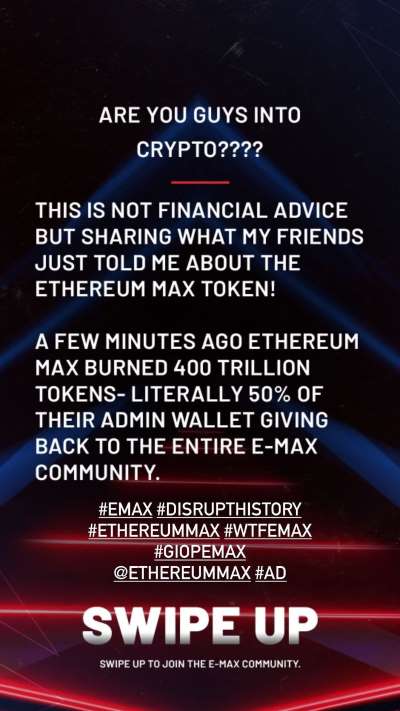
The last group of celebrities to get in trouble with the SEC started with Kim Kardashian, who endorsed Etherium Max without disclosing it was a paid endorsement.

Then there's the whole Guy Oseary/Yuga Labs/BAYC promotion scam.[1] That's in litigation. Short version: all those celebrities who announced that they'd bought Bored Ape NFT's didn't have to pay for them.

[1] https://variety.com/2022/digital/news/bored-ape-yacht-club-c...

Technically Kardashian disclosed it with #ad tag, but because it was settled outside the court, we do not know if this is sufficient disclosure.
Technically there's a '#ad' in there, but the 'sharing what my friends just told me' bit probably didn't help her.

https://cloudfront-us-east-1.images.arcpublishing.com/coinde...

Honest question, given that it says ad — why would this be illegal?

Would the SEC claim that she was not good enough friends with the people who told her that to call them friends?

Not a lawyer, but my impression is that a lot of time such cases are decided on what a reasonable person might take away from the text rather than what the text literally says.
And not all things in a TV ad are non fiction. Is the basis that a real orange tiger is supposed to be licking mystery red dust off his finger
If you watch German youtubers you will sometimes see a very clear banner during the entire video to make it clear it contains sponsored content which isn't specifically mentioned as being an ad.

Same goes for old television. For example the German version of "the price is right" has a banner during the whole show that says "dauerwerbesendung" which means continues advertising program.

#ad in a description/tv program guide is never sufficient.

Marking it as "#ad" in the hashtags or description or whatever is exactly what the advertising regulator says is required in the UK.

It's the bare minimum, but its compliant.

And the UK has (oddly) some of the stronger legislation/regulation around marking advertisements.

YMMV when it comes to advertising finserv tho, the other regulators might fuck you even if the ad disclosure is done correctly.

Is that odd? The regulator (the Advertising Standards Authority) is and has 'always' been pretty hot on misleading/etc. advertising in print, radio, television (pre and post digital) media. If anything I think they came quite late to non-traditional online advertising.
FWIW the UK also has fairly strict laws about this (possibly stricter than Germany). Tom Scott once did a good video about this: https://www.youtube.com/watch?v=L-x8DYTOv7w

German streamers also ran into a separate issue with German broadcasting regulations when they tried to run a 24/7 streaming format. Turns out you need a broadcasting license for continuous scheduled programming like that.

But Germans also tend to play it very German. They will have the "Werbevideo" notice, because they're reviewing a product that was provided to them, for example. Anyone outside of Germany probably wouldn't see that as a sponsorship, and sometimes I feel it waters down the point of the disclaimer if _every_ video is a "Werbevideo", but you don't know to what extent they are actually sponsored.
They play it very German because German authorities have fined German content creators for trying to play it loose and American. For a while German advertising agencies loved using influencers because they were ignorant of advertising regulations and would let them get away with things that were blatantly illegal to do in any other medium (but also, as it turned out, the media used by those influencers). Once legal precedents were set, that stopped.

It's similar to how a lot of "disruptions" in the startup space work (gig economy, "sharing" economy, crypto, AI, etc): find a niche that lacks established legal precedents, do obviously illegal things in that niche, make a profit to cash out the investors, get fined as laws and court rulings catch up, rinse and repeat.

Can't operate a taxi without a license? They're not cabbies, they're independent contractors.

Renting residential homes out as vacation homes would violate zoning laws? They're not vacation home rentals, they're "spare guest rooms" rented out by private individuals.

Can't afford to pay delivery drivers? They're not entitled to a minimum wage because they're now independent contractors of a delivery startup with a catchy name.

Scalping tickets, parking spaces and restaurant seats is illegal? It's not scalping, it's a universal digital assistant.

Can't sell meme stocks directly to clueless retail investors? They're not stocks, they're coins and NFTs.

Can't discriminate against marginalized people? It's not discrimination when the machine learning algorithm made the decision based on prejudices in the training data.

Have to pay royalties to use a picture you like? It's no longer the same picture if you launder it through an AI image generation model that used it as training data.

I work for a streaming service and we deliver to Germany, we have pre-rolls before any ad-break which say "Werbung" to mark the entry to an ad break (and I think another marker on the exit of an ad).

Interestingly, we do sports and we don't have to have any labels during the game to cover the extensive in-game advertising/branding, just the specific ad media we insert.

I wish more YouTubers would cleanly delineate their adverts. Crowbarring sponsor messaging into every opportunity or writing the script so that it smoothly transitions into an ad seems very deceptive to me. I understand "sponsored video" is a grey area, but it doesn't have to be so messy.

> they're reviewing a product that was provided to them, for example. Anyone outside of Germany probably wouldn't see that as a sponsorship

Depends. For example in Norway, a few years ago Norwegian tax authorities said that “influencers” need to declare items they received as income.

From the official website of Norwegian tax authorities:

> Må jeg skatte og av hva?

> […]

> Gratis eller rabatterte produkter/gaver med økonomisk verdi, som for eksempel sminke, hår- og hudpleieprodukter, bøker, klær, reiser, spill, teknologisk utstyr, barneutstyr m.m. Dette skal inntektsføres til omsetningsverdi (eventuelt omsetningsverdi fratrukket det beløp du har betalt for varen).

https://www.skatteetaten.no/bedrift-og-organisasjon/rapporte....

Translated to English with Google Translate:

> Do I have to pay tax and from what?

> […]

> Free or discounted products/gifts with financial value, such as make-up, hair and skin care products, books, clothes, travel, games, technological equipment, children's equipment, etc. This must be recognized as income at the turnover value (if any, the turnover value minus the amount you have paid for the item).

And likewise we have guidelines about marketing done by influencers

> Veiledningen er i hovedsak ment for annonsører som benytter påvirkere i markedsføringen sin. Den retter seg også mot påvirkere som får betaling eller andre fordeler for å omtale eller legge ut noe om produkter, tjenester eller næringsdrivende på sine profiler i sosiale medier.

https://www.forbrukertilsynet.no/lov-og-rett/veiledninger-og...

Translated with Google Translate:

> The guide is mainly intended for advertisers who use influencers in their marketing. It also targets influencers who receive payment or other benefits to mention or post something about products, services or businesses on their social media profiles.

Not sufficient. The Sectiom 17b of the Securities and Exchange Act is clear: celebrities must disclose the types of assets AND the amount they got etc.

They kept warning this as far back as 2017 btw:

https://www.sec.gov/news/public-statement/statement-potentia...

Wait wait? How come in all the commercials with athletes and actors they don't say how much the actor was paid then?
The stipulations are in regards to endorsement of securities, not regular goods and services.
Wouldn't be a bad rule in general though.

"I think Pepsi is great!" - X was paid $20 million to film this ad

Nal, but: yeah no.
And a perfect snapshot for what a steaming pile of BS all this crypto-hucksterism was in the first place.

I admit, I don't understand humans. I'm just trying to comprehend how anyone would think it a good idea to buy a token because any one of these celebrities hawked it.

If someone got into wine or baseball cards because their boss liked them, we might call it a smart career move. But much of the time the underlying psychology will be exactly the same. And in fact it will likely work better if it’s not done rationally: anyone who becomes too conscious of what their motivation might be risks coming off as insincere.

Wanting to connect with important members and of your community it a perfectly normal human impulse, and finding or creating things the two of you have in common is often a very reasonable strategy towards that end. It goes badly at the scale of modern celebrity, is all.

> If someone got into wine or baseball cards because their boss liked them, we might call it a smart career move. But much of the time the underlying psychology will be exactly the same.

Is the underlying psychology the same? As you mentioned, one is a smart career move. Your desire to emulate your boss may stem from your selfish desire to promote your career, not a desire to connect with important members of your community.

the SEC’s logic is that if you decided that a wine bottle or baseball card you bought was to be sold at a profit in the future, then the winery and card issuer should have registered them as securities, and the seller should have been a registered broker dealer. and the boss should have provided a whole list of disclaimer to mitigate regulatory liability.

otherwise, the winery or baseball card issuer is engaged in fraud, and the seller is too, and the boss who recommended them is as well

this is what people find to be… at best … incomplete logic. there is a Howey test interpretation that would allow for this expansion, and crypto folks would gain power by having it applied congruently to those physical established artificial scarcity collections too, because Congress would reevaluate this inconvenience more holistically. There is another interpretation where the SEC makes no sense at all, and has to provide a clear exemption framework for crypto assets to navigate in order to be treated the same as wine bottles and baseball cards, ignoring the current parasocial relationship and reliance that crypto traders have with crypto project creators.

The SEC's logic is actually about how the items are marketed by the manufacturer. Baseball cards and wine aren't marketed by the manufacturer as items to buy as an investment.
Baseball cards are a bad example. The packs are lotteries with extra steps, and the manufacturers routinely face racketeering suits.
and many crypto teams are meticulous about not doing that too

its why their discords say “no price discussion”, amongst many other communication nuances and project structuring to avoid securities issues. dont confuse celebrities and youtubers for the actual teams.

the only teams that have been sued by the SEC are ones that deviated in very predictable ways, there have been no surprises in the cases the SEC have brought, compared to the legal guidance that is given by law firms in the US

its just that the SEC then pretends as if it just hasnt gotten to other project issuers yet, and when not going after a specific project it just says “all cryptos are securities” because theyre going after an exchange, at the moment, and wont tell the exchange which ones

everything suggests the SEC’s logic is flimsy, or needs to apply even more broadly in a way that makes the SEC’s logic flimsy. The SEC is dragging this out because they understand the same thing, that all paths lead to their charter being modified even though they were just hoping that crypto went away.

Hmm that's not the SEC's logic though. Winery or Baseball cards have thier own intrinsic value and while their value can be pumped by promoters it does not depend only on that and they are not sold as an investment. You may decide to buy them as an investement but they are not Created for that purpose. The same as I may invest in Property to profit in the future but the property is not a security becasue it has it's own intrinsic value and does not depend only on the promotion or market expectation or how the contructor company does afer I have bought the house.

There might be some parallels in Art and NFT but there the issue is completly different and is more of grey area of what you are actually bying than if it's an investment or not.

intrinsic value isn't the qualifier for a distinction

and many crypto issuers focus on their nonspeculative utility

everything you described is exactly the problem. The SEC is saying that because any individual may have decided to buy them as an investment, then the SEC can ignore everything to the contrary. except the SEC hasnt actually ignored everything to the contrary because they havent charge crypto teams that focus exclusively on nonspeculative utility and other nuances. they charged teams that promised the price would go up. believe it or not, very many teams focus on the nonspeculative utility exclusively, the prevailing legal opinions from law firms in the US have had this advice to crypto teams for at least 6 years, and civil charges the SEC has brought have not undermined these assumptions. in any case, the SEC then turns around and says “theyre all securities” when speaking publicly or when charging an exchange. now we’ve come full circle between yours and mine perspective: either apply the same logic to “things with intrinsic value (that you respect)” or point out exactly which way for digital asset collections to be exempt as well.

The ape brain doesn't have a separate category for 'people you see on TV' and 'people you work with', celebrities are stored in the same place as your friends except the nature of parasocial relations seems to polarize their status; such that these people are seen as very high or very low status.
Citation needed
>> Our brains treat on-screen faces the same as in-person faces, explains Bradley Bond. He is a communication researcher at the University of San Diego in California. “We assign personhood to people we see in-person and on screens,” he explains. And we “process them in a similar fashion.” We are a social species. So we crave connections to other people. “It’s human instinct,” he says, and parasocial bonds help fill that need.

https://www.snexplores.org/article/imagine-friends-parasocia...

> If someone got into wine or baseball cards because their boss liked them, we might call it a smart career move.

First off, no, we wouldn’t. The boss and the other members of the team will all see that for what it is- trying to kiss ass to get ahead instead of doing your job. Particularly because (as you’re suggesting at least) the person doesn’t actually like those things and is simply trying to get ahead.

Just watch the Office. Dwight and Andy constantly try to do this to Michael and while they are occasionally successful, it hardly matters or has a lasting impact. Further, their coworkers all find them annoying (while they continue to “just do their jobs”).

> > If someone got into wine or baseball cards because their boss liked them, we might call it a smart career move.

> First off, no, we wouldn’t. The boss and the other members of the team will all see that for what it is- trying to kiss ass to get ahead instead of doing your job. Particularly because (as you’re suggesting at least) the person doesn’t actually like those things and is simply trying to get ahead.

The counter-assertion relies on the axioms of

(1) "100% of people are capable of detecting 'kiss-assery'",

(2) "100% of people don't like 'kiss-assery'", and

(3) "100% of all actions of a person copying their boss' likes are due to 'kiss-assery'".

All 3 axioms are invalid: (1) is invalid because not all people can detect it properly without false positives or negatives. (2) is invalid because of the existence of narcissism & (2)'s contribution towards the affirmation of narcissism. (3) is invalid as it excludes the possibility of taking on a new like simply because of enjoying it.

> Just watch the Office. Dwight and Andy constantly try to do this to Michael and while they are occasionally successful, it hardly matters or has a lasting impact. Further, their coworkers all find them annoying (while they continue to “just do their jobs”).

The example given cannot be considered useful as its reliant on using constructed scenarios in a semi-fictional setting, and using it as evidence. Its equivalent would be the usage of the CSI episode "Fur and Loathing" as evidence of the furry fandom always being about sex & deviancy at all times, which is not the case.

It's simple: they thought they could later sell it for more. Celebrities hawking it is "bullish" because other people (suckers) will see the hype and want to buy their bags. Unfortunately for them, they were the suckers.
Everyone knows it’s a scam, they just don’t know when the rug gets pulled. So they buy thinking they won’t be the last in the scam chain.
Then they barely understand what a scam actually is.
Unfortunetly these type of Pyramidal schemes always have that factor: "If i just get in early i get out making money and someone else looses". There will alwasy be people ready to make that bet, that they are not late because those 10 people that were early and made a fortune make more impression to them than the thousands that lost (and maybe lost even more than they could afford too) only in this case the chances of that are predetermined. most of these "new releases" have their winner deck already predetermined before the launch, a closed group knows when they get in on the action immediately and everyone of the public, no matter how "early" they enter they are already late.
Of course. If they did they wouldn’t buy crypto, they’d be the one minting the coins and shilling them.
Indeed! Just wanted to make sure I’m on the same wavelength as the comments here ha.
I bet you can think of some irrational things you've done in the last few years. I'd be curious what they might be.

Let's see, for me... Well any time I got games in a steam sale recently, my backlog is huge and I don't have time anyway. Any time I spend on Twitter, I know I don't enjoy how I feel after. Plenty of times I had irrational excuses for why I didn't have to go to the gym on a given day. Made a batch of really good ice cream despite trying to lose weight. Etc.

When I was younger I made some irrational decisions in stocks, now I don't anymore, I think if you get burned enough maybe that's what it takes? I too often wonder why people seem to need to "learn the hard way." For me, if a friend gets in a car accident, I listen to how it happened and make sure to never repeat their mistake, triple for motorcycling. But maybe its domain specific in that regard? Some people are good at being more rational in some areas rather than others?

It's just FOMO. You surely experienced it until now. It's "irrational" because people make many irrational(emotional) decisions. Sometimes it pays off to ride the wave but we all know that most will not make it...however the potential upside is too great to "miss" it...until you lose.
> It's just FOMO. You surely experienced it until now.

I mean yeah. For years I’ve looked up to Akon and Kendra Lust for innovative and reliable financial products

FOMO has little to do with "reliability" or innovation. I believe most people see crypto coins for what they are: volatile, speculaive assets. They know it's really just a pump&dump scheme and if Akon is promoting a specific coin that means the team behind the pump is "serious" (i.e pumping money into it) so there is a higher chance to get rich before the fall compared with a random s** coin.

If you look at the stock market a big part of it didn't behave that different than the crypto market and that's due FOMO. Why did people buy stocks at insane valuations? Some of them were burned and I'm sure they though they will sell just before the market is going down.

A lot of it is young kids or college students with undeveloped brains and a lack of good guidance. Then a bunch is desperate needy or greedy folks who are thinking impulsively.
it's also just plain advertising. When the celebrities listed in these charges say that they're buying NFTs, a whole lot of people are going to see that and notice.

The number of people that buy an NFT because Soulja Boy bought one is probably pretty small. The number of people who buy NFTs because "everyone else is" is much much larger.

Yes, in advertising terms these endorsements are not tactical but strategic. You want to create an ambience where people sense that everyone successful is now getting into crypto/NFTs. That kind of diffuse group pressure is much harder to consciously analyze than “do I want to buy this thing because Soulja Boy told me to?” — and thus much more effective over time.

Crypto seems to have been particularly powerful at preying on women and minorities who felt like they’re missing out with mainstream finance. This kind of highly focused influencer marketing within communities must have been a major contributor to its uptake.

Crypto is mainly a boys club. These celebrity endorsements came late to the party hoping to bring in a new group of people.
Is that really true? When I was in college some years ago I didn't fall for any scams and few of my classmates did either. Most of us barely had money for beer and textbooks, so there wasn't much to scam from us in the first place. Has the situation changed?
Do you remember those Power Balance wristbands? I think the things back then on the radars of school/college kids were a bit simpler. In the recent past, fashion was the big driver and what 15-20 year olds saw in trends. Now, social media exposes them to influencers and wealth and they figure they want to get on the crypto train, or get a GoPro because it will make adventure sports happen in their lives, or go live in a van.

Last year, a colleague was talking about his ~15 year old kid insisting he wanted to buy NFTs. Said colleague had suffered FOMO from years of the rest of us talking about Bitcoin and might've therefore been primed to acquiesce.

> And a perfect snapshot for what a steaming pile of BS all this crypto-hucksterism was in the first place.

"Web3 is a flaming pile of feces orbiting a giant dripping hairball."[0]

–Grady Booch

[0] https://www.infoworld.com/article/3689914/the-philosopher-a-...

Sort of the adult version of being suckered into buying a breakfast cereal because of the cartoon characters on the box...
At least you got the cereal.
Humans have a soft spot for snake oil. Always have, always will.

"If it sounds too good to be true" vs "but everyone else is doing it"

With a lil bit of "this time is different"
The irony, of course, being that actual snake oil worked...
Greed.
Floyd Mayweather was also boosting Ethereum Max at Bitcoin 2021 in Miami - When he said "maybe one day there'll be a better crypto than BTC... like Ethereum Max" immediately the crowd started booing him (expected, at a BTC conf), pretty funny

I wonder how he managed to slip through!

Was he compensated for doing this?
He was wearing a ETH MAX hat + jersey. Do you think he did that for free? Floyd Mayweather?
Maybe he really liked the tech.
Getting hit in the head a lot might do that
Floyd Mayweather can barely read
Not sure why this is downvoted. I think someone put this to the test and he legit can't read.

Isn't writing like the 10th thing in the CIV Tech Tree?

Much before Computers/Mathematics

I know the "maybe he likes the tech" is a meme but if someone can't read I'm pretty sure a crypto endorsement is almost 100% necessarily a paid product endorsement

Someone report him right now
Floyd "Money" Mayweather?
Forgot about this, so true!
Influencers aren't required to share the amount of compensation they're receiving from sponsors/advertisers. They are required to share if they have a material connection with their sponsors/advertisers though so definitely a fine coming their way.
If you're an E-list celebrity on TMZ you're a B-list on Cameo I guess.
What is scary is the small amounts that made these celebrities start touting scam products/pyramid schemes they had no clue about. $1-40k to tweet to millions of followers.
Jake Paul was also the main force behind cryptozoo, another rug pull. Coffeezilla has a three part documentary on YouTube.
Lil Yachty lmao
Bet they'll be fined less than they've earned?