Hacker News new | ask | show | jobs
by balaselvam 1423 days ago
The emphasis on "downturn" concerns me. Aren't reputed firms like YC supposed to look at a 10+ year horizon?

If this is true, it indicates that earlier investments were based on the market than the fundamentals of the founding team, market, and product.

19 comments

Even if you think things will look good in 10 years and want to build a company to succeed at that time, you still need the money NOW if you want to invest in a company now, and the availability of money for investment now is completely dependent on the current financial markets.

In other words, the amount of money available to invest is independent of the fundamentals of what that money is invested in.

Are VCs funded by debt? I thought the funds would largely have come from existing cash or equities and were only down 15% from ATH on SPY.

Is this just people being risk averse right now?

VCs aren't directly funded by debt. They generally receive funding from accredited investors, and accredited investors are as a rule wealthy. Now when you are wealthy you make money off your money (through traditional means stocks/derivatives/etc...) but you want to get even more wealthy and have access to special discounted loan rates through things like guaranteed loans. So you go to the bank and say here's some of my books over at Schwab and you can see there's 200M there and it's earning 10% a year on average. Now I want to put 50M into a VC firm so I can really leverage this shit up and make even more money, but I don't want to lose that 10% on the 50M and besides that the tax bill of I cash that position man...

And so the banker is like, but of course Mr Rich Dude here's a line of credit for that 50M at a low low rate of 2% since we have so much money to lend and you can keep making the now 8% interest profits by having your cake and eating it too. And if you're 200M account starts to dip too low that you might be at risk of not being able to pay us back you can always line up some more collateral or we'll margin call and collect that 50M you owe us.

Now sorry I got a bit long winded but that's really the gist of what happens, so yes indirectly VCs are largely funded by debt. And in times like these a lot of that collateral is losing value which is increasing the risk of the debt being collected, this is coupled with rising interest rates which then in turn reduces the potential reward for leveraging yourself up so much. It all becomes a vicious cycle.

Well, in that case, everything is indirectly funded by debt
Correct. Even the worlds richest man can't buy an internet company without going into debt (or crashing the stock which their "richness" is derived from)

In the U.S at least, holding cash is considered the worst thing to do if you have wealth. Which then leads people to use debt

Anywhere in the world holding cash and cash-based investments is a bad idea.

The government and banks will rip you off through inflation.

You can use debt to benefit from inflation, but it also carry its risks.

Although Warren Buffet isn’t the richest, he surely can buy things with cash. In his last annual report, Berkshire reported 33 trillion in cash if I remember correctly. They didn’t find anything interesting to buy for a fair price so then they’ll just sit on their hands.
That’s the gist of capitalism and why we have boom and bust cycles (in the short and long).

Ray Dalios series on the topic of capitalism being funded by debt is quite approachable.

https://youtu.be/PHe0bXAIuk0

Debt is where money comes from.
Money literally is debt, backed by debt.
I learned a lot from Graeber's book, this particular claim I later unlearned.

If anyone would like to follow that lead, start here https://fermatslibrary.com/s/shelling-out-the-origins-of-mon...

The tl;dr is that humanity has at least an 80,000 year history of goods which are fungible, collectible, portable, scarce, and made to an exact standard, traded between people who may not speak the same language for any other sort of trade good. The familiar example is wampum, but the practice predates the colonization of the Americas by many multiples.

Debt is where state money comes from. But shell and hunk money is where states got it from, and the systems coexisted into the late 19th century.

> Is this just people being risk averse right now?

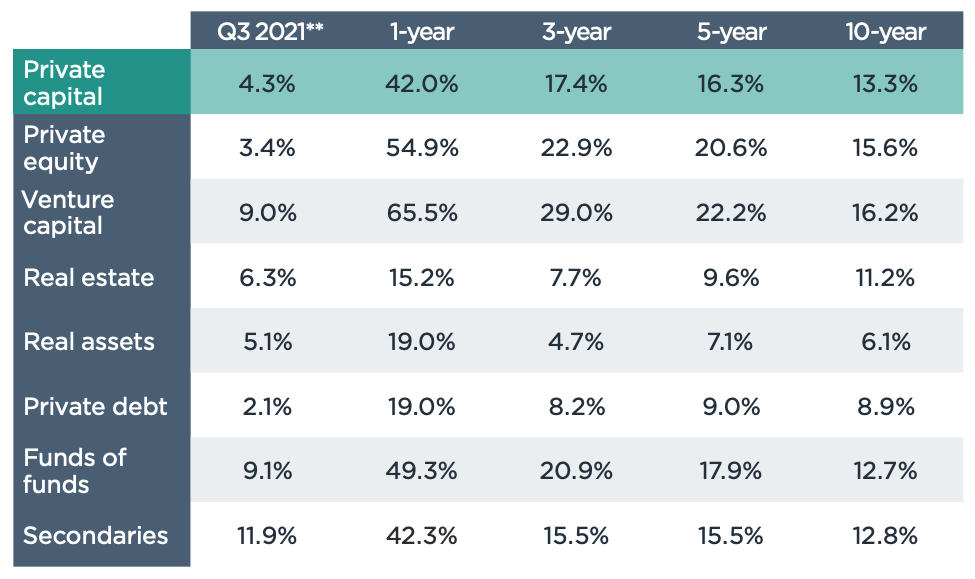
VC historically yielded 12 to 18% [1]. There is a lot of variance in those figures, with the crypto + Clubhouse guys coming in below ten, savvier funds still posting 30%+ and SoftBank + Tiger losing money.

So when a bond is yielding 5 pts [2] above the 10-Treasury’s 2.75% [3], more people will chose 7 or 8% with the guarantee of the issuer’s assets over maybe twenty maybe zilch.

[1] https://www.nexitventures.com/site2015/wp-content/uploads/20...

[2] https://fred.stlouisfed.org/series/BAMLH0A0HYM2

[3] https://home.treasury.gov/resource-center/data-chart-center/...

There is only $2 trillion "real money", all the other money in circulation is debt. You can search for the definition of M0/M1/M2 money for more detailed explanation.
The fact that they cite the current market means that at some point in their process they borrow money. And now that’s more expensive to do.

That doesn’t mean necessarily that they are “funded by debt”. It could just mean that getting into some temporary debt is part of how they work.

> at some point in their process they borrow money

I would be somewhat careful with such claims.

As an investor who has money available, you have two options (in this example) where none involve borrowing money:

a) invest in some startups

b) lend this money to other entities

Increased market interest rates mean that b) becomes more attractive. In other words: the startups that you invest in for a) have to be much more promising than in a market environment with lower interest rates. This means less investing in startups.

Sure, but we’re talking about a VC fund. I’m not convinced that YC reduces investing in startups to pivot and profit from increased lending rates.
A VC fund will only get money if the risk-adjusted rate of return is greater than the rate of interest; otherwise backers of the VC fund invest their money elsewhere.

This means that VC have to become more selective with respect to the startups that they invest in, as I described.

YC is qualifying and preparing startups for VC. If the funnel is narrowing at the end, it doesn’t make sense to put more companies into it.
That 40% is an opportunity for a leaner competitor! Which is how YC started out.
You have the luxury of patience when it's your own money. YC has been raising outside capital for several years (a decade?) now. As soon as you're investing other people's money you're at the mercy of other people's willingness to invest.
They could sell some of their holdings in these huge companies they have 7% of but basically they are saying everything is screwed right now and they expect a decade or more of depression.
I don't read it that way. There is reduced funding available now . So the current batch is smaller. They are still thinking of more than 10 year horizon to mature opportunities but the funds available for that runway is smaller. Hence the small batch. That is my read any way. The depression may be over in 2 years (say), but that does nothing for investor sentiment and available cash right now.
This argument holds true for most VC firms in general. My contention is that YC's stance on defining the "bar for acceptance" seems to be on how much cash they have. So a mediocre company and founders could have got in the previous batch and a deserving one may not this year. I agree that this is fair and square in market economics. I simply expected more from this institution.
I am not sure how you came to that conclusion. This reduction can still be consistent with a fixed bar for acceptance. Say that earlier everyone who cleared the bar got funded. Now, only 60% of those who clear the bar gets funded. The further selection can be on the basis of a performance criteria like value expectation or risk of failure, or it could be on the basis of investor preference to certain areas.
> and they expect a decade or more of depression.

Kinda what the 30Y treasure yields are saying (if you believe in recession indicators)

It’s also a self fulfilling prophecy too.
The world will be poorer when there is war at Europe’s door.
In my opinion the pandemic era saw a significant increase in employee headcount, and now we are seeing a "correction" of the employee headcount.

But I think the bigger point is that venture capital funding is really drying up and investors aren't investing as much. A lot of the market is basically "taking a loan to cover a loan that covers a loan.." and the market is no longer giving out loans as easily due to higher interest rates.

> In my opinion the pandemic era saw a significant increase in employee headcount

I am interested in hearing why you think that. I would have thought that the whole "Great Resignation" theme of the two pandemic years would suggest that people are instead looking to move away from the established companies.

> the whole "Great Resignation" theme of the two pandemic years would suggest that people are instead looking to move away from the established companies

That period was characterised by easy money boosting the job pool relative to applicants. Employees had heightened mobility and many capitalised on the opportunity. That window is now closing, with firms focussing on survival over growth.

Even if unemployment rates triple, we're still not in an employer's market. Companies will lay off to survive, but there will be jobs for laid off to land in.
> Even if unemployment rates triple, we're still not in an employer's market

Broadly, no. We had 0.6 unemployed per job opening in May [1]. So a ~70% increase in unemployment would have neutralised the market.

We saw a 5% MoM reduction in job openings in June [2]; if that continued into July then the ratio is currently about 0.7. Still tight! But tightening, and with all signs pointing to a neutral market before Halloween. (I said the "window is now closing." Not that it’s closed.)

[1] https://www.bls.gov/charts/job-openings-and-labor-turnover/u...

[2] https://tradingeconomics.com/united-states/job-offers

The JOLTS numbers you are using would indicate a neutral market at 6 unemployed per open job, not at 1 (5% unemployment is considered fully employed). I use these numbers regularly in estimating advertising costs and market demand in my business day to day (I own are recruiting tech company). The reason for optimism is simple: workers are aging out of the market, and young people are starting to work on average 4.9 years later in life - so the worker side is scarce and so scarce that the employer side can shrink with effectively little effect on employment, other than fluctuations in wages.

Today's report from DOL is unsurprising (unemployment went down in July).

> Earlier folks / seed funds have more than enough money and even if they take hits on marks the reality is that they invest at such low prices they are still 'good', but (a) they don't know exactly what to buy because they don't know what the later-stage folks are in the market for and (b) they really don't know what prices the later-stage folks will pay for things (which directly impacts what they are willing to pay)...https://twitter.com/lessin/status/1528750068932788225

VC is a https://en.wikipedia.org/wiki/Keynesian_beauty_contest

As a founder, you aren't paying the VC, the VC is paying you; you are the product and this meta-market is the actual real game you are playing. See: "Series A Exit Clause" – it's baked into your capitalization structure

> See: "Series A Exit Clause" – it's baked into your capitalization structure

Thanks! Learn something new everyday

[1]https://startupjuncture.com/2017/05/16/vc-deal-terms-explain...

That's an excellent article and worth posting on its own.
It’s code for “actually the program isn’t as scalable as we thought and a high % of a cohort not getting interest from traditional VCs is probably not a good look”

Remember that something like 25%+ of all YC companies ever are In the post-pandemic cohorts (due to said mega scaling).

the 10 year horizon of a first mover who grows every one of the 10 years looks a lot better than the 10 year horizon of a first mover who is expected to do nothing the first couple years. And you can only invest money your investors give you, and they give you money out of their own funds that are depleted by the downturn, so while you may be right that this is the perfect time to make a 10 year investment, you can't take blood from a stone.
These startups will need to raise funding within the X months. The amount of money invested in series A rounds next year is not something YC controls.
YC/VC don't get paid to be founder-friendly. Friendships rely on the returns (mostly from later rounds).
> Aren't reputed firms like YC supposed to look at a 10+ year horizon?

VC is affected by available capital. A lot of investors are dealing with climbing interest rates and loss of value in other investments. That means less money to place bets with, even if you want a 10+ year return.

It's clear that the valuation of the unicorns that YC and other VCs have been producing for the past ten years was way overblown. Now (i.e. with non-zero interest rates) that there will be less stupid money on the market, the returns on unicorns will be lower.
Survival is a precondition for growth. YC companies will run out of their $500K in under a year and will need to raise money in the VC markets. If they can't, there's no 10-year horizon to worry about.
Or that you expect a downturn that will last more than 10 years. Check out how the 10 year T note has been performing against the 2 year. Markets are not optimistic about the long term.
There was that headline that half of all Americans are expecting a civil war. Or maybe it’s the on-going showdown with the CCP. Or Russia’s disqualification of itself as an energy supplier. Or maybe it is climate change?

Seriously, what’s driving these market trends, I don’t know.

Ray Dalio wrote a book theorizing about some of these possibilities. I haven't read it yet but this video summary of it is pretty interesting.

https://youtube.com/watch?v=xguam0TKMw8

Americans are expecting a generation-defining change in the way the world works.
The problem is that their investors are chasing a return - they don't care specifically about start-ups, only that they can beat safer assets like T-bills, high grade corporate bonds, SPY, etc. Cheap credit is what fueled this start-up boom and bought us the Juicero, 21 Inc, etc. Now rates are rising and that era is over. I'm sure VCs still believe in their portfolios / thesis.
>Aren't reputed firms like YC supposed to look at a 10+ year horizon?

Hard to see a bubble when you're literally inside of it.

> it indicates that earlier investments were based on the market than the fundamentals of the founding team, market, and product.

Is that supposed to be a bad thing, to consider the market? Less good teams and products will do better in better markets, only the best teams and products do well in hard markets. Shouldn't you adjust?

Money is more expensive with higher interest rates.
That's the feeling i get too, they are more preoccupied by short term gains rather than long term commitment

Wich usually mean they do not trust the products they are funding

Not looking good

> earlier investments were based on the market than the fundamentals of the founding team, market, and product

False dichotomy

40% is a massive cut. If the heavy weighing of the market doesn't constitute a dichotomy, then nothing does.
It's a massive cut after a sequence of massive, program-redefining increases in batch sizes. The current size is, as their representative says, still a lot bigger than batches were until recently.
There are a massive amount of applications; they still base acceptance on quality. Otherwise, when market conditions were good, they were letting in a number of terrible companies.
doesn't matter if LPs get scared