He's saying that since there all other variants we're susceptible to the vaccine, it's unlikely that this one is.
...and goes on to list the high number of different markers the vaccines target.
Unfortunately, vaccines largely target the spike proteins, and sequencing of omicron is demonstrating that every single protein marker on the spike is changed.
Vaccines will likely have a very small effect on this variant.
There are also two other mutations of concern that have never been seen together that each increase binding to ACE2 for cell entry.
This all needs to be formally confirmed, but this is probably BAD.
No. If every single “protein marker” on the spike protein was changed, there wouldn’t be a heck of a lot of chance for the virus to attach to a cell. There still needs to be basic compatibility with the cell and the spike to get inside.
> there wouldn’t be a heck of a lot of chance for the virus to attach to a cell.
but there isn't just a single shape that could be used to attach to a cell. Another shape could be compatible, but is not targeted by the vaccine of today.
I'm guessing that this makes the virus a different virus - but isn't that what mutations are? they are slowly causing the virus to change and at some point, it becomes a different virus.
What you’re talking about is a different form of evolution where there are effectively “multiple answers to the same problem”. A common example is if there are two bird species eat the same nut, they might have two very different beak shapes that both open that nut.
But that’s not how the type of evolution in a single virus works[0]. Within a single organism/virus, the evolution is more like finding a local minima. There certainly could be a more effective design with a different shape. But it is very difficult to break out of a local minima through mutation and natural selection. You still have to maintain the function of a protein while simultaneously mutating it. So, breaking out of a local minima is really difficult. As you said, evolution is a slow process, so you wouldn’t expect to see dramatic changes in a shape and keep the same function.
[0] I’ve deliberately left out things like horizontal gene transfer, transposons, and gene duplication, all of which can involve hyper mutation or gain of function without being under selective pressure.
You're right that the argument is fallacious, but you ALSO can't say that the high number of mutations make escape almost certain. Fact of the matter is, we don't know, and it's hard to say.
For there record, I'm predicting it would escape, but I'm far from certain about it, I'd put like a 75% prior.
If the variant is already on the rise couldn't we figure this out by looking at the demographics of who is infected (are most of the cases vaccinated people? Are people previously having covid getting this variant). I don't know anything about the field, but it seems like we shouldn't need that high an infection rate before we can start verifying these concerns empirically, especially when a large majority of the population is vaccinated.
A study in Nature had previously shown that >= 20 amino acid mutations on the spike protein was sufficient to cause immune escape from the vaccine or previous infection, but that individuals who were both previously infected and vaccinated were still able to neutralize the mutant virus. [1]
The omicron variant has >30 AA mutations on the spike protein, so it remains to be seen how effective vaccines are in response to it. Even if it is unable to prevent infection, it's still likely that the vaccines will provide some attenuation of severity, especially with a booster. We also now have pharmaceutical means to treat infections, so any notions that this will bring us back to March 2020 seem unrealistic.
> individuals who were both previously infected and vaccinated were still able to neutralize the mutant virus.
Mainly because of the infection, not the vaccination. Infection trains your immune response to detect multiple factors of the virus, the mRNA vaccines are only for the spike protein which has considerable mutations in later variants like this one.
Arguably, traditional dead-virus vaccines might provide better long-term protection for this reason, but we went all-in on the new tech.
Somatic Hypermutation works on vaccine antigens as well, and diversifies B-cells so that the B-cells will recognize many spike mutations. Anyone who has been vaccinated or recovered probably has some B-cells which match this spike, even if they're not amplified and expressed into circulating neutralizing antibodies.
T-cells on the other hand don't diversify as much but they recognize primarily the host MHC section of the MHC-antigen complex, so they're already somewhat insensitive to mutations in the protein. The T-cells stimulated by vaccine or virus aren't special in that regard.
Arguably it doesn't really matter. If you get infected with this spike it is still going to have pretty much the same shape as the spike in the vaccine (after all even the mutated versions still need to bind to ACE2 and can't vary that broadly) and your vaccine-trained T-cells will still bind fine to the antigen-MHC complex that the spike forms.
There's this idea that antibodies and immune responses are like a key fitting perfectly into a lock where any pin being wrong doesn't unlock the lock, and that's just false. The immune system has a need to fuzzy match against antigens because it evolved against adversaries which mutate and attempt to reinfect.
You're pushing a narrative that spike-only vaccines are worse in the face of mutation, and there's just no evidence of that. On the other hand mRNA spike-only vaccines allow creating a very strong humoral response to the spike protein in the absence of significant side effects and their efficacy has been so far across the board superior to inactivated virus or viral-vector vaccines.
> You're pushing a narrative that spike-only vaccines are worse in the face of mutation, and there's just no evidence of that
"Pushing a narrative" is a pretty uncharitable interpretation of a short off-hand comment.
There actually is some evidence that the infected have a stronger immune protection to exposure than the vaccinated, and there are mechanistic reasons this would make sense, so I wouldn't go so far as there's no evidence for it. We'll just have to wait and see.
There's mechanistic reasons why the infected would have weaker immune protection because other viral proteins like ORF8 suppress MHC-I expression and T-cell responses. All the studies that I've seen that look at the problem properly find that recovery from infection provides highly variable protection with younger and less severe symptoms providing much less than vaccination.
>Arguably, traditional dead-virus vaccines might provide better long-term protection for this reason, but we went all-in on the new tech.
That argument sounds good in theory, but we have data we can look at to assess — Sinovac is inactivated virus and it's efficacy was 50% against the early strains. Also, work has shown that spike antigen vaccines broaden the range of antibodies produced by previously infected immune system to increase neutralisation against later variants, even though the vaccines were of course based on ancestral spike protein sequence..
It started from an extremely low base.
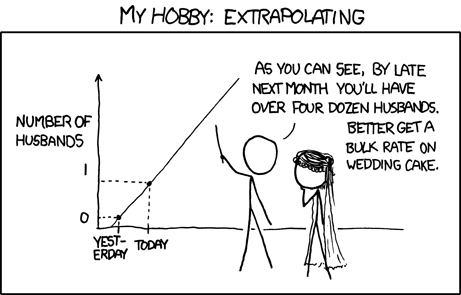
And extrapolating that curve is completely wrong as you can see from today numbers. 2.8k compared to yesterday 2.4K.
It’s obviously still early to know anything conclusive but the relatively small increase today is a very good sign.
We’ll know something more next week.
He's saying that since there all other variants we're susceptible to the vaccine, it's unlikely that this one is.
...and goes on to list the high number of different markers the vaccines target.
Unfortunately, vaccines largely target the spike proteins, and sequencing of omicron is demonstrating that every single protein marker on the spike is changed.
Vaccines will likely have a very small effect on this variant.
There are also two other mutations of concern that have never been seen together that each increase binding to ACE2 for cell entry.
This all needs to be formally confirmed, but this is probably BAD.