Hacker News new | ask | show | jobs
by 8f2ab37a-ed6c 2074 days ago
If this is revolutionary, why isn't everybody following his method? My skeptic alarm is going off, but also all of the investigative content I read about it seems to support the claims. I'm puzzled on why this hasn't seen mass adoption.
10 comments

"Because it doesn't make anyone money" is my best guess. I kinda hate how conspiracy-theory-ish it sounds, but I can't much deny it any more?

I'm one anecdotal data point:

Never heard of this guy, but the cold shower thing just sounded plausible enough that I figured I'd try it.

Not even the whole thing cold -- I start off with a hot shower and then just drop it for the last minute or so, as long as I can stand.

And -- it's CRAZY. After getting the regular yearly colds that I just presumed were a part of life...they just stopped. I haven't had any sort of cough/cold sickness at ALL going on about 3 years.

It's also hard. I used to do the same morning cold plunge as you. I have stopped, sometime in the last couple of months, because like any good habit, it needs to be maintained.

I am going to commit to doing this again tomorrow, though, because I remember that it makes me feel good.

Did it this morning, and can report that I feel great :)
> After getting the regular yearly colds that I just presumed were a part of life...they just stopped.

The same thing happened to me after age 34 for some reason. It's been years so far. I haven't done any breathing exercises though.

To provide one anecdotal data counterpoint: I decided to try cold showers a few years ago (not Wim Hof method, just showers) and although I generaly get ill very rarely, that year I cougt something three times. It obviously does not prove anything, might have been just bad luck, but after the third time I did not have the willpower to restart the cold showers routine again.

Maybe I was doing it wrong but I do not know how - I started with just showering my legs with lukewarm water and progressed to colder water and longer time gradually, very slowly. However, it never made me feel as good as some people here descibe. Sometimes I felt slightly refreshed during the summer but more often I just felt cold and stiff and I had strong desire to return to bed to warm up but I could not do that and I had to sit in my office cold and miserable for hours.

Maybe cold showers are not for everybody?

I feel like there's value in the "shock?"

As in, don't do it gradually.

Drop it INSTANTLY and just see how long you can last, even if it's only a few seconds. I know at first I was like okay, 5 seconds f* this.

But then you can make it a bit of a game for yourself, and after a while it just becomes habit.

(and fyi, I live in Florida, so staying in longer is much easier-- But I can say this switch made me change from dreading visiting relatives up North because that would ALWAYS make me sick --- to "aww yeah super cold showers in the morning," and you know, not getting sick.)

> why isn't everybody following his method

Eat less processed foods. Go for a walk. Stand up and stretch occasionally. Take the stairs. Lift some weights.

All will improve your life and are trivially achieved by almost everyone. Yet too many people - perhaps most - choose not to do any of these.

The debunking podcast "Oh No Ross and Carey" did at least four episodes [1] on Wim Hof. I recommend them if you want a skeptical take.

[1] https://ohnopodcast.com/investigations/2020/7/19/ross-and-ca...

Without having to listen to 4 hours of podcasts, what was their take?
I haven't listened to them but can recommend the Medlife Crisis episode [0], in which he reviews the scientific literature around the effects of cold exposure, blood oxygenation/acidity from hyper-/hypoventilation, and related topics. He comes to the conclusion that Wim Hof is likely a genetic outlier, but that breathing techniques can have real physiological effects on things like pain perception, and that cold exposure likely has a bunch of real benefits – but also that placebo may play a big role (which is nevertheless a very real effect).

[0] https://youtu.be/D6EPuUdIC1E?t=2215 (timestamped to the conclusions)

He's taken people up mountains in -15 C wearing just shorts after a few days of training. So I'm not sure it's just him being unique.
Yes, and that is impressive! But he has also set several cold exposure world records that these people probably couldn't replicate that easily, or perhaps ever.
How does that differ from people being able to lift 484kg or run marathon slightly over 2:10?

Them being outliers does not debunk notion of sport and training generally.

I tried it, while I won't make any claims of massively improved health, it did one very notable thing for me.

I've perviously never been able to meditate (or self-hypnotise) my brain would always conspire against me and race with millions of thoughts.

When I tried the Wim Hoff breathing methods, everything was suddenly quiet. This in turn has made a lot of other small things in my life easier.

The claims may be overblown and some of the science dubious - but being able to reclaim some additional control over my brain has, to me, been worth the "risk" of trying breathing in a funny manner once a day.

A friend of mine tried it after being curious about my experiences for months, and immediately sent me a text message saying thanks.

I think perhaps it hasn't seen mass adoption because most people face some kind of psychological barrier in trying it either from fear, or seeing it as quackery and a waste of time. Coupled with mainstream medicine being reluctant to recommend something with relatively little supporting evidence (I guess). While Wim himself has succeeded in making money from it, it is also something that is difficult to patent and sell - unlike a pill (no big-phrama conspiracies here - just money is always a motivator)

From what I understand his methods are revolutionary for people with his same physiology. He and his brother were the subject of a study which seems to cast doubt on the potential of his claims for people without a similar physiology: https://journals.plos.org/plosone/article?id=10.1371/journal...
How does experiment on his and his brother can possibly cast doubt on potential for different people? I mean, the study did not measured anything on different people.
The study showed that he and his brother, who has a similar brown fat physical makeup but doesn't follow the 'Wim Hoff method' performed pretty much the same.
I'm not sure mass adoption is a good way of judging anything.
Medicine and computers are pretty good by the looks of things
I think there are a lot of examples of mass adoption of "bad" things also. Fast food and processed sugar are the ones that come to mind immediately.
I'm skeptical of health claims, but I have definitely personally found doing 3 rounds of Wim Hof + a cold shower in the morning leaves me feeling pretty great.

I would say it requires a level of discipline and interest in "doing work" that most people don't have, so even if it is as revolutionary as claimed, I wouldn't be at all surprised that not everybody is following the method.

It may or may not be fraudulent, but please keep in mind that certain US states have ~ 40% obesity rates. It sounds obvious to the non-obese that eating like there is no tomorrow is not conducive to a good life; and simple measures, like eating less and moving more, can dramatically improve quality of life. But to the obese, it might not be so obvious for a variety of reasons (and yes, there are also genetic and environmental and mental health problems contributing to obesity, but also not caring much about one's own life).
Not saying this specifically about Wim Hof, the topic at hand - but:

People are lazy. This is quite simply a truth, especially with regards to the USA.

If you're not from the USA, we have this absolutely fucking unfathomable obesity epidemic going on. It doesn't get talked about very much. 95%+ of the time, weight regulation is one of the simplest things we know of. Calories in and calories out.

Anyways, nobody really gives a fuck about that and will die on the hill of stating it's incorrect. They will then go on to buy the newest ONE PILL DOCTORS DONT WANT YOU TO KNOW ABOUT TO LOSE YOUR FAT OVERNIGHT for $19.95(x # payments) year after year, new pill doctors don't want you to know about after new pill doctors don't want you to know about, and still be obese, wondering why they specifically can't lose weight - science must just be against them.

Ranting about US citizens obesity aside, the tl:dr - Wim Hof most definitely isn't some ridiculously revolutionary thing, but for many it's damn helpful towards their life, but it also takes time and effort to do, which many people aren't disciplined enough to stick to. Also, you have to read. Believe it or not, large amount of people don't like reading lmao.

The US obesity epidemic probably has more to do with the sugar content of processed foods than with laziness. As you note, people in general are lazy. Vietnam has the lowest rate of adult obesity yet is the 8th most sedentary population in the world.
Agreed. I'm of the belief that Americans aren't obese because they're lazy or because they're gluttons; instead, I believe it's the food that's killing us. Processed food especially.

When I was diagnosed with type 2 diabetes, I had to switch to a low-cab diet (which cut out a huge swath of processed foods), and I dropped from 170 lbs. to 150 lbs. in a few weeks. And I wasn't trying to lose weight—it just came off.

> Vietnam has the lowest rate of adult obesity yet is the 8th most sedentary population in the world.

I'd like to see a citation for this claim and how it was measured. People in Vietnam seemed much more up and active than people in America and they're much slimmer despite drinks there being sweeter than pure syrup in America.

Here's a link to similar https://saigoneer.com/vietnam-news/10653-vietnam-among-the-m...

I was a little skeptical myself. "data from the step-counting app Azumio Argus" - they counted steps. I can see how they might walk less as everyone gets around by motor scooter there which often involves less walking that using a car as you can normally park the thing at your destination rather than schlepping around looking for a car park. But I wouldn't really call them sedentary - they are quite a hard working bunch on average.

thats nonsense. The slimmest and fittest I ever was, was when I ate the most processed food in my life. I was cycling from my hometown in bavaria to nice in france. So I just had to eat all this garbage from the supermarket but it got burned immediatly. Funny that he gets downvoted he expressed his point in a very friendly way. I will just say it plainly: fat people are lazy. thats the reason they are fat. You can eat as much sugar and refined food as you want as long as you move around enough.
Age is also a factor -- when I was younger I could eat two large pizzas at one point without a problem. Now a couple slices and I feel like junk. ¯\_(ツ)_/¯
try not being lazy when your hormone system has been fried with food that is literally illegal to sell in Europe, from early childhood;

https://www.thedailymeal.com/travel/american-foods-banned-ot...

or being told that common healthy foods we enjoy in Europe, Australia etc are dangerous and to be avoided;

https://www.cdc.gov/foodsafety/communication/oysters-and-vib...

so the government is responsible that you are fat? that sounds like an excuse lol
> fat people are lazy. thats the reason they are fat.

Probably, but not vice versa (I'm not). So you need to be lazy and eat a lot of garbage to become obese.

haha lol you are right. its just one of the reasons.
I find the sugar argument to be a strawman.

Maybe ignorance/functional illiteracy of knowing how to read a nutritional label is a slightly more sound argument. Food deserts are a legitimate issue too. However, simply not caring is quite prevalent.

Don't take my word for it (how bad sugar is). Go to an expert: Dr. Robert Lustig, Endocrinologist at UCSF. "Sugar, the Bitter Truth" [0]. He'll describe the metabolic pathways of sugar. Key take-away: fructose is processed by the liver, and much of its calories is turned to fat.

[0] https://www.youtube.com/watch?v=dBnniua6-oM

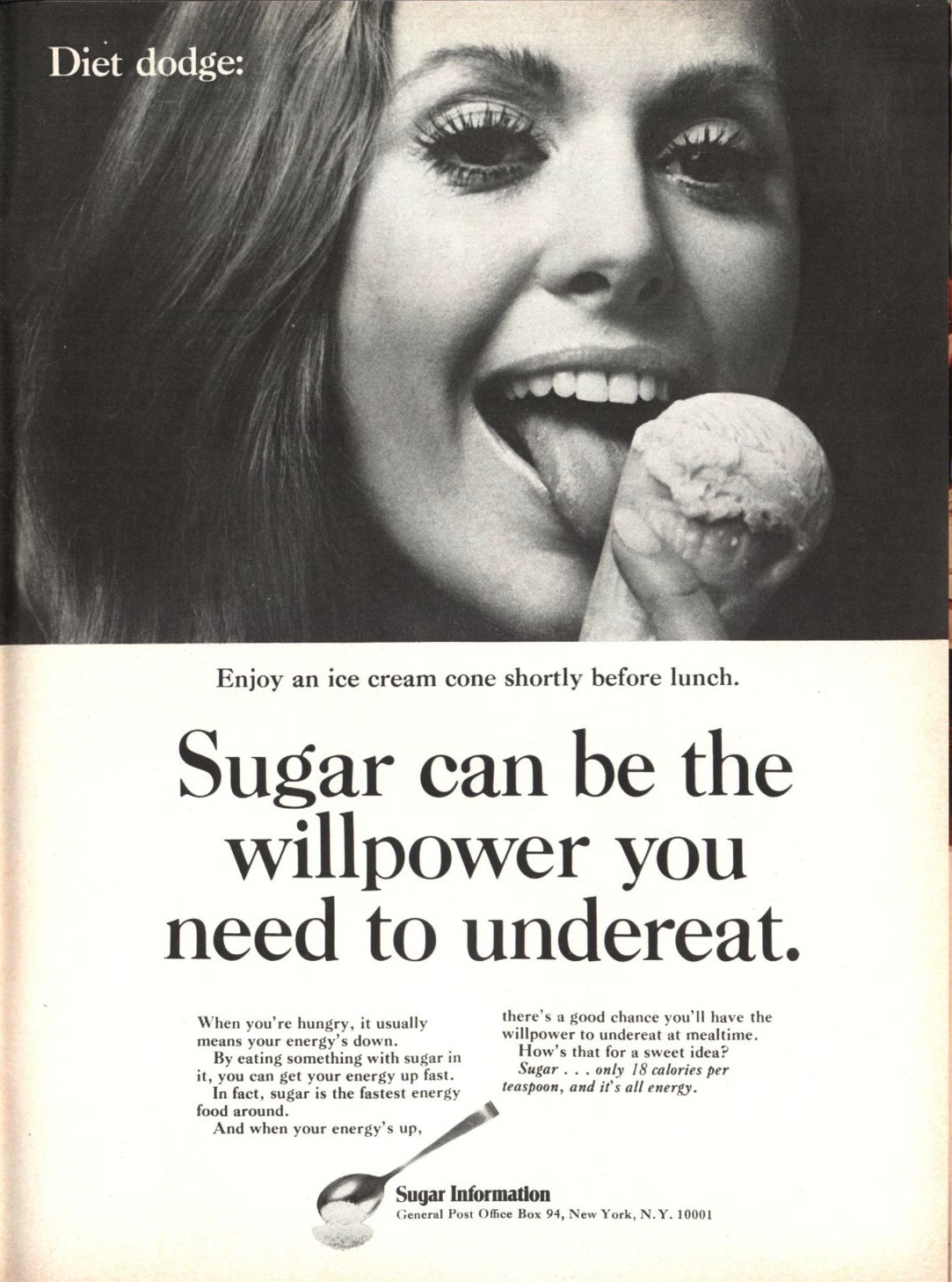
It can be hard to avoid though especially in the US. I was amazed at the difficulty there of just getting a loaf of bread without sugar mixed in. In Europe they don't usually have sugar.
The sugar in American bread is ostensibly to allow yeast to ferment quicker than they would on flour alone, to impart bread-y flavors, not for sweetness. This shortens processing time.
It's also legitimately hard to find foods without mass amounts of sugar. Just look at spaghetti sauce. Sugar is everywhere.
Exactly, this is why I really really hate it when people say "Poor people should cook themselves" as if they wouldn't if they had the time or energy to. If you work minimum wage all day, especially with kids, cooking from scratch is a chore and a half.

The stuff you buy off the shelves is either cheap or healthy, rarely both.

I come from a family that was borderline of the definition of "extreme poverty" within the U.S.

This is a really poor argument.

Aldi spaghetti sauces have ~10g sugars compared to a bottle of coke having ~65g sugars. Look into how many people are using Aldi's spaghetti sauces vs how many people are guzzling coke.

Is over sugarized shit literally everywhere in the U.S.? Yes.

Can you genuinely not find anything without? No.

It is not hard. It's really, really not. As somebody else mentioned, lobbying in the U.S. e.g. the Food Pyramid was an obvious disaster that did nothing good for the situation.

However, that can't be a coverall excuse.

The problem here is broken nutritional epistemology and lack of education. Remember that as recently as the early 1970s, it was broadly promoted, almost as a nootropic. In my home town in Australia it was common to add spoonfuls of sugar over breakfast cereal, Nutella and Milo (chocolate milk drink) were promoted as healthy sports foods for children, and a tablespoon of sugar (I know!!) was promoted as a good way to fix hiccups. My mother was ostracised by the other mothers at my school (in the early 00's, not the 70s) for not giving me Nutella, Chocolates, Lollies etc in my lunch.

I'm not making excuses here - it's more that unless you come from a privileged or niche background, especially before the internet, you would think this is normal. Imagine as a woman going to your GP doctor for a checkup in the 1980s and having them suggest you start eating spoonfuls of pure refined white sugar to help you control your appetite. Similar modern examples include the popularity of "Bubble tea" which should almost be regarded as a poison

It's not that its hard to find non-sugar food - it's hard to KNOW that's what you're meant to do, even in the most educated first world countries.

https://api.time.com/wp-content/uploads/2015/10/19710510.jpe...

It's irrelevant that a bottle of coke has more here. My argument is even if you're being good and skipping candy/soda...etc that just the normal food you eat is loaded with the stuff. White bread, most cereal, sauces...goes on and on. There are items without it, but it's more expensive and certainly hard to say no to the sugary stuff even when we knows it's bad.

I'll cede that I misspoke when I said it couldn't be found at all, but it certainly takes more effort.

I think the problem is the amount of processed carbs rather than sugar on its own. Sugar is addictive but not in the concentration you'd get in a pasta sauce (in a can I assume).

IIRC most western countries are vastly over-caloried, and have a roughly inverse relationship between BMI and income too.

It is not just Sugar, it's also the fact that most Americans live on a diet full of industrially refined sugar, hydrogenated vegetable oil, strange chemical preservatives, flavouring agents, artificial sweeteners to avoid the sugar, and "no fat' products that achieve this in strange way. For instance,

It's further complicated by the fact that there is no functional epistemology of nutrition in the US; previous attempts to create one such as the "Food Pyramid" were heavily financed by food lobbying groups and are now distrusted. This leads to things like people deciding that carbohydrates are universally bad because removing deep fried potatos from their diet makes them feel better; or people swearing by vegetarianism because for the first time since childhood they stopped eating "Meat.jpg" like you find in hotdogs etc. Or people swearing by low fat diets because they stopped eating icecream deep fried in margarine.

There is also no underlying national food tradition; I live in South East Asia and in this country there is a strong tradition of eating steamed rice and steamed chicken as a staple food, as well as steamed eggs and seafood (shellfish, pan fried fish,etc) This means that with no nutritional knowledge the diet here is considerably better than the average person in the US.

Given that Americans are the nation with longest average working hours among developed world and the nation that is literally worshipping hard work, I find it dubious when people just throw lazy Americans around. I know it is usually Americans doing it to other Americans, but still.
A lot of people are!