The moral hazard that comes from cities using fines for offenses to generate revenue is awful and despicable, and it causes all sorts of injustices, big and small. Red light cameras are a part of this, and they're awful.
That goes to the more general problem of fines, cities and people.
It is terrible that peoples' mistakes are used to fund a city. They really shouldn't. Furthermore anything that could reduce the fine aspect, say an advanced parking system that auto-charges you and warns you via text when you're close to your daily time limit, wouldn't make any money and would never get approved.
I use to be a sys admin for a debt collection firm; a company that was based entirely of making money from peoples' mistakes. I set up terminals for employees, many who were on welfare, to collect bad checks and credit card debt from other people who were also on welfare.
These types of revenue generators, whether they're run by a state or a private interest, rarely ever benefit society.
>These types of revenue generators, whether they're run by a state or a private interest, rarely ever benefit society.
This is ridiculously conspiratorial. Traffic enforcement has a real benefit for people living in these cities who prefer not to be hit at intersections. Here's the conclusion of a study about the red light cameras (RLCs) in Chicago:
>Quantitative studies conducted in this project demonstrate significant safety benefits of the current RLC program. As a result, it is appropriate to recommend continuation of the program. Most of the intersections have experienced an improvement in safety, particularly in terms of severe angle and turn crashes, albeit with an accompanying increase in less severe rear-end crashes. The safety benefits extend beyond the immediate vicinity of the RLC intersections, evidenced by a significant spillover effect. However, some intersections appear to experience no significant safety impact. Recognizing that crashes are the result of complex interactions amongst many factors, and subject to considerable randomness, these deviations should be used as opportunities for detailed investigation and learning to design and deploy more effective automated enforcement programs
Similar benefits have been demonstrated in NYC and other cities. Personally, I can't wait for speed cameras to see wider deployment, automated enforcement is our best chance to eradicate reckless driving. It also has the benefit of being unbiased (assuming they're deployed uniformly). Cameras don't make judgment calls about which motorists to pursue, so there's less room for discrimination by police officers.
>an advanced parking system that auto-charges you and warns you via text when you're close to your daily time limit, wouldn't make any money and would never get approved.
Some meters in Boston let you pay by phone, it can't be the only city, I'm sure stuff like this gets approved all the time.
Parking is an excellent example of why you need punitive fines, since it's expensive the fine has to at least be as higher than the legitimate cost of parking for it be an effective deterrent. There are already cities where people just "pay the ticket tax" and eat up on-street spaces to warehouse their cars. Being frank, if you're getting cheap (government subsidized) metered parking and not paying market rate, hundreds of dollars a month, you're getting a sweet deal and have no right to complain.
Parking enforcement benefits drivers who are looking for spaces, higher turnover on parking spots improves availability, and decreases traffic (fewer people on the street looking for spots). The incentive for city planners is to get people out of the spots, not trick them into "overstaying".
I agree. I've only ever received one red light violation, and that was because I intentionally rolled through a red light at low speed on a three-way intersection making a right turn.
It was early Sunday morning in clear conditions, with clear visibility in all directions for about a quarter mile, not a car in sight. My trusty crapmobile had been stalling while resting at complete stops, and the destination was my mechanic's place, which was 100ft around the corner. Stopping at that light very well could have meant calling a tow truck to be towed 100ft, and I'd already made it about 25 miles with only minor issues at that point.
Well, I didn't see the red light camera that was newly-installed (let alone any notices for it), so I ended up with a $100 violation for rolling through a red at 5mph, issued via some company the local municipality contracted. You can't really argue context or circumstance with those people, since they're pretty much just call center employees ensuring that the video technically supports the violation. A stop-gap for the imperfect nature of their automation.
Ended up bitterly paying the $100. In retrospect, I wish a cop had stopped me instead, because there's about a 98% chance I would have gotten off.
The perverse aspect of the cameras is that in many states they don't count as moving violations, so that indicates it's not actually about safety but in fact revenue.
You don't have to settle with the complainant, if you can convince the judge and/or jury.
Even if you don't actually want to go to court, you can usually still write an answer. Then you can still propose a settlement more favorable to you by mail, if the case isn't dropped outright. Why pay $100 if you could pay $20 plus postage stamps?
The automated enforcement would completely fall apart if the contractor had to spend money on skilled human labor for every citation. So every time you get a ticket from a robot, write an answer, and request source code for the robot's software as discovery. People pay because they don't want the hassle, but when you just send in a check for automated traffic enforcement tickets, you are paying the Dane-geld, and will never be rid of the Dane.
  "We never pay any-one Dane-geld,
    No matter how trifling the cost;
  For the end of that game is oppression and shame,
    And the nation that plays it is lost!"  --R. Kipling, "Dane-geld"
He didn't say the car couldn't stop - there was no mention of any problems with the brakes. He chose to roll through the intersection after evaluating the safety of doing so. Please don't put words in others' mouths.
I already addressed those specific concerns. Wide, empty roads. Not a safety issue. Did you know that plenty of mechanics will take vehicles in far worse shape on the road, in traffic, because it's the only way to test them?
As much as I enjoyed being put on trial here, I would have preferred to actually talk about red light cameras instead. Maybe next time stick to the topic, rather than derailing a large part of a thread with self-righteous moral pedantry.
The car could safely stop at the intersection, but it would have stalled if he did so.
He made a human decision, a judgement call, to roll through the stoplight: one that would have been supported by a police officer, who could also apply common sense to the situation. The traffic camera and bureaucracy, unable to apply any decision-making or judgement or common sense, is in the wrong here.
Stopping safely wasn't a problem. The issue was getting going again, because it'd stall out at a complete stop. Considering I'd chosen a time when the roads were virtually empty, and a route that consisted entirely of four lane roads, I wasn't endangering anyone.
I'd also already blown through my tow insurance by having it towed several times to local shops who couldn't diagnose or correct the issue, so I'd have had to foot the bill for a long distance tow on something that three shops found no issue with, which was rather difficult being completely broke at the time.
Would it be allowed in the US to drive a vehicle on public roads that is not able to start on it's own? Because your explanation sounds awfully like "Very sorry, office – I'm kinda in a hurry because I want to get rid of this body in the back before it starts smelling".
>Would it be allowed in the US to drive a vehicle on public roads that is not able to start on it's own?
The stalling was infrequent, not constant. I'm sure a lot of things are technically illegal, but it would depend on the state.
>Because your explanation sounds awfully like "Very sorry, office – I'm kinda in a hurry because I want to get rid of this body in the back before it starts smelling".
What? I'm starting to regret even sharing this story. :)
If it makes you feel any better, it was a small town, so the mechanic and local cops were friends. Seeing as I would've literally been pulled over outside of the mechanic's garage, and that common sense was in my favor anyways, I'm sticking with the 98% probability of getting off.
Huh, I didn't interpret stalling while idling at a stop as a danger to others on the road. Especially when the car can be started again. The same principle applies if I accidently stall my manual vehicle.
To play devil's advocate it can be an issue if you're stalled out long enough that cars start moving around you on narrow roadways with oncoming traffic, but in my case that was completely mitigated by choosing the route and time carefully. Wide, empty roads are ideal.
An example of what I would consider red-light camera abuse:
Philadelphia has a number of red light cameras which each generate about 10,000 tickets a year. That's about 30 tickets a day for each camera, $100 per ticket. 12 cameras generate $9 million a year [1].
If 30 people are "running" the red light each day, does that say more about the drivers or about the setup of the red light?
So, that's an open question -- do the sorts of infractions that red light cameras catch make roads less safe? Does the installation of red light cameras make roads more safe? As it turns out, no. The installation of red light cameras in Chicago has actually increased rear-end collisions that result in injury by 22%.[1]
And that's what I mean by moral hazard. Revenue generation by these means changes the city's incentive. Rather than having traffic laws and enforcement designed to increase safety, you have laws and enforcement designed to turn the greatest part of your city's population into offenders as possible, in order to maximize your revenue generation, at the expense of public safety.
And it's an injustice because the well-off simply pay their fines and move on, while the poor end up trapped in a neverending cycle of fines and punishments, because the inability to pay the first fine leads to a cascade of involvement with a court system pressured to produce revenue, not justice or fairness.
>As it turns out, no. The installation of red light cameras in Chicago has actually increased rear-end collisions that result in injury by 22%.
You're misrepresenting the results of the study. The study recommended the continuation of the program. The rear-end collisions were less severe than types of collisions it reduced, it was a safety improvement overall.
From the findings section of the actual study (emphasis mine):
>Quantitative studies conducted in this project demonstrate significant safety benefits of the current RLC program. As a result, it is appropriate to recommend continuation of the program. Most of the intersections have experienced an improvement in safety, particularly in terms of severe angle and turn crashes, albeit with an accompanying increase in less severe rear-end crashes. The safety benefits extend beyond the immediate vicinity of the RLC intersections, evidenced by a significant spillover effect. However, some intersections appear to experience no significant safety impact. Recognizing that crashes are the result of complex interactions amongst many factors, and subject to considerable randomness, these deviations should be used as opportunities for detailed investigation and learning to design and deploy more effective automated enforcement programs
If you want to accuse me of "misrepresenting" things, you should have your facts right. The study I was quoting that finding from was conducted by Texas A&M at the behest of the Chicago Tribune. The study you're quoting from was conducted by Northwestern University for the Chicago Department of Transportation.
Fair enough, I incorrectly assumed you were citing the one released last week, not 3 years ago. Either way, increased collisions (or one type of collision) doesn't necessarily mean decreased safety.
It's not an injustice inherently, it's just a moral hazard that may lead to injustice (or other poor behavior). E.g. I remember hearing about a city that, after implementing red light cameras, shortened the yellow time, thus technically increasing the number of people who ran reds and gaining revenue (at the expense of actual safety since short yellows are more dangerous).
You're taking the same logical leap that the RLC companies are. Sometimes running lights and ignoring speed limits is more safe than the alternative, depending on circumstances.
The cameras don't care about your circumstances or safety, they only care whether you're over a line or not. Safety is just a sorta-value-added benefit that may or may not come with installation.
Chicago seems to have also reduced the amber phase to an absolute minimum also in order to increase the likelihood of someone hitting a red. This is anecdotal, but go there and see. And this seems to contribute to some of the very scary driving behavior you see in Chicago so it's likely that in fact this is causing accidents more than punishing bad drivers.
The solution is rather simple: decouple traffic enforcement and rule-making from the revenue stream they generate.
(Not that I'm convinced that these "injustices" people claim are more than anecdotes, or that there is an alternative to red light cameras that doesn't involve actual cops stopping people and the very real injustices of racial profiling and just-shooting-people we've recently seen in that practice.)
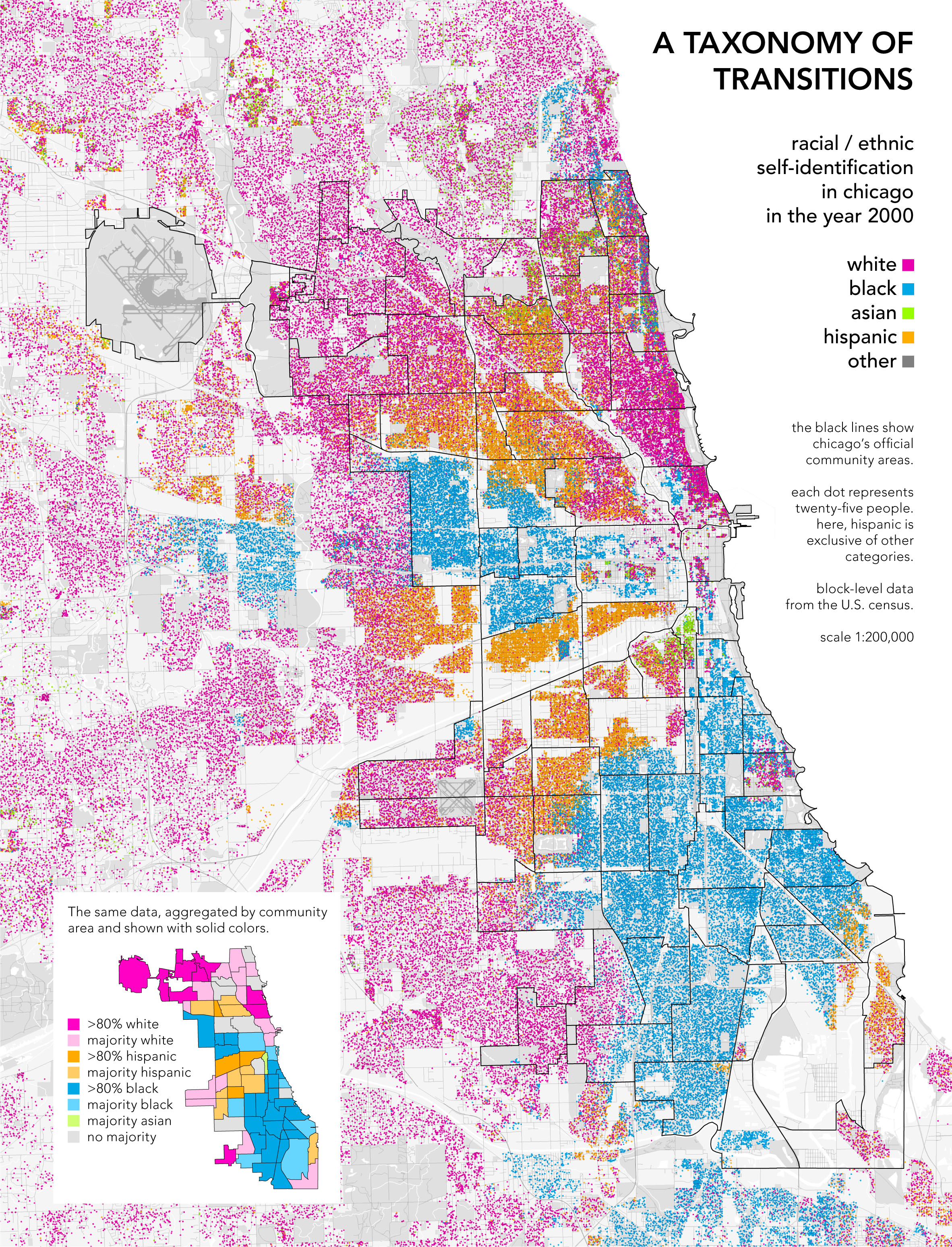
A big plus of automating tickets is that it's no longer biased. You're not more likely to get a ticket in a poorer, more high crime neighborhood, just because there happen to be more police there. This way, rich white people in the Loop are just as likely to get tickets as poor black people in Woodlawn. To me this democratization seems like a big plus.
..because most people don't want to intentionally run red lights.
Furthermore, most cities run these as civil violations, but if you take them to court, the courts run them under criminal procedures. IANAL, but there was an excellent post someone shared on HN a few weeks back where a law professor fought one of these tickets (I can't seem to find it right now). He wasn't driving, but felt the burden of proof shouldn't reside with him, but the state.
He lost his case, had to appeal, won that case and was never given any of the bond he issued to appeal.
These tickets don't add points to your license in most states, their safety improvements are questionable, and they're pretty much a money making racket for cites and the companies that make/run the cameras.
> A big plus of automating tickets is that it's no longer biased.
Yes, it is.
> You're not more likely to get a ticket in a poorer, more high crime neighborhood, just because there happen to be more police there.
IME, you (the same person) are more likely to get a traffic ticket in a rich, low-crime neighborhood, because the police that are there are more likely to be concerned with writing traffic tickets.
People who live in poorer, high-crime areas are more likely to get tickets (in either poor or rich neighborhoods), but that's a different problem. (And, unlike the one you identify, one that automation might actually help.)
But, in any case, there's as much opportunity for bias (and by the same people) in placing devices that automatically issue tickets as their is in placing officers, plus automated devices don't mean that human officers can no longer issue tickets, so no matter which direction it operates in, the source of bias you identify (that is, inequity based on choices of deployment of officers) is not addressed by automation.
I don't feel like this is true - the rich people can hire the lawyers to get them right back out of the ticket. Secondly, the cost of the ticket creates different amounts of deterrence, as when you're rich enough with no social shame (cop car with lights), you're probably going to run red lights.
See: cars parked brazenly illegally are rarely beaters.
These types of "democratizations" usually leave the poor even worse off, where they have no extra-legal wiggle room (chat with the cop) and no intra-legal resources.
See: Modern credit cards, mobile phone billing, etc.
I know it's an anecdote but in Denver they are only in the very wealthy neighborhoods. Usually here those parts have the city have much lower speed limits than a comparable street in a poorer neighborhood would have so they can generate more revenue from them.
No, they are not at all in the wealthy neighborhoods, they are out in Aurora in the poorer areas and around Buckley AFB to nab the servicemen. I drove past many of them going to work/home and they erroneously flash when a bird flies past or the wind gusts too hard. There seems to have been no correlation at all with the many people I would see running red lights, just random.
I was talking Denver not Aurora or the outlying suburbs. I guess I could of been more clear. Around here they camp outside of Cherry Creek Golf Course and in uptown around 17th. I was also speaking of the speed limit cameras.
The red light cameras here are mainly on large intersections, 6th and Speer etc. Not really poor nor rich more based upon volume of traffic.
Unless a red light camera is put on every single intersection with a light, there's still a bias in play, a bias based on who uses the intersections where the cameras are placed.
The busiest roads (and thus those most likely to get cameras) are fed by those who are commuting into town to a day job; not by those who live in-town. This immediately creates a bias based on income; the larger the city and the higher the costs of living in the city, the bigger the bias.
It's much harder to hide racial bias in fixed camera installations, which can be nicely illustrated on a map, than in the day-to-day decisions of individual police units.
These decisions are also made by different groups of people, and a city's elected leadership tends to better reflect the population's diversity than the police department.
I was rear ended at a stop light because I slowed down for a yellow light while the guy behind me gunned it. Now I'm extremely hesitant to slow down for yellow lights. It has nothing to do with being impatient or disregarding traffic regulations, I simply don't trust the people behind me. I feel much safer speeding up to get through lights.
While I find the camera's themselves to be... undesirable..
Why is there a need for a grace period? The yellow is all the grace period you need. If you speed up for or ignore the yellow with time to stop, you're already breaking the law...
Not that I'm a fan of the system at all - just, if you're going to do it, do it ... u know?
If yellow lights all had a fixed duration I would agree with you, but unfortunately the length of yellow lights is variable. Additionally yellow lights have no legal rules behind them. They don't mean "slow down", they are simply an indication that the light will be red soon. You are within your rights to accelerate through a yellow light (assuming you're still under the speed limit).
At least in Michigan yellow lights certainly have legal rules enforcing them, from MCL 257.612 (b):
If the signal exhibits a steady yellow indication, vehicular traffic facing the signal shall stop before entering the nearest crosswalk at the intersection or at a limit line when marked, but if the stop cannot be made in safety, a vehicle may be driven cautiously through the intersection.
And I know of at least one case of someone getting a ticket, challenging it in court and losing after failing to stop for the yellow light.
Edit: Found the relevant Illinois law 625 ILCS 5 Sec. 11-306 (a)1.:
Vehicular traffic facing a steady circular yellow or yellow arrow signal is thereby warned that the related green movement is being terminated or that a red indication will be exhibited immediately thereafter.
So still legally defined but it seems in Illinois the yellow is simply a warning signal and does not include a requirement to stop.
Yellow legally means "do not enter the intersection if you can safely stop" where I live. Of course that involves a judgement on the part of the driver. The duration of the yellow is generally based on the distance across the intersection and allowing cars to clear from inside the "safe stopping" distance.
If you can see the pedestrian crossing light, they usually have countdowns to yellow at least. I use these a lot to estimate the staleness of a green light.
Many traffic lights in China have countdown timers.
I've attempted this, but if the car which triggered the light change clears the intersection in a particular time (say, with a right turn), the countdown completes only to go back to a "walk" signal.
Makes for some confusing signaling; but it's better than a red light for an empty crosswalk and cross street..
They'll also adjust the yellow light period down to the legal minimum when installing red light cameras, so every other intersection might have a longer yellow around it.
Because the human reaction time for visual stimulus is .25 seconds. That coupled with less length of time with Yellow lights is a very anti-citizen policy.
I'm curious to hear why you think it's unconstitutional. It's unobtrusive surveillance in a public setting, so there's no expectation of privacy. It's punishing people for breaking a public-safety law. In most cases they even have signs alerting you to the presence of an enforcement camera.
Now I can definitely see how automated enforcement ripe for abuse when there are revenues to be had, and it's concerning when operations like this are given to private companies with little to no transparency. But given those concerns can be resolved, what's the problem at a constitutional level?
Perhaps not the strongest possible, but I've heard the argument in the past that it violates the confrontation clause of the 6th amendment – that you are unable to face your accuser, since your accuser is simply a timed camera.
OTOH, since you can sue property (for example in asset forfeiture cases), that might not hold any water.
A local prosecutor, at least at the one RLC challenge I ever saw in person in Denver. Going by memory, the guy ended up getting out of the ticket because the law required cammed intersections to be clearly labeled, and the sign was obscured by a bush, a tree, or something else.
Some cursory googling turns up this as pretty common, occasionally it will be a police officer.
> I'm curious to hear why you think it's unconstitutional.
Most of these cameras can't demonstrate that the owner of the car was the one driving at the time. In a criminal court that'd be plenty of reasonable doubt, but red light tickets (at least around here) are handled as civil manners that go to collections agencies if unpaid to circumvent that issue.
the surveillance footage is evidence, not an accuser.
in your murder example, you would still need to be arrested by a physical person in a police uniform, you would have some interaction with an agent of the state.
when you get a ticket in the mail, who is your accuser? Whose name is on the ticket? what is their badge number? how do i lodge a complaint against this officer? Who is expected to show up in court to prosecute this case?
People talk about running government like a business, not thinking about the implications of trying to turn cost centers into profit generation in that sphere.
Devil's advocate though : you can choose to not be affected by them by simply not running red lights. So.. while I agree on the unconstitutional part (im on your side), the other side of this, its an opt-in system, in practice
When a city prioritizes revenue over safety, everyone is affected. Even if you don't run a red light, you'll still be stuck in traffic when someone else crashes in the middle of the intersection.