| The recent announcement to reject review articles and position papers already smelled like a shift towards a more "opinionated" stance, and this move smells worse. The vacuum that arXiv originally filled was one of a glorified PDF hosting service with just enough of a reputation to allow some preprints to be cited in a formally published paper, and with just enough moderation to not devolve into spam and chaos. It has also been instrumental in pushing publishers towards open access (i.e., to finally give up). Unfortunately, over the years, arXiv has become something like a "venue" in its own right, particularly in ML, with some decently cited papers never formally published and "preprints" being cited left and right. Consider the impression you get when seeing a reference to an arXiv preprint vs. a link to an author's institutional website. In my view, arXiv fulfills its function better the less power it has as an institution, and I thus have exactly zero trust that the split from Cornell is driven by that function. We've seen the kind of appeasement prose from their statement and FAQ [1] countless times before, and it's now time for the usual routine of snapshotting the site to watch the inevitable amendments to the mission statement. "What positive changes should users expect to see?" - I guess the negative ones we'll have to see for ourselves. [1] https://tech.cornell.edu/arxiv/ |
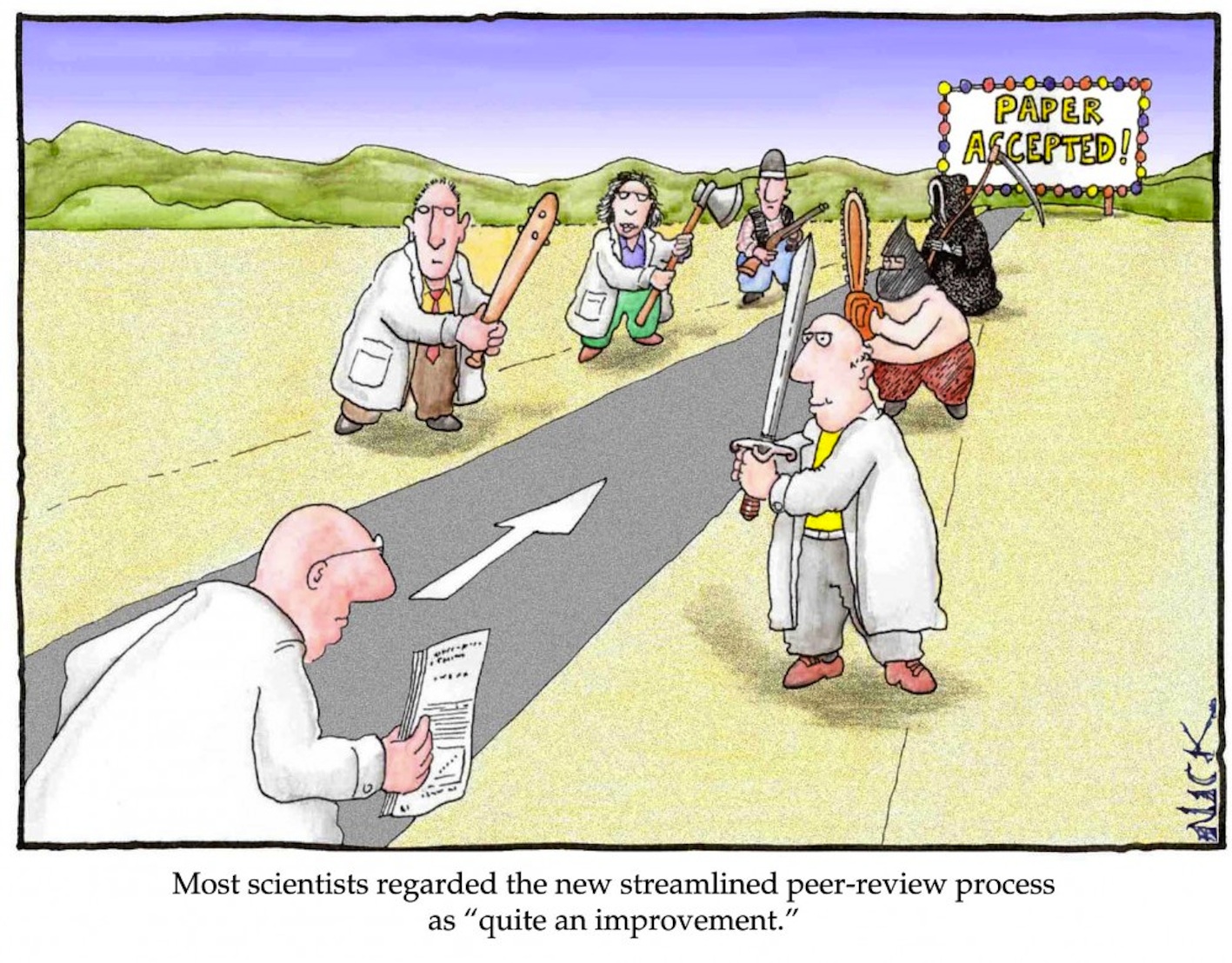
This has been a common practice in physics, especially the more theoretical branches, since the inception of arXiv. Senior researchers write a paper draft, and then send copies to some of their peers, get and incorporate feedback, and just submit to arxiv.