Hacker News new | ask | show | jobs
by bjourne 84 days ago
I really am not sure about that: https://biologue.plos.org/wp-content/uploads/sites/7/2020/05...

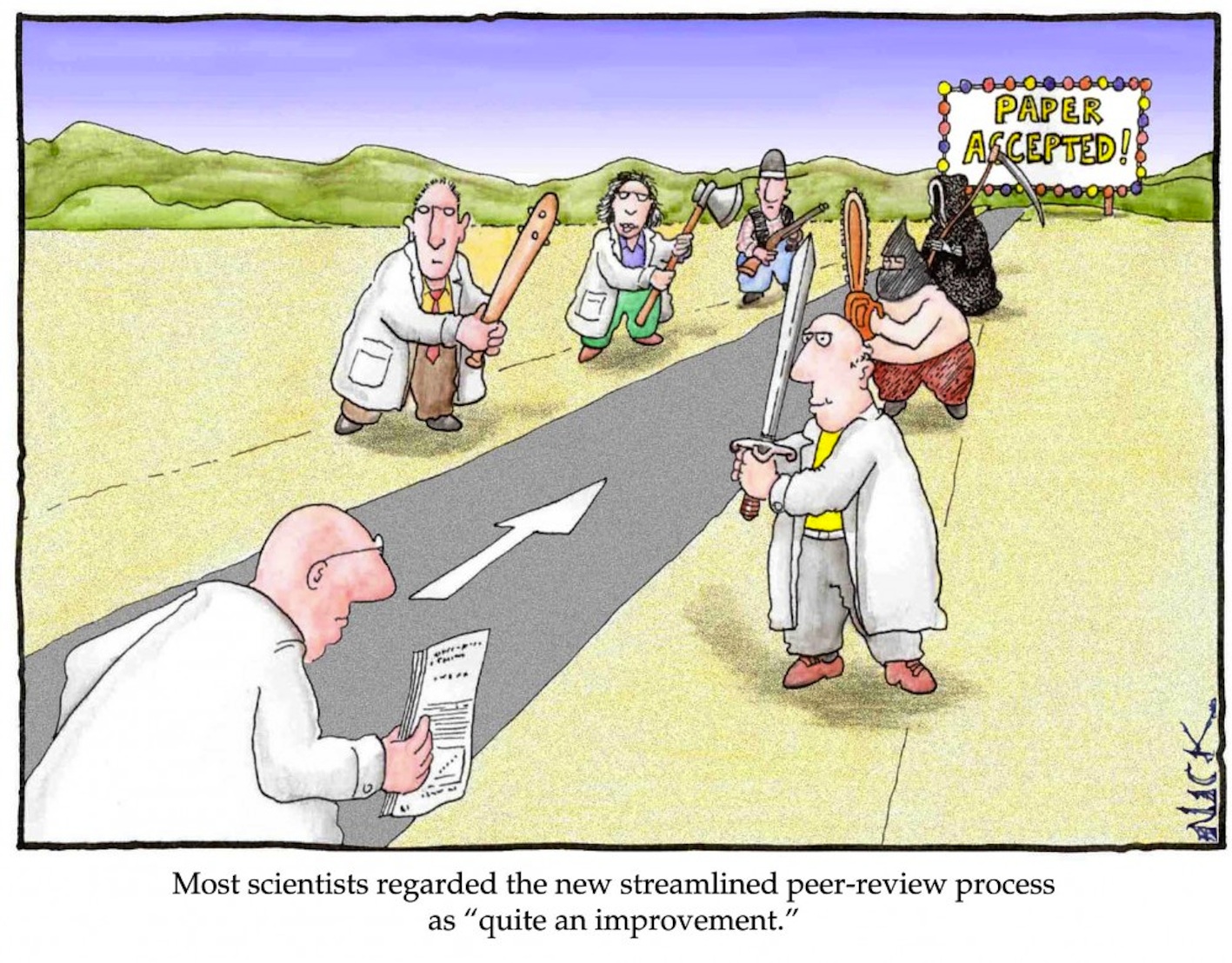
The problem is that "optimizing for peer-review" is not the same thing as optimizing for quality. E.g., I like to add a few tongue-in-cheeks to entertain the reader. But then I have to worry endlessly about anal-retentive reviewers who refuse to see the big picture.

1 comments

Currently a kind of rule of thumb is that a PhD student can graduate after approximately 3 papers published in a good peer reviewed venue.

If peer review were to go away, this whole academic system would get into a crisis. It's dysfunctional and has many problems but it's kinda load bearing for the system to chug along.

Maybe their institution should evaluate whether their papers pass muster? It's the one conferring the degree.
No hard rule, no crisis.

Maybe we can go back to very opinionated “true” academia,

where there are institutional gatekeepers,

but they mostly get it right on who to award (and not),

vs the current game of

“whoever plays ball with funding sources the best = the best academic”,

which is obviously bullshit.

You'll still need to convince the purseholders to pay you, and they'll want some objective metric to measure your output, and whatever metric they pick will be gamed.
The point of my comment was,

in much earlier institutions of knowledge and excellence,

the only transparent metric was whether or not they approved you.

That ossifies intellectual monocultures, though. (Or, heaven forbid, if someone has a financial conflict of interest in the private sphere...)
The current solution doesn’t resist capture by capital either,

and indeed we’re already left with all of the things claimed - the worst of both worlds, really.

But this is already how the purse holders operate. A big group of experts get together and vote on which grant proposals within a given category to fund.

I think it comes down to how the system is structured and how many players there are. The more difficult it is for a small cult to capture control of the funding (or access to instrumentation or awarding of degrees or whatever) for a given area the less likely you are to end up with a monoculture.

Assuming the majority of the funding continues to come from governments then you have a centralized point of leverage that can shape the system. So it should be possible to impose constraints that result in a system that actively prevents monocultures from developing.