Hacker News new | ask | show | jobs
by N_A_T_E 358 days ago
I don’t think this is a science or safety issue, it’s an issue with bad ingredient labeling. They should name these numbered dyes something more understandable. “Red dye 4” sounds pretty sketchy when they could say “Cochineal extract for coloring”. People can reject the product because the ingredients include a bug derived coloring rather than fear of the unknown “red dye” invented by their imagined evil food scientists.
6 comments

> Cochineal extract for coloring

95% of people wouldn't realize that's code for "insect juice," and they might prefer the artificial color.

Red 4 is already bug paste. Always has been. The “preference” based only on perception is just advertising.

Naturally colored candies use beet extracts for red.

Wait until people find out where jelly beans come from.
Jelly Belly doesn't use gelatin. They do use confectioners glaze, but that's closer to honey than to cochineal.
Confectioner's glaze in jelly beans comes from lac bug excretions.
Since cochineal casues so many allergic reactions, there's already a law that they have to put it on the label.
When I was a kid I ate lunch with a girl who couldn’t have M&Ms because she was allergic to the red die. I was appalled by this.

And the strangest thing about that story is that she was maybe 4 years old when Mars pulled the red M&Ms due to a cancer scare with a different red food coloring. Though my recollection was that it was a few years more recent than that, given how shelf life and supply chains work, I may have been getting back stock. I think I eventually proved to her that there were no red M&Ms anymore. I guess her parents hadn’t bothered to check for years. Not the first injustice I had tried to right but the easiest one.

Five years later they added Red back and I would think of her every time I ate M&Ms for a long time after.

Wikipedia reports red M&Ms were eliminated in 1976, and added back in 1987. I'm sure it took several months for these changes to make it to the marketplace, but probably not years; M&Ms have a reasonable shelf life, but they do degrade, so year old stock isn't great.

My Mom was pretty salty about the red M&Ms going missing, and refused to eat blue M&Ms for quite some time.

As I said, I’m pretty sure that number is wrong by a little. And does 76 mean January or December? That’s a long time for small children. This thread is about people announcing things and then taking a while to do them. But we were in a town hit particularly hard by a recession. I have no doubt they were turning inventory closer to the Best By date than yours was. I bet all those sales I remembered seeing (3 for a dollar!) were overstock.
"... it’s an issue with bad ingredient labeling ..."

I've been working on some improved labeling for certain grocery products:

https://kozubik.com/items/ThisisCandy/

Awesome idea. Are you doing anything else in a similar vein?
The only reason they add dyes, outside of baked goods IMO, is because they've used so many artificial ingredients, fillers, and preservatives that the resulting food product no longer looks appetizing. Whole, fresh food has never needed dyes added to it to be enticing to our monkey brains.
People have been coloring food for thousands of years with dyes like Saffron, carmine, turmeric, and squid ink.
Those are spices with taste.
Carmine is better known as Red 4 these days. Doesn't have much taste. Saffron adds basically no taste in the amounts typically used for something like Saffron rice. Squid ink again, mostly for the striking color. The taste isn't particularly great.

Turmeric can go both ways, but the ground turmeric that's historically common for preservation reasons is much less flavorful than the fresh root. It's mostly a color thing.

Of course, we can also just open up a medieval cookbook to see what they say. The Forme of Cury is a nice 14th century example that's available from Gutenberg: https://www.gutenberg.org/ebooks/8102

    As to colours, which perhaps would chiefly take place in suttleties, blood boiled and fried was used for dying black. saffron for yellow, and sanders for red. Alkenet is also used for colouring, and mulberries; amydon makes white; and turnesole [for yellow]
Alkanet is commonly used today for Rogan josh, but historically would have been more known for rouge and dying wine. A Mediterranean cookbook might have instead chosen amaranth for the same purpose
You need so little tumeric or annatto to color food and they impart so little flavor in so many applications that the reason they are used is very obvious.
flash freezing some paprika to remove the flavor is probably easier than boiling coal in a vacuum to make red 3.
> Whole, fresh food has never needed dyes added to it to be enticing to our monkey brains.

Have you ever cooked? Most stews use spices for colouring. A paella looks ill without saffron in it.

_Most stews use spices for _coloring? A quick glance over my recipes and books shows none of the stews use any spices for colouring.
Fruits and vegetables from a few hundred years ago would be almost unrecognizable and unpalatable to modern consumers. The colorful, delicious, and durable fruits and vegetables of today are the result of lots of work and selective breeding.
Most fruits and vegetables in grocery stores taste pretty bland. They're bred more for appearance, shelf stability, regularity, and transport rather than taste.

There are legendary varieties that are lost to time. Occasionally we rediscover them, and we get to compare. Usually the modern industrial varieties are pale imitations.

https://gastropod.com/the-most-dangerous-fruit-in-america/

jell-o of any color looks absolutely vile to me
Although you're free to like/dislike whatever you want, calling other people's food vile seems kind of mean. There are plenty of old/ancient foods that look exactly the same as jell-o

warabi-mochi, nata-de-coco, aiyu jelly, kokum, annindofu, kanten, blancmange, to name just a few

Jell-o is a byproduct of the meat industry, none of what you listed seems as bad nor look as bad as a mass produced artificially colored and artificially flavored blob of pork gelatin seating in a plastic cup.

If anything I'd say my take is less insulting to these other dishes than you are by comparing them to jell-o

> none of what you listed seems as bad nor look as bad as a mass produced artificially colored and artificially flavored blob of pork gelatin

You have really good eyes. I can't tell the difference

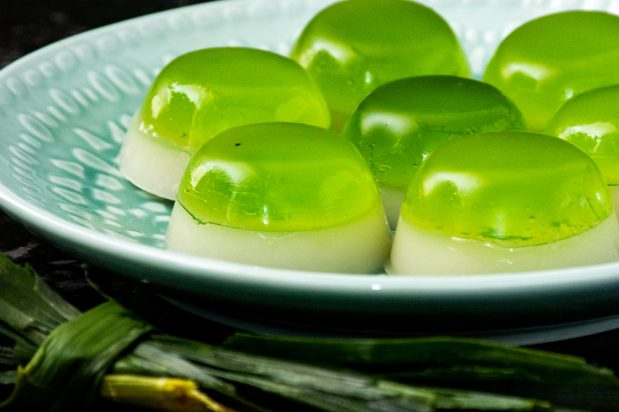
Pandan Jelly

https://asianinspirations.com.au/wp-content/uploads/2018/12/...

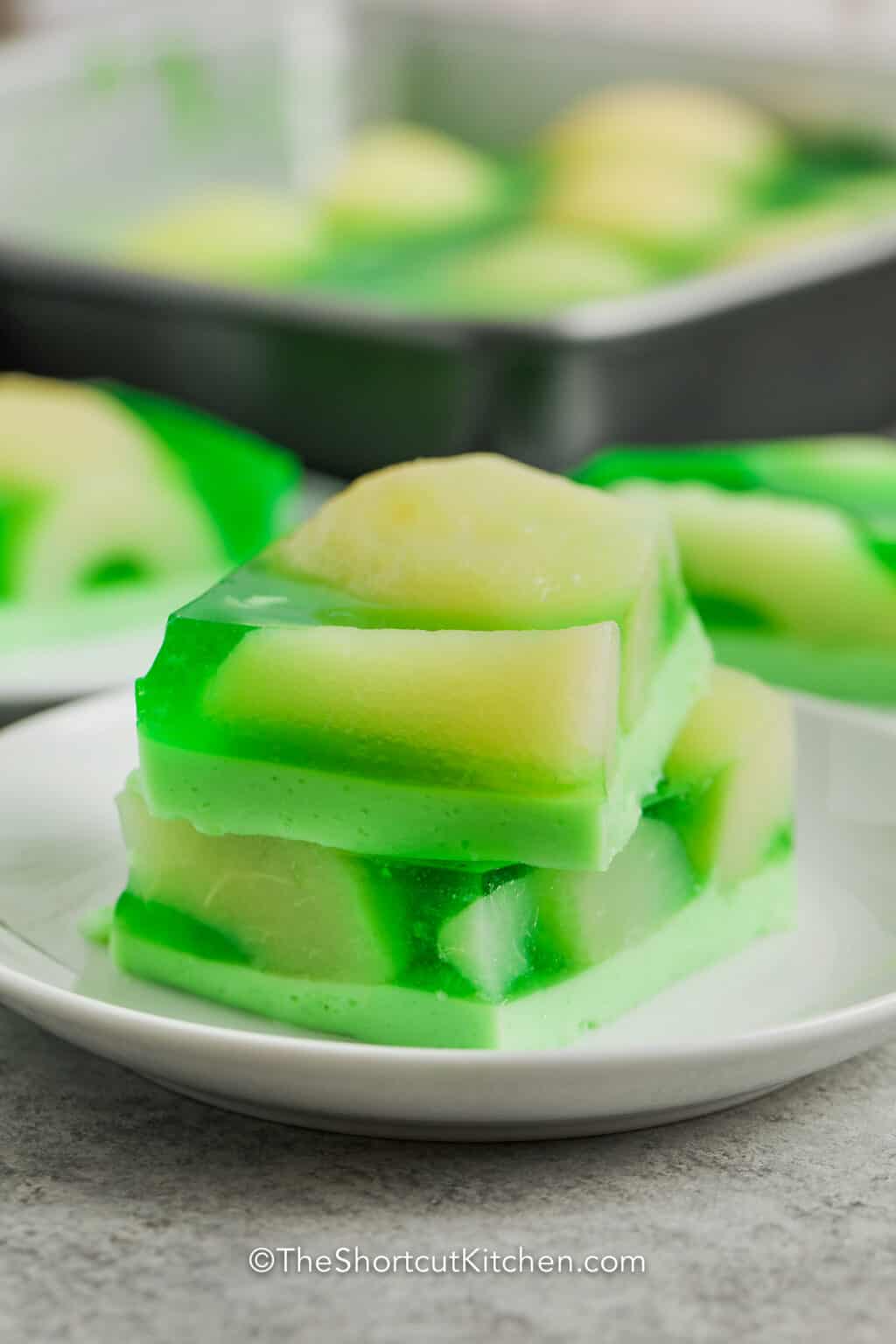
Lime Jell-o

https://centslessdeals.com/wp-content/uploads/2022/02/Lime-J...

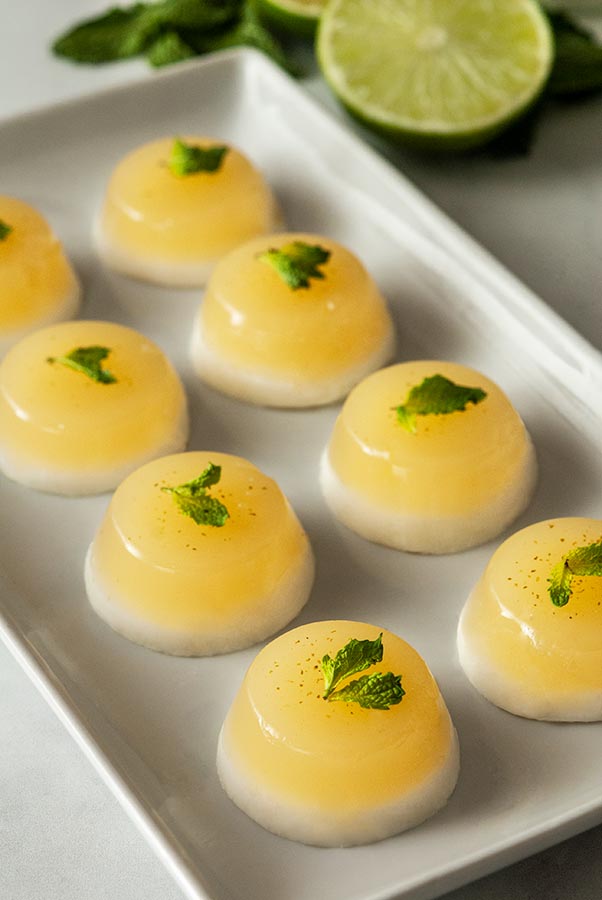
Lemon Jell-o

https://www.shekeepsalovelyhome.com/wp-content/uploads/2019/...

Aiyu-Jelly

https://www.shutterstock.com/image-photo/aiyu-jelly-46238794...

Raspberry Blancmange

https://themoderngelatina.com/wp-content/uploads/2010/09/img...

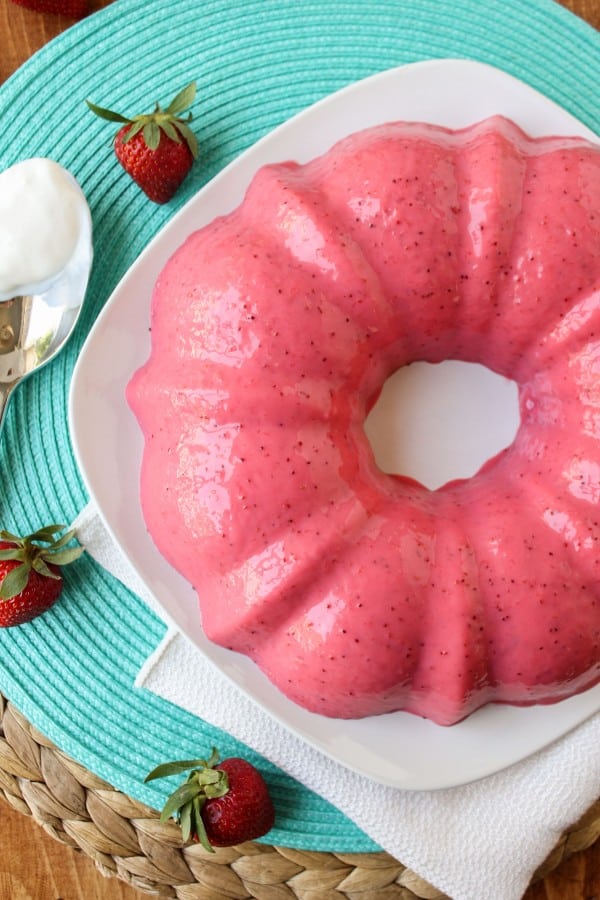
Strawberry Jell-o

https://thefoodcharlatan.com/wp-content/uploads/2014/04/IMG_...

That’s not super true. Salmon for instance. Or Easter eggs.
Wild salmon have their characteristic color because they are eating organisms that contain the naturally occurring Astaxanthin. Farmed salmon subsist on grains, fish oils, etc and come out looking grey unless pigments are added to their feed.

https://en.wikipedia.org/wiki/Astaxanthin

Great lakes salmon flesh lacks orange coloring as well
Definitely not.

https://www.youtube.com/watch?v=Cvvshpw4FxM

Check at 6 minutes into the video.

interesting, the Salmon I have caught has not been as colorful- I mostly fish in the rivers though

edit: it looks like that vid had some steelhead (trout) mixed in? This is more like what I have seen, but the color is even more "dulled" in person https://www.youtube.com/watch?v=e09UmeqAd4g

I think this is a health and safety issue, and I think the food business has corrupted a lot of science.

Why do we need these dyes in food?

Why are so many people so unhealthy? Could it be the food we are consuming?

Are we tracking the health and safety data from these policy changes to know if there is a change?

> Why are so many people so unhealthy?

Because being unhealthy is the natural state of things, and keeping a handle on that fact, at scale, is difficult and complicated. We used to do a much worse job of it, though. Humans living in developed economies where everyone eats all these oft-maligned foods live much longer than their ancestors did a few centuries ago. And those who live into old age tend to remain healthier longer than those who did a few centuries ago.

That's to say that there isn't room for improvement, or that there aren't things in our food supply that don't belong there. But a sense of perspective is important. "Is this food coloring increasing people's lifetime risk of a specific cancer from 0.005% to 0.01%?" is still a pretty tidy improvement over, "Ugh, yet another outbreak of ergotism. Well, why don't we try burning witches to see if that puts it to a stop."

I think being healthy is far more natural than you say.

Go look at how native or indigenous people live vs people in cities.

One of the things they have that people in developed economies generally don't is a 50% infant mortality rate.

The ones that don't achieve it through access to very unnatural artifacts such as vaccines that are quite likely to have been made using ultramodern technologies such as genetic modification.

Or, I've got quite a few friends who have various congenital conditions that mean that they absolutely would not have survived in a society with a more "natural" foodway. With the modern food supply chain, though, they're doing just fine. Unnatural things you get in some ultraprocessed foods, such as vitamin fortification, mean they can even do it without having to worry about developing comorbid chronic ailments due to malnutrition.

That is a survival bias. Ironically if you want signs of good health practice look for unhealthy people - it means that they can survive vs the unhealthy just dying.
A really good example of this was the paper that kicked off the whole "omega-3 fatty acids for heart health" thing. It ultimately got retracted.

The gist of the paper was that they observed that Inuit communities have really low rates of heart disease, and hypothesized that it could be because their traditional diet is very high in omega-3 fatty acids. The problem is, they don't actually have low rates of heart disease. They just have low rates of heart disease diagnosis, because they also have limited access to health care.

This is somewhat survivor bias though, because all the dead that didn’t survive their youth are actually dead.

In wealthy countries these would-be-dead people walk amongst us.

Little s Science can’t get “corrupted” because it is just a tool. When the scientific method is used to determine what people prefer to buy based on one second of looking at the product, that is arguably an immoral use of the scientific method especially if the health of the users is not taken into account.

That’s also to say that “trust the science“ can be a dangerous way to shut down discussion when people are actually grasping for words to understand whether a scientific method is being improperly used.

Are people so unhealthy? Life expectancies continue to rise. The "a majority of americans have a chronic health problem" stats include things like back pain. It turns out that if you live a long time you get chronic health problems.
> Why are so many people so unhealthy? Could it be the food we are consuming?

There's no doubt about this. High sugar, low fiber is the biggest culprit.

There's doubt about this. While high sugar and low fiber is problematic, sheer quantity might be a bigger culprit. And some indigenous populations seem to remain relatively healthy on low-fiber diets (i.e. eating mostly animal products).
Do yellow 5 next.