"So we should X?" is usually a signal that you're about to not track/engage with what someone said. I'm reminded of Cathy Newman's interview of Jordan Peterson where her only retort the whole time was "So you're saying that <something he didn't say>." (https://www.youtube.com/watch?v=aMcjxSThD54 -- A classic, even if you don't like the guy)
For example, they are talking about cows we farm into existence at the tune of 1.5 billion global population, not a few million wild animals.
No, I'm asking the commenter to consider the consequences of what they're saying. It is not "a few million wild animals"; there were an estimated 60 million bison in North America alone around 1800.
Why was it ok then but we can't have grazing animals now? I think the linked article makes a poor argument.
I'll take a stab even though I don't really have an overall opinion on the issue.
It was ok then because we weren't facing a climate crisis due to carbon cycle disruption then. Also, wild bison are different from domesticated cattle. One of the effects of the bison was shifting the boundaries between forest and grassland; now that they're gone more of the grassland is becoming forest, which IIRC captures less carbon than grassland. Also bison are native animals that might affect local ecosystems in many other different ways than our introduced cattle.
We've had an estimated 30-60 million bison in the US, now we have 100+ million cows.
And cattle and bison differ in their grazing behavior and ecological impact, making a direct environmental comparison unfair due to their distinct roles in shaping ecosystems.
It's our cattle and farming methods that are wiping out all wildlife.
The 2022 Living Planet Report found that vertebrate wildlife populations have plummeted by an average of almost 70% since 1970, with agriculture and fishing being the primary drivers of this decline.
* Of the 89.3 million head inventory, all cows and heifers that have calved totaled 38.3 million.
* There are 28.9 million beef cows in the United States as of Jan. 1, 2023, down 4% from last year.
* The number of milk cows in the United States increased to 9.40 million.
* U.S. calf crop was estimated at 34.5 million head, down 2% from 2021.
* All cattle on feed were at 14.2 million head, down 4% from 2022
As pointed out by olddustytrail .. that's the US.
Elsewhere meat consumption can save the planet by decreasing hoove heavy ferals that aren't managed at all - eg: Australia where camels, donkeys, goats, and cleanskin cattle are all introduced animals run wild that can be rounded up and trucked out every year in a never ending game of trying to keep their numbers in check and stop them over taxing the environment.
Kangaroos are native but savagely boom | bust - when the wet years hit numbers spike and if the population isn't culled the following years see the ground littered with dead as water resources contract.
> It's our cattle and farming methods that are wiping out all wildlife.
Well, when you say "our" you mean your own. Our local cattle graze on the machair.
But that's not the argument you originally made. You were saying it's impossible to raise grazing animals without being environmentally unfriendly. That is the part I dispute.
> it's impossible to raise grazing animals without being environmentally unfriendly. That is the part I dispute
Animal farming became unsustainable due to its massive environmental footprint, including deforestation, habitat destruction, pollution, and excessive resource consumption, which collectively strain the Earth's capacity to support such practices.
We cannot feed the population with the same version of American or European diets - we'd need 5+ Earths to do it.
"A 2017 University of Oxford study titled Grazed and Confused accepted that managed grazing systems could sequester some carbon back into the soil. It added, however, that this was only around 20-60 percent of the emissions that the cattle produced in the first place. What’s more, after a few years soil reaches carbon equilibrium, meaning it cannot sequester any more."
Feeding 10 billion people by 2050 within planetary limits may be achievable
A global shift towards healthy and more plant-based diets, halving food loss and waste, and improving farming practices and technologies are required to feed 10 billion people sustainably by 2050, a new study finds.
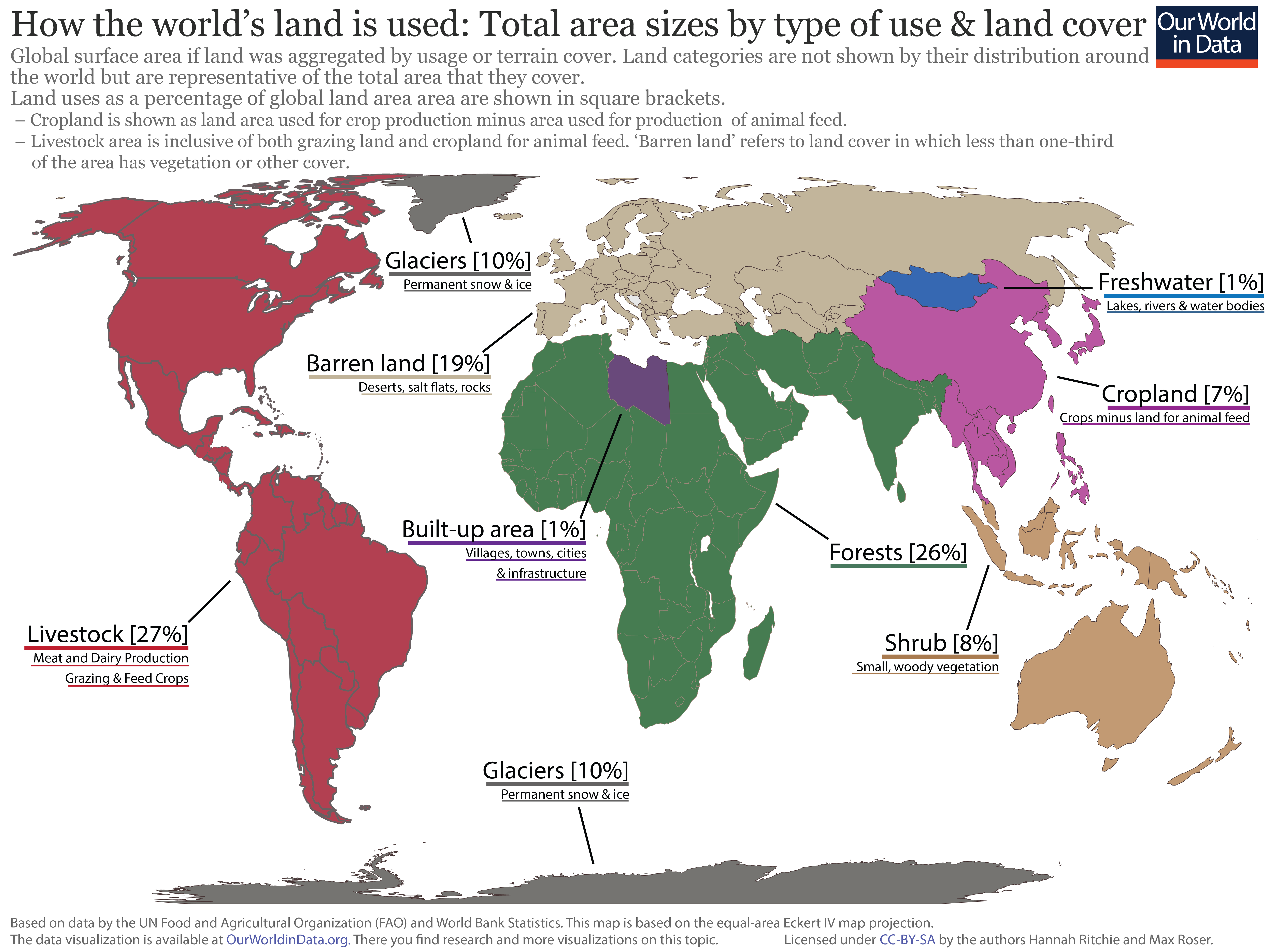
For example, they are talking about cows we farm into existence at the tune of 1.5 billion global population, not a few million wild animals.