| We've had an estimated 30-60 million bison in the US, now we have 100+ million cows. And cattle and bison differ in their grazing behavior and ecological impact, making a direct environmental comparison unfair due to their distinct roles in shaping ecosystems. It's our cattle and farming methods that are wiping out all wildlife. https://xkcd.com/1338/ https://en.wikipedia.org/wiki/Holocene_extinction The 2022 Living Planet Report found that vertebrate wildlife populations have plummeted by an average of almost 70% since 1970, with agriculture and fishing being the primary drivers of this decline. https://www.unep.org/news-and-stories/press-release/our-glob... Our global food system is the primary driver of biodiversity loss https://www.vox.com/future-perfect/22287498/meat-wildlife-bi... The way we eat could lead to habitat loss for 17,000 species by 2050 Two recent studies underscore the danger the meat production system poses for biodiversity. https://phys.org/news/2023-04-climate-crisis-biodiversity-ap... The climate crisis and biodiversity crisis can't be approached separately https://pubmed.ncbi.nlm.nih.gov/26231772/ Biodiversity conservation: The key is reducing meat consumption |
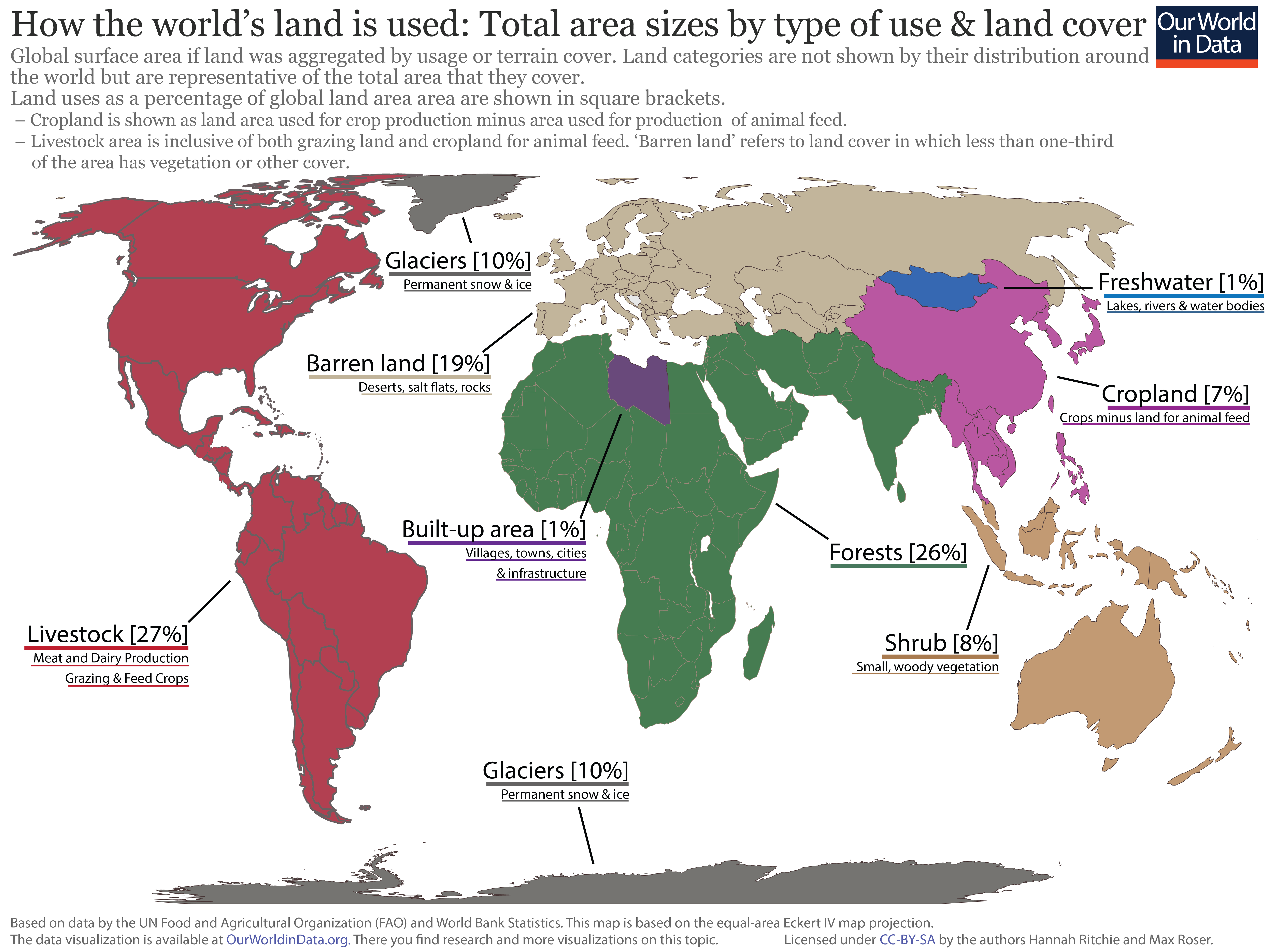
> We've had an estimated 30-60 million bison in the US, now we have 100+ million cows.
The US has always had < 50 million adult cows (milk or beef), the difference is yearling calves.
The bison estimates likely didn't include calves either .. and have a lot of bounce in any case.
There were 89.3 million head of cattle and calves on U.S. farms as of Jan. 1, 2023,
https://www.nass.usda.gov/Newsroom/2023/01-31-2023.php
* Of the 89.3 million head inventory, all cows and heifers that have calved totaled 38.3 million.
* There are 28.9 million beef cows in the United States as of Jan. 1, 2023, down 4% from last year.
* The number of milk cows in the United States increased to 9.40 million.
* U.S. calf crop was estimated at 34.5 million head, down 2% from 2021.
* All cattle on feed were at 14.2 million head, down 4% from 2022
As pointed out by olddustytrail .. that's the US.
Elsewhere meat consumption can save the planet by decreasing hoove heavy ferals that aren't managed at all - eg: Australia where camels, donkeys, goats, and cleanskin cattle are all introduced animals run wild that can be rounded up and trucked out every year in a never ending game of trying to keep their numbers in check and stop them over taxing the environment.
Kangaroos are native but savagely boom | bust - when the wet years hit numbers spike and if the population isn't culled the following years see the ground littered with dead as water resources contract.