Hacker News new | ask | show | jobs
by whats_a_quasar 1043 days ago
The brain is really complicated, and all psychiatric medications affect multiple receptors and subsystems. Framing this study as "antipsychotics were off target" is an editorial choice. The title could just as easily have been "Improved understanding of antipsychotic action means we may be able to design better antipsychotics."

Edit: It also ought to be noted that the study was on mice that had been given amphetamines to mimic psychosis. Which is interesting and good science, but seems far from enough evidence for the press to write stories with headlines like "Everyone Was Wrong About Antipsychotics" or "Schizophrenia Drugs May Have Been Off Target For Decades, Study Finds."

This sort of internet story bothers me because I've spent time around schizophrenics who are recovering from a psychotic episode. Schizophrenia can get really, really bad, in a way that I don't think most people who haven't had contact with the psychiatric medical system understand. Antipsychotics have awful side effects, but for many people the alternative is uncontrolled psychosis, which can be vastly worse.

There's a decent chunk of people who inherently and vocally dislike psychiatric medication, and these media stories are in that tradition. But the only people who ought to be involved in the decision about using antipsychotics are the patient, their family, and their medical providers. Writing headlines that are too broad for the evidence that supports them does not help improve the lives of people with schizophrenia.

4 comments

I think you might miss the point slightly, moving too far the discussion on the other side.

It's perfectly normal to wonder how can one administrate something when one doesn't understand it. Especially when there can be such debilitating effects.

In clinical settings, things are way less clear than you make it seem. All psychosis are not equal and even all diagnostic of a same patient are not equal.

There is a lot more caution that should be advised. Including in the administration protocols instead of handwaving and just claiming that it should be taken life-long (which betrays that it's not a cure).

It does not even make sense in the first place that there is no attempt at finding the base neuro-transmitter levels in and out of psychotic phases for each patient before deciding on the posology of a treatment. Managing plasma concentration in a finer-grained way might avoid some (not all) of the issues with neuroleptics.

Some people even only have a few episodes every few years and are still put on life-long treatment with all the side-effects that can then be seen.

It needs to be way more fine-grained if not restudied.

> It's perfectly normal to wonder how can one administrate something when one doesn't understand it. Especially when there can be such debilitating effects.

A theoretical/principled understanding of how a drug works has never been required for useful medicine to happen. For example, we don't know how general anaesthesia works. We don't know why some people have extremely bad reactions to certain anaesthetics (and they do). And yet they are used every day, to enormous net benefit.

> finding the base neuro-transmitter levels in and out of psychotic phases for each patient before deciding on the posology of a treatment

Is it actually possible to measure that, non-invasively?

The anaesthetic agent is not a drug that one is supposed to take for the remaining of their life and has no observed side-effects in general.

It's also treated with the utmost care and in most interventions, if there is a choice to do without, the patient is offered the choice. There is a lot more consent involved.

So it's not the same thing.

To answer your other question, yes, neurotransmitter levels can be measured in the blood or urine.

For someone under-treatment, it would only make sense to. Wait 4 or 5 times the half-life of the molecule. (that's the difficulty since once started, they are not even supposed to stop).

> The anaesthetic agent is not a drug that one is supposed to take for the remaining of their life and has no observed side-effects in general.

This is notably untrue. General anaesthesia is associated with higher risks of dementia. Especially the older the person being treated.

While there's some disagreement here - short term cognitive decline is inarguable as a side-effect (called post-operative cognitive decline), and many suspect it's related to long term cognitive issues:

---

From: https://www.alzheimers.org.uk/about-dementia/risk-factors-an...

> There is a link between surgery and short-term changes in thinking and memory, called post-operative delirium or post-operative cognitive decline. This condition particularly seems to affect older people. Some studies have also found that these short term changes may be associated with higher risk of dementia later in life but other studies have found no association.

I don't see how your link establishes that what I said is notably untrue.
There are known side effects (short term cognitive decline). In addition - there are unresolved questions about whether those effects are persistent or not, and whether age plays a role.

What you said is: "[anaesthetic agent] has no observed side effects in general" and that's just not true.

As an aside - my grandmother had hip surgery at 86 and was never the same mentally afterwards. She could walk, but she couldn't remember who her family was. It was not particularly unexpected (she had an existing diagnoses of alzheimers) but the change post-surgery was notable enough that the entire family discussed it. It was like she had been slipping a bit, but the surgery threw her off a cliff. The difference between knowing who you are, but discussing the weather every half hour or so, to having no idea who the people around her were.

Personally - I would firmly place anesthetics into a fairly risky category of drug that we have a very poor understanding of. Which is decidedly not where you are placing it.

It has serious, observed, side effects for a sizable fraction of the population?

Yet your comment said "and has no observed side-effects in general."

It isn't required for useful medicine, but it is useful for required medicine.
The goal is to maximize the life outcomes and quality of life of people with schizophrenia. I think in the conversation here there are two questions: What should the public conversation on schizophrenia be like? And, how should the medical system use antipsychotics in the treatment of schizophrenia?

I think, on the first question, the public conversation about schizophrenia is not ideal for improving outcomes. In particular, people in their 20s who have a first psychotic episode need to be pushed by their friends and family to get medical care immediately. Schizophrenia treated early is associated with much better outcomes later in life, and long periods of untreated psychosis are associated with much worse outcomes. I think that poor quality articles like this one sustain that section of the population who distrust psychiatrists, which leads some schizophrenics to seek treatment too late or not at all.

On the second question, I think that doctors are doing about as well as they can with antipsychotics with the current state of knowledge. Though it sounds like your concern about overprescription is from experience, and my feelings about the right level of long-term antipsychotic use are much weaker than my feelings about the public conversation.

I agree that it would be better for antipsychotics to be better targeted. Measuring individual neurotransmitter levels sounds like a very interesting way to better target treatment, though I don't think it is straightforward to measure neurotransmitters in a living brain.

I agree that many patients are on antipsychotics for longer than is necessary. The challenge is distinguishing between patients who should discontinue antipsychotics and the patients who will immediately relapse into psychosis without meds.

---

Other thoughts:

> It's perfectly normal to wonder how can one administrate something when one doesn't understand it.

This is a mischaracterization of the state of the science. Antipsychotics are well understood, though not fully understood. We at this point have decades of data on the efficacy of antipsychotics, the prevalence and severity of side effects. We know most of the interactions between the drug and the body. What is not well understood is the exact mechanism by which these interactions moderate psychosis.

> there is no attempt at finding the base neuro-transmitter levels in and out of psychotic phases for each patient before deciding on the posology of a treatment

To my non-expert ears this sounds like an interesting approach to make treatment more targeted. I am not aware of a technology that could currently be used to measure neurotransmitters in a living brain, and I worry that measurement would be invasive.

> Some people even only have a few episodes every few years and are still put on life-long treatment with all the side-effects that can then be seen.

> This is a mischaracterization of the state of the science. Antipsychotics are well understood, though not fully understood

That's a very important distinction in the latter part. They are somewhat understood in their action mechanisms, whether VMAT1, VMAT2, D1, D2 receptors etc. But not really in their effectiveness (which is slightly more important, especially to determine administration protocols).

Which is also the point of the article.

The story could just as easily be "Improved understanding of antipsychotic action means we may be able to design better antipsychotics"

And that would be a more accurate understanding of it - and I hope its true. Current antipsychotics are helpful but imperfect.

You'll be positively surprised to read the conclusion of the article then:

"The findings also offer a glimmer of hope that researchers can correct course and use these new insights to design much-improved treatments for schizophrenia. Treatments that can't come soon enough."

Close enough, right?

Journalists know how to write headlines that make people read the article, or at least some people. They are little dramas, and if you start by giving the plot away like that, as if you just simplified a scientific paper a bit, your analytics will tell you to look for a different job soon. It is what it is. So no, it couldn't 'just as easily' be this alternative thing if it wants to get attention.

And I don't think this is always a bad thing. It only gets bad if the headline is overly editorializing, clickbait or just plain false. I don't think it is in this case.

The serotonin model of antidepressants just doesn’t pass a sniff test. Something else is going on there. How they say they should work would mean they work in the first dose and possibly that don’t require tapering off. But that’s not what happens in the real world.

If we understood what’s really happening we could target pathways better.

The "serotonin model", actually called the monoamine hypothesis, hasn't really been taken seriously in the field for decades, except by naysayers like yourself who continue to use it as a strawman.
I see patients still take it seriously because of the heavy marketing of Zoloft in particular.

The drugs are literally have serotonin in the name.

I still hear people regularly refer to mental health problems being due to a "Chemical imbalance", often as a way to defend their use of pharmaceuticals and dismiss the efficacy of any other intervention. It's that they see people justify a non-falsifiable in the efficacy of the current course of treatment. It's that it's hard enough to convince people who have been on SSRI's for decades and are doing badly to take a month to ween off them, a month to see how things go, and a month to get back on them. If they believe their brains are fundamentally broken without evidence it's just about impossible.

It's that when a sixth of American women have taken anti-d's in the past month, and the most popular explanation as to why is they have broken brains that need to be treated with medicine, as if their problems must all be due to some genetic issue or whatever, I find it abhorrent.

I don't know, it pisses me off that these drugs are popular largely due to a mythology and how difficult they are to stop more than they're efficacious is all (not that they are not efficacious). It's not that psychiatrists don't know this theory isn't true, I'm well aware the theory has been well known to lack support for a long time in medical circles, it's that they don't effectively inform their patients.

Medicine should stop calling them "SSRIs" if the SSRI part is a tangential side-effect, better educate patients on the fact that medicine doesn't really know why the drugs work, or even if a given patient will respond to them better than placebo. Governments should ban pharmaceutical advertisements because they make people sick and misinformed.

SSRIs are popular because they are effective and safer than older antidepressants. And what depression interventions are incompatible with SSRIs but other drugs not understood completely also?

What should SSRIs be called if the SSRI part is how they work indirectly? What would you call them now? And SNRIs? And MAOIs?

I mean this without sarcasm, but congratulations on your deployment the phrase "strawman" being one of the only uses I've ever seen that makes sense, and not using it as cop out to avoid responding to a valid metaphor/ anecdote
> hasn't really been taken seriously in the field for decades, except by naysayers like yourself who continue to use it as a strawman.

…and by basically the entire general public. Big pharma did a great job on the “depression is a just a chemical imbalance…” awareness campaign, but absolutely dropped the ball on the “actually we were wrong about that” campaign, so that’s still what most members of the public tend to believe.

Can you name one topic of bleeding edge research on which the general public's understanding is not either outdated, oversimplified, or both?
The reason it’s outdated in this case is because the pharmaceutical industry invested so much money and time into selling Prozac to the public, for a treatment that was ultimately ineffective, and then of course invested no money at all into correcting the public’s subsequent misunderstanding. So unlike what you’ve claimed, this isn’t a concept taken seriously only by naysayers who want to use it as a strawman. It’s a concept many members of the public generally believe to be true, because the experts spent so much time and money telling them it was.
There seem to be practitioners still taking this seriously, and I expect them to continue to do so until they die. According to this article from 2022 it's still "influential": https://www.nature.com/articles/s41380-022-01661-0
Don’t people still talk about “low seratonin levels?” I always found it suspect that we say someone’s levels are low without actually measuring them.
Yes, and psychiatrists never believed it was "low serotonin" at all, or at least claim to have never believed it.

For ADHD, stimulants actually do treat it by fixing "low dopamine"… in specific areas of the brain. But "low dopamine" is also a description of Parkinson's disease.

But SSRIs don't work like stimulants do; they take a lot more than half an hour to take effect. We don't actually know how SSRIs work in the people where they do work.

> But SSRIs don't work like stimulants do; they take a lot more than half an hour to take effect.

Sorry, need to be an anecdote for you. Prozac makes me manic in about 5 hours. We know how SSRIs work, the problem is they are treating a symptom not the cause of depression which is immune dysfunction.

If SSRIs did not increase serotonin there would be no risk of them causing serotonin syndrome, and they do.

> the problem is they are treating a symptom not the cause of depression which is immune dysfunction.

Yeaaaaa that's gonna be a serious "citations (plural and trustworthy) needed" from me there

The fact we still called them SSRIs is the part that gets me. But I suppose until we know how they actually work we can’t just call them “thingy”.
They're called SSRIs because pharmacodynamically, that is what they do. Not sure what's so wrong with that.
They Inhibit the Reuptake of Seratonin Selectively. What should we call them?
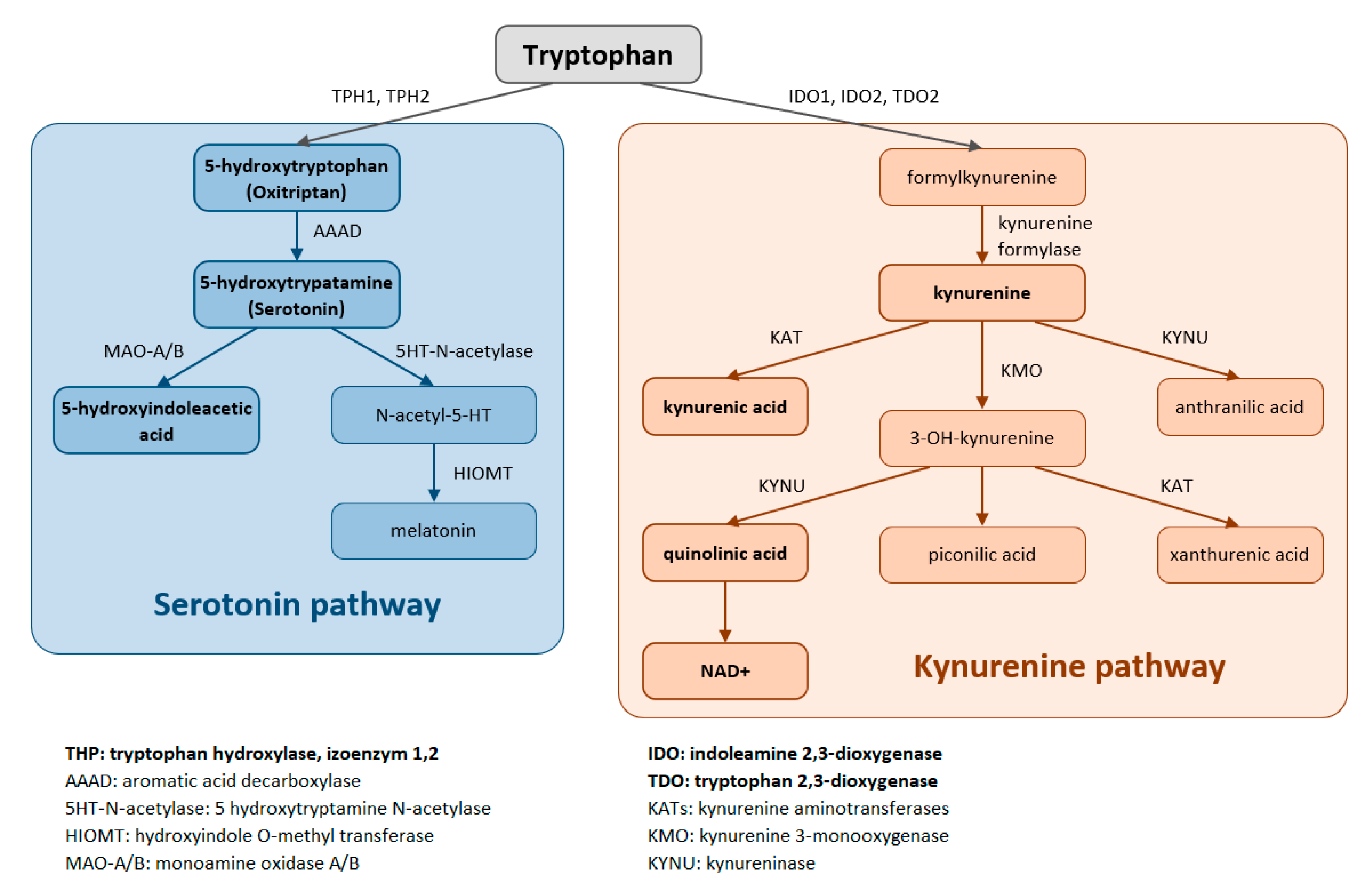
As someone living with schizoaffective bipolar disorder and has studied his own genetics over 15 years I can tell you serotonin plays a role in mood disorders but it is secondary. (Tryptophan is pushed down the kynurenine pathway during illness and therefore none is available to make serotonin.)

https://www.mdpi.com/ijms/ijms-22-11714/article_deploy/html/...

My mood disorder is caused by an immune disorder. How do I know this? When I take TNF Inhibitors my mood disorder goes away. But it is all over my genetics (PNP, CACNA1C, EARP1, TNPAIP3, SLC18A2, SLC1A2, SLC23A2 are the most relevant) and I have found rescue in high dose zinc and ascorbic acid not only for my mood, but also for my Ankylosing spondylitis.

Note as well that I had my worst paranoid delusional states both time I had COVID.

Here is a tip from a two time suicide survivor; Doctors can only treat the symptoms, and most do its poorly. Use medicine to get stable and stay alive but figure out the rest on your own.

How antidepressants work doesn't seem especially germane to a discussion of antipsychotics?
Antidepressants can exacerbate symptoms/ trigger episodes in patients with undiagnosed schizophrenia and bipolar, so it is pretty relevant
Yes, I agree. It's confusing to branch off to that without mentioning why they are doing so.
Neurochemistry isn’t relevant?
This media story isn't 'in the tradition' of vocally disliking psychiatric medication. You could twist the headline to be, possibly. Have you read the article itself? Its the complete opposite.

The headline is a bit attention grabby perhaps (and of course, that is what a headline must do), but I wouldn't even call it clickbait. It is even fairly accurate. Yes, they were likely off target with the specific neuroreceptors, no that doesn't mean the medication didn't work and of course, this is a positive development for designing better medication. This is classic storytelling, draw the reader in with some conflict and save the resolution for the end.

We need to be able to discuss negatives and limitations associated with psychiatric medication in an honest and nuanced way. They often don't work well enough, there are costs associated and just giving somebody a pill and be done with it is hopelessly inadequate to the point of negligence.

As someone who did experience uncontrolled psychosis myself, let me tell you the absolute taboo of discussing these matters made me way more uncomfortable than the side effects. Furthermore, psychiatry made me feel like a diseased animal at times, not to be taken very seriously and just put on drugs for life to be on the safe side. In hindsight I do appreciate how difficult that line of work is, doesn't change my experience.

I am not against medication really, actually I think they are a must-have. I just think most anti-medication people are not really rallying against the side effects or at least not initially, but grew opposition out of bad experiences with treatment that focuses only on medication and was just very inadequate. Medication is what represents that. Additionally, medication can come to represent your loss of sanity and with that, you fundamental not-belonging to the group of 'normal people'. Thus the desire to not be on meds 'for life'. Haven't spoken to a single therapist or psychiatrist who made me feel that was a legitimate desire and who understood that. Maybe things have changed, this was a long time ago.

To deal with the resentment against meds, I think it is way more effective to address those concerns directly and without fear, rather than putting down everything that might be interpreted as negative about medication.

Like you say, without experience yourself, you have no idea how bad psychosis can get. It is a really complex thing and you will need much, much more than pills. And not only for the psychotic episodes, because these experiences tear at your identity as a human being. It isn't over when the psychosis is over.