Hacker News new | ask | show | jobs
by hinkley 1043 days ago
The serotonin model of antidepressants just doesn’t pass a sniff test. Something else is going on there. How they say they should work would mean they work in the first dose and possibly that don’t require tapering off. But that’s not what happens in the real world.

If we understood what’s really happening we could target pathways better.

3 comments

The "serotonin model", actually called the monoamine hypothesis, hasn't really been taken seriously in the field for decades, except by naysayers like yourself who continue to use it as a strawman.
I see patients still take it seriously because of the heavy marketing of Zoloft in particular.

The drugs are literally have serotonin in the name.

I still hear people regularly refer to mental health problems being due to a "Chemical imbalance", often as a way to defend their use of pharmaceuticals and dismiss the efficacy of any other intervention. It's that they see people justify a non-falsifiable in the efficacy of the current course of treatment. It's that it's hard enough to convince people who have been on SSRI's for decades and are doing badly to take a month to ween off them, a month to see how things go, and a month to get back on them. If they believe their brains are fundamentally broken without evidence it's just about impossible.

It's that when a sixth of American women have taken anti-d's in the past month, and the most popular explanation as to why is they have broken brains that need to be treated with medicine, as if their problems must all be due to some genetic issue or whatever, I find it abhorrent.

I don't know, it pisses me off that these drugs are popular largely due to a mythology and how difficult they are to stop more than they're efficacious is all (not that they are not efficacious). It's not that psychiatrists don't know this theory isn't true, I'm well aware the theory has been well known to lack support for a long time in medical circles, it's that they don't effectively inform their patients.

Medicine should stop calling them "SSRIs" if the SSRI part is a tangential side-effect, better educate patients on the fact that medicine doesn't really know why the drugs work, or even if a given patient will respond to them better than placebo. Governments should ban pharmaceutical advertisements because they make people sick and misinformed.

SSRIs are popular because they are effective and safer than older antidepressants. And what depression interventions are incompatible with SSRIs but other drugs not understood completely also?

What should SSRIs be called if the SSRI part is how they work indirectly? What would you call them now? And SNRIs? And MAOIs?

I mean this without sarcasm, but congratulations on your deployment the phrase "strawman" being one of the only uses I've ever seen that makes sense, and not using it as cop out to avoid responding to a valid metaphor/ anecdote
> hasn't really been taken seriously in the field for decades, except by naysayers like yourself who continue to use it as a strawman.

…and by basically the entire general public. Big pharma did a great job on the “depression is a just a chemical imbalance…” awareness campaign, but absolutely dropped the ball on the “actually we were wrong about that” campaign, so that’s still what most members of the public tend to believe.

Can you name one topic of bleeding edge research on which the general public's understanding is not either outdated, oversimplified, or both?
The reason it’s outdated in this case is because the pharmaceutical industry invested so much money and time into selling Prozac to the public, for a treatment that was ultimately ineffective, and then of course invested no money at all into correcting the public’s subsequent misunderstanding. So unlike what you’ve claimed, this isn’t a concept taken seriously only by naysayers who want to use it as a strawman. It’s a concept many members of the public generally believe to be true, because the experts spent so much time and money telling them it was.
There seem to be practitioners still taking this seriously, and I expect them to continue to do so until they die. According to this article from 2022 it's still "influential": https://www.nature.com/articles/s41380-022-01661-0
Don’t people still talk about “low seratonin levels?” I always found it suspect that we say someone’s levels are low without actually measuring them.
Yes, and psychiatrists never believed it was "low serotonin" at all, or at least claim to have never believed it.

For ADHD, stimulants actually do treat it by fixing "low dopamine"… in specific areas of the brain. But "low dopamine" is also a description of Parkinson's disease.

But SSRIs don't work like stimulants do; they take a lot more than half an hour to take effect. We don't actually know how SSRIs work in the people where they do work.

> But SSRIs don't work like stimulants do; they take a lot more than half an hour to take effect.

Sorry, need to be an anecdote for you. Prozac makes me manic in about 5 hours. We know how SSRIs work, the problem is they are treating a symptom not the cause of depression which is immune dysfunction.

If SSRIs did not increase serotonin there would be no risk of them causing serotonin syndrome, and they do.

> the problem is they are treating a symptom not the cause of depression which is immune dysfunction.

Yeaaaaa that's gonna be a serious "citations (plural and trustworthy) needed" from me there

The fact we still called them SSRIs is the part that gets me. But I suppose until we know how they actually work we can’t just call them “thingy”.
They're called SSRIs because pharmacodynamically, that is what they do. Not sure what's so wrong with that.
They Inhibit the Reuptake of Seratonin Selectively. What should we call them?
If they do something else as a side effect, but it turns out that's the main effect, it might be worth renaming them.
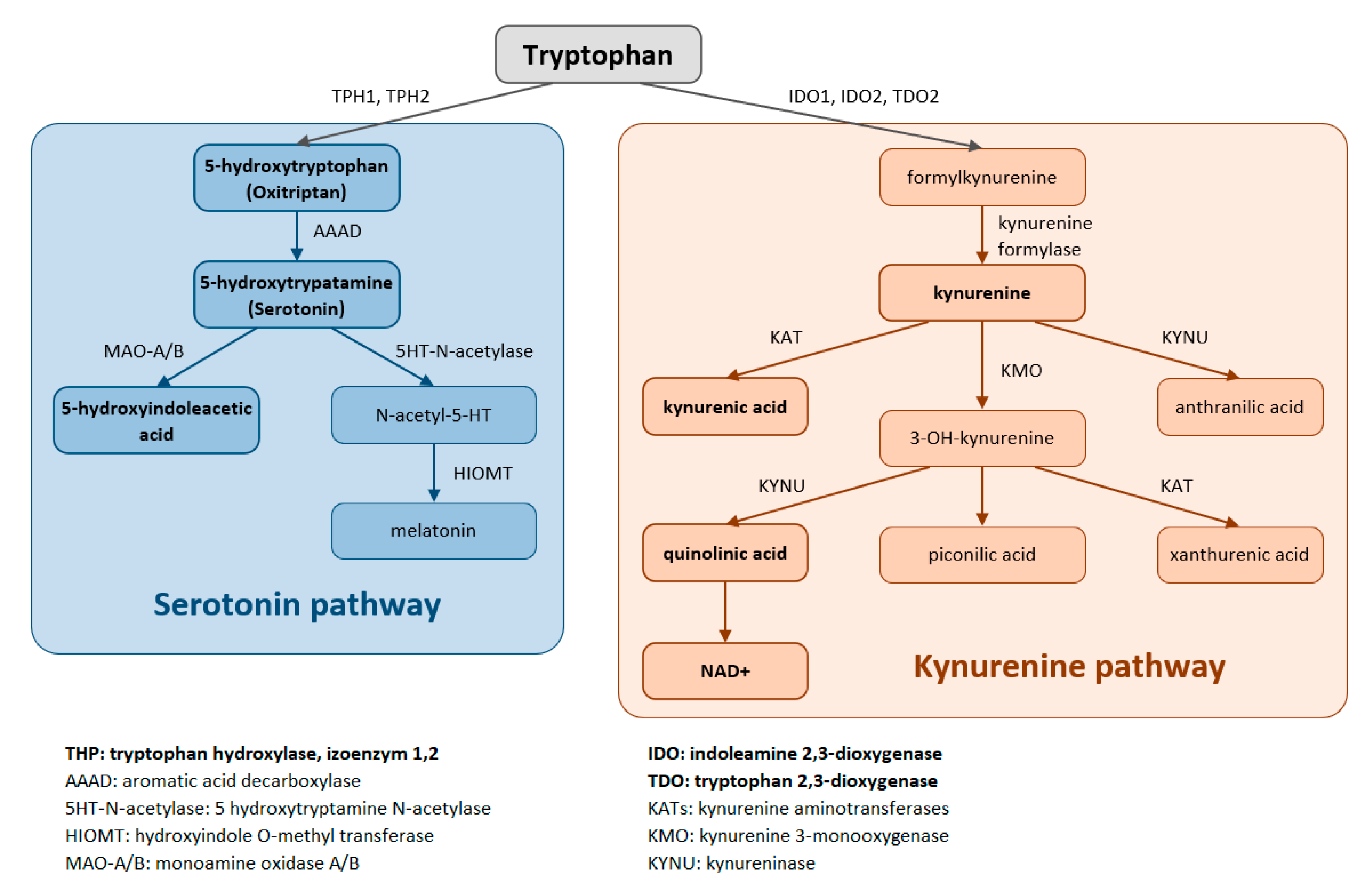
As someone living with schizoaffective bipolar disorder and has studied his own genetics over 15 years I can tell you serotonin plays a role in mood disorders but it is secondary. (Tryptophan is pushed down the kynurenine pathway during illness and therefore none is available to make serotonin.)

https://www.mdpi.com/ijms/ijms-22-11714/article_deploy/html/...

My mood disorder is caused by an immune disorder. How do I know this? When I take TNF Inhibitors my mood disorder goes away. But it is all over my genetics (PNP, CACNA1C, EARP1, TNPAIP3, SLC18A2, SLC1A2, SLC23A2 are the most relevant) and I have found rescue in high dose zinc and ascorbic acid not only for my mood, but also for my Ankylosing spondylitis.

Note as well that I had my worst paranoid delusional states both time I had COVID.

Here is a tip from a two time suicide survivor; Doctors can only treat the symptoms, and most do its poorly. Use medicine to get stable and stay alive but figure out the rest on your own.

How antidepressants work doesn't seem especially germane to a discussion of antipsychotics?
Antidepressants can exacerbate symptoms/ trigger episodes in patients with undiagnosed schizophrenia and bipolar, so it is pretty relevant
Yes, I agree. It's confusing to branch off to that without mentioning why they are doing so.
Neurochemistry isn’t relevant?