"Despite his claims of a revolutionary breakthrough, Alexander had trouble finding a journal to publish his results. Both Science and Nature rejected the study for publication, likely due to significant problems with the methodology and results. Pharmacology Biochemistry and Behavior published the results in 1981 with little response and the funding for Rat Park was canceled shortly thereafter."
"When scientists tried to replicate the Rat Park study, they got mixed results. In 1996, a study attempted to precisely replicate the conditions in Alexander’s Rat Park, down to the breed of rat. The researchers conducted two experiments to see if they could replicate the Rat Park study’s results. In the first experiment, the happy, social rats consumed slightly more of the morphine liquid, in the second experiment, the isolated rats drank slightly more. Neither experiment reflected the Rat Park’s results, which had the isolated rats drinking up to seven times the amount of the morphine liquid as the social rats."
Whenever a large group of people really want something to be true, your Bayesian evidence threshold should increase significantly.
IE cigarettes not causing cancer, glass of red wine a day, unleaded gasoline, caffeine has no negative effects, drugs are not addictive, you can eat as much as you want as long as no carbs.
Sorry, meant leaded. The dangers were known very early-on but it was such a great way to increase octane rating that many including regulatory agencies allowed themselves to be led into wishful thinking.
It's interesting we're still using leaded when it comes to aviation. The FAA has been quite slow in approving alternatives.
Science operates on a system of checks and balances, not a free speech model. If your paper can't pass peer review then your paper is what is clinically referred to as bullshit. Now there are people who bypass the system of checks and balances by publishing on pay to play journals but scientist came up with a solution to that too, Impact Factor. They took all the journals and rated them by how much of the content that they publish has an high impact on science and how much of it is bullshit. If you can't get your paper to publish in a journal with an impact factor higher than say 3.5 then you're probably bullshit.
Checks and balances are a perpetual game of cat and mouse. While yes, they do raise the barrier of entry, it doesn't account for nepotism or favouritism, which would be the equivalent of lifting the ribbon to let someone through. It can go so far as to make legitimate attempts at entry unreasonably difficult or downright impossible, making the paper publish only papers pushed through a rigged system that appears on the surface to be of value. It is only through time or by investigation that it is found that a paper reputation is increasingly fraudulent.
Right. Not really the thinking of someone concerned with science, which is frustrating as a harm reductionist who has recognized that lack of serious logic and reason are the biggest enemy of the movement. It can begin to look like hedonism to the outsider otherwise
Also frustrating considering how bloated their staff seems to be and how much they seem to want to be viewed as scientific, and this is perhaps the most visible harm reduction org in the states.
The situation described (cannot reproduce) is the standard in modern paper publishing, a significant fraction of even widely cited papers are just full of nonsense. The fact that it is not replicated in big publishers should therefore be sought in a different direction (I would say a political one).
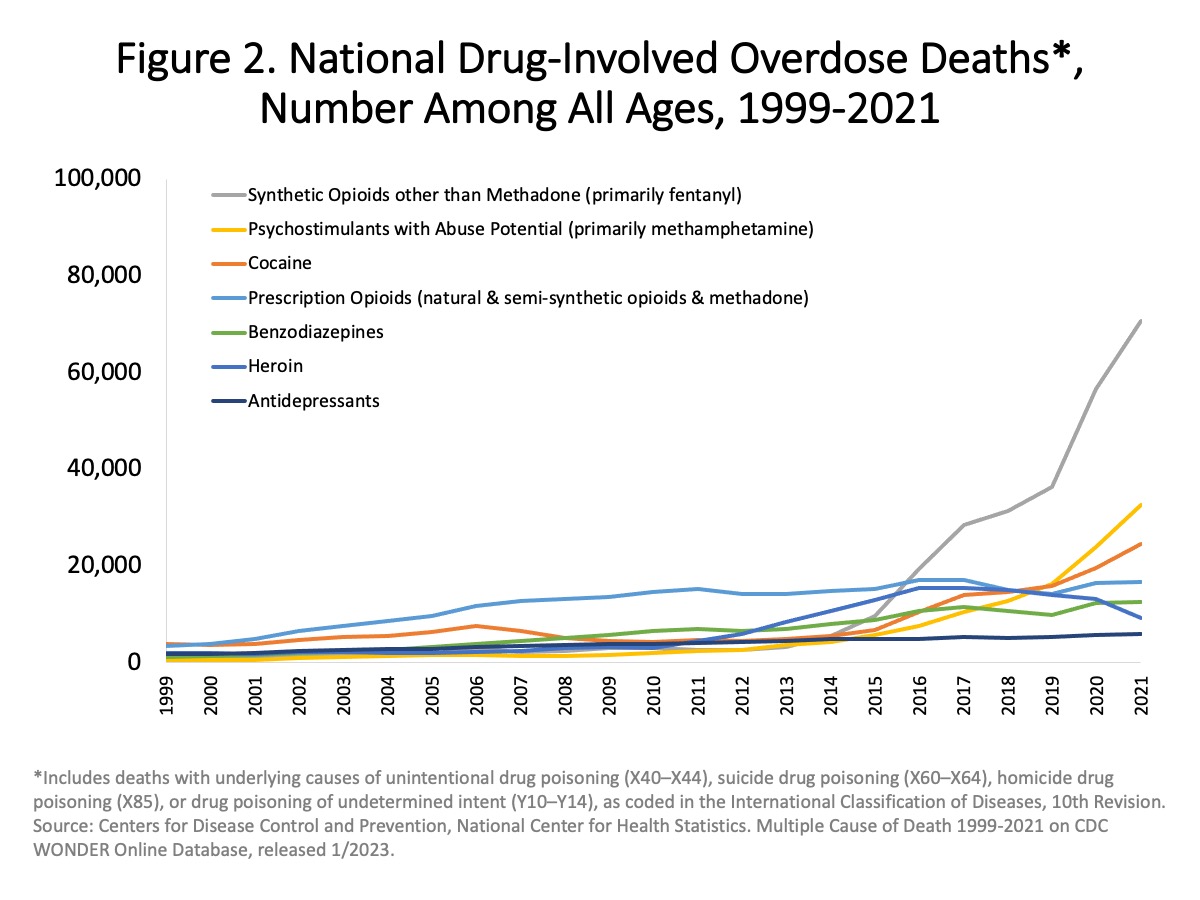
I've got a friend who recently was hospitalized for fentanyl addiction.
Twenty years ago he was my first investor in my first startup. He was the guy that taught me about mediation. He was the first vegetarian I knew.
He owned four cab licenses in Portland. Then Uber came in and shredded his retirement plan. The cab company forced him out so he wouldn't even capitalize on the partial ownership of the land they owned. He lost everything. He has nothing left.
He discovered some awful things about his father. His brother died in a gruesome car crash at 25.
I remember him telling me about oxycotin (edited: I misremembered it as oxycodone), this "miracle drug" without the addiction of morphine. He got on that.
Ten years later he was using heroin. Then fentanyl more recently.
I'm pretty angry at the Sakler family. I'm mad at the drug cartels. I'm not mad at my friend. He's a generous and loving person.
Everyone has a story. I'm sure some are full of awful actions that led them to where they are, but I don't see my friend in that way.
Oxycodone was always known to be addictive. It’s right on the label from day one.
“Also at the time of OxyContin’s approval, FDA product labeling warned of the danger of abuse of the drug and that crushing a controlled-release tablet followed by intravenous injection could result in a lethal overdose. There was no evidence to suggest at the time that crushing the controlled-release capsule followed by oral ingestion or snorting would become widespread and lead to a high level of abuse.”
I remember with distinct anger that my friend told me information to the contrary. He probably got that phrasing from that doctor who got a free trip to Barbados to push it. I wasn't there but i remember him telling me that and it makes my blood boil.
I do share other people's skepticism of the medical industry as you might be able to tell. He should have done more research, agreed.
We license doctors you visit to practice medicine, not to do research. Unless they're working at a dedicated research hospital like the Mayo clinic, doctors don't do research on their own.
They'll stay up to date with what is standards of care, but even that is dictated to them by their EHR software or what they expect your insurance will cover.
When I've gotten prescribed a new medicine, I don't really recall a doctor ever even telling me what side effects to watch out for. At most, they've told me not to drink alcohol while on someone.
“Covid” or the constant breathless reporting about every possible little thing over 3 years did this to me. Not rehash any of it but now 3 years later people like Zuck coming out and saying things like “Woops maybe we censored the wrong things and promoted also the wrong things. Woopsies.”
I thought I was world worn and tough.
Then came AI and I was again on the doom and gloom train. Then I had a moment, realized this just the new thing and dropped it down a few degrees.
Yeah that was saying if you crushed n injected it would be addictive. No. It was addictive in literally any form. They knew that too, n it wasn't on the packaging.
You kind of have to be a monster to say something that callous.
As far as I understand it, crushing/injecting it makes it more likely to induce pronounced euphoria and other side effects that encourage abuse. But it was known from the start that it was addictive (causing a physical dependency) even if used as intended, simply because it is an opioid. Here's an older package insert:
Among other things, it says “Physical dependence and tolerance are not unusual during chronic opioid therapy.” I'm no expert, but I think that explains why warnings about dependence weren't more pronounced. The drug was supposed to be distributed in a tightly controlled fashion due to these risks, after all.
In retrospect, the warnings at the start, and the information for patients read like recipes for abuse, though.
Both sides benefit from the average Joe not knowing the facts. This is, in a nutshell, why so much FUD exists about drug addiction.
For dealers, it gets people through the gateway. For the anti drugs crowd, it's the equivalent of preventing teenage sex by not telling them how it's done
So, here is my problem: if the sakler family or drug cartels deceived regarding the harmful and addictive nature of drugs, sure thing, hang them for murder! But if an adult human makes a conscious decision, being fully aware of the consequences then it that person's responsibility.
I think you should instead be angry at the government. Your friend should have been able to go to a facility that administers fentanyl or heroin safely while making available counseling and any other help that could be provided to him.
If there is a dosage for any substance where it can be administered without causing near-term death or irreparable physical damage, the government should either ignore it or intervene by implementing safe ways people can can consume these substances. You shouldn't need to go to a street dealer, even if you don't have a medical perscription they should let you get addicted and consume it if you choose to do so against all advice.
Millions die in the US every year because... I don't even know why? It sounds not right to treat people?
Fifteen years ago there was a guy outside my apartment selling the homeless newspaper. He admitted he was addicted to heroin. So I paid for him to go to a halfway house. That was because my friend told me that even though it was unlikely to work, every chance is an extra chance.
That's what I'm hoping for here. I want a story that addiction from these horrible drugs isn't always the end. It would be amazing if he can recover from this. I'm scared but it's all I have for him right now.
Also, my friend is in the hospital and apparently will be there for a week or two. So he will leave with several hundred thousand dollars of debt, which will probably be shackled around his mom's neck.
This is a medical crisis that will never get solved because our medical system doesn't want to handle people with these addictions. No one does of course. But that's the only way to solve it in my opinion.
Sorry to hear about your friend. What was he hospitalized for? Several hundred thousand dollars is an exorbitant amount of money even with how high the cost of healthcare is in the US.
From a mutual friend, apparently the withdrawals were severe. He was actually admitted to a recovery place with his mom's help (that was $45k for a month!). Fentanyl is stored in fat cells apparently. It takes a long time to leave the system. So he was hospitalized because his potassium levels dropped to a dangerous place.
I'm not sure of the price tag. But i had another friend who was told to go to another hospital when his wife's pregnancy took a bad turn. They spent two weeks and it was several hundred thousand. The insurance said, just beg the hospital to reduce it? It was ridiculous. I'm just sure my friend won't leave with that covered. Not the hospitals responsibility for sure but it's outrageous the cost and prevents people from seeking help.
That sucks about your friend. But how did anyone think there was no abuse potential? I was in highschool in the early to mid 2000s and even I knew there was massive abuse potential. There's a reason it was called hillbilly heroin
> The claim from the company was that Oxycontin, which was a slow release form of oxycodone, was less addictive because of the slow release.
A similar claim is now made about Vyvanse, a pro-drug for amphetamine. Like a slow release formulation, but needs to be metabolized first. The slower onset, less sharp peak, makes it less euphoric for a similar effective dose, which is supposedly one of the mechanisms involved with the reward-feedback addiction cycle. Less likely to experience (intentionally or accidentally) the intense euphoria of a bit too much instant-release amphetamine on an empty stomach, and so less likely to seek out the experience again. It also frustrates injection, since it needs to be metabolized first so injecting it doesn't make it work any faster. I'm not sure the premise is wrong, and it is probably fairly similar with opioids. But slightly less abuse risk is certainly not the same as non-addictive.
That’s interesting, I’ve been on vyvanse for five years now and never felt any of the telltale signs of dependency (which I am familiar with). I had to stop taking it for a month once and it just made me very drowsy for a week.
Ah, I corrected my original post. That's what he was on. It's confusing even now to me. Anyone in this thread suggesting that anyone with half a brain should be intimate with the difference can tell me I've only got half a brain.
I had this told to me and had family members told this by doctors. A large number of addicts started from medical prescriptions for legitimate pain. I have been scolded for not taking pain meds.
My family member died from his addiction and I'm still angry at him. He made several decades of selfish, disastrous choices. He had every advantage in the world and squandered it all. I'm angry we don't do more to fight these drugs. Drug dealing is very much a violent crime, it killed my cousin. The popular culture that celebrates drugs and dealers.
Plenty of blame all around but central is the person who decides to use.
> He had every advantage in the world and squandered it all.
I don't believe people get on addictive drugs and squander their lives when they truly have "every advantage in the world". I've been to rehab and recovery programs and I haven't a single person for whom this was the case.
Usually when people say this, they're talking about privileged people who outwardly seem like they have everything they need to succeed. But they have demons: depression, bipolar disorder, mental health, trauma, chronic pain. What's worse, other people are often unwilling acknowledge those demons, and say things like "you have every advantage in the world" which can just make them feel more isolated.
This can lead people to seek relief however they can get it.
I'm sorry for your family member and for you and your family; but for anyone reading this with a loved one struggling with similar issues, know that helping them can sometimes require willingness to understand them first.
> The popular culture that celebrates drugs and dealers.
You mean modern medicine? That's what makes this problem so pernicious - so much of it was created by the people fictionalized in shows like House MD and Grey's Anatomy not The Wire and Breaking Bad.
For thousands of years the natural opioids morphine & codeine have been almost universally recognized as harmful dependency-inducing substances in their own category, that build a tolerance which can almost never be limited beyond a certain number of years, before the toxicity overcomes any therapeutic benefit there might have been upon initial administration.
After all this time a religious person of many different faiths over the recent centuries might have often said that for long-term use they were put on earth by god for people who can not be expected to recover.
Synthetic opioids are just the modern version which were developed because the natural product itself can not be patented.
Hence "patent medicine".
The habit-forming effect is what made the Sacklers the richest pharmaceutical barons so far.
Obviously he doesn't mean that, there's an enormous body of media and art that glamorizes drug dealing and using. It stretches across ethnicity and class. It begins with alcohol and weed, stretches into cocaine and hallucinogens, and from there gets into the heavy drugs.
If the only input into drug addiction was the modern medical industry over-prescribing opioids, the landscape of modern drug use would look very different.
Does any recent media actually glorify the drugs that are causing the worst problems right now? I watch a lot of TV but have less exposure to popular music so I'm genuinely unsure.
There's plenty of alcohol, weed, cocaine, and hallucinogens, I'll give you that, but they're not gateways to opioid addiction. Breaking Bad glorifying the manufacture and sale of meth is the only except I can think of - Oxy, fentanyl, and p2p meth aren't exactly the drugs musicians and Hollywood turn to as a lyrical/plot device.
There's also a fine line between glorifying and entertaining. I struggle to find any such glorification in shows like Snowfall, for example, which mostly shows the very negative impacts of crack cocaine in cities. There's only a single character in the entire run that manages to overcome the drug and the main character is a tragic anti-hero at best.
Any time heroin or another opioid comes up in pop culture it's almost always in the context of horrifying drug dens.
I would argue that if one watches Breaking Bad to its conclusion that it's hard to say that it glorified the manufacture and sale of meth. Everyone involved has huge negative consequences in their lives as a result. The collateral damage is staggering. By the end, Walt seems as addicted to the sense of power that making meth gives him as the user of meth desperately seeking their next hit. He sabotages himself and ultimately gets himself shot (probably killed -- though I think this is open to interpretation) chasing his last hit.
> There's plenty of alcohol, weed, cocaine, and hallucinogens, I'll give you that, but they're not gateways to opioid addiction.
This is only partially accurate. There are two primary "pipelines" to opioid addiction; one of them is overreliance on painkillers, but the other one is fairly standard risk-seeking escalation through a socially deleterious lifestyle, often culminating in an OD or a prison sentence after a predictable years-long risk escalation path through social drug use.
I will agree that I don't think there's a lot of media showing meth or fentanyl use as cool and attractive, but my overall point is less that a specific drug needs to be shown to be cool, and more that the artistic construction of the drug lifestyle as alternative, exciting, rebellious etc. wears down the emotional barriers of a lot of people when they're young and malleable. I've done a good number of drugs in my day and I can assure you that in the case of most of the people I did drugs with, early exposure to "drugs are cool" art and music played a part in their ready acceptance of the lifestyle.
As one example, if you go to a high school party, often the riskiest, coolest kids will go off in private and do drugs. There's no feedback loop in the media to make this look pathetic or sketchy--on the contrary, most drug use is played for laughs, or it's added as another dimension to a lifestyle that's supposed to be tragic but instead looks awesome. "Oh my god, look at this guy's life, he's a mess, his apartment is so dirty, he's doing lines off the mirror... with a smoking hot supermodel-actress while we do a B-plot story about how his small-town parents are boring and stodgy... and he's a rock star..."
I don't really know whether or not you could seriously reduce drug use by not showing it in the media, but I do believe that showing it as positively as it is now increases drug use. And I haven't even mentioned the music surrounding drugs.
> Oxy, fentanyl, and p2p meth aren't exactly the drugs musicians and Hollywood turn to as a lyrical/plot device.
Oxy is hugely glamorized in rap music. Drinking "lean" / cough syrup and doing Percocet pills. Future song "Molly Percocet". The Weeknd's record label is called XO for Ecstasy / Oxy.
I still tend to disagree because I have a hard time finding balance and not going too far in restricting the media I consume, but it's a nice vision.
A lot of the religious right in the US, especially the part that is led by televangelists like the late Pat Robertson, just wants to suppress it out of ignorance and they have no plan except to throw more and more people in jail, creating more X to prison pipelines.
After reading this article, I agree with the words of Thich Nhat Hanh, thank you for the recommendation.
> The religious right in the US just wants to suppress it out of ignorance
I tend to agree that the religious right in the US is a legislative force that does more harm than good, and that many people who campaign against drugs don't have a solid understanding of drugs or drug culture. However, I don't think that it's ignorant to want to suppress drug culture (either in the media or in real life), and I think more religious conservatives have experience with addict family members than you think.
> Plenty of blame all around but central is the person who decides to use.
Oh get off your high horse.
I've had two uncles die from alcoholism. In reality, it was the divorces and way more complex circumstances that really did them in. It really is the cage.
It's important that we avoid the twin extremes of, on the one hand, categorically blaming circumstance for everything, and on the other hand, categorically assuming 100% culpability. The proper view is that human beings operate at a nexus between circumstance and decision. Circumstances can create good or bad incentives, and statistically, people will follow incentives (hence the need to legislate properly, for example). These incentives can be strong or weak. They can create more or less pressure to follow through with the incentive. But we must ultimately make a choice and that rests with us (in the extreme case, something like extreme pain can blind a person and effectively rob him of the freedom to choose intentionally which is to say with the capacity to use reason). So how culpable we are for a decision varies on a variety of factors, but there is almost always some culpability.
In the case of your parent comment, it sounds like the person in question is very culpable, that he had the capacity to reason, to know he should have chosen otherwise, but did not. There's nothing wrong with the content of that claim as such.
I mostly agree with you. But when your doctor is telling you to take some 'medicine', and that is what makes you addicted it's not completly in your hands anymore.
After I had surgery on my ankle in college, my dad took away the pain medicine the moment it was no longer necessary (1 day later) and just gave me Advil after that.
I didn’t fully appreciate why until I saw somebody go through it.
But then I got the entire picture. This man struggled. Hid it from his family. Finally confessed it to his wife who stuck by him and sent him to a rehab program to get clean. He was gone for about 4 months and got clean. Got his life back. Got his family back and got back to work.
And then his old dealer came back around. It took another family member telling the dealer he’d shoot him on sight if he ever came around again to get that predator to leave.
of course you shouldn't be mad at your friend. he is suffering and seeking relief. the sacklers and the cartels for sure are despicable. but they aren't responsible for your friend either. they didn't force him to take drugs. it sounds petty but i firmly believe for a number of reasons that it is very important to keep this in mind.
Indeed, the idea that we shouldn't criminalize drugs because of some ludicrous personal autonomy argument is silly. It rests on a kind of extreme, libertarian view of human beings and human society in which human beings are construed as atomic, self-sufficient beings shouldering the entire burden of responsibility for their actions (we ARE responsible, but those who encourage or enable bad behavior share responsibility) and society is construed as some kind of purely voluntary association of atomic beings for transactional exchanges. Classical liberal view, extremely anti-social and anti-human. Human beings are social animals. Harming oneself harms society, and harming society harms its members. Society exists for the sake of the common good, and it isn't good to enable or allow drug use.
Yes, and we need to ban equasy as well, it harms people, predominantly the young, and provides no tangible benefits. Children are being harmed by this scourge!
I strongly disagree with the article. I work in the space and been involved in this topic for the last 20 years.
While the article claims that jails only worsen addiction, correctional facilities in the U.S. provide medically-supervised drug rehabilitation programs that have high success rates. Folks with substance use disorder are given medication for withdrawal and co-occurring mental health issues. There are withdrawal monitoring and detox programs at every facility. Some facilities started to offer MAT, which is currently gold standard of treatment.
The article fails to consider how addictive substances themselves, especially opioids, undermine one's autonomy and ability to connect with others. Opioids activate reward centers in the brain, inducing a sense of euphoria and pleasure that is difficult to resist (Volkow et al. 2014). Even a small dose of fentanyl, for example, can trigger an addiction with continued use (Kounang 2018); it is disingenuous to blame the "cage" alone when the substance itself chemically hijacks the brain. Genetics also predispose certain individuals to higher addiction risk, as addiction correlates highly with hereditary factors (Ducci et al. 2012).
The rise of fentanyl and other synthetic drugs has made "escaping the cage" of addiction nearly impossible for some. In some cities int he U.S. in 2023, a pill of fentanyl would cost as little as 50c. Counterfeit opioid pills containing fentanyl are extremely cheap, potent, and deadly, yet addictive to a point when a single pill can completely change direction of one's life.
I think opportunities might help people avoid taking the drug in the first place, but from observations, even folks with seemingly great jobs and families often fall to opioids once they try them.
obviously (!) it means that the more things look like everything should be fine the less people find ways to be, to feel, to act as they actually are - non-fine, and due to this the more they can end up using more and more.
We should not treat drug addiction as a crime -- it's a medical condition and should be addressed in that context.
That said, we need to find a way to institutionalize and treat those that have become non-functional from their addiction(s). And that power needs to be wielded with extreme transparency and accountability.
Everyone is saying that, unless you think drugs materialize out of thin air? Because in reality, a drug user, drug seller and drug producer are all part of the exact same system, completely inseparable and entirely co-dependent on one another. Any differentiation we make is a fantasy we have devised to make ourselves feel better, like we're going after the "real" criminal, not the poor victim/user.
The only way to stop criminalizing drug use is to end the black market for drugs. Half measures like "decriminalization" simply leads to more and problems and solves nothing.
Decriminalization is the thing you're looking for -- making people free to sell whatever drugs they want, rather than something like legalizing, which keeps the black markets intact
"Decriminalization is the thing you're looking for "
That is not even remotely close to what I am looking for. No substance that is widely consumed by people should be produced or sold without comprehensive - if not excessive - formal processes to ensure purity.
Black markets only exists because states enable them. We have unlimited evidence that, when you allow people to produce and sell products and make a profit, even with significant regulations and enforcement, they will do so and usually not break the rules.
Decriminalisation generally means taking away criminal penalties for possession but still having some penalty (usually the user must attend counselling), and keeping production and supply illegal.
Legalising is the 'full fat' solution which allows legal production and trade.
Regulate includes public consumption: you can't drive while intoxicated, but also if you're nodding off from smoking fent on public transit that should be dealt with a trip to a treatment facility.
The comment I was responding to was talking about it in the context of "correctional facilities". Likewise, the continued war on drugs literally makes addicts into criminals.
The strongest conclusions from Rat Park should be that rodent studies are complicated by lab conditions. This probably doesn't sound too controversial (by now anyway). But because of the ideological or personal issues at play, it's easy to draw conclusions about humans from Rat Park.
Put another way, placebo studies show that attention and treatment alone get some level of result and that science is hard, not that sugar pills are a panacea.
Rat Park is an excellent example of how people pick studies that show the things they're looking for. When people point to it uncritically, it says more about them than about the world.
I was providing the link as context and a jumping off point for further reading, if you were curious (which is encouraged here). If you're looking for criticisms of Rat Park, I suggest starting with the "Criticisms" section on the Wikipedia article.
Just want to mention my experience quitting smoking (which is notably hard, but I have no point of reference having not used other drugs).
Physical addition is easy. With nicotine there are not really strong symptoms anyway, irritability mainly and inability to focus. I know other drugs are worse but in principle, battling withdrawl is not that tough, people are good at physical hardships. For nicotine it's a few days.
It's the rest of your life that's the problem, because you know that something that has an effect you enjoy immensely (and you tend to view use nostalgically though rose colored glasses) and you could do it any time if you wanted to. You need to deal with that forever. And if you slip you're back on the thick of things - like why alcoholics can't have a social drink.
So anyway, I sort of agree with the article, because it's easier to quit when you have something going on (I started walking and then running, which is what I attribute to success). Though I also think humans are complex enough that making a "rat paradise" for someone is not at all tenable.
Edit: and just to conclude, I smoked for 15 years and quit 12 years ago. I still want to smoke, I still dream about it, I still know I would enjoy it. I will never do it and I've learned to cope, but wanting to is something I'll live with forever. That's what makes addiction hard. If it was just a couple sweaty nights tied to a bed, things would be very different.
I quit smoking well over a decade ago. It was very hard.
I use the crass metaphor of a gorgeous ex-girlfriend who is terrible for you and you know it, as a way to describe the mindset I came to with the difficulty of quitting. The idea being, when you’re lonely, you know you could call her up and she would come over and you’d get what felt good, but not what you wanted. Only when you get to the point where you know it’s a waste of time can you quit. That took me years.
I used to smoke and chew tobacco quite infrequently once a day or so, but for about ten years, but decided to stop about three years ago.
During the past several years I’ve come back to realize I was using tobacco therapeutically — specifically to actually focus and as a relief from constipation.
And, since then I’ve been “trying to get healthy” - especially mentally. But just feel endlessly stuck trying to get some kind of ADHD diagnosis — having seen 4 separate mental health professionals for problems I never had on tobacco.
Sadly I’ve relapsed and for the first time in those three years since I quit I actually don’t feel constipated when I chew in the evenings. Also, I’ve found the ability to sit down and finish my manuscript.
Running is also used successfully by heroin addicts to help quit. It's actually one of the best ways to help with many addictions. Not discounting your achievement in quitting smoking in any way, but the easiest way to quit an addiction is to slot in a replacement habit that is also pleasurable, and running is deeply satisfying
I hate running, and could never keep up a workout routine with it involved.
Then i found i could really push myself in the pool and have fun. Swimming is so much easier on my body and when I do laps it's almost like a sensory deprivation tank. Just me and the water.
Personally I think what's great about running is that it's also addictive, and so the same personality quirks that make you susceptible to other addictions, at least in my case, make you susceptible to becoming a regular runner.
> because you know that something that has an effect you enjoy immensely
> And if you slip you're back on the thick of things - like why alcoholics can't have a social drink.
I know someone who prescribes naltrexone for alcohol addiction, which has the specific purpose of blocking the positive effect of the alcohol. So you can have the drink, and you won't enjoy it, and it's easier to live with.
The Sinclair Method does have impressive results, and I've have some success with it in the past.
For alcoholics at a certain level (thinking of myself here – yes, anecdotal), there is the necessary accountability to take the naltrexone tablet and "deprive" one of the euphoria, which can be difficult to maintain over a long period of time.
With Vivitrol (an injectable form of Naltrexone that lasts ~1 month per injection), it is not difficult to simply "drink through it". Results in an absolute horrible hangover – sure – but that's not necessarily enough to stop the motivated alcoholic.
Overall though, MAT is a valuable tool in the toolbox.
I also quit smoking. I recommend the book "The Easy Way to Quit Smoking" by Allen Carr, which basically spends a like a hundred pages explaining that no, smoking isn't fun, at all, you've just been brainwashed to think it is, but really life is much nicer without it. Focus on enjoying your freedom from a completely useless vice :)
It’s obviously better when there’s good data. People like myself who frequent HN often do because they want to hear an expert cut through the propaganda with the inside baseball on the real science.
And I hope someone does on this thread.
But in the absence of a qualified expert interpreting the inside data laypeople are as always thrown back on the thoughtfulness arbitrary creative force gave a rock and anecdata.
And this rings insanely true. My life never changed back from COVID lockdown, maybe that says more about me than the biggest natural experiment in arbitrary and sweeping human confinement probably ever: but I use more of everything from nicotine to caffeine to adderall now than when I was partying with a purpose ten years ago.
More substances more screen time more all of it. Being trapped on an island with 100 people sounds like a vacation from either the glass box I live and work in or the empty-seeming bars and coffee shops and comedy clubs in the half dozen cities I’ve traveled to this past year.
Lockdown was boom time for screen companies. Anyone got a vested interest in leaning on the delicate pressure points of really resuming IRL life?
Think COVID has caused many of us to reflect on life, and how choose to resume it now that the situation has improved.
Working from home for so long definitely removed a social element from my life, but I've replaced the time I would be commuting with exercise and time outdoors, which has been a massive life improvement.
It sounds trite but just do it. Go out. Go to bars, go to the gym, go to the coffee shop, go to wherever people are congregating. Living cooped up in a box is no way to live. Unsurprising that the study in TFA found that creatures living in unhappy circumstances seek mood-altering substances more than those living more freely and naturally.
As I said: maybe I’m an outlier and my N=1 study is one of those dots in the corner.
But historically I’m a rabid extrovert on paper in terms of coffee shops and bars and comedy clubs and music shows. Before the risk was that I’d meet some cool people and talk until I had to race to the morning’s first meeting.
And when I say “empty-seeming” I don’t mean there are no people exactly, but rather that walking up to someone and introducing yourself seems to go over about as well everywhere as it historically has in Paris.
Now one random guy having a bad time socially isn’t data, but I thought it was worthwhile to throw out in case I wasn’t the only one.
Another consideration is that you’ve gotten older during the pandemic.
Especially given many people’s description of “time distortion” through lockdown, it’s easy to forget you got 2-3 years older, so did all of your friends, and 2-3 years is plenty for some formative changes depending on how old you were.
I left New York for the pandemic and came back after a few years just to realize that I’m too old for this shit now, or at least for what I loved about NYC previously.
Try traveling to other parts of the world if you can. For example I was just in one of the greek islands for a week and everyone was incredibly friendly. Meeting cool people and chatting late into the night is precisely how I'd describe my time there.
All of the things you loved about life before COVID are still out there. Caffeine, nicotine, and adderall shouldn't prevent you from being able to experience the world.
These are interesting studies mentioned, no doubt, but the assertions made feel very heavy-handed to me. We have to take into consideration things like bipolar disorder, depression, obsessive compulsive disorder when dealing with humans. Also a bit skeptical of their conclusion based on the Vietnam vet studies, where we need to consider access to heroin in Vietnam vs wherever soldiers went home to.
Worth keeping in mind that this is a non-profit organization that sold fentanyl test strips at ridiculous markup for years (they have some novel strip now that i'm unsure of bulk pricing on). These were the same exact BTNX strips most fellow harm reductionists were handing out for free or at low cost. I was paying 75 cents per strip as a fairly small harm reduction organization, DanceSafe sold them for $2 (their novel strips are same price) and I can only imagine they got significantly better pricing through the biotech company we all were going through due to how many strips they must move.
I disagree with this article, not because of it's correctness, which I don't care. It is more about the perspective. This kind of "explanation", has nothing good to solve the problem. It is just yet another aftermath "excuse research".
In east Asia, we had an infamous example: Chang Hsueh-liang https://en.wikipedia.org/wiki/Chang%20Hsueh-liang . The problem is clear here: if we could find an excuse for him, then we could for anybody.
Let's ask ourselves this question: do we want our kids addicting to drugs, or do we want ourselves addicting to drugs? If the answers are no, still the question will be, going forward what we can do, which this article has little advice.
> The war on drugs we have been fighting for almost a century now has made everything worse. Instead of helping people heal and getting their life together, we have cast them out from society. We have made it harder for them to get jobs and become stable. We take benefits and support away from them if we catch them with drugs. We throw them in prison cells which are literally cages. We put people who are not well in a situation that makes them worse and then hate them for not recovering. […] We have to build a society that looks a lot more like Rat Park and a lot less like those isolated cages. The opposite of addiction is not sobriety; the opposite of addiction is connection.”
The author's contention is that "addiction" is a result of circumstances, not of substances. He cites a rat study, and that's about it.
I don't think that's correct. I do think that addiction results from circumstances, and it's impossible to quit if the circumstances are wrong; but depending on the substance, withdrawal can mean life-threatening seizures.
Suggesting that the primary (author implies "sole") cause of addiction is circumstances enables all these claims of sex addiction, chocolate addiction, sugar addiction and so on.
Author says at the end that the word "addiction" is outdated; I agree, because it's been hijacked to refer to any kind of obsessive or repetitive behaviour. We need a new word for a chemical dependency that threatens withdrawal symptoms more serious than feeling rather down.
My only encounter with drugs (pain killers) for the past 10 years was fentanyl as part of colonoscopy. That was no joke. Just one dose had noticeable effects for a few days later. I felt fucking great waking up from that colonoscopy but man, the day or two after sucked.
I've had three. They'd usually offer NO2 or diazepam, but only if you have someone to take you home. Which I didn't. So I've never had drugs for a colonoscopy.
It's an unpleasant, uncomfortable experience, makes me groan out loud, but I wouldn't describe it as painful.
There are an alternative interpretation of the same data. The rat park may provide protection against addition, while the rat cage makes the rats more vulnerable to addition.
This model is often use with illnesses such as chronic stress, depression and ptsd. A "rat park" has many major health benefits, and aspect of it is measured with organ donations in order to determine which patients has the highest probability of surviving.
A way to see it is that in order for a negative outcome you need three things to be true. Be exposed to a trigger, while being vulnerable, and lacking protection.
> "Imagine a society that subjects people to conditions that make them terribly unhappy then gives them the drugs to take away their unhappiness." - TK
Fentanyl in the heroin supply is a direct result of prohibition.
You could put people in prison and they'll still be able to get drugs. Is it worth the erosion of our civil liberties to tell people what to do with their own bodies? Perhaps this erosion was the entire purpose of the War on Drugs.
Hopefully people sick with addiction will some day have access to clean drugs of a known potency.
Also, I’m not really sure that giving rats all the cocaine or heroin water they can drink is the same as a down on his luck homeless guy or a manager of a club or a good time college student… if you want to say it’s the cage, then you should probably theorize about how the deeper you get into drugs, typically the stronger the cage gets.
I like the idea that it’s not the addict’s fault for feel good reasons, but I’ve known enough addicts to know that the cage or the drug it isn’t kept at bay without hard work and discipline and the latter was typically already lacking to become an addict in the first place.
I've met many, many incredibly successful, intelligent, disciplined, kind, impressive people with incredibly serious addiction issues. 10s-100s of millions in net worth. These aren't lazy people.
Recovery does take an immense amount of hard work and discipline, albeit in a very different way than, say, reading legal briefs, writing code, performing surgery.
You have to use a very strange definition of "cause" for the articles title to be true.
If there was no chemical the addiction to the chemical would not be there. It is obvious.
The existence of the chemical is part of a hugely complicated causal tree that leads to addiction. The argument laid out in the article is a false dichotomy, which is denying one part of the causal tree(the existence of the drug) by pointing to one part of another part of the causal tree(social factors).
Real change (the end of the war on drugs) should come from facts not poorly laid out rhetorics.
One day I might find myself addicted to some substance which I was supposed to avoid but some situation in my life made me fall back on the drug over and over again until I couldn't live without it--this is something that could happen to any of us.
But I know that there is more to addiction than poor social circumstance--and many users of addictive substances do it as part of their social-world, most drug-use is social to some extent. Bars, smoke-breaks. Homeless heroin users are usually hanging out together while high. I host dinner parties and get really drunk with my friends. Drugs, addictive ones, are a part of the fabric of our society. People get high, they drink coffee/tea, they take something to help them sleep, they use poppers during sex, they smoke to destress from work. When a corporation understands this, they can engineer a drug and insert it into society such that the nature of its use becomes embedded in peoples' day-to-day lives to reap massive profits. Its the same as an iPhone, Instagram, Silicon Valley writ large. It's the model of so-called "late capitalism."
And even when someone gets clean, they probably are involved in a world still where their friends use, when they are always close to the drug. After a while, the neurophysiological changes are so extreme that it is practically impossible to get someone to stay sober for long. I accept that I could become a lost cause one day, just like so many unfortunate addicts in our society. I could become a burden on my friends and family and ruin my life. Sometimes you can't help people.
The drive for ever more productivity and efficiency causes us to eschew things which — on the surface and by measurable metrics — are inefficient, unproductive, and “not good,” but serve incorporeal purposes, like keeping us sane.
don't think meth or fentanyl changes his hypothesis. if you see the interviews of those in bandos in Baltimore or on the street in Kensington, they have endured trauma their entire lives. Whether it's societal induced trauma like racism, poverty, family trauma, violence, or whatever else. These people are choosing to escape their "cages" with these drugs.
And yet plenty of people without major life trauma have succumbed to addiction as well.
I have no doubt that traumatic life experiences can exacerbate addiction, make it harder to quit, and/or increase propensity to becoming addicted (maybe even increasing propensity to try hard drugs in the first place). But the notion that the addictiveness of heroin, cocaine, alcohol, nicotine, etc. is purely a psychosocial phenomenon is at best a fairy tale.
My understanding is that highly addictive substances will be consumed ≈ to their availability. Makes sense, given the social dynamics of addicts. It’s useful to find people who you can drag into your despair with you, so there’s an inherent virality alongside the high “retention rate” powered by the chemical itself.
There are drugs that cause neural rewireing in animals after a single use e.g. cocaine. If you have a stable social group and a fulfilled life you will probably not become dependant on thc, you should still avoid crack.
1rst. Yes single use cocain in animals causes unusual neuroplasticity, we can prove it.
Citation:
https://www.frontiersin.org/articles/10.3389/fnins.2020.5898...
Favorite quotes:
"For the first time, it has been demonstrated that a single low dose of cocaine, which can cause no locomotor behavioral and brain metabolic changes, can induce structural damage."
"It is essential to alert the population even against the consumption of low doses of cocaine."
Changes are much more pronounced in long term exposed animals, please work through the publications originating from the grant for "Cocaine-induced neuroplasticity: a new role for TGF beta signaling"
Link:
https://grantome.com/grant/NIH/R01-DA037257-02
2nd. Memory is devilish complicated, but AFAIK the current state of knowledge is that short term memory ( which I normally would expect to be the main memory for a single incidence trial) is not due to anatomical changes in the actual neurons, but a complicated mix of neurotransmitters, spiking, vestibules etc.
So saying that every interaction leads to a measurable change in the brain matter is most probably wrong.
So summarizing:
No not "Everything causes neural rewiring", and yes my sentence had quite a lot of content, but normally people stop listening when I start quoting studies in a conversation.
Those are very different sentences and that difference makes them hold some content. Especially content like numerical values and limitations, making the whole thing waaaaaay less binary (which was the issue with the original one).
I went through abstracts of papers 1 and 3 ('long term exposure to cocaine induces neuroplasticity' isn't exactly controversial). The issue isn't with those papers, but in difference between them and 'cause neural rewireing'.
It's the difference you're also well aware of, because in 'summary' you put my exact quote quoting you in form of 'Everything causes neural rewiring' while on the way there you decided to argue against position that 'every interaction leads to a measurable change in the brain matter'. Those are different statements, unless there's some standard explaining that 'neural rewiring' refers to a specific level of changes that I'm simply not familiar with.
Indeed, it's not the chemicals. It's that one innocent friend of yours who has you wrapped you around his finger. ;-)
--
Downvotes? How about learning to ask some questions on such a "controversial" topic? What do you think, the chemicals just fall into your lap from the sky?
And yes, I have firsthand experience with addiction, for many years actually.
I am sorry for being so intelligent that I am able to narrow it down to the actual root problem in a single sentence.
https://theoutline.com/post/2205/this-38-year-old-study-is-s...
"Despite his claims of a revolutionary breakthrough, Alexander had trouble finding a journal to publish his results. Both Science and Nature rejected the study for publication, likely due to significant problems with the methodology and results. Pharmacology Biochemistry and Behavior published the results in 1981 with little response and the funding for Rat Park was canceled shortly thereafter."
"When scientists tried to replicate the Rat Park study, they got mixed results. In 1996, a study attempted to precisely replicate the conditions in Alexander’s Rat Park, down to the breed of rat. The researchers conducted two experiments to see if they could replicate the Rat Park study’s results. In the first experiment, the happy, social rats consumed slightly more of the morphine liquid, in the second experiment, the isolated rats drank slightly more. Neither experiment reflected the Rat Park’s results, which had the isolated rats drinking up to seven times the amount of the morphine liquid as the social rats."