Hacker News new | ask | show | jobs
by krysp 1191 days ago
As a Brit I can't help but notice that on every axis, our country appears to be in decline at the moment. Even before Brexit, things hadn't been going well, as this article shows. It's making me seriously consider moving away.

I want to have hope that as a country we can turn around this societal regression, but I fear it's a deeper problem than just the current government. The class system and an unhealthy nostalgia for when we were more important in the world seem to be holding us back.

12 comments

I'm considering leaving the country as soon as I'm able to also.

The thing that concerns me the most is that I believe many people here have a fundamental misunderstanding of challenges we face as a country, and our class divide seems to contribute to this misunderstanding. As someone who comes from a poorer background and now socialises with people who are fairly affluent it's always surprising to me to see how much misunderstanding exists between the rich and poor in the UK. It's so bad that people often accuse me of lying or have no ability to related to what I'm saying.

I've tried to remain hopeful, but I'm starting to come to accept the answers politicians provide for our problems will always more of the same: higher taxes, more spending, more immigration, etc. If we want go get out of this mess I think we're going to need some new ideas and some very stronger leaders who are willing to make very unpopular decisions.

This isn't xenophobia. I can explain my reasoning here if need be. Have I to say this because some people are likely to assume bad faith.

Could you give some examples of the misunderstandings you see between rich and poor in the UK?
The mains two would be that in general the upper-middle class and wealthy don't understand the financial incentives of the poor. And the poor tend to believe everyone with a job earning more than £35,000 is "rich" and needs to be aggressively taxed.

For example, when I tell people that most of my family choose to have children in their early twenties as a means to move out of their parents homes those who are wealthier simply don't believe me. They simple don't understand that if you have no skills and your family have no money, you're not going to afford a house no matter how hard you work as a cleaner or cashier.

So this means that most people in my family who live in nice houses are actually unemployed, and typically single mothers. While those who work generally live with their parents or in small run down flats.

Further, it's very common for these people to be getting so much support from the government from various disability allowances, child support, and benefits such as support for energy bills, free school meals, disability cars, etc, that they actually can't get a job because doing so would dramatically reduce their standard of living. So for example I know a single mum with 5 kids who is a drug addict. A large part of the problem is that she has nothing going on in her life so she just sleeps all day and then does drugs in the evening. My girlfriend tried to help her get a job a few years back but the adviser told it wouldn't be financially sensible decision given how much she'd lose in benefits income and support. And well, now she's a prostitute because it's cash in hand and she recently been in hospital for liver failure... I could give you countless stories like this from my family.

But the point I'm trying to make is that if you're poor and working class you won't be able to ever afford a house in the UK. So instead you're basically forced into claiming benefits, and to improve your standard of living you need to learn how to exploit the system while doing illegal things on the side. The thing you're not incentivised to do is work.

On the other side of the coin my family believe myself and those social with are "posh", because we earn say £50,000 - £100,000 and most of us can just about afford a 2-3 bed home by 30. I know a women who was impressed by a guy she was dating recently because he had a £38k income and was a manager in a retail store. I mean, that's not a bad income, but if you're middle class you would never consider that wealthy...

I'm pretty lucky because despite going to crappy schools I was autistic enough to be good at computer stuff which allowed me to break the cycle. But even I'm in no position to afford children right now. And realistically me and my girlfriend only have 5 or so years to get our finances in order if we want to have them. So in all likelihood I will never be in a position to afford children and I have above average income.

The truth is a household income of around £60,000 in the UK won't go that far after tax and expenses if you're living in a major city. You might get to a good place eventually, but you'll never afford a family before you turn 30. You might afford it by maybe 35-40, but this assumes you make a lot of good decisions (or have wealthy parents).

So I get quite upset when my family tell me I'm wealthy because I envy their lives so much. I want children like them yet I know that I'll probably never have them. Instead I work long hours and I'm worrying constantly about budgeting. So given what I see, when I hear cries to raise taxes on people like myself to give even more to people on benefits it pisses me off a little.

My controversial take on this is that we should not be giving pensioners non means tested benefits. The majority of our tax goes to free health care, state pensions and various other state benefits for wealthy elderly retirees. And almost none of this support is means tested. Instead we should be encouraging retirees to sell their homes and pay for their own retirements and care. This would take tax burden away from the young while increasing the supply of houses for people to start their own families. It would also be a fairer system because less people would inherit wealth from the elderly, and instead it would encourage building it. I think we should also consider a lower tax rate for people in their 20-30s and for working parents. This will allow the young to build wealth to get a good start and support families on their own.

Obviously, in an ideal world there would be enough money for everyone, but there isn't. Therefore it makes little sense that most tax revenue gets redistributed to wealthy retirees at the cost of the young and poorest in society. We probably also need to look at improving the incentive structure of the benefits system. Generally I'm fine with the benefits people receive today, but we could probably do a better job at ensuring people don't feel like it's ever a bad financial decision to get a job or earn more because they'll be worse off. My guess is that this will also reduce crime, because again, part of the reason people in my family sell drugs or get involve in prostitution is because of how benefits are means tested.

Of course, none of this is politically feasible given voting demographics and what seems to a popular opinion in the UK that the solution to our problems is even higher taxes and even more benefits... And perhaps I have the wrong solutions, but I'm sure as hell that the solution isn't raising taxes and giving retirees better health care, larger pensions, more support for energy bills, etc.

Largely agree with what you're saying, not so much on retirees, yes they should be means tested, but I have seen old people getting robbed of their homes to pay for some shitty nursing home.
FWIW As a US citizen I feel similarly. The switching cost feels too high to move, as I can't really see myself living somewhere other than the West Coast (family, friends etc)

It's a shame humans don't have more empathy and sympathy for each other, and that governments have been so obviously co-opted by the wealthy and powerful for their own benefit.

One of the things that does make me feel better is being more involved in my neighborhood and local politics, where occasionally things you do can have a real impact. (For example I got a stop sign installed on my street, people still speed but usually they'll stop at it, making the neighborhood a tiny bit safer)

I am curious what country you could move to that isn’t co-opted by the wealthy and powerful.

Sure isn’t Canada. Sure isn’t anywhere in the EU. Super-duper-sure it isn’t anywhere in Asia.

I don't know honestly, never been to any of these places and after moving around several times within the US I realize how nice it is to just be setted in one place, but here's what I would consider: Netherlands (I really like biking), Germany (Cologne seems like a nice vibe), France (Probably Paris, Food obviously, but I also really appreciate people's willingness to protest stuff)
> Probably Paris

Paris is probably one of the worst places to live in Europe. Looks nice on postcards and it's nice to visit when you never live there, though.

Hard disagree. Paris is lovely and gets more so every day with reduced car traffic increased greenspace etc. You're mad. The only place better is Amsterdam
I like it, and especially compared to the US it's a huge upgrade
The US is a single place? I did not know that.
Nederlands has not so great weather. If you're used to the West Coast and like to cycle, try Girona. A bit more wet though. Pay is obviously a lot lower than you may be used to.
Point to a single time in history this hasn't been the case.

Things are a lot better now than they used to be.

The only thing that has really changed is that the post-war American boom is over. Cheap labor, cheap money, cheap everything has returned to baseline and reached the costs felt elsewhere in the industrialized world.

Things aren’t better at all. People say this because we have better technology, medicine, etc. but there was never a time in the past when humans had the life sucked out of them as they do now. We are raised inside boxes, our whole lives elapse inside boxes staring at screens and our social and emotional brain networks atrophy, leaving us damaged and hollow. Like zombies. There is no escaping the state. The law is absolute, there is no chance of escape or starting over. There is no land that is mysterious, the world has been collapsed. There’s no mystery in the world compared to before. AI gets better by the month and now most people can’t rationalize or ignore it: humans will face obsolescence soon. This is bad not just for the obvious reasons. We ingest chemicals and environmental contaminants that make us extremely sick. People are keeling over from heart attacks, obesity much more than they used to. I’ve read a lot of history and I would much rather live in 1720 than 2020.
Europe is far worse for everything being designed to serve the wealthy though.

Income tax is 40+% and VAT usually 25% so you lose so much income to the state.

Meanwhile there is often no property or inheritance tax, and capital gains tax much lower than income tax, so wealthy aristocrats and landowners pay a far, far lower amount of tax proportionally.

It's just that the wealthy in the US are mainly industrialists, whereas in Europe they're landowners and aristocrats.

Where would you move, and for what? The “wealthy and powerful” enjoy similar if not better corporate and investment tax rates in most of Western Europe as on the west coast of the US.

The social services those countries have that we don’t are largely paid for by the middle and upper middle class, not the “wealthy and powerful.”

Everywhere has problems, it’s less about perfection than simply being a better option. I’ve generally considered Canada the best option for a while. English speaking, low crime, same time zone with family, etc.

New Zealand, or one of the Nordic countries aren’t that far behind. Australia, England, and Western Europe etc are much lower, but still have plenty going for them.

The biggest thing America has going for it is my friends and family happen to live here.

Crime rates are a city by city and neighborhood by neighborhood issue. Most of the USA is very safe; my city has zero murders most years. The statistics are thrown off by a few neighborhoods in a few cities like Chicago that have degenerated into third-world war zones. While that's a terrible situation and we need to fix it, most HN users can easily avoid those places.
Even the “safe” parts of the US aren’t all that safe.

Ontario which includes Canada’s largest city and 38% of the population had a lower average murder rate between 2016 and 2020 than every single US state but New Hampshire. Quebec population 8.5 million is significantly lower.

These statistics aren’t completely equivalent due to various factors, but it’s close enough for reasonable comparisons.

You’re comparing a rate - murders over population, of a province with a vast rural population with few murders to US cities where murders are concentrated.

Edit: I'm an idiot and can't read.

Chicago's homicide rate isn't that high once you use per-capita numbers.
One day, on my way to work, there was a two hour backup, because the Eisenhower was closed for a murder investigation.

One day at work, making gears, I heard what sounded like fire-crackers... turns out there was a shooting in front of the gear factory. I had to drive through a murder crime scene to exit the parking lot.

Per capita numbers don't erase that from my memory.

Chicago and Toronto are roughly the same size, but per-capta Chicago has ~10x as many murders. That’s fucked up.
I'm not talking about what's perfect or not perfect. I'm talking about why OP thinks "the wealthy and powerful" are the reason for whatever shortcomings they perceive about the U.S.

Canada, for example, has basically the same corporate tax rates as the U.S. Canada's capital gains tax rate is effectively about the same as the U.S. for high income earners, because of only half of it is included in income. The social services are paid for by higher middle class taxes, including an 18% total VAT in Ontario.

US nominal tax rates are meaningless. Canada's companies pay twice the share of taxes as US companies.
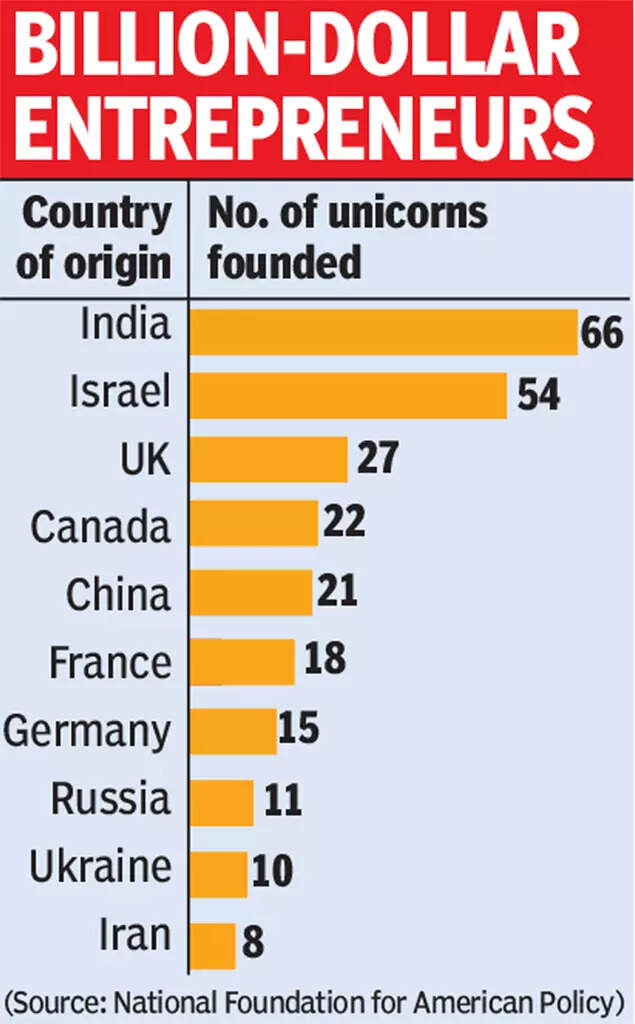
I am not sure how in a totally integrated free market world, a country like UK can compete with US or China. The amount of funding US can put into new areas like green energy and the internal market and capital it offers is something UK can't compete with. This is why UK origin founders are one of the biggest cohort of immigrant unicorn founders in US.

Although, I am not sure where a Brit would move to, if they want to have similar social systems. Most of the EU also seems on the path to decline as well.

Also, unlike say a German or a French expat, a British expat would have little problem moving to US, Canada, Australia or NZ as there is little language or culture barrier, so if those countries do well, why won't a skilled Brit just moved there.

Taiwan, South Korea, and Israel all have much lower populations than the UK and yet remain important global influencers.

It isn't all about population. The USA has 1/4 the population of China and yet technologically is a peer competitor. Japan had less than 1/2 the population of the USA in the 1980s and was a technological peer competitor.

With wise investment in capital equipment, education, and technology, even small, resource-poor countries can punch far above their weight. The UK remains a sufficient economy to serve as a foundation to rise significantly above its current situation. Imagine a UK with a $150,000 USD average income, thanks to intensive investment for a generation. If that sounds unrealistic, so would our current level of average incomes to people living in 1900. Somehow we've just lost the belief that we can continue to dramatically increase our quality of life.

Between its nuclear deterrent and soft power, the UK could remain a global power for at least the next couple of centuries if it chose to do so.

I wonder what the electoral interest would be in a UK political party that advocated the goal of doubling the nation's per capita income in 10 years?

To be honest it is all about population. Industrial/technological first mover advantage has now gone really. You need the concentration of talent that only drawing from a very large pool can achieve. US, EU, China are the 3 poles at the moment - with Africa and South America as potential for the future if they can get their governance sorted out.

The UK stopped being a global power after Suez - not for nothing is Brexit known as 'Suez for slow learners'

One counter-argument to this would be:

A nation with a 10x higher per capita of truly productive scientists and engineers (with a well functioning R&D system that wasn't just publish-or-perish or other friction that reduces efficiency) would perform roughly as well as a nation with 10x the population. Somewhat but not perfectly analogous to how some countries invest more, or more wisely in their military budget, and have equivalent military power as much larger countries.

So if the UK invested such that it had 10x the per capita scientists and engineers, let's say 10% of the population vs 1%, then it could compete with a nation of 680 million.

If it also invested more wisely in capital equipment, business efficiency, legal efficiency, and so on, it might be able to get further multipliers and compete with the biggest economies in the world.

> So if the UK invested such that it had 10x the per capita scientists and engineers, let's say 10% of the population vs 1%, then it could compete with a nation of 680 million

With the equal outcome approach taking over universities and sciences being considered the unfashionable stream unlike East Asia, how would you do this?

Even if you are able to, why won't these trained people just leave for US when they realise they are compensated more and taxed less there?

> With the equal outcome approach taking over universities and sciences being considered the unfashionable stream unlike East Asia, how would you do this?

Clearly that approach is harmful and is preventing the economic development of nations, which in turn harms those who need assistance because there’s a smaller tax base.

But as other nations 'catch up' and turn out productive scientists and engineers in similar ratios, the disparity in the denominator becomes overwhelming. E.g. China.
This sounds like a win-win. No need to imply it is a zero sum competition.
To add an example. Israel with 9.3 million population has more productive scientists and engineers than whole continent of Africa with 1.2 billion population.
you could try raising the level of education. breeding a whole bunch of people and hoping some of them teach themselves to be useful isn't really a great way of maximizing intellectual output
certainly education is vital to a modern economy (and society), but I suspect that you hit diminishing returns at our current levels - not many more can really benefit from e.g. post graduate studies. Sending ~50% of school leavers to uni in the UK has arguably been counter productive, as instead of a path for the talented to rise, uni has become more a rubber stamp for entry into the middle class and course content has become diluted (and then loans on top to pay for it all)
> but I suspect that you hit diminishing returns at our current levels

I think there are plenty of uses for another million bioengineering grads. Combine the grads with R&D funding and we’d see a regular cadence of medical miracles.

Similar for materials scientists, robotics engineers, etc.

Also on a low tech side, a million more teachers, teaching much smaller classrooms, might pay for itself many times over.

> I wonder what the electoral interest would be in a UK political party that advocated the goal of doubling the nation's per capita income in 10 years?

Probably about the same as the electoral interest in a party that promised everyone a perpetual motion machine, which would be about as capable of achieving its promises. (The recent UK electoral record of promises you'd have to be utterly delusional to believe isn't bad actually, just helps to have a lot of backing from the status quo!)

The UK already has more global influence than Taiwan, South Korea and Israel and massively outsize influence for a country making up less than 1% of global population and an even smaller fraction of its land physical resources, it's just this global influence isn't guaranteed to be used wisely, never mind benefit the lifespan of the average citizen.

Israel has an existential threat next door and the region where they have to exist and their past drives them to have real ingenuity in innovation.

Taiwan and South Korea are modelled after Japan like obedience to authority and way higher tolerance for tough work conditions than a western European nation. Is it realistic to assume that a Brit would work 12 hours in a job?

I am not trying to say UK lacks the talent to do it, it absolutely does have the talent and historical pride to do it, but as a nation it is too distracted and bogged down by social chimeras to be like South Korea/Taiwan.

> Taiwan and South Korea are modelled after Japan like obedience to authority and way higher tolerance for tough work conditions than a western European nation. Is it realistic to assume that a Brit would work 12 hours in a job?

1st, historically Western European countries absolutely did work 12 hour days, back when that made any kind of economic sense, despite the human misery it creatd.

With modern knowledge work, a forced 12 hour day is probably not going to help anybody achieve more. Although a very very highly educated, very very highly compensated, might choose to work longer hours, but hours aren't what would cause the higher productivity.

A forced 12 hour work day doesn't make people achieve more, but if you have to compete with others whose output is 1.3x of yours by putting in those extra hours, people will do it with efficiency.

> Although a very very highly educated, very very highly compensated, might choose to work longer hours

Yes, like SV companies are able to do but not sure how this will work in UK.

> With wise investment in capital equipment, education, and technology, even small, resource-poor countries can punch far above their weight.

It is much easier to organize for smaller countries.

The problem is labor exploitation & work culture.

SK & Taiwan have working hours that would be considered hellish in West. At the top level & for immigrants, US working hours are similarly hellish. The British may be just as productive per hour, but they could never keep up on time. Personal life in SK/Taiwan is non-existent as demonstrated by the countries having the 2 lowest fertility rates in the world. On the contrary, Israel is another story of fertility rates. At ~3.0, they have so many young people, that there is always ample labor available to support Govt. money-sinks like welfare and healthcare.

All of these nations are a glowing endorsement for conscription. Conscription lifts the entire population to a certain level of mediocrity that helps avoid labor unemployability. It's no surprise that other successful nations include Singapore & Scandinavia.

Israel's high fertility rates are driven by Arabs and ultra-orthodox Jews (haredim), two groups that, by and large, do not drive entrepreneurship and the tech sector. Quite the opposite, in fact, the haredim are exempted from military service and around 60% of them live off welfare.

And the only country in Scandinavia with real (universal) conscription is Finland.

Thanks for the clarification. Didn't know those specifics about Israel.
> Most of the EU also seems on the path to decline as well.

Far from it, the EU is at the forefront of many things, especially when it comes to regulation. The influence reaCh has had on manufacturing worldwide demonstrates that it remains one of the three big players on the global stage. Its commitments to social democracy and privacy of its citizens gives it a unique edge in some respects over the US.

>British expat would have little problem moving to US,

Yeah it's the lack of integration/internal market/capital that really disadvantages UK who is #3 in scientific output, respectable per capita basis as well. Low switching costs less factor on pure science than ability to commercialize/convert into value add, i.e. actually making stuff. Which others have covered under culture, IMO medium/large sized countries like UK need to work twice as hard for 10% advantage to stay competitive like east Asia. This isn't the 60s anymore where half the globe is rebuilding/playing catchup, it's not enough to just work smart/efficiently when competitors working smart but also _hard_, even if hard is less efficient but eeks out enough extra competitiveness to matter.

You pick one thing (or a few) and do it well.

Agricultural exports (billions): US $134.8, Brazil $87.2, Netherlands $81.3, China $72.7

Population (millions): US 331.9, Brazil 214.3, Netherlands 17.5, China 1412

Size (km²) US 9834000, Brazil 8516000, Netherlands 41850, China 9597000

Nitrogen pollution laws will soon change the numbers for the Netherlands significantly
Agriculture is something like 2% of the economy of the netherlands. Additionally, the vast majority of agricultural production in the other countries you mentioned is consumed domestically. The netherlands isn't richer because of agriculture in any way whatsoever. Its richer because its population is much more productive across its entire economy.
> the vast majority of agricultural production in the other countries you mentioned is consumed domestically.

A sensible argument, lets see...

2019 Arable Land (Million Hectares):US 157.7, India 156, Russia 121.6, China 119.5, Brazil 55.8, Nigeria 34, Ukraine 32.9, Argentina 32.6, Netherlands 1

Arable Land/Population (Hectares): US 475 000, Brazil 260 000, China 84 630, Netherlands 57 000

> Agriculture is something like 2% of the economy of the netherlands.

And employs only 2% but for the size of the country it seems quite the accomplishment?

https://www.topuniversities.com/university-rankings/universi...

But laugh a little, we sell more Cheese than France and Italy!

2020 top exporters of Cheese (billions): Germany $4.79, Netherlands $4.11, Italy $3.57, France $3.49, Denmark $1.71

And more beer than Germany!

2020 top exporters of Beer (billions): Mexico $4.89, Belgium $2.08, Netherlands $2.08, Germany $1.28, US $0.503

You see how I'm making your point for you?

Perhaps semiconductors from Hong Kong is a better example.

That seems like a good counterpoint. Let me read what gives the Dutch that advantage.
Very intensive environmentally unsustainable industrial farming

https://dutchreview.com/culture/dutch-nitrogen-crisis-explai...

> This is why UK origin founders are one of the biggest cohort of immigrant unicorn founders in US.

Is this true? Would love to read about it as a Brit in North America!

> Even before Brexit, things hadn't been going well

While I think Brexit was unwise, it passed for this exact reason: things hadn't been going well.

Plus a largely broken press which can't or won't tackle most of what's really going on.

See Simon Wren Lewis's war against "media macro": https://mainlymacro.blogspot.com/2023/02/fiscal-reporting-at...

As a country we're going through a period where people don't WANT things to work. They want them to get worse. That's the Brexit vote and Boris "obviously incompetent" Johnson and 50 other similar examples. It's a very under discussed phenomenon.
Instead of creating a government policy based on "managing the decline" as they are doing, they should consider policies that will promote improvement.
Everywhere has problems, I've lived in many countries.

I never moved back to the UK mainly because of the cost of housing though, it feels like such a rip-off - like almost US-level prices, but nowhere near US-level salaries or Scandinavia-level new build quality, etc.

But really everywhere has issues, once you move abroad you'll see how much you take for granted - language, technology, etc.

In the long run, the British culture of checking, enduring, regulating and filling in insufficiency will be vital to balancing the world against a centralizing Asian power.

There's a growing longing in people's hearts - a pull - toward authoritarian and religious control. People are chasing Moby Dick's white whale and are filling their hearts with that craving and emotional desire to follow a goal.

It can be really disruptive to a culture that depends on satisfying wants, giving results to clear needs and obtaining what's lacking.

Britian needs a clearer, beautiful relationship to it's future and maybe we can move past nostalgia for the 1800s.

There will be no centralizing Asian power in the long run (this century). China has a fair bit of influence now, but with all the domestic problems it has, it cannot remain stable for much longer and is in for a long, irrecoverable decline.
People have been saying this for literally 30 years now...
Really? They have been saying 'this year marked the first decline in China's population' for 30 years? Because that is what China stated this year. Also that they had over reported their population by 100 million. For 30 years you say... huh, I must of missed that.
True it will go in waves this century, but in 160yrs was my aim with that comment. Maybe too long of a time frame to think about, but the next big change in structure will be then.
As another Brit I totally agree.

I don’t quite understand the sequence of events that brought us here, but I am convinced that we need to kick the Conservatives out at the next election at the very least.

I don't think the conservatives are the problem per-se, rather it's a flawed political system that rewards the biggest bullshitter, imposes no penalties for lies, misconduct and conflicts of interest, and a term limit that's way too long so the feedback loop is extremely long.

I hate the Conversatives as well and would like to see them booted out of principle but I'm not under the illusion that the other option is going to do any better long-term beyond some minor post-election platitudes.

If we kick the Conservatives, hmmm I wonder who will be next up to bat, ohh for about a decade until we are sick of their incompetence.. goto 10.

They just literally wait their turn, terrible incompetence and no accountability.

> unhealthy nostalgia for when we were more important in the world seem to be holding us back.

Surely when things are in decline, the more nostalgic one becomes, and the less willing one is to let go of things that clearly aren't working.

> I can't help but notice that on every axis, our country appears to be in decline at the moment.

> an unhealthy nostalgia for when we were more important in the world

Really? Are you not seeing the connection there?