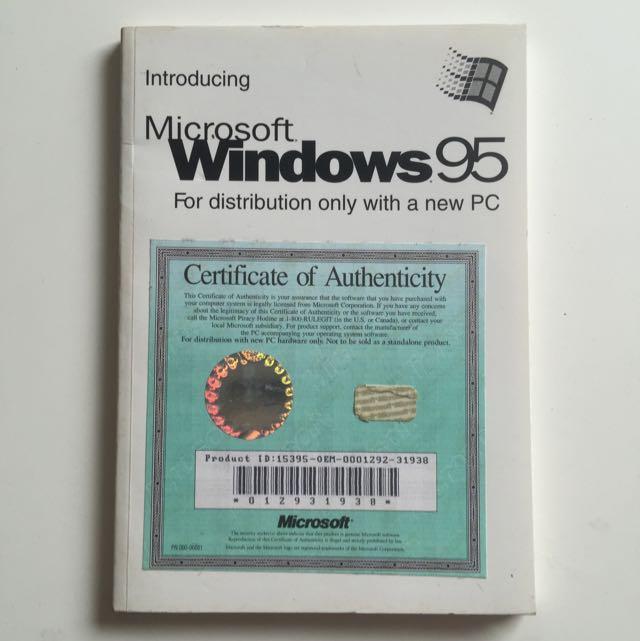
| It may sound strange to people who were born later. But in 90s these mechanisms were in infancy. It was normal for computers to auto-login and have no password at all, processes could each read entire memory on the machine. Software was cracked the moment it came out and it was assumed people bought any software because they feared legal action rather than because they had no other way to get their hands on it -- late 90s and early 2000s you could download pretty much anything you wanted, immediately, for no cost. There really wasn't much possibility to protect your piece of software. If it was put on a CD somebody will either extract the key or modify your software to accept any key. Windows security mechanism was no better and there were copies distributed so much that probably many people remember "standard" CD Keys even to this day. And it was pretty much safe because most software did not have ability to phone home so the software developer would have no way of knowing that somebody used an illegal copy. The business model was mostly companies paying for software (fearing an ex-employee reported illegal use). I remember most teens and young adults (which is most people who used computers) would never buy any kind of software, music or video. The only exception was sometimes people bought OEM software with their hardware. |
Everyone was doing it. I remember my teachers, friends, and family all giving me pirated software at some point. I remember my friends and I getting excited when someone got a ripped copy of some game and we couldn't wait to burn new CD-ROMs to share. If one of us got our hands on the copy of some game, we all got copies. It was kind of like a free-for-all in the world was starving for cool applications. Computers were starting to live up to their promises and software was just like recipe cards.