Hacker News new | ask | show | jobs
by kaio 1281 days ago
Key takeaway:

>>The reported incidence of (epi-)myocarditis after vaccination is low and the risks of hospitalization and death associated with COVID-19 are stated to be greater than the recorded risk associated with COVID-19 vaccination [29].

3 comments

the more interesting unaddressed question is, for whom? i am a young-ish healthy person, i have basically no risk of ending up in the hospital for covid. what is the risk tradeoff for people similar to me, rather than an abstraction of the entire population? what is the risk tradeoff for a young child, who effectively has zero risk of serious covid?
> what is the risk tradeoff for a young child, who effectively has zero risk of serious covid?

This is only true if you consider death the only "serious" outcome. Around 25% of children and adolescents who get COVID-19 will get "long COVID", with long-term effects we've just begun to understand. Plenty of "young-ish healthy people" have suffered debilitating effects.

Vaccines don’t make a major difference against Long Covid. 14-25% reduction in risk I read.

At this efficiency level they’re not an adequate preventive measure.

A 14℅ reduction in something that happens to 5%+ of people measurably and probably lowers your developmental outcome even if it is bellow the threshold of clear measure (a weaker school year that you never quite catch up from could just be random after all.)

That's a much bigger deal than whether you have 12 in a million or 24 in a million chance of something that has a 5% chance of being fatal.

Giving a population lead poisoning didn't kill any of them outright but cognitive problems in the lead generation is correlated to our higher homicide rates and many of the poorer outcomes in our generation and echo's of its affects in society.

I find it interesting that the wider anti-vax demographics overlap heavily with the safety/helicopter parenting that focuses on some extremely unlikely demise as a reason to limit the next generation in ways that will have much higher rates of earlier deaths and reduced lifestyles when considering their overall lifespan.

You sound like somebody that likes to crunch numbers, but doesn’t understand how most parents decide on these things. Or if you happen to have children, you’re unusually clinical about their health…

Anyway, the children’s vaccine was authorized in the EU on the 19th of October 2022, after all Omicron strains were making rounds through the population.

In Germany at first one dose was recommended for 12-17 then one plus booster. Kids younger than 12 may be vaccinated on a case by case basis if there’s risk factors or the parent explicitly wants it. This means that the risk of Long Covid in this age range is not a “bigger deal” than the benefits and risk from the vaccine.

According to the RKI, there were 1500 vaccinated in the age range 0-4. And between <10% and 30% in the range 5-12 depending on state.

In conclusion, your dogmatic approach is not supported by the competent health organizations. Neither is it supported by parents.

> doesn't understand how most parents decide on these things

> your dogmatic approach is not ... supported by parents

Your dogma here is that you assume all parents take the zero-sum "ok for thine but not for mine" approach. Personally I know plenty of parents who were eager to vaccinate their kids against COVID. But I'm not taking my personal outlook as some kind of fact about all parents.

Instead I will note that in the history of vaccine mandates there has always been opposition from a _minority_ of parents, doctors what have you in the context of broad societal support, even though vaccines have always had some amount of risk that similarly to COVID were vastly outweighed by the societal benefit and the risks of the disease itself.

i believe i have found the source[0] for your claim -- this seems a bit overplayed as 'long covid' when the definition is given as any persistent symptom, including congestion and emotional state(?)

https://www.nature.com/articles/s41598-022-13495-5#Sec6

The long COVID myth is being debunked.
Essentially all children and adolescents will get Covid if they somehow haven't had it already. Something like a quarter of the population being physically disabled to even a mild degree is an extraordinary claim requiring evidence in kind.
I guess it's fortunate that we have almost three years' worth of data conclusively establishing this fact, then!

https://www.cdc.gov/nchs/pressroom/nchs_press_releases/2022/...

A survey essentially asking people "do you have long covid?" isn't extraordinary evidence. Could be a simple case of psychogenesis[0] like has been common during any mass illness event historically. The demographic info in your link seems to indicate that is a possibility. With 25 percent of the population apparently having this disease it's not a hard one to study experimentally.

[0]https://en.m.wikipedia.org/wiki/Mass_psychogenic_illness

Except that we have all kinds of other indicators of this phenomenon as well.
surprisingly high! how many of those children were vaccinated?
That's not even the complete question though -- because by all accounts, Covid actually results in a higher incidence of myocarditis than the vaccine does.. Given the tenor of the conspiracy theories here, the landscape of questions is too nuanced for HN I guess. Ideally, the vaccine recommendation would weigh:

Incidence and seriousness of myocarditis (ISM) naturally / in absence of covid or vaccine, ISM following vaccine, ISM following Covid, ISM after being vaccinated but later catching Covid, relative risk of death / or the other litany of problems following unvaccinated covid infection, same but with vaccinated covid infection and the increased chances of avoiding infection after being vaccinated.

It's possible that vaccines are leading to more myocarditis, covid is certainly leading to more myocarditis, most cases of myocarditis are undetected and resolve on their own with no health impact at all.. as expected, weird antivaxxers are harping on point 1 to the detriment of anyone actually interested in public health.

Not true for men under 40, myocarditis higher from vaccine.
Why do people keep thinking young people have no risk of ending up in the hospital for Covid? So many people have, and so many have died?
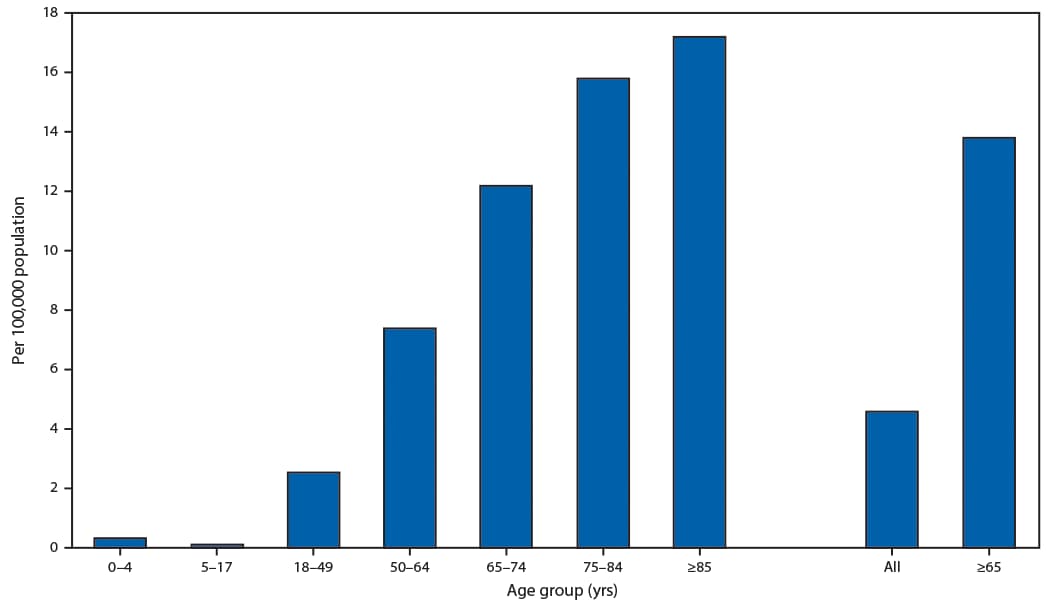
statistically, it is extremely unlikely[0] for an otherwise healthy young person to end up in the hospital for covid, much like myocarditis -- i am simply interested in which is more likely for specific population subsets

[0] https://www.cdc.gov/mmwr/volumes/69/wr/figures/mm6915e3-F1.g... -- from https://www.cdc.gov/mmwr/volumes/69/wr/mm6915e3.htm

The numbers are so small that it is hard to say -- several long-term studies are ongoing. All the evidence suggests the risk of Covid is far greater. I'm sure you know this, but covid causes significantly more cases of myocarditis than the vaccine.
The vaccine isn't preventing COVID, it's just limiting symptoms. Does it lower the risk of myocarditis from COVID?

I just looked. The Vaccine doesn't lower your risk of getting myocarditis if you still become infected by COVID.

You are wrong. The vaccine absolutely reduces your odds of getting covid in the first place.
~26,000 people under 30 have died of COVID since the epidemic began.
how many of them had an existing underlying condition? the broad numbers suggest ~85% https://www.cdc.gov/mmwr/volumes/69/wr/mm6915e3.htm
Because it’s true
"stated" is an interesting choice there, especially when using "recorded" a few words later. It reads as being a bit untrusting of the COVID death numbers.
Are the covid death numbers trustworthy? (honest Q)
They're probably low, if anything.

https://en.wikipedia.org/wiki/Undercounting_of_COVID-19_pand...

The chart on https://www.cdc.gov/nchs/nvss/vsrr/covid19/excess_deaths.htm shows all cause deaths before and during the pandemic; there's an extremely clear difference, and it coincides closely with the spikes in COVID cases we've seen.

This method of reporting avoids all the complexities around "died with COVID" vs "died of COVID", people who never get tested before dying, etc.

An article was published in Nature a few days ago saying the actual number of COVID deaths could be around 2.75x higher than officially reported numbers. We might be underestimating deaths by many millions worldwide.

https://www.nature.com/articles/d41586-022-04138-w

>it coincides closely with the spikes in COVID cases we've seen.

Aren't there about 100 other confounders that could be in the mix there

If it was one general noisy correlation, I would agree. But there are multiple spikes that go up and down and match almost precisely with the multiple waves of covid, persisting through many shifts in other factors (like downstream effects of different levels of lockdown) with almost no change in the trends for all other deaths beside it. It's about as close of a correlation as you can ever hope for with real-world data.
Which of them do you propose would cause the American public (and others worldwide; we see excess deaths increased everywhere, whether they required masking or closed schools or did very little to mitigate) to suddenly start dying in significantly higher numbers - again, of any cause - for the last two years - and especially so at the same time large COVID waves are occurring?
> Which of them do you propose would cause the American public (and others worldwide; we see excess deaths increased everywhere, whether they required masking or closed schools or did very little to mitigate) to suddenly start dying in significantly higher numbers - again, of any cause - for the last two years - and especially so at the same time large COVID waves are occurring?

I can give one example, which happened to my dad...

"Sorry, we have to reschedule that surgery to remove the tumor because we're anticipating a covid spike and need the bed availability."

Repeat until he died due to cancer spreading.

Does it matter which?
It's actually a non sequitur because you can still get Covid after getting the vaccine. It's not an either/or at all, and in fact most people who got the vaccine did get Covid.
But had lower incidence of hospitalization.