This is relevant to today's events because Magnus Carlsen just withdrew from a tournament[1] after yesterday's loss to a significantly lower rated opponent who had previously been suspended for cheating on chess.com. The tournament organizers have also implemented additional anti-cheating protocols starting today.
Whatever comes out of these accusations, the chess world will sure enjoy its new infusion of drama.
Wow, somehow I missed this. Pretty wild accusations from Magnus and Hikaru on this. Hans just had a horrific tournament in his last attempt, which makes this whole thing pretty interesting.
Hans didn't play engine perfect lines when beating Magnus in the Sinquefield Cup, though he obviously played extremely accurately.
Ignoring the lines (and any cheat at this level would be canny enough to avoid the top few engine moves), there's something seriously off about Niemann's analysis - shallowness and incoherence covered over with bluster. Even Ramirez seemed disdainful of his reasoning about his position against Firoujia tonight.
It's pretty grim for him if he really didn't cheat. He won't be invited to a tournament involving Magnus again.
Seconded re: Neimann's analysis. Specifically, he stated in a post-game interview that Carlsen had played the same Nimzo-Indian g3 line in a prior tournament, even though that never happened.
For the sake of the sport, I hope Neimann didn't cheat, but I doubt we'll ever know for sure.
Yeah, but Move 6 is different and it changes the whole dynamics of the game.
Prior to Move 6 this is a well known line with 700 hundred high level games, and Magnus (apparently) never played the line with 6.a3 before, so I find Hans's claim extremely dubious.
Still not an evidence that he cheated, but I agree that sum of signals e.g. prior cheating ban on chess.com, incoherent after game analysis without engine help and in general never being worse against 4 Super GMS and having a winning position against all of them does not paint a good picture. Something smells, but we will probably never know.
Good catch. I was searching for a game without Nf3, but this is effectively a transposition.
One minor point folks aren't mentioning that I think works in Neimann's favor - Carlsen is known for enjoying the Catalan, and the opening in the game was essentially a Nimzo/Catalan hybrid. This fact makes Neimann's supposed pre-game prep a bit more palatable. Everything else (postgame interview, past history, Twitter antics) seems to work against Neimann though.
My question is - if Neimann did cheat, how? Doesn't seem like something that can be done easily in an OTB tournament.
It's binary. Either he did cheat today or he did not. If he did not then who cares what his post analysis looks like after drawing the #4 player in the world and being +3 at some point. The only reasonable analysis is to declare him a cheater today or discard the interview. To say that the interview would point to him cheating vs Magnus but not today is nonsense.
No GM would be stupid enough to cheat playing 100% engine lines, they of all people know which engine lines would look particularly suspicious. All they need to know is to avoid any serious blunders, and play some important moves here and there, and that's enough to get a serious advantage at this level.
Do you have a source of Magnus accusations? He seems to have withdrawn relatively quietly, perhaps consciously trying to refrain from cheating accusations.
Hikaru was less reserved on the other hand. He called Hans's post-game interview analysis sub-2700 level after Hans Neiman badly mis-evaluated several positions.
Yeah I think he's being very professional instead of just throwing out accusations; let the arbitrators call that.
I'm not at all into chess (only through the odd HN post where I get out-nerded left, right and center), but I can imagine it ends up being a very analytical thing, where the experts or analysts can spot whether someone is playing like a human or a computer. And I also think they can't add "noise" (e.g. human mistakes) to it either, that'll either throw the computer off, OR it'll look "uncharacteristic".
Not a member of this forum, but wanted to help a bit here.
First off, computers are (especially in complex positions) ridiculously stronger than humans, like your average family car can't keep up with a Ferrari. In less complex games (like an endgame with fewer pieces) top-10 players can definitely play 20 perfect moves in a row, in an attacking game that's harder. A player like Niemann is not really expected to reach that level in a game like this.
A second point is how much time you spend on each move. If you play a move with big consequences (say sacrificing material, or violating a principle) you would generally think longer. A computer doesn't see it that way and might spot "instantly" that this move wins material 7 moves down the road, where even a World Champion will check his analysis before playing that.
So playing too perfect and playing too fast in critical positions are both red flags. In Online chess, they often use this to grade your moves, and flag you if you go over certain thresholds, especially if you have a lower "rating".
Hans Niemann did both of this (too fast and too good) and then after the game was not really able to explain his thought process afterwards. None of this is hard evidence, but they are red flags, and if you add that Niemann has been caught before in online chess... that's so many red flags it would make the CCP proud.
Hope that helps a bit! So no, there is no very analytical thing, which does mean we need to be a bit careful and leave the option open that Niemann maybe just really liked this move on general grounds, got lucky it worked, and has learned of his previous mistakes. It could definitely happen.
Nothing really throws the computer off. It is objectively much better than any human at evaluating any position, not just the types of positions computers get into.
He has done absolutely everything you can do to accuse somebody without actually crossing the line into directly accusing them. His meaning could not really be more obvious.
(My bias: I think Hans' analysis is pretty dubious, but if it were anyone other than Magnus I would give these accusations little credence. I think we who are not in the know should be giving Hans more benefit of the doubt than people generally seem to be giving)
If he had ironclad proof, he'd hand it over to the arbitration committee / judges; it's not very professional I think to accuse people directly, even with proof.
Withdrawing from the tournament is the loudest accusation you can make without words. I'd rather believe Hans on this https://youtu.be/GSLM1K6O6aU?t=1507
Do computers play like top humans? Or different stylistically?
ie - if you were a top player and looking at the moves of an opponent, could you discern if the style was more similar to a top rated human or a top rated computer?
There are "computer moves" which stand out vs human players. These normally show up in lines where there are many options of roughly equal value and the computer picks a move that is infinitesimally better but out of 'theme' with the position.
They can also show up when for instance there are multiple checkmates in a position. The computer will choose the one requiring the least number of moves even if it requires deep calculation and perfect play. Humans will just trade off material and go for an easy win.
Now that chess engines have started to use neural networks in move selection the amount of "computer moves" has decreased noticeably.
> if you were a top player and looking at the moves of an opponent, could you discern if the style was more similar to a top rated human or a top rated computer?
With a large enough sample size I believe that top players would be able to tell the difference. But that sample size is much larger than a single game or likely even the ~10 games being played in a tournament.
Edit:
Oh I should also mention that in the context of cheating with computers there are more signals to look at than the moves themselves. Time management is normally a huge giveaway for cheating. In online chess this normally manifests itself as players using the exact same amount of time for each move in spite of the positions being very different in terms of complexity.
In the match being talked about above Hans, the challenger, used a suspicious amount of time during the opening sequence. He played the opening moves in around 10 minutes which is weird because if he had memorized the lines he would have played them much faster. If he didn't memorize the lines then it would have taken him much more than 10 minutes to calculate it all.
> There are "computer moves" which stand out vs human players. These normally show up in lines where there are many options of roughly equal value and the computer picks a move that is infinitesimally better but out of 'theme' with the position.
To elaborate on this, humans use pattern recognition to identify themes within a position. This is a shortcut that prevents needing to mentally brute-force your way down an enormous tree of possible positions. Elite chess-playing humans are very good at this, but are still very good at spotting potentially non-thematic (perhaps "surprising") moves that offer some quantifiable advantage.
Computers operate very differently from humans. They rigorously evaluate positions to absurd depths. They can examine lines further than 30 moves deep without too much time. Often the moves they come up align with the thematic ideas that humans have (after all, there's a reason why humans have identified these patterns). But at the end of the day, the computer isn't playing thematically. It only cares that the position at the end of best-play by both sides has the score most in its favor.
This leads to computers playing moves that humans would only come up with exceedingly rarely. And if a human came up with that move, there would generally be some clearly-identifiable reward that humans can pick up on several moves later. When a human player plays computer moves, those noticeable rewards are often missing. The cheating human makes a puzzling move, play continues, and many moves later their opponent is worse off. But even after serious analysis it's not entirely clear how that original move brought about this advantageous position.
Of course maybe the human in question really wasn't cheating and stumbled into a brilliancy. Perhaps it's even one they didn't even truly understand the ramifications of when they played it! But when a human makes several of those types of moves in a single game, or even across a single tournament, it brings about extreme suspicion.
If this interests anyone reading this, check out this Daniel Naroditsky video where he analyzes positions with some astounding engine moves which are very difficult for humans to see, but do have logical reasons for why they work: https://youtu.be/GdaU7wpOArs
If there is too little communication between you and behind-the-scenes cheating operator, you run the risk of choosing a move which requires perfect play for a long sequence, otherwise it would give away that you didn't understand the move.
This is a rather poor example. If there are multiple checkmates, humans are usually much more likely to see ones that require the least number of moves. Anyway if there are multiple checkmates, the game is irrecoverably lost by another player and it is easy to see on the board.
The situation would be more like, there is a forced checkmate in 12 but it involves navigating a sharp position that is complex and any miscalculation could equalize the position.
On the other hand, you can simply exchange queens and rooks and have a clear winning endgame, but it will only result in a checkmate in 20 moves.
Almost any human would opt for the latter to avoid the risk. From the computer's perspective, there is no risk.
I tend to analyse my games after playing them, and I must say that NOT ONCE in a few hundred of games played at my level (~2500+ on lichess rapid) I have seen a forced mate in 10+ moves other than in end-game when there are very few pieces on the board left. And when you see such long checkmate, usually it doesn't really matter, because by then all is already clear on the board.
So no, I stand by my point that a specific choice of one of multiple possible checkmates is quite a poor indicator of using a computer to calculate moves.
This is false. If there's a longer mate where every move from your opponent is forced (that is, only one more is legal or doesn't immediately lose) a human player will play that, as opposed to a shorter mate, in say 5 moves, where you have all sorts of different cases to calculate depending on what your opponent plays.
You should be more careful with such statements. Boldly claiming that something is 'false' and backing it up with a rather vague hypotheticals does not make your statement look good, considering that said hypotheticals are not supported by my own chess playing experience. Of course, I don't claim to be a really strong player or something, and my lichess rapid rating is only ~2580, so maybe your expertize in these matters exceeds mine.
The top chess engines are now much much stronger than humans, and they will find some moves that grandmasters are unlikely to even consider. One recent example was Kf8 in the recent Patrycja Waszczuk cheating scandal: https://www.chess.com/news/view/patrycja-waszczuk-cheating-2.... I watched Hikaru Nakamura analyze the game on stream and he burst out laughing when he saw the infamous Kf8 move, since it was such a bizarre move for a human to play.
I can't find a citation but I recall that computers agreed with the moves of grandmasters from the pre-computer era about 60% of the time.
Generally, the biggest heuristic for identifying cheating is identifying somebodies moves share statistical similarity to the top moves of common engines (Especially stockfish). This doesn't really work after a single game, but anybody playing the top move of stockfish 90% of the time over 100 games is a cheater. Nobody that isn't cheating can do that. Cheaters are savvy though, they will notice in a position there are maybe 5 decent moves they can choose from, so for just that position they will choose stockfish's 5th choice. Or maybe they'll only check the engine at the most critical moments of the game and turn the engine off and play normally afterwards. Notice that the person being debated in this article is somebody with a history of cheating, the evidence they cheated in this specific game is likely not as good as the evidence they are just generally a cheater.
On top of this more empirical analysis, there's more subjective analysis. Humans tend to try to simplify games when they're ahead to reduce computational complexity, but computers don't do this as it's not a good strategy for a computer. Humans will tend to follow a narrative and follow a general idea throughout a game with ideas they calculated earlier in the game or in their preparation, whereas computers don't care about narratives and will completely switch plans on a dime. In the endgame the computer starts having a LOT of winning moves that it hasn't calculated to the end and can start making very offbeat choices, whereas humans tend to use a set of rote memorised strategies that are known wins. Again though, a skilled cheater realises all this and will choose weaker more human-like moves that are probably the engines 2nd or 3rd choice.
There's also metadata. Cheaters usually take a few seconds to think about a move that a human would make instantly (this came up in the article where it took the cheater 20 seconds to make their first move), they probably exhibit different browser/app interaction habits. Humans have all sorts of particularities about UI interaction and time management. A lot of people play blitz and bullet chess because cheaters struggle to cheat convincingly under time pressure.
At this level, players know all opening lines to some depth. The first move? I don't see how 20 seconds indicate anything other than a passage of time.
Well in this case it did actually indicate something other than the passage of time, it indicates the player was using a shoe operated cheating device an remarked on how he would normally move more quickly.
Maybe I overemphasized the first move because it was emphasized in the article, in general cheaters use their clock in weird ways throughout the game since for them pretty much any move is similarly complex. In this case the shoe operating cheating device raised the minimum time to make a move, which is a characteristic common to many forms of cheating.
Yes, you could very easily do that. However, the theory is that cheaters would let the engine decide only 3-4 critical moves during a game and that would be enough to turn the tide in their favor. In chess small advantages compounds so this computer help would be enough for grand masters to beat the world champion. A cheater that understands cheating countermeasures could easily fly under the radar that way.
The problem with this approach is that you'd still need to be able to correctly identify those critical moments in the game, and a single move won't help you. You need the entire line.
Which would still require a considerable skill. If you can't figure out why a single move is brilliant, you won't be able to find the entire line.
If stockfish tells you the entire line, and the opponent plays something that wasn't included in stockfish's line (because it's worse), you're also going to be at a loss.
The best cheaters are also highly skilled. This is true in online competitive games as well. Very rarely do these folks just leave cheats on all the time. That's blatant and easy to ban. But toggling it on at critical moments will give you those "clutch" wins which genuinely happen sometimes, but makes them much more reliable.
There are certain moves that players will absolutely call "engine moves". These are usually moves with no discernable purpose (even when calculating deeply) that later on turn out to have been crucial dispite the fact that they don't seem to progress any conventional goal or deal with any current concrete threat. If you analyse a game with Stockfish you'll often see it suggest (say) a calm-looking king move that no human would ever play in the middle of a massive attack but that turns out to resolve some deep positional issue later on.
The clearest example in modern play is a4 and h4 as white (eg early h4 vs the King's Indian Defense) or a5/h5 as black. These are now frequently played in various positions because since they were discovered a few years back by alphazero, they have been extensively examined and found to be good, but prior to that, no strong human would play them.
If every move was an engine it would be suspicious, but it would be easy to just use the engine a few times at important moments in the game to get a huge advantage, and it would be very difficult to detect. The top player normally know the best few moves on the board and choose between them based on long term strategy.
Top humans tend to pick a slightly weaker move than computers every few moves. By letting the computer veto their chosen move sometimes but not all the time (and only doing so when the computer's chosen move was one they were strongly considering), they can have stronger performance without anyone catching on.
The top chess engine was ELO rated at 3546 in 2021. The top rated player ever was Magnus at 2882. To put that ELO difference in context, even if Magnus gets the first move, the chess engine is expected to win 0.979934616 of the time. Within that gap, there are many moves that can be played that are superior to human moves by varying degrees.
It would be very hard to detect a sophisticated cheater solely by examining their moves in a vacuum. They could pick moves that appear to be "human" e.g. moves that appear to be chosen based on the common heuristics that strong human players tend to rely upon, rather than moves based on very deep brute force calculations, where we could never match the strongest chess engines.
The giveaway is usually in the time required for each move. Humans will tend to spend varying amounts of time on each move, with significantly more time spent at critical moments in a game. A computer will pretty much spend the same amount of time for each move. But even here, a sophisticated cheater could disguise this side effect by only using computer assistance at critical moments.
Agadmator covered this game and explains a disgusting computer line quite well. Note that under time pressure, a human can only calculate so many lines. They will immediately see a range of possible good lines, explore them to some depth and choose the best looking one. This engine line takes a bad looking path which comes good only after 19 moves.
There are some grandmaster chess streamers who play random people on the internet and pick up rather quickly when they are playing against a chess engine instead of a person.
In a nutshell, computers do some things that are very unlikely for humans to do. A lot of the play is similar, but some things are outliers and high level chess players will notice the unusual style and high accuracy moves of a person assisted by a computer.
In the moment I doubt a top GM would notice. Everyone is preparing using state-of-the-art chess engines and taking inspiration, even from moves that would have been considered crazy a decade ago.
After the fact, it'd probably be more obvious. Human players will typically avoid unnatural moves that require long sequences of perfect play before they pay off.
But top players are also the best qualified at cheating in a way that wouldn't raise suspicion. Many games are lost or drawn because of small mistakes or inaccuracies during the endgame. And playing a perfect endgame is not implausible at this level.
I don't understand why a GM would need to explain some of his moves precisely and with a deep understanding of the position as some commentators here point out. Why is that so indicative of cheating? It's known that classical chess has a lot of theory, and Hans himself admits that he checked an engine line the evening before the game. So what? Here's the quote:
"
I didn’t guess it, but by some miracle I checked this today, and it’s such a ridiculous miracle that I don’t even remember why I checked it. I just remembered 12…h6 and everything after this, and I’ve no idea why I would check such a ridiculous thing, but I checked it, and I even knew that 13…Be6! is just very good. It’s so ridiculous that I checked it.
"
https://chess24.com/en/read/news/sinquefield-cup-3-niemann-b...
It's subtle, but the sheer amount of time that it takes to become a top level GM make it such that there's a bit of "GM Speak" that all of them seem to do. So, there is first a cultural variation: the way he speaks doesn't sound like the rest of the experts. By itself, it isn't damning.
However, people at the GM level also tend to have an ability to look at a position and remember what they were thinking at that point of time. They internalize lines in a way that is a branch of moves. So, in this case Be6! is such a sharp position that you would expect them to talk a bit through it because it takes a lot of prep.
Further, when they turned off Stockfish analysis, his analysis goes down sharply.
Further, he was banned from chess.com twice because he was cheating with an engine.
Further, when he was talking about a set of analysis, he made something up on the spot involving a match between Carlsen and GM Wesley So, and Wesley So said that what he had said was impossible for multiple reasons on another chess streamer's twitch.
It's a lot of little things that don't add up. It's like if you were in an interview and asking a developer to explain some code on their Github about ML, and they sounded like they didn't understand the basic principles of the model they coded. It doesn't mean they didn't write the code, but it casts suspicion.
It's just one signal among others. All other GM's who have beat Magnus in classical format tournaments have been able to explain themselves very clearly. This guy can't. He might be a more "intuitive" player, or he might be cheating.
There's no smoking gun to show laypeople like you and I but people familiar with the scene and its norms do find this to be a salient point of data against Hans.
What people are speculating is that Magnus' prep got leaked to Hans leading to him researching this line. Of course just speculation, no hard proof. I tend to be of the mindset of "innocent until proven guilty".
I know some fairly high rated players who've had accounts suspended for cheating because they got angry and used an engine to cheat a cheater. So you can be a good player and a cheater.
Edit: For clarification, after losing to an obvious engine user, they used an engine themselves to strike back.
A speed running cheating expert on YouTube has observed that many cheating scandals start with a genuinely skilled player breaking records legitimately. However, that player starts cheating later in their career to maintain their status when they can't keep up with the brutal grind of being the best.
Is there any evidence Hans Niemann was suspended specifically for cheating? I’ve seen multiple unsubstantiated claims, but no source that definitively states he was suspended for cheating.
> but no source that definitively states he was suspended for cheating.
And no source will. I'm not sure why chess.com didn't make it public (by a notice on his profile that his account was suspended for Fair Play violations).
But yes, the only 2 entities that can definitively state that are:
1. chess.com
2. Hans himself
Not sure why chess.com won't, but Hans won't for obvious reasons.
Only by K factor; those calculations don't hold at the highest levels, the distribution is skewed. Magnus also rarely loses with the white pieces in classical; his last loss was in 2018 at Biel vs. a much better player than Hans.
Rookie question but don’t draws occur more than 20-25% of the time at this level? Or is that just a unique feature of chess versus say StarCraft.
Restated, are sports specific ELO scores real? Alternatively phrased, does an X ELO score in one competitive endeavor represent the same relative strength as the same ELO in another subject?
Not correct, the current rating doesn't reflect growing player's strength. It takes time for them to accrue rating. Alireza used to be beat players 200 points higher as he was climbing through the ladders. Hans just topped 2700.
There is also the reverse side of the coin that top players peak at a rating and then decline as they age. Not saying Magnus is, but it is not a possibility that can be ruled out.
Magnus has played tons and tons of chess games this year and has maintained his rating. There is no doubt his rating is very accurate unless you think his skill started to deteriorate in the last month.
I don't get it. HN seems to be always on the skeptical side when accusing anyone, here we're seeing people pile up on Hans without any evidence whatsoever.
The fact of the matter is, no one knows why Magnus quit.
I don't see a cheater, I see someone who's been grinding for a while and finally popped off. Dunno if he can keep it up though, might be one of those miracle performances that he never recovers from (ex. Linsanity). He comes across as arrogant and a little affected (the hand flourishes, stylistic pauses), but I like him a lot better than Hikaru. Hoping he continues to see success and smooths out his interview performance over time.
If anything, I'm suspicious it's was a throw from Magnus, or at least subconsciously choosing when to relinquish the throne. This is the guy you want to see in the spotlight. He's interesting, confident, and puts his heart into the game.
That was the result of the four games they played at the FTX Crypto Cup in Miami about 3 weeks ago.
Hans, playing back, crushed Magnus in their first game. Then afterwards when an interviewer tried to interview him about the game he just said "The chess speaks for itself" and walked away.
A lot of commentators interpreted that as a bit of trash talk about Magnus, who convincingly won the remaining 3 games.
I'm not sure why wasn't that blatantly obvious until today. Chess is an extremely unsuitable sport for online because you are 100% free to use the strongest computers on it without 100% no cheat protection at all. It should be ..100% restricted to person-to-person tournaments for keeping score.
It's pretty easy to detect the blatent cheaters who just copy moves from the top engines: you just run the engines on the game and compare the moves between the player and engine: a close enough match is certainly cheating. More sophisticated cheaters who actually know the game well themselves are harder to catch.
I considered that you could have vibration sensor plates under player's feet but I can imagine several ways this "doesn't work":
1) Feet could be stimulated using electrical voltage (low level shocks).
2) Cheaters could put one foot on their knee and the system would only activate vibration when it was near a 90-degree rotation.
3) Cheaters could incorporate a vibration-damping polymer like sorbothane, probably a particularly low durometer to absorb vibrations between shoe insert and floor plate.
I believe the answer is going to have to be establishing a "secure" zone that can't be crossed by anyone without a full x-ray scan of all personal effects and mmWave scanners. If clothing blocks the mmWave scan, people would have to don lighter / more form-fitting clothing while going through the mmWave scanner, send their preferred clothes through the x-ray machine, and then swap into their desired clothes in a secure changing room/bathroom.
The main downside to this is increased cost; I'm not even sure how much this would cost to operate. And for which events would FIDE make this extra cost a requirement? Every FIDE rated event seems completely unreasonable - many of these are small local events with very little budget and lots of 1200 rated players. Perhaps any rated event which includes any of the top-10 players? Is there enough money at that level of chess to fund a requirement like this?
Still some potential for hiding cheating devices in relatively private areas like bathrooms, changing rooms, utility closets, or even "planting" large objects like potted plants/etc with hidden compartments. Most likely I'd imagine the player wouldn't grab these, they'd have someone they trust hide them in the weeks before the event and have a person retrieve these and then drop them in a secure bathroom stall/etc. These would be, for example, identical shoes to the ones they came in with.
Perhaps worth having players go through the scanners again right before they sit down at the table, including in the middle of the match if they take a bathroom break/etc. Maybe that would work, but I'm still concerned about the price -- that would need a separate analysis. How much money is available for each of these matches?
The stakes right now are pretty personal but if nations governments get involved in the cheating for reasons of national pride like they do for the Olympics[0] then I'm not sure anyone would be able to stop the cheating.
Another strategy might be to change the format of the top level of chess to "allow" cheating by giving everyone access to whatever engine they want, powered by identical hardware and watt-limited. So the competition would be "man+machine" vs "man+machine". There's been some chat about this but I'm not sure that matches wouldn't be so insanely even that you'd need 300+ games to build a reasonable confidence interval so that you can even determine which player "won". Currently the TCEC (highest level engine vs. engine championship) uses 22 games per matchup to determine a clear result. Even that would be excessive.
> I considered that you could have vibration sensor plates under player's feet but I can imagine several ways this "doesn't work":
There's also no reason to expect the shoe form factor to be used repeatedly. One cheater was accused of morse code blinks, although he also had a camera on him [0]. When people talk about vibrating shoes there's always someone joking about a wireless buttplug instead, which would probably not show up in the mmWave scan (I don't know exactly what they look like but I doubt they have huge antennas sticking out). A Faraday cage would go a lot further for the price than airport style scanners IMO (and make every match a cage match, which makes chess sound way cooler), but it's probably still overkill.
Those saying it he got banned on chess.com, it was total bullshit, here it is of how it happened live on Han's stream when he was an IM: https://livestreamfails.com/post/84343
Alireza was also banned on Chess.com for cheating but there was none. I don't think HN crowd realizes how easy it is to falsely get banned on Chess.com, don't assassinate someone's character based on that: https://www.chessdom.com/alireza-firouzja-was-banned-for-che...
Hans admitted to Chess.com he cheated, that's why he was allowed back in cash tournaments such as Titled Tuesday.
Firouzja was 11 years old at the time of his ban and he was an unknown commodity at the time. He was quickly unbanned b/c it was revealed that he was just a kid developing very fast.
Hans' situation and Firouzja's situation are not the same.
At this point, I am just extremely skeptical of the narratives in chess. It is much like politics. No substance, all speculation. If I have to speculate, it would be that Hans is a weirdo and has no social skills, people are piling up on his atypical asshole-like personality.
If there is proof to any of this, we should condemn it. Cheating sucks. It is even more serious if Hans actually cheated in an OTB game, that would be a major violation of sportsmanship. It would be a career ending move.
Though I'm not much of a poker player myself, I am friends with many professionals who have found success both online and offline, in games from pot-limit omaha to no-limit hold-em.
Cheating in online poker has been around for many years, with varying success by online gaming companies to implement anti-cheat measures in their software. With recent developments in AI, there is renewed discussion about cheating as the best AIs have no trouble beating anything from PLO to NLHE.
It was only a matter of time before this started to spread offline, and just a few weeks ago, I heard a story from a friend of a friend who caught a player using a device similar to this during a private game he was hosting. It's only a matter of time before these sorts of devices continue to spread, and I'm not sure how the world will respond.
It would be a huge deal to cheat at events like the World Chess Tournament, but the consequences of getting caught will likely stop at complete disgrace. Cheating at events like the World Series of Poker, with tens of millions of dollars on the line, or even worse, private events with potentially billions of dollars at stake, could lead to a hell of a lot worse.
About 20 years ago (before the crackdown on online poker in the US), I had a friend who made a good living playing online poker. His cheating strategy was to use an engine to watch every single game being played on the server. Once he accumulated enough data on players, he would simply play at tables where there were really bad players. He would have insight into each players strategy, and could counter easily. He made quite a bit.
20 years ago online poker was extremely soft, and you could make a profit easily with a little bit of skill. At any rate, what you describe is usually not considered cheating - most sites (with some exceptions now, but likely none back then) explicitly allow software that tracks stats about players - by 2010 (when I was playing semi-professionally online) most regs used software like that (usually Poker Tracker or Hold'em Manager) both to make decisions in a given hand and to avoid tables with too many other regs in the first place.
It was a long time ago so my memory might be fuzzy, but I believe he played on pokerroom.com... the cheating part of it, from my memory, was that the tracking software had access to mucked hands, which normal players at the table wouldn't have access to.
For most of the sites, the software was reading the text-based "hand history" to collect data. When hands were mucked at showdown, the contents of the mucked hands generally appeared in the plain-text hand history (and most UIs provided a way to view them or to replay the hand action-by-action).
There were a couple of sites where this wasn't the case, or where the hand history wasn't provided in a simple text format (or at all) -- but generally, that's how it worked for the majority of the poker sites/clients.
The reason for being able to view mucked hands (at showdown) is because you can do the same in live games, at least that's the house rule in the vast majority of live rooms. It's almost always frowned upon, to varying degrees, to actually request to see a mucked hand - but generally IS allowed by rule (ie WSOP events explicitly allow asking to see hands mucked at showdown, though an 'anti-abuse' discretionary clause is included in that rule, too).
That is interesting… I don’t play a ton of poker at casinos, but I haVe played in probably a dozen or so tournaments at Hollywood Park and a few in Vegas… I have never once seen anyone see or request to see a mucked hand, although I have seen someone get yelled at by the dealer for trying to turn over another player’s mucked hand after the showdown.
Everyone (that talked on the forums, a minority of players) ran Poker Tracker / Hold'em Manager but even in that community I think it was considered shady to use a shared database or to undergo a large datamining operation of hands you weren't involved in.
I played casually many years ago. I remember reading about that strategy to find the fish¹ and have no doubt it was reasonably widespread, because I then opened the cash tables² and noticed that despite a number of them having vacant seats, a couple had a waitlist. Sure enough, opening the game you could see that most players were trying to take from the same person.
That lead to an interesting counter-strategy: because most players were aiming to sucker a single target they heavily avoided playing anyone else, which meant that by playing a little more aggressively one could steal³ from them as well.
Can’t say how viable that would be on the long run, as I only tried it briefly. My goal was to have fun playing and that definitely wasn’t. I stopped playing altogether shortly after.
This article [0] from 1999 on Texas Hold'em shows how bad some developers have fouled up card shuffling algorithms.
> In a real deck of cards, there are 52! (approximately 2^226) possible unique shuffles. When a computer shuffles a virtual deck of cards, it selects one of these possible combinations. There are many algorithms that can be used to shuffle a deck of cards, some of which are better than others (and some of which are just plain wrong).
> The shuffling algorithm used in the ASF software always starts with an ordered deck of cards, and then generates a sequence of random numbers used to re-order the deck. Recall that in a real deck of cards, there are 52! (approximately 2^226) possible unique shuffles. Also recall that the seed for a 32-bit random number generator must be a 32-bit number, meaning that there are just over 4 billion possible seeds. Since the deck is reinitialized and the generator re-seeded before each shuffle, only 4 billion possible shuffles can result from this algorithm. Four billion possible shuffles is alarmingly less than 52!.
> The RST exploit itself requires five cards from the deck to be known. Based on the five known cards, our program searches through the few hundred thousand possible shuffles and deduces which one is a perfect match. In the case of Texas Hold'em poker, this means our program takes as input the two cards that the cheating player is dealt, plus the first three community cards that are dealt face up (the flop). These five cards are known after the first of four rounds of betting and are enough for us to determine (in real time, during play) the exact shuffle. Figure 5 shows the GUI we slapped on our exploit. The "Site Parameters" box in the upper left is used to synchronize the clocks. The "Game Parameters" box in the upper right is used to enter the five cards and initiate the search. Figure 5 is a screen shot taken after all cards have been determined by our program. We know who holds what cards, what the rest of the flop looks, and who is going to win in advance.
> Once it knows the five cards, our program generates shuffles until it discovers the shuffle that contains the five cards in the proper order. Since the Randomize() function is based on the server's system time, it is not very difficult to guess a starting seed with a reasonable degree of accuracy. (The closer you get, the fewer possible shuffles you have to look through.) Here's the kicker though; after finding a correct seed once, it is possible to synchronize our exploit program with the server to within a few seconds. This post facto synchronization allows our program to determine the seed being used by the random number generator, and to identify the shuffle being used during all future games in less than one second!
From the NY Times article [1]:
> The ASF vulnerability lies in a faulty implementation of what is known as a pseudo-random number generator to produce a shuffled deck of cards before each round of play. The order of each shuffled deck is completely determined by one number, known as the seed. In this case, the program chose a seed based on the time, measured in milliseconds since midnight. By synchronizing their program with the system clock on the server generating the seed, Mr. McGraw and his associates were able to narrow the number of possible decks to about 200,000. Then, given the cards dealt and the community cards in the center, they could quickly compute which deck was being used.
Your friend's strategy of only playing poor players is a lot safer than breaking the casino's wallet. I'm reminded of the scene in the movie Casino [2] where casino staff drag the cheaters into the basement and threaten to cut off their hands with a power saw.
Oh yeah. Mike Postle was 100% cheating and getting fed moves from a confederate. But even if he wasn't, this type of setup with communication could simply maximize imperfect information, run it through a "solver" (which is what poker players call their game engines), and return the best plays.
More on the Mike Postle thing in this twoplustwo thread, or of course, Google:
I stumbled onto and down the Mike Postle rabbit-hole. [0] It's astonishing that he was blatantly able to peek at his phone, period, and he never got caught!
My favorite is the hand where they're playing PLO (with 4 pre-flop cards) and the game overlay is still NLH (2 pre-flop cards). Postle freaks out trying to re-scan the RFID of his pre-flop cards. The behavior makes no sense unless...Postle knew (via his phone) that the game mode was wrong, and he couldn't see his opponents' hands.
I'm assuming you have, but if you haven't breezed through Doug's channel, it's fascinating and really approachable. If I were playing online poker, I'd be paranoid that someone is using live assist.
In my circle of friends I have one or two that will take the option to cheat, to this day. This was fine during school days, but, as an adult, I question the behaviour.
This is at cards (Bridge) and Scrabble with some quick hands of normal card games if there is a break or insufficient time for a 'Bridge Rubber'.
My counter strategy is to win fairly and squarely. My cheating friends are obligated to spend a lot of effort planning the cheat and not getting caught. After the sleight of hand they also need to monitor the table to make sure nobody has noticed. They also need to be watching for others cheating.
With Scrabble in particular, total focus on the task in hand is, for me, a much better strategy. The dopamine hit is being able to lay down all the letters, calmly and without commotion, to get maximum points, doing it again on the next round from a fresh rack of letters. This can be done with an 'open' game, where opportunities are given to competitors instead of made a priority to deny. Done well, this feels like you have just put together e=mc2 each play.
Because of gambling mentality, the stakes get higher and higher. I am not in it for the money and feel troubled by taking what was other people's money from the table, more so if they cheat because I feel sorry for them. If it is a legitimate game then the stakes are representative of the situation, the prize can be fairly claimed.
Of consequence is reputation. If you cheat and lose then that is going to be remembered by your peers for decades. However, if you play a monster game where people you have not played before start out with the assumption that they are just going to be battered, then that reputation is short lived. Which is good because people will still play you, even the cheats.
IIRC if you take out the human element of poker (bluffing), it becomes a statistics / numbers game - at least, I see 'win chance' numbers on the off occasion I see poker on TV. Knowing your chances and being able to guess at other players' gives you an advantage.
But you don't need a computer for that... knowing the odds for a hand is a pretty basic skill. And on the other hand if you did place bets based on your hand odds you'd be leaking a lot of information to your opponent.
Not really related to AI but it gives quite an advantage if you can connect multiple "players" to same table. It is not worth to do it without some kind of automation and service providers try to prevent it from happening.
> In AI, two-player zero-sum games (such as heads-up hold'em) are usually won by approximating a Nash equilibrium strategy; however, this approach does not work for games with three or more players. Pluribus instead uses an approach which lacks strong theoretical guarantees, but nevertheless appears to work well empirically at defeating human players. Across the competitions, Pluribus won an average of over 30 milli big blinds per game. Pluribus' self-learned play style eschews "limping" (calling the big blind), and engages in "donk betting" (ending a round with a call and starting the next round by betting) more often than human experts do.
Yeah I'm fairly sure there's security checks at these tournaments and the environment gets tightly controlled; I wouldn't be surprised if they go as far as have everyone and everything that goes into the playing room go through a full-body X-ray.
I wonder why everyone focuses on electronic communication and wearable devices.
There are tons of acoustic side channels if an accomplice watches the live stream outside of the playing venue. Set up construction site and use a hammer just loud enough to be just barely heard from the inside. Bird sounds, music, the possibilities are endless.
Very few bits of information need to be transmitted for the best three moves.
Then chess games will be held inside windowless, purpose built sound proof rooms with only staff members inside, and the players will be forced to leave their shoes and socks at the door and wear tournament-provided slippers. Construction work around the building will also be stopped during the tournament.
example: Moon Ribas, an artist, has a small vibrating sensor embedded permanently in her feet that communicates wirelessly and vibrates whenever there is an earthquake somewhere in the world.
https://en.wikipedia.org/wiki/Moon_Ribas#Seismic_Sense
The idea can be extended to an implanted device that receives subtle signals from the user to have a representation of the game state and communicates back through gentle sensations.
Computer-assisted chess cheating has been going on for over a decade now.[1]
It's getting to be embarrassing for humans, that small battery powered devices now win against strong players. At world championship level, at least you still need a laptop.
Does the size of the device really make it more or less embarrassing? If anything, I think it's pretty awesome that a small battery powered device -- designed and programmed by humans -- can excel at games like chess.
My impression from reading about chess engines online is that drawing is far simpler if that is your explicit goal. Several comments online on different websites claims that they are able to end games in draws against stockfish.
There's a parameter called "contempt" that you can increase to make the engine avoid draws.
The idea is that if the engine has "contempt" for the opponent, it assigns a negative value to a draw, instead of assigning it a value of zero. The engine will then only attempt to draw if it thinks that it is actually in a worse position, but it will not go for a draw in an objectively drawn game. The engine will even play suboptimal moves in order to avoid drawing.
When playing against evenly matched opponents, contempt makes the engine perform worse. But against weaker opponents (such as human super-grandmasters), contempt can make the engine score significantly better.
There are various videos you can see of strong players forcing draws against stockfish (or engine cheaters online etc.). The general way to do it is to trade everything but rooks and then force a very closed position. Then you shuffle for 50 moves or until contempt makes the computer sacrifice material.
I mean I can force a draw against stockfish by just using stockfish myself to beat stockfish.
Look to put this into perspective back in 2008 Hikaru Nakamura a world top 10 player won a game once against the then top engine and it was a significant story in the chess world that day. It's been 14 years since then. If people can easily draw stockfish I'd like to see them do it live giving stockfish the same clock.
One problem with trying to draw stockfish by trading off its pieces is that stockfish is so dominant it tends to win more games the more complicated positions get, so it's actually hardcoded to be bias towards making positions as complicated as possible, so it will resist you closing the position and trading off pieces to an extent. It's also non-deterministic. You might be able to force it to a draw in some games but it's hard to do this reliably.
I'm also by the way not saying Magnus cannot draw stockfish 1/100 games, I'm saying it wouldn't be easy.
For those who may not be aware, the author reinvented a device (one of many really) that has been used in casinos to cheat at games of chance and table games.
Don't actually use something like this. You will always get caught, sooner or later. Depending on who lost money on your match, you will either be tossed out of the tournament, thrown in jail, or killed. Maybe some mix of those will happen. These sorts of things have been used literally for decades.
Honestly a Faraday cage should be a very good defense against most attacks including this one. Moderately expensive for a good quality one, probably only affordable for high stakes tournaments (it shouldn't be expensive in terms of materials: a very simple sheet metal cage with adequate electrical connection technique should be enough, but I assume it's too specialized to be cheap -- plus care must be taken with openings and ventilation).
Edit: I believe at the moment it's still necessary a fairly large device to run the best engines which can't be concealed (?).
Edit2: Oh the engine is running on the Pi 0! Impressive.
Could you hide a bone-conducting bluetooth speaker in your big hair? This way the computer could speak the instructions and confirm the inputs.
How about the controls being inside your mouth at the top. The tongue is very agile. But it might be difficult to tolerate. You could use a local anesthetic spray before.
>Could you hide a bone-conducting bluetooth speaker in your big hair?
You don't really even need that. You only need to communicate a handful of bits. Morse code using small zaps/pressure anywhere on/in your body is sufficent.
1993 had the John von Neumann affair (I played in 1994 World Open so missed out on the fun) where the player had huge dreadlocks, presumably hiding headphones.
"At the World Open 1993 in Philadelphia a completely unknown player appeared, unsubtly calling himself John von Neumann. He played excellently, drawing against GM Helgi Olafsson in the second round. But in round four he suddenly stopped at move nine and lost on time."
"Von Neumann won a prize in the category of players without an Elo rating. Naturally people had become suspicious of this unknown and highly unorthodox player. Before the organisers handed over the $800 check they asked him to solve a simple chess puzzle. He refused, turned and left, and has never been seen again at chess tournaments"
Who was he and who was his assistant? Personal computers were not quite at the GM level in 1993.
If I was the tournament organizer, all games would be held inside windowless, sound proof rooms doubling as Faraday cages with thick concrete walls, electronic jammers outside to prevent any radio communications, and no one but cleared staff members inside. The players would also be subjected to multiple rounds of metal detectors.
Can metal detector detect a gram of Silicon(except transistor I think there are non metallic replacement for everything)? Also, many players bring their own beverage in their container. Seems pretty steep to ban everything for a small minority of cheater.
IBM has 1mm * 1mm chip comparable in performance to 1990 Intel, likely much lower in weight than 1g along with photovoltaic cell for power[0]. I don't think this is enough for beating Magnus, but it could at least find tactics.
If one really wanted to cheat with a computer, I imagine it would be better to only carry around enough hardware to communicate wirelessly with it, rather than the whole thing.
This would be harder to detect as the amount of hardware would be much smaller, and it would allow using a more powerful computer.
Cheating seems easy to deal with. The players should go into a dressing room with supervision. They take off all of their clothes and don new clothing for the event. They then go out and play. They also probably need to be accompanied to the bathroom with an observer.
Of course, this all sounds crazy. But it's not that different than what athletes have to do (if you've ever had to stand around naked waiting to pee into a bottle after a race you know what I'm talking about).
Yes, they still could have some kind of in-body thing (tiny earpiece, or weirder thing in some other part of their body), so they probably have to also be scanned for electronics (or, the game has to take place in a location where there is no way to electronically communicate).
Very interesting, lots of room for improved UX with more sensors to more efficiently communicate opponent moves - "long presses", double and triple taps, "shake your foot", rolls, heel lifts ... if you could get this down to < 2 seconds I think you're in real business.
Also for things like "captures-captures" or "only move" some shortcuts would be handy.
Maybe some hand and brain style options where you or it select the piece and the other suggests a move ...
Wiring up each toe and mapping to a piece type could expedite move suggestion inputs ...
I'd be interested if any HN members consider James Stanley a 'cyborg' with the shoes on?
From what I've found on Wikipedia, it sounds like wearing the shoes is an, "integration of some artificial component or technology that relies on some sort of feedback."
This got me thinking that the Nike shoes Marty wore in Back to the Future 2 could also be considered a cybernetics enhancement.
To what degree does a device need to be integrated with a human body for that human not to be considered a human any more?
In artificial hip definitely makes you a cyborg, and I like to imagine by contact lenses as cybernetic vision enhancement devices, though I can see people err-ing on that. But I don't think I would consider my glasses to be 'cybernetic'.
In my opinion the difference is whether it sits inside the body (imo, inside the eyelids counts). Pacemaker, insulin pump, cochlear implant. Otherwise, you could claim our phones are cybernetic memory and knowledge enhancements (which isn't entirely wrong)
Though I think many of these simply bring you back towards 'baseline healthy human'. For many, the term cyborg requires you to _exceed_ baseline human to be worthy of the term.
So if he implanted this device that made him inhumanly good at chess, I think it would count. This is just using a very inefficient keyboard.
Inserts self-promotional link to a "Scrabble board solver on a smart watch that can analyze the game board using the smart watch's camera, the tiles you currently hold, and the optimal word to play" and then walks away whistling.
Just wait until innocuous looking smart glasses show up.
Really can't stand Niemann's arrogant attitude, but cheating is a whole new level, if this is proven, and if this is indeed what Magnus is hinting at. Whatever the outcome, it's not a pretty picture for chess overall. Publicity it will get for sure.
This is only legitimate as a prank ("Can you teach my kid Chess?") or as part of some elaborate Ocean's-11-style Rube Goldberg heist. Also for James Bond if the fate of the free world is not at stake.
We need a tournament that allows for engines. That way the humans are merely avatars of NNs, and may the best engine win. This may also uncover lots of useful insight for the "all-natural" human tournaments.
How would this solve the problem of cheating? What is "the best engine"? An Engine requires rules as well. Cheating is always involved when there are rules. That's why it is called cheating.
The idea of professional cheating is not to tell anyone about it. That's why undetected case are usually higher.
There's a very well known engine tournament called TCEC. For that tournament, all the engines run on the same hardware.
The teams submit their binaries to the organizers beforehand, and the organizers run them on the tournament hardware.
There are some questions beforehand about what hardware to use (for example, some engines use GPUs and others don't), but after that is settled, the tournament is run in a fair way, hardware-wise.
Is there a precise, published-in-advance definition of cheating in the chess contest rules, or are the contest organizers allowed to shift goalposts as they see fit, and ban a player from future contests because of any arbitrary reason they come up with?
My naïve definition would be: a player was probably not cheating if they would have been able to come up with the same moves even if they had played in an isolated room with only basic supplies (such as water and sugar for human players and electricity for computer players). Thus a player who is consulting a chess book, a friend, the web or a computer is cheating, because those are not available in an isolated room.
Yes, if it's a FIDE tournament, there is a precise definition about what is allowed. Of course, this will be applied as interpreted by the arbiters.
12.3 a. During play the players are forbidden to make use of any notes, sources of
information or advice, or analyse on another chessboard.
12.3 b. Without the permission of the arbiter a player is forbidden to have a mobile phone
or other electronic means of communication in the playing venue, unless they are
completely switched off. If any such device produces a sound, the player shall lose
the game. The opponent shall win. However, if the opponent cannot win the game
by any series of legal moves, his score shall be a draw.
Very interesting article. I like reading about cheating and how people try to trick everyone, especially in chess. It seems unusual to me that there’s only 89 points, but I guess thats temporary.
For this sort of thing you have to always tell some authority first, before doing it, and have them approve of the reason. Like a judge of the Law, a grandmaster, something like that. And if she/he refuses don't ask anybody else, no forum shopping, you can ask the same authority again after many intervening interactions a single second time, or allow him to return to you. Or put it on the blockchain, there has to be a commitment is the term of art. It's cheating after all, there has to be integrity from before the fact.
You have any idea what happens when you dogmatically refuse to cheat?
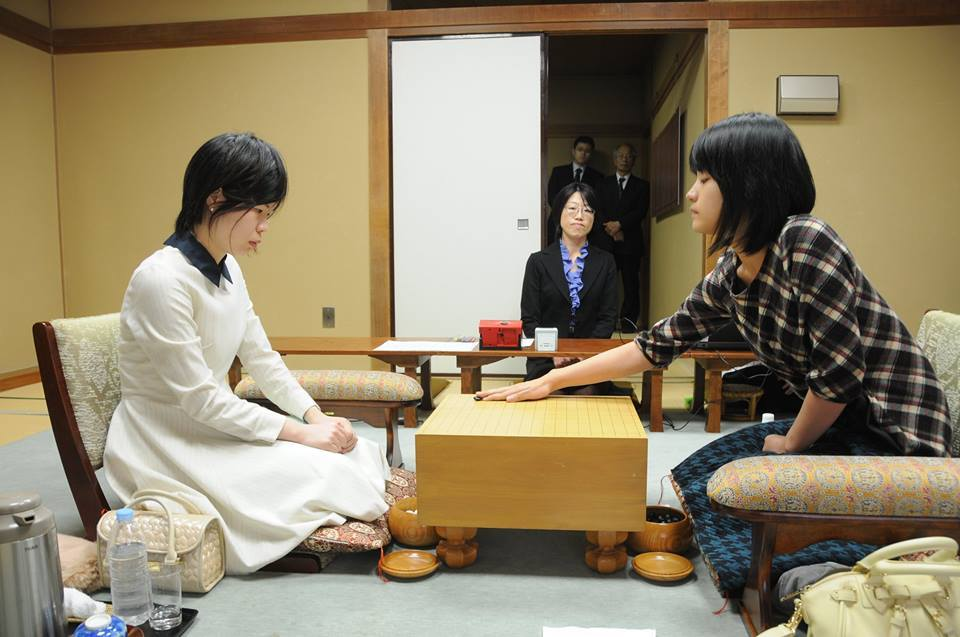
Whatever comes out of these accusations, the chess world will sure enjoy its new infusion of drama.
[1] https://twitter.com/MagnusCarlsen/status/1566848734616555523