Hacker News new | ask | show | jobs
by api 1404 days ago
A glance suggests that Saccharine and Sucralose may be problematic. The others may be “complicated” but the effect also looks close to noise. They should have included some non-sweetener molecules of a similar nature as controls.

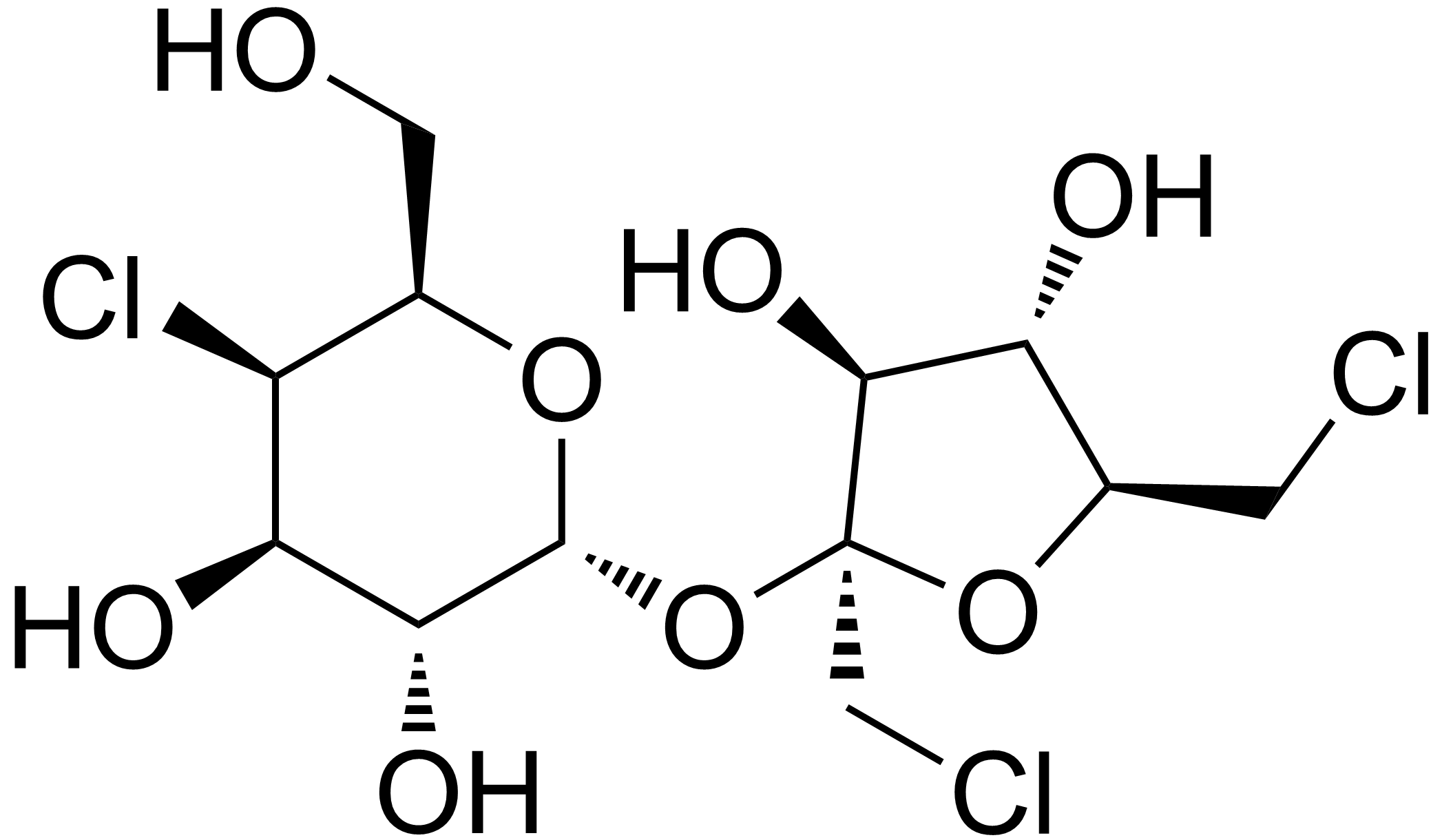
Sucralose was an instant no to me when I saw the molecule. “Here let’s hang a chlorine off this here sugar.” Nope. I recall seeing similar sentiments in a thread over at Reddit where a biochemist remarked that it looked like a pesticide.

The weird complicated molecules in Stevia and Monk Fruit seem safe precisely because they look like something the body is going to hack apart right away and look like all the other complicated molecules found in plants that the body is used to dealing with. Things like blueberries and onions are just loaded with random baroque carbon sculptures like this.

9 comments

> Sucralose was an instant no to me when I saw the molecule. “Here let’s hang a chlorine off this here sugar.” Nope. I recall seeing similar sentiments in a thread over at Reddit where a biochemist remarked that it looked like a pesticide.

If you could infer the properties of a compound by making vague analogies to other similar looking molecules, chemistry would be easy. Changing a single atom can completely change the safety properties of a compound, ie. H2O->H2O2, Hg2Cl2->HgCl2.

> The weird complicated molecules in Stevia and Monk Fruit seem safe precisely because they look like something the body is going to hack apart right away and look like all the other complicated molecules found in plants that the body is used to dealing with.

Yeah, like the atropa belladonna, the deadly nightshade? I'm sure that's chock full of "baroque carbon sculptures". Maybe biochemistry just isn't so easy.

Organic and inorganic molecules are way different. Most small changes to organic molecules are somewhat predictable as to their outcome, afaik.
As someone that is relying on a single high school chemistry class as a base of knowledge, why would Cl here give you pause? In other words why is the Cl here bad, but ok in say salt?
Chlorine-carbon (or halocarbons in general) bonds are somewhat rare in nature. That is not to say they don't exist, but they are a bit unusual. The problem with halocarbons (aside from fluorine, which has its own issues) is they are generally not very reactive, so they can bioaccumulate. But when they do react with biological systems, it tends to be in unwanted and toxic ways.

That said, as a former chemist, I consume sucralose, and I am not worried by it. Unlike most halocarbons, It's very water soluble, so it does not react in the ways the bad halocarbons do.

In salts and in sea water, the chlorine is in the form of free chloride ions, which is also the normal form of chlorine in your body.

In sucralose, chlorine substitutes a hydroxy group and it is covalently bonded to a carbon atom.

Most of the organic substances where hydroxy groups are substituted with chlorine atoms are more or less toxic and some are carcinogenic.

For example, substituting the hydroxy groups in carbonic acid with chlorine yields the toxic phosgene, which has been used as a chemical weapon in WWI.

> Most of the organic substances where hydroxy groups are substituted with chlorine atoms are more or less toxic and some are carcinogenic.

This kind of argument is so... "weird" to put it politely. H2O also becomes toxic if you add an oxygen atom. The safety of chemical compounds does not follow from a naive classification of bonds.

It's a heuristic. If you haven't done a randomized placebo controlled double blind exhaustive study of the compound and all you have to go on is the layout of the molecule, is it a bad guess?
Guess all you want I suppose but there are fairly exhaustive studies on artificial sweeteners.
> If [...] all you have to go on is the layout of the molecule, is it a bad guess?

Yes, almost certainly. Like I pointed out, one atom is the difference between a toxin and water.

That doesn't change whether or not it's a good heuristic. Whether it's a good heuristic depends on how often "extra chlorine hanging off the side" is indicative of toxicity. He didn't make a claim about one atom changes in general, and even if you did you would need to show that on average across many instances from the sample population (substances we are likely actually to run into) it's misleading.
Alkyl halides (carbon chains with halogens off of them) can be alkylating agents - basically they can bond to molecules within your body and if it's things like DNA, can cause mutations and other bad stuff.

Nitrogen mustards (highly reactive alkyl halides) are used in chemotherapy. They basically damage DNA which is used to kill off fast reproducing cancer cells (but they also kill off normal cells).

I was a little surprised when I first saw the structure of sucralose. Chlorides aren't that reactive (bromides and iodides are much more reactive), but a person might consume grams of sucralose so concentrations are high.

That said, many experiments have been done and sucralose isn't reactive at all. Due to the shape of the molecule and steric interactions, the chlorines are very difficult to knock off.

I wouldn't be concerned with taking it.

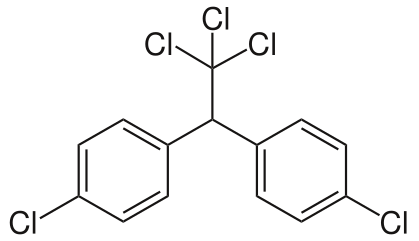
As another person with only high school chemistry, sucralose does look a bit like DDT.

https://en.m.wikipedia.org/wiki/DDT https://en.m.wikipedia.org/wiki/Sucralose

The fundamental difference is between the sugar ring (flexible, which each carbon having tetrahedral geometry, and localized electron density) and the aromatic benzene ring (flat trigonal geometry, with electrons delocalized over the ring).

If you attach chlorine to the latter, you end up with something that's very hard to break down (very persistent) and which will often (depending on exact structure) stick tightly to many biological molecules. Thus they can cause developmental disruption, odd forms of cancer, liver damage, etc. For example, TCDD (dioxin, a side product of many herbicide synthesis routes, a notorious component of Agent Orange formulations in Vietnam, etc.):

https://en.wikipedia.org/wiki/2,3,7,8-Tetrachlorodibenzodiox...

The chlorinated sugar ring is probably easier to break down but if this produces an activated chlorine species during metabolism, say in your liver, it might bind to who-knows-what and cause problems. Or it might just get excreted as a chlorine ion, no different from NaCl (table salt). I'd avoid it myself.

Some organo-chlorines (and -bromines) also occur in small amounts in many edible seaweeds, apparently often with the halide attached to fatty acids and lipids. Hence consuming large amounts of seaweed might not be the best idea either.

In the grand scheme of molecules, they look nothing alike.

DDT is what we call a "greasy brick", while sucralose is a highly water soluble sugar.

I saw someone who looked like my brother. But it was not my brother.
you can't just read a molecule and say "oh it looks like something safe". Digitalin and the cardiac glycosides [1a,1b] may look like completely innocuous compounds (just have to remove a group and they are inactive). Some hormones look like cholesterol. Some steroisomers [2] (think of it as just changing the order atoms are connected in space but not what they are connected to) of molecules kill you while some other forms are safe and that's even harder to grasp on a 2d representation of the structure.

[1a] https://en.m.wikipedia.org/wiki/Cardiac_glycoside

[1b] https://en.m.wikipedia.org/wiki/Steroid

[2] https://en.m.wikipedia.org/wiki/Enantiopure_drug

Isn’t bleach just a water molecule with an extra oxygen atom? I’m not a chemist but I didn’t think you could make assumptions about the effect of a substance in the way you describe. Am I missing something?
Hydrogen peroxide is H2O2 (SMILES `OO`).

"Bleach" can refer to any chemical that makes things whiter. Common laundry bleach is usually a chlorine bleach, most often Sodium Hypochlorite (NaClO, SMILES `[Na+].[O-]Cl`).

There are a bunch of other bleaches[1].

[1] https://en.wikipedia.org/wiki/Bleach

Hmm,"let's hang a chlorine of this here sodium" seems to work out pretty well for us in moderation. I guess it's all about the molecule's properties.
The presence of chlorine does not necessarily imply toxicity. Widely used medications like sertraline and loratadine have chlorine atoms.
Everyone always with this "noise"! Of course there is noise! They are looking at the "noise" and telling you what it is from! Genetics!

If you average any trial out in a large population there will be "noise", but these people who live with the "noise" are the ones affected and suffering.

Does everyone have microbiome-driven effects of non-nutritive sweeteners? Probably not, but what about the ones that do?

> If you average any trial out in a large population there will be "noise", but these people who live with the "noise" are the ones affected and suffering.

If you do a trial in a large population of a drug, device, or clinical practice that does nothing- a perfect placebo- you'll see a variety of effects: statistical noise.

If you do a trial in a large population of a drug, device, or clinical practice that has an effect-- you'll measure that effect, plus the statistical noise.

You can't generally tell for any individual whether the drug helped or hurt. But you can tell that more people did well (or badly) in group A than group B.

You can't even really know exactly how big the effect is precisely: just a range of likely effect sizes.

The more things you try to measure to more precisely zero in on an effect, the greater the chance that statistical noise spuriously makes one of these look important (and the larger the effect must be to be reliably measured). https://xkcd.com/882/

> You can't generally tell for any individual whether the drug helped or hurt. But you can tell that more people did well (or badly) in group A than group B.

That is what they found in this study, but the OP said it was likely "noise" and had no scientific basis for saying that. My point; saying something is "noise" is a way to look cool on HN and dismiss any finding that does not fit your world view.

> That is what they found in this study, but the OP said it was likely "noise" and had no scientific basis for saying that.

It's a small finding in both effect size and statistical significance, and prior probabilities count.

Barely statistically significant findings don't change my beliefs much, because the base rate and prior knowledge matter.

E.g. if you show me a p<0.05 finding that ESP exists, I'm going to dismiss it as statistical noise-- even if the study methodology is perfect it's only 10-20x more likely that ESP works than before, and 20x my prior belief of very near 0 is still very near 0.

If you show me a p<0.05 finding that green jelly beans cause acne, after studying all colors-- I don't care at all.

Here, the commenter you replied to-- api-- suggested that the study clearly indicates that there's reason to be concerned about saccharine and sucralose. It raises a general level of concern about other NNS's, but the data is ambiguous and weak. This is a reasonable reading of the study.

Yikes. When someone makes a comment about "noise" in this context, they simply mean "we can't tell whether the effect observed is due to the thing we're measuring". You'd need a much larger study with totally different design to even begin to approach the question of "do non-nutritive sweeteners make peoples' lives worse or shorten their lives compared to whatever else they might be ingesting". No need for the confrontational angle.
> You'd need a much larger study with totally different design to even begin to approach the question

Yes, that is my point. As the OP remarked; "The others may be “complicated” but the effect also looks close to noise. " is disregarding that data.

When one thinks of the word "noise" one hears something that bothers them, like "there is too much noise in here". This is the problem with research. By getting rid of the "noise" they will only zero in to the thing they wish to hear clearly.

If you manage to model the "noise" and make it somewhat deterministic then it's not noise any more. If genetic variations really are the reason for these variations and some people are indeed measurably harmed by these compounds then it would be a very interesting and somewhat alarming result, but that's not what the study says or what we can conclude from it.
> If you manage to model the "noise" and make it somewhat deterministic then it's not noise any more.

Yes. That is called doing science.

> If genetic variations really are the reason for these variations and some people are indeed measurably harmed by these compounds then it would be a very interesting and somewhat alarming result, but that's not what the study says or what we can conclude from it.

What would make me not think that? Maybe we should investigate it. That is also called science. Saying anything is noise only disregards the response of that part of the sample as useless. It is not useless.

It is why some of us are more sensitive to to certain diets: https://www.chop.edu/conditions-diseases/carbohydrate-malabs...

You know what isn't science? Not doing any of that and just going off on a study that's led to more questions (aka, science) in the comments of Hacker News.

Their study had a scope, they did the study and found some results then drew some conclusions. They also found the study wasn't large enough to draw all conclusions because of noise, something they didn't know before the study.

> Saying anything is noise only disregards...

Saying something is noise indicates that the data isn't clear enough to draw a conclusion and more specific and targeted studies are needed to draw said conclusion.

It certainly doesn't mean that they're ignoring the plight of... you.

I was commenting on how the original commenter was using the term noise. Not how scientists use it.

Listen, the term noise is probably the worst term for this data. Because we don’t know if it’s noise until we examine to see if it is noise. So until we know it’s noise we can’t call it noise. It’s like you’re walking into a crowded room and you’re trying to hear one thing but there is too much “noise”. This assumes we know what we’re looking for in the first place.

Man, and I thought mechanistic arguments were bad. This is a whole new level.
does hanging a chloride off of sodium scare you as well? sodium alone scares me a lot more...