Hacker News new | ask | show | jobs
by zackbloom 1648 days ago
This reads like a case of 'all about me'-ism. It sounds like this person negotiated their salary, and then decided the company didn't value them _because_ the company agreed to raise it when asked. If your goal is to have people throw money at you which you don't ask for, you are going to have a tough time working. A company that's willing to double your salary when you point out the offer is low sounds pretty great to me.

It then sounds like some other timelines were shifted, but rather than engaging with the company to learn what was going on, they silently invented more 'disrespect'.

Building a product is hard. It's also expensive. Many many companies go out of business trying. The company being somewhat reasonable with money, and moving other deadlines around to accomplish their goals, is not evil in and of itself. It sounds like OP needs to learn how to engage constructively, communicate their concerns and questions, and empathize with the people they're working with a bit.

14 comments

For anyone else reading this, when you're negotiating salary information with a company, it is good for you to think about yourself, it's not entitled. You are supposed to advocate for yourself.

I'm not sure if the parent comment realizes that the author didn't actually accept the job? It sounds like parent believes she cut off work or something, which isn't at all what the article describes; it describes a pretty standard run-of-the-mill negotiation process that the author eventually cut off, and that left the author with a sour taste in her mouth about the company culture.

None of that is entitlement. If you go into contract work, you are going to get a million sob stories from a million companies about how building products is hard. Often those sob stories will be paired with real red flags like this article describes (leading with aggressively low offers, asking you to put off other work you're doing, etc). Building products is hard, but also paying rent is hard, and so you have a duty to yourself to advocate first and foremost for yourself during negotiations.

It's not kindness for you as a contractor to take on work that doesn't fit you or that you don't think is sustainable; you're setting yourself up for burnout and failed projects if you do that. And burning out in the middle of development, not being able to make rent, having to ignore other clients, all of that also makes products hard to ship. All of that is also a recipe for going out of business.

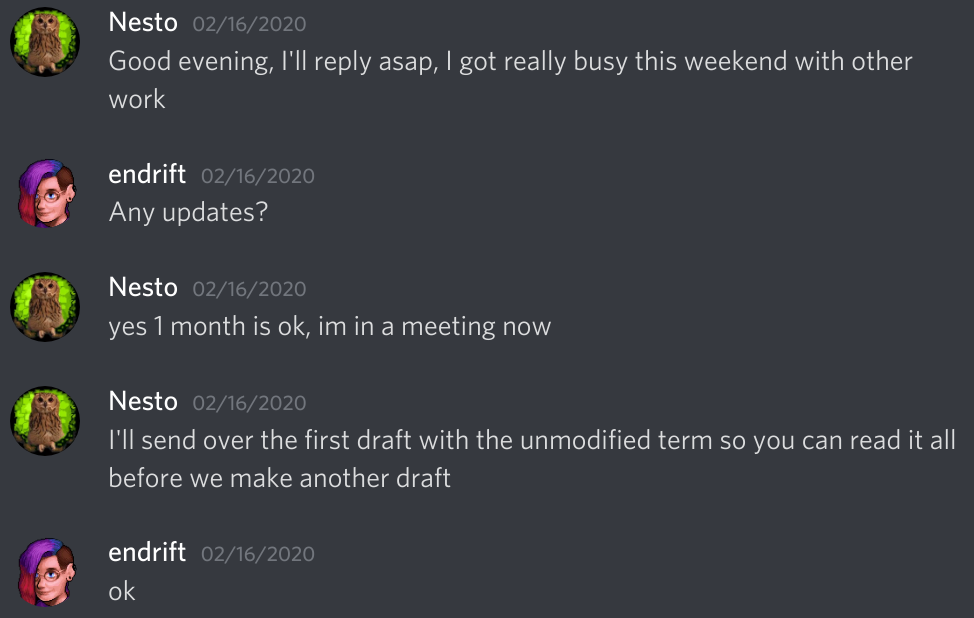
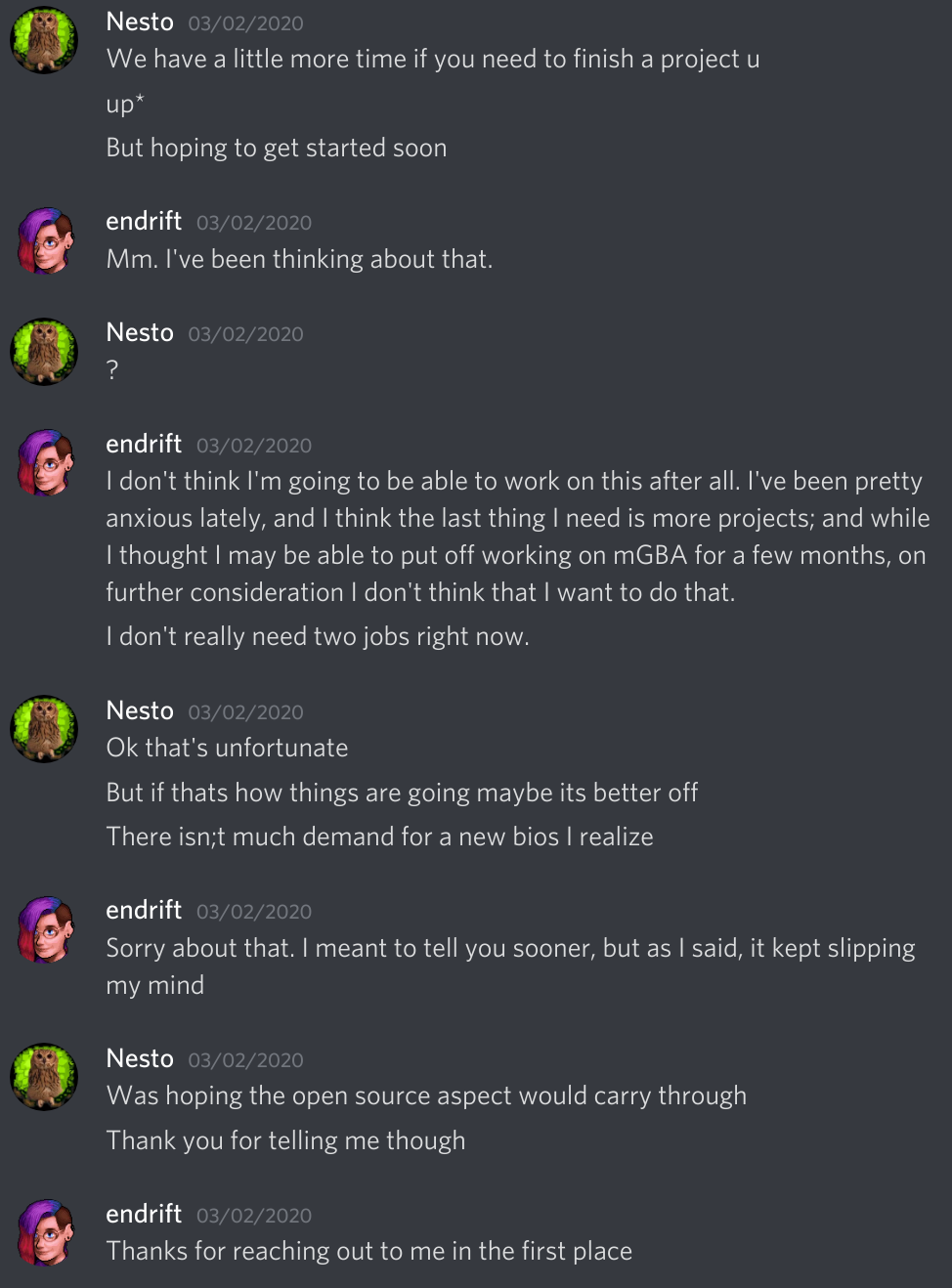
Honestly, it's not the looking out for yourself and not wanting to take a lowball offer that makes this come off as entitled to me, it's the idea that they were apparently so offended that they name names about the situation, and post what appear to be chat logs, just for what looks like a fairly benign negotiation fail.

It's professional to treat yourself and your time and skills with the respect they deserve and not bother with lowball offers. It doesn't exactly come across as professional to me to throw all this online for the world to see because apparently they either didn't want to pay (or couldn't afford) what they needed so offered far less than was needed. Maybe there's some subtext here which I'm missing or isn't explained? Did this company disparage her conduct or skills publicly or something? The level of the response (even how it's called a "hate story") just comes across as weird and overly petty to me.

Without weighing in on the rest, I'd quickly note that the name of the post seems mostly to be a reference to an (unrelated) visual novel called "Analogue: A Hate Story".
Which demonstrates poor judgement. The post title is extremely inflammatory whether it's a reference or not.
This isn't really a random company. Analogue is a company that is plastered across almost every tech/gaming site I visit right now. I think there is a difference between airing every grievance you have with everyone, and airing a specific grievance you have with a company that is getting a huge amount of coverage, if you are someone who is also reasonably prominent within the community that is being covered by the press and that is being targeted with this hardware release.

Because Endrift also isn't really a random person, she's in charge of some extremely public, fairly lauded emulators in the retro space. Analogue is releasing one of the more anticipated and public hardware projects in that space, and Endrift within that context is talking about their experiences with Analogue the company -- including some reasonably relevant details like that the company asked them to delay a release of an Open Source emulator.

Back when I was in college, people in my department shared what was being offered by companies that came over to job fairs trying to hire us. We talked about the hiring processes, the interview processes, and what their culture was like, because we were all part of a community of people who were going to be interacting with the same companies. Unless it was under NDA we didn't keep a ton of that stuff secret, we wanted the people we were going to class with to know what companies were worth pursuing and what companies weren't. So sure, this doesn't warrant a NYT article, it's not an accusation that means Analogue the company should be burned to the ground or something, but don't you see any value in a prominent voice in the emulation community talking about (on a personal blog) their experiences with a company that is a very public presence within the emulation space?

Some additional context here is possibly warranted that the author didn't share this post to HN, somebody else did. I feel like often with worries about things being "too public", there's a weird phenomenon where communities being open enough that people outside of that community can look in suddenly means that anything posted publicly is expected to be intended for a global audience or planned out as a potentially viral piece. But in the same way that I don't think the negotiation process here is worth as much debate as its seeing in the comments, I also don't think the author reflecting on that experience publicly is weird, at least not given the context of the general news about Analogue happening right now, and at least not given the context that this is the person running mGBA. I certainly don't think it's weird enough that it warrants publicly claiming that the author is lacking empathy.

> even how it's called a "hate story"

Someone else has already mentioned, but this is a reference to a video game title.

> Back when I was in college, people in my department shared what was being offered by companies that came over to job fairs trying to hire us. We talked about the hiring processes, the interview processes, and what their culture was like, because we were all part of a community of people who were going to be interacting with the same companies.

I don't really have a problem with someone saying a company low-balled them. Honestly, the fact that she took screencaps of what appear to be private conversations (where the other side specifically refers to it as a personal conversation) and refers to specific people at that company is where I think it goes from being something equivalent to "that time Analogue tried to hire me but vastly underestimated the cost and my value, so I turned them down" into something else. If the author had written something along those lines, even at length, then I don't think the vast majority would have a problem with that.

Instead what we have is something that seems far more personal, and far more targeted as specific people, but without context as to why that's warranted, and not necessarily shared with some people with like situations, but for the world to see.

> Some additional context here is possibly warranted that the author didn't share this post to HN, somebody else did.

The author posted it online. It wasn't some private conversation (although she doesn't seem to think posting private conversations is worth noting enough to justify from what I can see), but pushed out for the world to see. Google's going to index it, people are going to share it.

> there's a weird phenomenon where communities being open enough that people outside of that community can look in suddenly means that anything posted publicly is expected to be intended for a global audience or planned out as a potentially viral piece.

I think perhaps people show be more careful what they say online in open locations. These are not private conversations. Other people see them. When you say something in an open forum it's the equivalent of carving it into a tree in a public area in the real world. Any expectation that it's private is ludicrous, no matter how many people seem to fall back to that excuse when called out for something they've said. Perhaps people just should act as they would like to be treated in public. The author, by making a private conversation public deserves no consideration that her public post wasn't intended to be seen by the world, in my opinion.

> But in the same way that I don't think the negotiation process here is worth as much debate as its seeing in the comments

I wouldn't think it was really worth doing an expose on either, but the author seems to think it worth while. The negotiation is rather mundane. It's that she decided to air it to the world which I think is the more interesting thing, even if it's interesting in a way that I think doesn't speak well of her.

> this is a reference to a video game title.

I noticed that, and I think that's a bit less objectionable because of it. It's still kind of ick though, and I think speaks to a lack of care regarding the situation.

In case it hasn't come through as obvious, my real objection to the behavior is the airing of private conversations with individuals for no useful reason. That the conversation seems utterly mundane but is presented otherwise makes it worse in my eyes, because there's no obvious reason from the conversation either.

I think I've written enough on this. The only reason I've written what I have so far is because people keep equating her behavior to less objectionable comparisons, but to me it seems clearly different when it's public on the internet, aimed at specific people, and uses screencaps of a private conversation in a way that I think would make most people feel violated if it was put online like that, regardless of whether they said anything objectionable in it.

> I think perhaps people show be more careful what they say online in open locations. These are not private conversations. Other people see them. When you say something in an open forum it's the equivalent of carving it into a tree in a public area in the real world.

I can agree to disagree on things, but I will leave out by saying that the Internet is a global medium that spans multiple continents, cultures, and languages. If the expectation is that everything posted online needs to be thought of through the lens of a global press release, the end result of that is you are going to have a lot less interesting content online and lot less culture.

There is a difference between a truly private post (meaning that no one is supposed to see it) and a targeted post intending to primarily communicate with a specific audience. When I write posts on HN going into programming details, I don't preface them for people who are unfamiliar with the concept of programming. I don't write in the same style on HN as I do in other contexts, and I don't engage in the same topics. All of that stuff is public, people can correlate it if they want to, in which case I'm going to kind of shrug and kind of look at them weird.

This may just be a personal opinion, people are welcome to disagree with me on this, they can disagree with me on anything. But I think transparent communities with their own circles, memes, cultures, and concerns are a good thing, and making those communities more insular, or demanding that they constantly explain themselves to people who don't understand the references, have a background of their concerns and internal debates, or recognize the people involved -- I think that's an unnecessary burden to place on people.

I understand, and for the most part entirely agree with that. I don't think every single group should have to guard their words entirely. I do think it's worth people considering whether those statements violate norms in what someone would expect as confidential without cause. If we message privately and then you expose those conversations for your own social gain and there's no real cause to do so, I'm going to feel violated, and the amount of violation will probably scale to some degree with how public it was, regardless of whether I said anything bad. And, I can only hope, people would look upon you unkindly for the act. That's really what I'm doing here, looking unkindly on the author for what I see as a violation of norms I think we'd all be better off keeping from becoming common.
Yeah, how dare the OP warn us that a fly-by-night company is trying to lowball and screw over engineers. Or that this company has failed to deliver on a project for 2 years because they can't find people willing to accept terrible offers.
Do you really need to be told about every company that could conceivably offer to pay you too little? I've go news for you, you won't be able to read that list as fast as new entries get added.

Telling people to value their time and effort is laudable. Lambasting some company or person in public because they offered you less than you were worth is not. If I contacted you in private and offered you $1000 to design a GBA emulator (not quite the same thing, I know) and you thought that was far too little money, is that worth posting screencaps of, or maybe you should just tell me "really that's so low of an offer that whether you intend it to be or not it's sort of insulting, as I would be working for so far less than I value my time"? That seems like the most useful thing to do for all involved. Maybe something good comes of it, maybe nothing changes, but at least it's not just one person pointing at another and doing the equivalent of saying "look at them and laugh because they had the temerity to try to pay me for work, but just not enough". I mean at some point the person she's talking to literally says in the screencaps "No hehe this is just a personal conversation".

It's not screwing someone over to make an offer of work, no matter how low. Some people are happy to do certain types of work for free. Others want to be paid. The amount they may want to be paid might be based on many things, including market rates and cost of living in their area. Making an offer to someone is never screwing them over, nor even trying to, as long as they can freely reject it. The whole idea that them making an offer, no matter how low, is some sort of way of screwing someone over is just totally weird to me, and I'm not sure how people are even coming to that conclusion.

Doesn't matter. She has the needed skills, she gets to set the terms completely. "I want X to happen" and X doesn't happen? No deal. Pretty straightforward. I read all the chat logs and I can say she was much nicer than she probably had to be, honestly. In the end, she realized they wanted to delay mGBA development, that their deadlines were shifting (they wanted no commits for 6-months post release of a product that hasn't launched 2 years later), and that it ultimately wasn't worth her time to even further negotiations.

"All about me"-ism, what a complete crock. Made-up MBA word salad used to shame a person for daring to exercise a shred of self-respect and autonomy, instead of being treated like a doormat.

> Building a product is hard. It's also expensive... and empathize with the people they're working with a bit.

Sorry to be a hater, but I don't care. I'm not going to cry myself to sleep at night because there's one less "product" to consume in the world. One less thing in the world that has my name tucked away in a measly, legally-obligated "About this software" window nobody views, for work that will get thrown in a landfill and forgotten in less than a decade. Sound the alarms everybody, there's one less toy in the world! And if it wasn't for this entitled person, you would have had it faster, with one more feature, for the same cost: the most important things there are. I bawl at the thought.

No, I truly don't care that building your product is hard work or that you have thin margins. Because if I did, I'd own stock. Simple as that. So until then, all that hard product-building work? That sounds like your problem. Not my problem.

There's a deep and misplaced sense of entitlement here.

Some companies have money and want to complete a project, and some developers can do the work and want to be compensated. The process by which the compensation is determined involves negotiation. That is a two-sided process. In none of the presented screenshots did the author actually propose what she thought was a fair compensation for the work. She suggests $20K may work but that is the moment to say what she thinks is fair or what would have been worth her time

A lot of people who do emulator work are not based in SF. Many are in other countries where $10K stretches a lot further. The actual offer is not really insulting if the company didn't know she was in such a high COL area.

In the case of GBA emulator work, there is some sort of market. For example, MVG wrote the emulator for the Shantae re-release and there's no reason to believe others can't do the same.

If the author straight up made a counter, we could judge the reasonableness accordingly. In absence, it seems like entitlement.

> There's a deep and misplaced sense of entitlement here.

No there isn't.

> She suggests $20K may work but that is the moment to say what she thinks is fair or what would have been worth her time

Actually the "right time" to specify it, is literally any time she decides she's come to an adequate number, and put it in ink, at her own leisure. Again, she has the skills, she gets to makes the demands. Go make another offer to someone else instead. Not difficult to understand.

> The actual offer is not really insulting if the company didn't know she was in such a high COL area.

Again: your problem. Not my problem.

Shantae is a GBC game. It's a different kettle of fish. Of course others could write a GBA emulator or BIOS but mGBA is widely regarded as one of the best.

Why isn't it entitlement on Analogue's side to offer so low a bid and with ridiculous restrictions?

>>Why isn't it entitlement on Analogue's side to offer so low a bid and with ridiculous restrictions?

Because at the end of the day it's just an offer. She should have just said no, or named a price that was appropriate. The blogpost is literally about nothing, just a failed business transaction like millions that happen every day, but it gets weirdly personal for no real reason that I can see.

>A company that's willing to double your salary when you point out the offer is low sounds pretty great to me.

Yeah, a $1 to $2 raise, how generous. What I got out of this article is that the author knows the value of their time. $20,000 for 4 to 6 months of work for a software engineer is an insult. They might as well ask him to work for free.

$20K is at most 100 hours of consulting time in SV. Probably less [it's been quite a while since I was in that market].

Analogue was hoping for a screaming deal on this software. He was right to walk away.

Minor correction, Endrift is a woman
I stand corrected. Apologies.
Analogue isn't an SV company, so why are you using SV rates?
They're a Seattle company hiring people with very niche skills. Even if you don't think SV rates apply exactly too Seattle, the scale of them does -- 100 hours vs months of work.
Specialist knowledge. Hard problem. Company is located in Seattle.

Someone capable of doing a good job on this can make FAR more doing something else. $20K is a joke.

And yet someone did it. So either someone took the lowball or they paid up in the end.
Endrift lived in SV at the time, as stated in TFA - she would obviously base her rate expectations on her location, not on wherever Analogue happens to be legally incorporated.
Endrift being unhappy with $10k-20k due to their current situation & cost of living is entirely different from the person I responded to claiming that "Analogue was hoping for a screaming deal on this software"

Analogue wasn't looking for SV contractors, they were looking for contractors in any location (in this case, a remote contractor). That Endrift happened to be located in SV changes their specific appetite for the offer, but doesn't make the offer unreasonable or disrespectful, either.

> Endrift being unhappy with $10k-20k due to their current situation & cost of living is entirely different from the person I responded to claiming that "Analogue was hoping for a screaming deal on this software"

> Analogue wasn't looking for SV contractors, they were looking for contractors in any location (in this case, a remote contractor). That Endrift happened to be located in SV changes their specific appetite for the offer, but doesn't make the offer unreasonable or disrespectful, either.

I wouldn't expect to get cycle-accurate FPGA emulation work (by one of a handful of experienced experts in simulating the original hardware!) done for ~$30 USD an hour from basically anywhere on the planet. Contracting out of Eastern Europe or South America you'd end up paying about that much for a mostly incompetent web dev -- for what Analogue wanted, there's no real way to describe it other than "hoping to hit a homerun on an absolutely insanely unreasonable offer".

This is deeply specialist knowledge that Analogue is looking for.

100% it wasn’t even worth the effort of asking for more. I’ve tried that, it’s just humiliating. Their offer was openly disrespectful. If more engineers were brave enough to walk away from abusive employers like this it would be a better and more equitable industry.
I’m amazed how long it dragged on.
>>$20,000 for 4 to 6 months

$20,000 for 300-400hrs of work, as estimated, quoted and documented by the author.

I don't know why we are trying to misinterpret the story so hard in this thread. And I don't know how much more entitlement we can possibly have as profession on this continent, where we find $50-$66USD per hour of optional, interesting and challenging, comfortable and remote work, a perceived insult worthy of HackerNews front page. This person was not forced at gunpoint to work beneath their sustainable means. They got an offer, they rejected the offer. I give the author a credit of self-awareness for noting this is indeed a lot of money for a lot of people; less so for most of us on HN it appears.

Honestly, the whole post seems extremely petty to me. This person apparently felt so offended by the offer that they decided to make a post about it, name the company, and put screencaps of the conversation online? It's not like they were taken advantage of or underpaid or actually caused harm. They had a conversation about some work, negotiations broke down because they had wildly different ideas of the work and pay, so they went their separate ways.

Was there some public badmouthing of this developer by Analogue or something? Because if not, this is possibly one of the most petty and entitled things I've seen posted to do with software development in a while. Don't want to take a low-ball offer? Don't take it. Posting what look to be private conversations online to shame someone because they didn't offer you enough money for something you have full choice to accept or ignore? WTF?

Eh, if a programmer feels guilty about the market rates for programmers, and they feel over-privileged, and they feel they can live on less money than that, then they can donate their money to people who are less fortunate, donate to advocacy groups, volunteer places in their community, or release Free(Libre) software. They don't need to ignore market rates for the industry and drive their own salary down for the benefit of software companies. We are talking about a company making a $200 luxury gameboy, this is not a company that needs your charity or a product that needs cheap labor.

It's OK to both acknowledge that software engineers are extremely privileged and often divorced from the realities of other workers, and to acknowledge that we can use our privilege in ways that can help people (and in fact have something of a moral responsibility to do so), and finally also to acknowledge that we have market rates as an industry and we don't have an obligation to give labor away to companies who want to ignore those rates. Nobody working at McDonald's on a minimum wage salary is going to benefit from you under-charging for your consulting/contract work.

If you want to help those people and acknowledge your privilege, there are a lot of ways to do that without undervaluing yourself. Direct your generosity towards under-privileged people/organizations, not towards companies that are even more privileged than you are. It's easy to accidentally misdirect responses to guilt (even legitimate guilt), and undervaluing salaries out of "fairness" to other workers is a misdirection of guilt. The fact that Amazon mistreats its warehouse workers is not helped by Amazon programmers allowing Amazon to pay them less for the same amount of programming labor. It would be helped by activism, by possibly quitting outright so the company is no longer getting the labor, or by publicly advocating for the other workers, or by donating a lot of money to lobbying groups to help raise minimum wage. But it's not showing solidarity with low-income workers to give more money to your employer.

> And I don't know how much more entitlement we can possibly have as profession on this continent, where we find $50-$66USD per hour of optional, interesting and challenging, comfortable and remote work, a perceived insult worthy of HackerNews front page.

This comment is just so ridiculous I don't know where to start.

Let's start with entitlement, not once did I say things like the author or software engineers in general are "entitled" to anything. My words are about reality, reality is, $20,000 is not enough money to get me to do any work for longer than a month because I can walk down the street and get a job that pays me more after a 5 hour interview.

Let's talk about having the "privilege" to do interesting work remotely. Aka, the privilege to donate your time to someone else's business. I can do interesting work on my own thank you very much, I don't need $20,000 from some company for the privilege to do interesting work, I can open my laptop and do it and I own the result in the end.

If making a lot of money causes you to feel guilt sort your issues out.

I feel we may still be talking past each other, so let me attempt to clarify my position one more time:

* Not taking an offer because it's not worthwhile - more power to you and the author. Zero issues or concerns from me. I wouldn't take it either.

But I wouldn't make a thing out of it either! The person is clearly comfortable in their day job, they have hobbies they enjoy, and they had an offer they negotiated then rejected (eventually; after the other side followed-up; apparently only companies are bad when they ghost employees, employees not replying with change of heart is fine:). Life.Is.Good.

* A well-to-do random person freely not taking a random $20k contract from a random company making top post on Hacker News with outrage at the "disrespect" and the awful exploitative business practices and evil leaders? Yeah, that's entitlement.

That's 300-400 hours in the mines. That doesn't account for the time you spend pondering about the problems, or studying and researching solutions. Sure, you could in theory power through 10 hour days and knock it out in a month, but that is only if you know the solution and all that has to be done is to press keys on a keyboard until the solution is built.
All 100% correct, and in my mind 100% irrelevant. Author was the sole source of seemingly unpressured estimate; it was up to them to give an inclusive realistic estimate and quote they felt confident about.

They gave an estimate, company made an offer; they asked for more, company doubled. They decided it still wasn't worth it. Awesome. Nobody was forced to do business together. Why are we still trying to make excuses as if there was some pressure to do un/underpaid work? I did not see it in the very polite and understanding screenshots. Am I missing something that's causing this outrage? why is this even a thing we're talking about is still my personal question in this thread :D

Edit: You know what; I re-read to see if I'm missing something, and indeed I did: though author insists, multiple times, in bold letters, that company mandated six months, based on screenshots, company in fact relented and agreed to one month difference. Which author themselves indicate was far less than normal between-releases period.

1: https://endrift.com/resources/post-assets/analogue-12.png

Nope, I'm out, I have no rage to spare at this particular "injustice".

> What I got out of this article is that the author knows the value of his time.

Her time.

> $20,000 for 4 to 6 months of work for a software engineer is an insult.

In SV, the company is from HK. If that offer was ridiculous too, she should have said as much.

I’ve been offered flat 200$ for jobs that cost >10k$. Your clients might not know the price of your labor, it’s your job to inform them.

Wikipedia says the company is in Seattle.

https://en.wikipedia.org/wiki/Analogue_(company)

It says “founded”. Their terms of service point to Analogue Enterprises Limited, registered in HK.

Founded is a typical weasel word because people tend to be more trusting of american companies.

Either way, the founder is American so they would know if their offer was competitive or not with other American salaries.
She was very explicit about working on it part-time. If she doesn't know how much of his time it will take, how would the company? Isn't it her job to ask for the appropriate amount of money, and reject an offer which isn't enough?
>I’m not very good at estimating timelines, so I gave a (very) rough estimate of 2 to 4 months. A reply affirming that that sounded reasonable, with an estimation of 300 to 400 hours of work, with a price tag of $10,000 was what I got back (assuming the project didn’t run seriously overtime).

The author of the article gave an estimate of hundreds of hours across 2 to 4 months and Analogue's valuation of that time was $10k - for an expert in the domain working in software. That number is an insult. Even doubled it's quite bad.

> Isn't it her job to ask for the appropriate amount of money, and reject an offer which isn't enough?

That's exactly what she did. She didn't lead by demanding a specific number, but in some cases, that's actually pretty good advice, it can be good to let companies make the first offer on salary.

Otherwise, she engaged with the company, told them upfront that $10,000 wasn't enough without leading them along too much; they came back with $20,000, which sounds like it still wasn't a great offer for her, but she engaged a bit longer to see what the context was and whether or not it would work.

When the company came back with NDA demands and demands around her own Open Source projects that she wasn't comfortable with, she decided that the job wasn't for her, and (imo, very respectfully) turned down the offer: https://endrift.com/resources/post-assets/analogue-13.png

Writing a blog post about this process is allowed, I don't see anything entitled or disrespectful about that. NDAs and non-competes would make me very nervous if I was contracting with someone, particularly if I'm a domain expert with a popular Open Source project in the field that they're hiring me to work on.

The other side of this comment thread is that she very factually described a negotiation process she had with a company, described why it went wrong and why it didn't work for her (she feels her time is worth more and wasn't being valued enough, among other issues), and described graciously breaking off the job offer on what seems like good terms to me -- and people are angry about that outcome?

> This reads like a case of 'all about me'-ism.

No, it reads like someone negotiating a salary and terms and having a clear view of what they think they're worth and when terms seem bad to them, which is a normal thing that people who look for jobs should be comfortable with. Ultimately, when you're negotiating a contract it does no one any favors for you to do anything else other than advocate for yourself during that negotiation process. Looking at company culture (trademarking fgpa, claims about emulation, etc), looking at side-project terms (delaying releases of an Open Source project), and looking at salary are all part of that -- and being honest about how you read those signals is something that good companies want. It doesn't help anyone to mask these objections.

I get a little frustrated when I see people describe normal negotiation as entitled. This article is how job searches and hiring processes are supposed to work.

> This reads like a case of 'all about me'-ism. It sounds like this person negotiated their salary, and then decided the company didn't value them _because_ the company agreed to raise it when asked. If your goal is to have people throw money at you which you don't ask for, you are going to have a tough time working.

Would you similarly recommend that if a employee was to find a way to go the extra mile and really make a impact on the business they should hold back? After all, if businesses think people are going to throw labor at them they didn't ask for, they are going to have a tough time.

I'm mostly joking but people are told as children that they should work hard and can expect their boss to notice and reward them. It isn't their fault that lots of people abuse that social construct, they are just naïve.

Does it? I think you'd have a point if Analogue were a charity of grant-funded or something, but Analogue is a for-profit entity. Most people reading this post are in the business of selling their time and/or expertise for money, and it's not weird to want to maximize that value. I (like most people I think) hate the process of salary negotiations, but I always do it because of course that's just what you do. I've walked away from offers that seemed interesting because I'm not 100% about how they are handling their finances.

This isn't really selfish; I have a responsibility to me and my wife. I need to know that I won't get too burnt out, I need to know that the money I am making will sustain me comfortably, I need to know that I will have enough to pay my mortgage or my wife's school etc. If I am going to work to make someone else a profit, then I should try and maximize my own as well.

> This reads like a case of 'all about me'-ism.

There is something sublime, while simultaneously prosaic, about missing that everyone's actions are about themselves, especially in the business portion of life.

You can find allies and mentors and trustworthy partners. But ultimately, you are the only one who can decide if your next action is the right one, for you, your career, your mental health. Thus it is always about you. No one else can be a bigger advocate.

Analogue has a history of being actual dicks and being unliked in the entire emulation industry. Not only are they constantly putting down software emulation (while then crawling to people like endrift to do the work for them, or attacking Near for their work on bsnes), they are now attempting to hold back emulation to make their product more attractive (as reported by endrift). Let's also not forget that they straight up trademarked the term "fpga" in an attempt to confuse people.

This is a case of "Analogue has a history of being shady", and their attempt to negotiate this on Discord while offering a miserable pay is one more proof of it. There's maybe 10 qualified people on earth to make a cycle-accurate GBA BIOS, and they offer 20k for exclusive work for 10 months ?

> There's maybe 10 qualified people on earth to make a cycle-accurate GBA BIOS, and they offer 20k for exclusive work for 10 months ?

Turns out they only needed one, and got it done.

They tried to stall the development of an open source GBA emulator. What's constructive about that? Where's the corporation's empathy?
We don't really know what happened here, because as far as I can tell the OP didn't actually engage with anyone to understand what was happening. It seems most likely that the company needed to focus more on one project than another for a little while. That is not the same as stalling something intentionally. It's hard for the company to have empathy if the person didn't elect to communicate their thoughts and feelings.
> We don't really know what happened here

First they said it wasn't going to impact the author's open source work.

Then they started talking about delaying mGBA development until the product was released.

Then they started talking about delaying mGBA development until many months after the product was released.

Terms can change during negotiations, it's not like they changed the terms after an arrangement was agreed to.
When I'm negotiating compensation for a job, it should most definitely be 100% "all about me". There is no charity involved here. The company isn't going to make any investments in me that it doesn't think will pay off for itself later, and I should do the same.

> The company being somewhat reasonable with money

That's the thing, they weren't. If you've done the math and know how much a task is worth, then you should offer roughly that amount. To ask one amount and then double it when it's not enough means you either haven't done the math, or you have and you were hoping the potential hire hadn't.

It's like when I see anything regularly go on sale for 50%+ off; they're probably making money even when it's on sale, which means without the sale they have more than a 100% markup over cost. They have their market cornered and are getting as greedy as they can. Nothing wrong with that. Nothing wrong with me not buying it either.

I haven't had a good time with people who guess my compensation way off. I think that was just a flag here though, the 6 month creeping was starting to ask for more work
This is about business and not me or them. All that matters is that you're getting what you want out of a business relationship with someone else. In my brief experience as a dev consultant/independent business owner:

1. You should get the scope of work from a client before they throw a number at you. 2. You should then turn them back a proposal with an amount (based on some estimate of hours, or whichever way you prefer to bill people (daily, retainer, hourly, whatever)

In this scenario, they threw out a number and it set a bad expectation on the dev. I don't blame the author. This is 300-400 hours of your life you will not get back and it sounds like it's not competitive to them based on their situation. The business will have to try someone else or change up their approach.

You missed the last part of the story, where the true crux of the matter was that Analogue promised that the work for them would not impact her open source project...and then tried to demand that she delay the next release of her open source emulator until at least 6 months after the release of the Analogue Pocket. At the time of negotiation, that was initially scheduled for Summer 2020...but ended up actually being Dec 2021, so the author's next release would have been delayed more than 1.5 years.
How can you not see that even $20k is entirely insufficient for such specialized work?

Do you understand the work that was asked?...

The company made an offer. The person accepted it. Nothing notable about the scope of the work changed (at least as detailed in the blog post). The person wasn't stiffed or otherwise cheated. They just... didn't like a job offer which they themselves accepted.
" I told them that amount may work and went on with my day."

I don't read that as accepting the offer, I read it as continuing the negotiation.

I absolutely read that as accepting the offer. If you say that an amount "may work" then well, that's it, they are not going to increase the offer unless you ask. The next sentence confirms that too:

" 6 days later I was told that the doubling was approved and we could sort out the fine details "

Like ok, we're now past the payment negotiation stage, now onto other details.

The person in the article clearly(to me) agreed to an insuficient amount of money, and then wrote a blog post to complain about it.

With all due respect, your comment reads like a case of 'I don't know math'-ism.

- $10,000 for four months is the equivalent of a $30K/year salary. That would have been low for me when I lived in Tampa, Florida, in 2000; in Silicon Valley in 2020, you could make more than that working at Panda Express. (This is not an exaggeration for effect, I promise.)

- doubling it to $20,000 is a $60K/year salary equivalent, right? That would have been just fine when I lived in Tampa, Florida, in 2000! In Silicon Valley in 2020, it is…not super great, let's just say. BUT!

- problem #1: "equivalent" is a dodge in practice, since actually it's, well, just $20K flat. WHICH LEADS TO!

- problem #2: the "extra six months" the article referred to the employer trying to add on after the fact did not refer to adding more money to the contract. Now we've gone from $20K for four months to $20K for ten months -- which is actually worse than the original offer -- and at this point we are handily back to "screw this, I'm gonna make more money slinging orange chicken at the mall".

tl;dr: the problem is not with the author wanting their time to be properly valued. "But building hardware is expensive, man" is not sufficient justification for this kind of nonsense.

Everything else aside, let's pick a math and stick with it :).

The offer was not (as I understand it) $20k for 4 months of life, it was $20k for estimated 300-400hrs of work, freely estimated by the author themselves. Which comes out to $50-$65 USD/hr. Which is atrociously low for Silicon Valley consultant rates, and quite high in much of the world. So it may well not be worth author's time, but does not on its own indicate atrocious personal intentional malignant disrespect worthy of international outrage.

(everything else, I'm leaving intentionally aside - I understand a small snippet of one person's perspective about the issue, and nothing about the framework of hardware development, where I hear margins to be slimmer than slim, unlike in the wider world of purely-software development).

> Which is atrociously low for [deleted] consultant rates

I don't think $50 an hour is a reasonable salary for consulting period. An experienced/senior developer working full time for a company with benefits in a cheap area should still (off the top of my head) probably be looking for at min $100,000 to $120,000 yearly salary (roughly $50 an hour). Depending on the situation you might be able to get more than that, I'm sure I could find people who would tell me that my estimation is also low. It is a very low salary for developers living in San Francisco, but let's leave that area out of the conversation for a second since it's something of an anomaly.

When you consult/contract, you are now paying for your own health insurance, your taxes are now more complicated, you are paying for most of your own gear, your situation is more complicated and your work is short time, you don't have the same level of job security, you are more self-directed, and you are taking on a greater amount of responsibility for the success of the project you're working on.

You need to charge more for consulting work than you charge for normal full-time development.

And all of that even ignores that at the point you're doing consulting work, you're doing it because you're likely a domain expert. A full-time domain expert in a company should be making way more than $120,000 a year, and similarly should be charging even more for consulting work. Contractors undervaluing themselves and choosing to charge too little is a pretty big cause of burnout and failure for people who are trying to get into that kind of work. I would not entertain for a second a $50 an hour rate for contracting work even if I lived in a rural area with cheap housing.

Everyone's situation is different, maybe there are people who can make that work and it makes sense for them, but on average people undervalue what their salaries should be when contracting. The overwhelming advice that I hear from contractors is "take what you think is fair to pay yourself and at least double it to get your minimum rate." Huge cause of burnout for people who get into self-employment, they give away their work for too little and then can't keep up because they're over-stressed and overworked.

You don't have to go far for Silicon Valley rates to be insane.

I'm in Canada. Experienced developer salary under 100k CAD is the norm. Consultant rates of $100CAD/hr are not unusual.

And then there's the rest of the world.

I have no beef with author for rejecting an offer that didn't make sense to them.

I am however disappointed for eagerness to ascribe malevolence and disrespect, and demonize a company whose side, balance sheet, and options we don't understand even remotely. I've read the screenshoted messages and they all seemed polite & understanding; no pressure, no offense. They made an offer and it didn't work out, life goes on for all involved - unless, and this is my personal daily fear, an internet mob decides some offense was committed. I expect and hope for more from HN.

> unless, and this is my personal daily fear, an internet mob decides some offense was committed. I expect and hope for more from HN.

Is that what happened here? The second most popular comment on this page starts with, "this reads like a case of 'all about me'-ism."

$50 an hour is low for programming consulting in America in general, which is where Analogue is hiring. That doesn't mean I hate the Pocket, but it's worth just saying that it's not a competitive salary, and if you're in the US unless you have a very good reason you should think extremely carefully before you accept an offer like this, it's below market-rate. I think it's reasonable to read into that offer and say that Analogue is undervaluing the work that Endrift does (maybe not on purpose, but in practice pricing something below market rate is literally undervaluing it). I feel confident that Analogue knows what average market rates are for programmers in America. Again, doesn't make me hate Analogue or the Pocket overall, it's just a thing they did.

But the context of this conversation is a set of top level posts that are immediately accusing the developer of being entitled and of the post of being petty and mean-spirited. Who are we calling out here? You have a very different reading than me of what kind of HN culture is being demonstrated under this post. I'm not seeing a pile-on of Analogue from HN, I'm also not seeing a set of top level comments urging context or describing that this is a normal negotiation process -- what I'm seeing from people calling out the salary as under market-rate is that they are primarily either pointing out an accurate fact about US market rates, or stepping up to defend an author who shared their honest experiences of a US company offering them lower-than-US rates, and then immediately got called selfish/entitled for doing so.

It's a strange jujutsu that we're talking about whether or not people are piling on Analogue too hard as a direct child thread under a top-level comment that says the salary was good and that the post author has a problem with communication and empathy.

I think the answer to both our concerns is "Thread has changed as time progressed" :).
No offense, but if 100k CAD is your idea of the average, you might be tremendously underpaid. No one on my Canada team makes less than 100k CAD. They're all junior, some fresh from college, and the company isn’t even FAANG
Zero offense taken.

Amount Is based on team members, friends and colleagues working at large established companies. I imagine price there may be more depressed than at small successful rapidly growing companies - but percentage wise, though they make minority of HN, boring dev jobs at large companies are majority of actual Devs. Canadian averages are notoriously hard to get but based on linked in and glass doors, there seems to be a lot of dev jobs well under 100k.

(fwiw, based on sample size of n=2, my friends who are Canadian Devs but on primarily American companies, effectively get American salary grandfathered. They both acknowledge its far higher than what they previously had and what they might get otherwise in market)

It is my understanding that e. G. UK is largely the same - development is a white collar office job like any other, not a rock star exotic occupation it appears based on HN to be in US.

Very cursory search shows median US developer salary (not average vocal HN audience salary:) to be 100k US and UK average dev salary to be fraction of that. These may or may not be accurate, but most dev jobs are far more boring and standardized than HN average.

Also keep in mind that contractor rates typically need to be 1.5-2.0x higher than salaried wages, since the contractor has to cover all healthcare+benefits themselves, plus whatever time it takes to find a next contract/gig/job when the current contract is over.
> $10,000 for four months is the equivalent of a $30K/year salary.

I have a senior dev on my team at 35k€/year. Prices in SV != Prices in the rest of the world.

My understanding is the company wasn't paying for her time, it was paying for a job to be done by an ostensibly part-time contractor. I'm not sure how the deadline changing increases the amount of work that was to be done.
They are asking for a timed exclusive on a product that isn't part of the contracted work. Timed exclusive release rights typically cost significantly more than straight-up contract work.
$10,000 was for moonlighting, not a full-time job.