|
|
|
|
|
|
by paulmd
1705 days ago
|
|
|
It is very relevant: people keep bringing up the "x86 loses because it is clocked higher" (you did so yourself!) but the thing is, sure, clock that x86 down and then instead of matching in performance and losing heavily in perf/watt you lose heavily in performance and match in perf/watt. The fact of the matter here is that Apple is getting much better IPC at a much better power-per-core, and that is the real architectural gap. You can slide around where on the scale that x86 falls, but there isn't enough gain from a full node shrink to close a factor-of-6 perf/watt gap and a 3x IPC gap. |
|
|
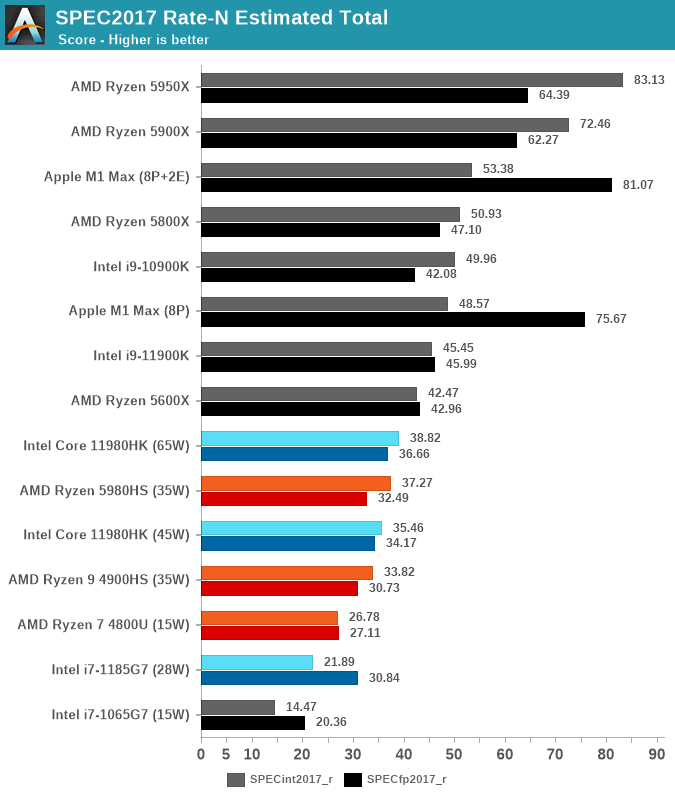
You could make a very wide CPU indeed if you decided to run it at 100MHz. That would be obviously stupid, though, because it is the product of IPC and frequency that matters.
It certainly looks like Apple has made the better tradeoff. However, you can only tell that from the benchmarks. Either going wider or going faster are valid approaches.