Malls seem like the perfect mixed use type property. Stores on 1 floor, offices on 2nd floor, then 2-3 floors of housing. 1 of the big department stores could be a grocery store.
100% agree. It drives me bonkers that even now with towns and cities expanding and new town centres forming, there's still a strict separation between residential and commercial use. Why not allow spaces for light commercial use in apartment buildings?
There are malls like this in the US. Such as places called "Galleria". But these seem like much more expensive projects that clearly can't be built everywhere, while the typical mall is really just an american version of an enclosed bazaar.
Also one US-specific issue is Christmas shopping, which probably drives a lot of the planing. Stores make the most money during a limited interval when they are packed to capacity and need to plan for that.
The circulation of a business's customers is regarded as a toxic impact to nearby housing. There is a decent amount of mixed zoning, actually, for businesses that rarely or never have customers visit in person.
This suggestion put me in mind of George Romero’s seminal 1978 analysis of the potential for reallocation and repurposing of large-scale commercial property, and in 2021 the notion of high-density rehousing for communities displaced by a public health crisis seems all the more relevant.
This is the single greatest comment I have read on the internet in at least 10 years. You have made my night, and probably my weekend too. Thank you, I genuinely needed something to laugh about and you provided in huge amounts.
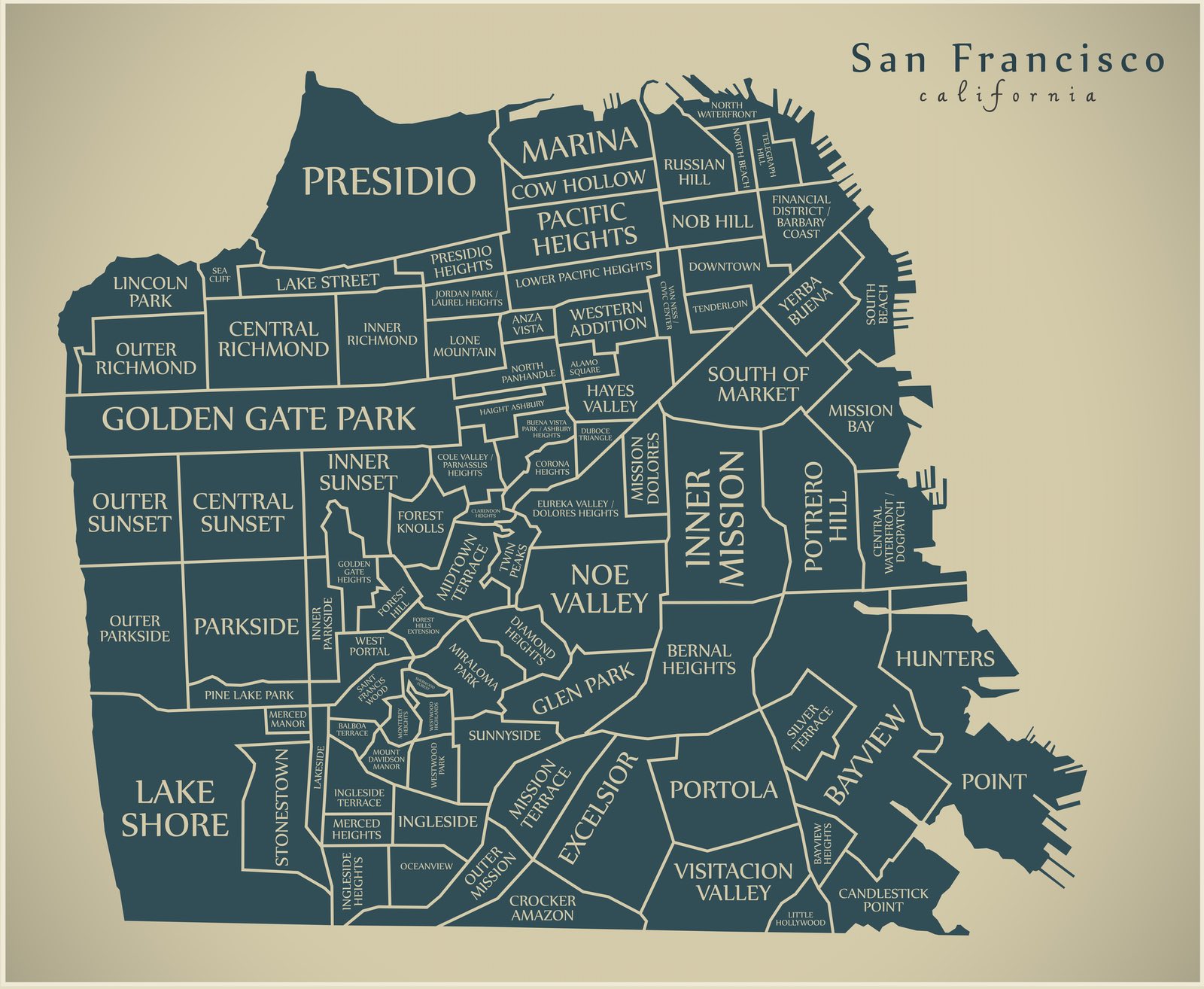
Stonestown isn't in the Outer Sunset, its closer to "Lakeside" TBH. It'd probably be a good spot for housing since the lightrail runs next to it, its near a college (SF State), and near 280 which makes commuting to the southbay easy.
I honestly don't recall what it was called before the Mall existed, then again it was built in the 50's and tons of new neighborhood names showed up then...
Its a stones throw from Daly City so indeed about as far as you can get from downtown heheh.
Once a mall can't be used as a mall, it is pretty much useless and generally gets torn down. They can't be used for housing since people don't want to live in windowless giant buildings surrounded by parking lots (and owners don't want to lower the rent until the desperate move it. Even the city doesn't want to house the homeless there). Malls might have a bit of office space already but the store-spaces aren't really suited for that either.
Edit: which is to say that traditional malls are just terrible because mixed use would be much better. City center buildings, even strip mall buildings, get a bunch of uses. But the scale of traditional suburbans just forces a single use on it.
Things like this exist in some city centers - but I’ve never seen one in the normal areas malls lurk. The three types usually try to stay some distance from each other unless forced together by exorbitant land prices.
The surviving stores that used to be anchor candidates seem to be happy being on their own in a sea of dedicated parking.
In Korea, there is a special term for buildings like that, translating to basically "residential and commercial complex". Most cases are apartment high-rises with the first few floors dedicated to businesses, which can include restaurants, banks, doctor's offices, and private academies. Some are actually attached to malls. These apartments usually command premium prices due to 1. convenience, and 2. being typically of a higher quality than standard apartments. You can find them in city centers as well as suburbs.
There is one near me (Dayton, OH). Not exactly as parent described, it is more of an outdoor mall, with lots of restaraunts, there is a gym, but no grocery store. The apartments are quite expensive for the area. I can certainly see the appeal.
The effect of zoning is vanishingly small relative to the effects of money. An insurance company investing its reserves isn't going to change its risk tolerance just because zoning changes.
These people look at the numbers produced by their model and send their money where indicated. It's why Walgreens and CVS will build on two corners of the same intersection. Both have the same traffic counts and same catchment demographics.
> It does but the dirty secret is that given enough money or interest zoning is a relatively weak opponent
Neither interest nor money are a given and the amount of either necessary varies wildly by jurisdiction. Even quite small obstacles can change outcomes a lot. Zoning has quite real effects.
It does but the dirty secret is that given enough money or interest zoning is a relatively weak opponent - there jus tidbit that much desire for mixed use buildings in most areas.
(The low-key method for normal people is to get “variances” - which are not as impossible to obtain as you may think if you work slowly and quietly on them.)
I’ve attended a few variance hearings (always in support of my neighbors who wanted to get a variance for their property). Variances are granted here for the flimsiest of reasons, to regular people who don’t have a clue how to ask for what they want and what they saw two other people get variances for in the same hearing.
I remember seeing a condo complex on top of a Ralph’s in San Diego: the Ralph’s was 24 hour and it always struck me as being incredibly convenient (the condos had an elevator direct into the store) - who needs a pantry at all when you have a 24hr grocery store literally five seconds away?
There is a supermarket in Boston over an interstate highway. The store is nothing special so I never thought much of it but now I'm really wondering what kind of political gymnastics had to occur to make that happen. At this point it's such a landmark that traffic reports refer to it as "the supermarket."
I used to live above the Safeway near the Giants baseball stadium in San Francisco - it wasn’t 24 hours at the time (not sure if it is now) but you’re right, it was crazy convenient.
Far less food waste too, I’d rarely buy more than a bag’s worth of food at a time and would just go shop 3+ times per week.
It's the supermarket doesn't want housing on top. If it is the only way to get the location and the location is incredibly good, then the supermarket will accept it. Leasing to a supermarket is incredibly more profitable than leasing or selling housing.
At the professional level, urban planners meet confidentially with developers and figure out how to make projects happen. What you see is what money wants to do. The professional urban planner's job is to generate economic development. Theories live in the academy.
A planner at my firm recently told me, with complete confidence, that on-street parking increases safety. Then I was told that research from AASHTO was just not something this person agreed with, and haven’t I heard of Strong Towns? Here’s a lovely YouTube video.
The planners at the firm are paid to do what paying clients want. That’s what everyone there is supposed to do. What matters is that checks don’t bounce.
Most malls I've seen are one-story (rarely two), and given the natural cost-minimizing nature of their construction I doubt that you could just build more stories atop the existing structure (but I'd like for an engineer to chime in).
It's more likely you could turn the empty big box store (sears, circuit city) into a complex within itself. You need windows added, but generally speaking 3 outside walls for people to look out
I think it must be human nature that we don’t desire housing and commerce in a single building in the same way as how we’d want kitchen and bathroom to be separate, because buildings in that apartment on top configuration always seems borderline rundown to me.
Office + mall examples usually seem to be working fine, except there always are one entrance for each, distanced physically as well as in general aesthetics.
I think it's just tradition and what people are used to, since buildings with both are actually considered more desirable in Korea, and are often more luxurious apartments than normal.
We who? I've lived in mixed use buildings with bars, restaurants, and other small businesses on the first floor and apartments above. It was quite nice, I really enjoyed it.
> we don’t desire housing and commerce in a single building in the same way as how we’d want kitchen and bathroom to be separate
Wait, what?
Other than very old houses (which I've been told had the bathroom in a separate building), every residence I know of has the kitchen and the bathroom in the same building. Yes, they are separated by walls, in the same way housing and commerce in a single building would be separated by walls and floors.
The retail portion of a mall is so much more valuable that it is difficult to make economic sense out of that sort of configuration. [1] Architecturally isolating access and services for residential and office uses will tend to dramatically increase costs of those lesser uses...you don't want random mall patrons to have access to the residential areas. If the offices are accessible from the mall use, then why not build more mall which can be rented at much higher rates and can compliment the other stores?
Finally, there is the issue of investment. There are big pots of money for each use...investors who invest in retail, office, and residential. The pots of money for non-conventional projects are much much smaller. One reason is that with mixed use, there are three economic cycles that have to be timed. The retail, office, and housing sectors don't cycle in lock-step.
Your good ideas in real-estate only have legs if you have the money to make them happen. And the time. You're talking a several hundred million dollars and a decade optimistically down the happy path. More likely more since most mall land is already malls and you will have to acquire multiple parcels from multiple owners without them being the wiser and holding out for premium prices.
[1]: Retail uses produce so much income that it makes sense for them to sit vacant for many years instead of converting to some other use.
I think one point is that there are only so many stores one mall can support, depending on the local population size. If land is expensive, then building on top of the mall to further utilize the land can become economical. As to whether offices or apartments are the better choice, that would depend on the local supply and demand of each.
Major projects take a couple of decades to get out of the ground. What was the demand like for housing ten years ago? What is the demand for office space like today? What was the demand for retail twenty years ago? (Low, low, and low) [1].
I agree there are only so many stores a mall can support. At that point the economically sound strategy is to stop building. It's not to layer on incidental complexity that provides lower returns at increased risks. It will only create problems syndicating investors for the project.
[1] Retail was still recovering from over-supply from the S&L pre-crisis and under-demand from the dot.com crash. At the low point of the cycle it could have been perfectly sensible to start planning a retail project on the prediction that retail could only come back and in the hope of timing the up-cycle correctly. But you would not have been building a mall. You would have been planning a power center.
Yes, real estate is a very regional thing, and places not affected by the S&L crisis and the dot.com crash would have different economics, for example in other countries. The place I had in my mind when replying to your comment was South Korea, where there are many mixed-use high rises with business or even malls on the first few floors, and residential above. I don't know the impact of S&L and dot.com on the economics of these buildings back when they were being planned and built, but seeing as how they are not an uncommon sight, and are sought after as residences, likely they had a different view than your analysis.
People think there are ways for the market to produce non-market outcomes. And don’t realize the scale at which market makers operate is qualitatively different from normal experience with real-estate. For big money quick profits are a problem.
As a layman, it almost seems like a either “quick profit” or “zero risk”.
A family friend opened a bakery. Finding a storefront was an insane process, in some
cases it’s apparent that the landlord doesn’t want to rent out the space, it’s been vacant for 4 years and rent is... aspirational.