Hacker News new | ask | show | jobs
by 3jckd 2231 days ago
Could someone ELI5, why it is so difficult to make it right? And I do not mean exclusively to Linux, because Windows has been horrible for years now too.

If the issue is hardware, then we'd blame OEMs.

If it's software, then we'd blame, say, Microsoft.

If it was a combination of these two, then we could say that Apple is the only one that controls both... if it wasn't for the Surface series which still has atrocious touchpad experience.

9 comments

Honestly, I think a lot of people forget the real reason:

In one corner, Apple got there by mainlining trackpad and trackpad software development...with iPhone touchscreen R&D. You have basically the largest R&D product in the world dictating the software that controls their trackpads. We are talking advanced finger speed and direction prediction (not just detection), AI to ignore unintended touches, and hardware and software that have been built specifically for them. It's no secret that all of Apple's laptops effectively have the same trackpad in various sizes and that the tech in the touchpad is nearly identical to to that in an iPhone minus a display. (Including the taptic engine and `3D Touch` aka, `Force Touch`.)

In the other corner, you have people with laptops by random companies with random hardware and drivers written by FOSS contributors/ Laptop ODMs/ Legacy Microsoft Drivers.

FOSS is fantastic, but it can't generally compete with a Billion dollar a year R&D budget stretched over 10 years feeding back improvements.

Mac trackpads have lightyears ahead of other vendors since before the iPhone, so this can’t be the primary reason.
They always had better scrolling due to custom drivers but it wasn't anything like today until 2008, when the macbook air came out with the (now iconic), Glass capacitive Trackpad. The presentation repeatedly referenced the iphone and how they were learning from the iPhone and using it's tech. If you used a pre-2008 trackpad and then the modern Apple trackpad you would see massive differences.
I don't remember the difference between the non-unibody and unibody trackpads being that dramatic. They were better, sure, but it was a difference of degree, whereas PC trackpads, especially of the time, were borderline unusable after you'd used a pre-unibody Mac one.
It was very dramatic. For one, it stopped being a physical, clickable trackpad and became a single piece of glass with haptic button pushes. Losing the physical components also gave more room to make it larger and it's gotten bigger since. You also got more multi-touch options. It was pretty big.
The haptic responses only began with the 2016 or 2017 models. You can tell when it's turned off if clicks or not. (I have a Mid 2014 from work)
>It was very dramatic. For one, it stopped being a physical, clickable trackpad and became a single piece of glass with haptic button pushes. Losing the physical components also gave more room to make it larger and it's gotten bigger since. You also got more multi-touch options. It was pretty big.

All of these are correct but have nothing / little to do with the quality of the main trackpad use experience, which was still great on Macs before it got haptic pushes, larger size, glass, etc.

The root of the iPhone's multitouch technology was in a company called Fingerworks, which was founded in the late 1990s by some academics, and acquired in 2004 by Apple. Fingerworks touch keyboards and trackpads worked extremely well and supported complex gestures using up to 5 fingers.

The 2005 Powerbook was the first to support multi-finger input on the trackpad... probably not a coincidence. We now know that the tablet/phone project kicked into high gear around this time as well.

I think this is really where Apple took a big step in their trackpads across the board. I had an iBook from before this time and while the trackpad was nice, I did not think it was way better than my PC laptop's trackpad. The biggest difference was that the Mac trackpad was about 30% larger.

Apple also invested in touch concept company-wide, including gestures in their marketing and shipping a trackpad as a first-class option for desktops in 2010. I think part of the reason Apple has done well with touch is that they just prioritized it and tried harder at it.

Yeah, I remember noticing on first using an iBook (2003 or so) how ridiculously better the trackpad was than anything I'd used before, and that wasn't new hardware or software then.
I'd guess it's a perfect-storm combination.

As the above commenter mentioned: a combination of hardware & software gives Apple and inherent advantage, which—along with Apple just having a culture of prioritising UX in their products (and MS kind of being in decline at the time, before their recent resurgence)—would explain the pre-iPhone trackpads being ahead of their competitors.

With Surface, while MS do control both elements, they're playing catchup on years and years of progress by Apple.

Combine all that with the recent mainlining of iPhone R&D and catching them seems really really tough.

Some other vendors. I'll take the trackpad on my Dell M3800, or a Logitech T651 when using a Mac, over a Mac trackpad any day of the week. Subjectively, of course!
The touchpad on all the HP Zbooks and crappy Dell laptops I've had over the years have all been better than, or at least as good as, Macbook touchpad, for me.

Hell, I even have a low power, super cheap Lenovo laptop (Atom CPU, IIRC), and I much prefer the touchpad on that over my MBP's!

Honestly, it feels like some Apple users almost fetishise over their MB touchpads! I truly don't get it.

Could you elaborate? I've never heard that before.
Also the touch interactions on Windows Phone were really good, as good as iPhone and vastly better than Android's uncanny valley touch responsiveness.
I assume they do it in-house now, but didn't they use Synaptics trackpads like everyone else, forever?
I don't get it, what's so much better about them? I prefer a separate keyboard and mouse, but the trackpad on my Zbook for example, and previously Elitebooks, felt and worked just fine.

Scrolling, zoom, clicking, what else do I need? :/

1- Apple puts much bigger trackpads on their machines. I've got a 2015 MBP that had a huge trackpad on it when it came out, now it looks tiny compared to the new ones. The Surface Pro's trackpad looks like it's about 2/3 the size of my MBP, and half the size of the latest MBPs.

2- The trackpads are flush with the body of the machine. I've often used PC trackpads where you were expected to scroll using the right side of the trackpad, but it was basically unusable because the plastic bezel was in the way.

3- The finger tracking is phenomenal. I don't know, it "just works", whereas PC trackpads would often lose track of my finger, forcing me to repeat the movement while pressing harder.

4- The multi-touch is great. 2-finger scrolling feels way more natural than using the side of the trackpad. No wonder it's been (often poorly) copied by basically everyone else.

I don't doubt that some PCs have very good trackpads, but Apple's has been consistently a pleasure to use on every Mac I've used, to the point that I don't bother carrying my mouse when I travel with my laptop.

Mac trackpads also have a much larger area that can be used for clicking. In my experience, Windows trackpads are unusable for clicking (the area doesn’t depress) in the back most (i.e. closest to the screen) 1/4 to 1/3 of the trackpad.

And this includes Microsoft hardware such as Surface Books. (To be clear, it’s a hardware issue, but one would think Microsoft would shell out for better trackpads on their flagship devices.)

I personally prefer the physical buttons.

On my MBP, it really feels like I have to press with far too much force to get it to "click" (which isn't great given I suffer from nerve damage, but I felt the same about the trackpad even before that). By comparison, I just make a "purposeful", light tap on any other trackpad.

I still prefer the physical buttons, I've found mac trackpads inflame RSI
I'm not saying whether or not Apple trackpads are better or worse than PC trackpads, but I don't think I've seen a laptop that doesn't support multi touch scrolling (horizontal and vertical, of course) in at least 5 years. Maybe in the low budget range? The side scrolling thing is there for the people who are used to it, but two finger drag has been standardised in any laptop I've seen.

My laptop has a Synaptics trackpad and while it doesn't have stuff like force touch, it's just as comfortable as using a mouse in many occasions.

People like the Apple trackpads enough that Apple sells a separate trackpad to use on their desktop machines.

I haven't used a mouse regularly in like 7 years because I prefer the Apple trackpads to any mouse I use. (The one exception is video games)

>felt and worked just fine.

It does, until you've used a Mac trackpad for a while and can compare...

I use both MBP and other trackpad regularly, and respectfully disagree. I actually prefer non-Apple trackpads, and physical trackpad buttons.
OTOH mac trackpads were already much better than the competition even years before the iPhone existed.
You're absolutely right. We're still young, though, so yeah, don't completely discourage FOSS etc I have high hopes. And I would be glad for Mac's Apple's successes, I just am sure that FOSS etc will catch "up" too. We are still young. Let's prais both apple and foss, it's not a question about winning, it's just existing. It's so easy to not choose apple or mac, and, so easy for those who want to go into the apple orchards. And that is great.
Does Apple hold software patents that prevent trackpads and the trackpad experience from improving throughout the industry?
If I was being uncharitable I'd say that the problem is that companies beside Apple just don't care about a good user experience. Maybe they could produce the same product if they thought it mattered. With almost all non-Apple laptops being flimsy, cheap-feeling plastic junk, stuffed full of ports and bezels, I feel like they're miles away from being at the stage where it makes sense to optimise the trackpad.
Companies optimize towards whatever drives their customers buying decisions.

For some makers that’s going to be performance or cost. For businesses laptops reliability and security are going to be big factors.

For Apple the overall experience is a large part of why people buy; Apple users want a great hardware experience integrated into the OS, and they’re willing to sacrifice performance and price to get it.

You’re giving Dell / HP / etc too much credit. They’ve tried over and over again to build a machine with Macbook level quality. They have laptops that cost just as much, if not more, than a Macbook. And every one of them has some glaring issue.

It’s not some purposeful design decision. They just don’t have the same caliber of engineers or management that Apple has.

This is it. Apple is willing to spend money on actual R&D for user experience. Dell and hp and friends essentially just assemble off the shelf parts into a styled chassis. It took dell years to bother developing a thin camera module instead of having a nose cam. It does come at a cost and until recently windows machines were not able to recoup it (probably chicken and egg scenario)

Until Microsoft forced precision touch pads windows touch pads were awful since the oems just slapped in garbage vendor drivers.

Screen aspect ratio is another thing. Everyone but apple moved to 16:9 since it's cheaper but 16:10 is better for productivity and not bad for media. But even the business windows laptops pinch pennies and do 16:9. Only apple was willing to buy 16:10 panels.

To be fair, apple hardware also has some catastrophic issues. The ongoing keyboard disasters and overheating/throttling are two that come to mind.
Fixed in the 2019 model.
for the 16". fixed in the air last month, and fixed in the 13" this week.
I honestly think a lot of it is just (bad) prioritization. An analogous situation; remember when Mac laptops had far, far better battery life than PC laptops? Like ridiculously better. People usually thought it was some magic property of the PowerPC; then Intel Mac laptops came out and they were still ridiculously better. Then Intel started taking it seriously, and a few Centrino revisions later the gap had narrowed dramatically.

I remember reading at the time that, when idle, the chipset in many PC laptops used more power than the CPU...

All Apple stuff's that way, it seems. A lot of it's the software. Just compare the effect of Safari versus Firefox or Chrome on MacBook battery life. One of these projects clearly gives a quite a large damn about power use—the other two... not so much.

I worked on software for phones and tablets right around the 2/3 split for Android, up through Android 5 or so. We had lots of testing devices of all quality levels. The joke-but-actually-100%-true around the office was that an Android tablet left unplugged on a desk over the weekend was always dead when you got back on Monday, while an iPad forgotten in a drawer for a month would have a useful amount of charge left on it (and come to life instantly, of course, as if it had never been asleep). Didn't seem to matter how much the Android device cost.

Totally. I own Android phones and tablets. But when I pick up a friend's iPhone or iPad, it's clear that the user experience is more polished. Is that because Google has a lower caliber engineers than Apple? I doubt it. Certainly the people I know at both companies are equally smart.
You're right, it's not a design decision. That degree of optimization is not something that happens at the product design level -- it is organization-wide optimization.

When Apple leverages iPhone R&D for their MacBook, they get it for free. If it takes Dell 50 million dollars to develop the tech, and Dell expects to sell 100,000 laptops, then if we assume everything else is equal, an equivalent Dell laptop would carry a premium of $500 over a MacBook. In which case, they probably wouldn't sell 100,000 laptops, and it would be a failure and a waste of 50 million bucks.

Horizontal integration is powerful.

I would bet cash money that Dell, etc, could do just as poorly with equally good engineers. With differences that persist this long and are this far-reaching, I think you have to look at culture, process, and values.

For all Jobs' flaws, he built an amazing culture around valuing user experience and putting that first. That's extremely hard to do, especially with a dominant business culture that instead values things like individual performance metrics, quarterly profit numbers, and low labor costs. The average piece of consumer electronics gets 3-7 physical prototypes before launch; the iPod had over 100. That's not down to the caliber of engineers or line managers.

I think “culture” and “management” kind of bleed into each other, because at the end of the day you’re going to do whatever the manager tells you to do. If they tell you to make 100 more prototypes until you perfect the iPod, you’ll do it. If they tell you what we have isn’t perfect but it’s good enough, then you’ll go with that.
I think doing only what managers say is a fine example of bad culture. People who have been trained to not care can make a hundred prototypes and still not make anything great. People who believe that the organization will support them in making something great for the users will push to do more prototypes until they get it really right.
My new-this-spring HP EliteBook (ordered custom with FreeDOS) running Ubuntu 20.04 seems flawless to me, although YMMV. This coming from someone who has only ever owned Macs and uses Macs at work.
Wow what a mac clone! I thought these facsimile designs died out, but I guess they must sell.
I agree there's nothing original about the basic design, but that's true of a lot of mature products. With USB ports on both sides (in additional to Thunderbolt 3) and an HDMI port, it's a lot like the 2015 MacBook Pro aka the "best laptop ever made"¹. But mine has a great matte touchscreen, so there are some new ideas.

1: https://marco.org/2017/11/14/best-laptop-ever

>They have laptops that cost just as much, if not more, than a Macbook. And every one of them has some glaring issue.

You can go to many laptop review sites and find that Apple are not dominating every category. What do you know that they don't?

The older I get the more I realize raw performance matters far less than the experience of using the machine every day. Macos is comfortable, so that's what I go with. Heavy lifting is better done with something permanently plugged into a wall.
Every MacBook Pro these days has the glaring issues of

* not having a top row of physical keys

* not being able to run Linux natively

* not integrating with any phones except the ones it makes

Apple just doesn't have the caliber of engineering or management to compete with PC manufacturers.

These are not glaring issues to most mac buyers, with the possible exception of the touchbar.

Most Mac buyers both want OSX, and use iPhones. If you want Linux, don't buy a Macbook Pro, you'll save a ton of money on features you don't need, and get better hardware support.

I love the Touch Bar and the fact that the new Macbooks have a physical escape key should pretty much silence any devs that were screaming about losing one.
What I'm saying is that — while the fact that all PC laptops have glaring issues is true, Macs just have a different set of glaring issues.

Doing my bit to counteract the rampant sycophancy here.

>not having a top row of physical keys

They instead get an adaptable keybed, that can be used as sliders, piano keys, timeline managers, and other controls, plus a fast and secure fingerprint sensor (PC ones are laughable), and a physical escape key again.

>not being able to run Linux natively

On exchange they get stronger security from the T2 controller handgling they keyboard, etc. Besides, most dodn't buy Macbooks to run Linux on them (though Linus used to love them for that purpose).

That said, if they're willing to turn it off, there's ongoing work from the Linux side to let it boot, talk to the SSD, keyboard, etc.

>not integrating with any phones except the ones it makes

I'm pretty sure it integrates just fine with my Android phone. Do you know something I don't know?

I downvoted you before you added your second and third bullet points, because you were taking a cheap shot. Even with the additional points, you're comparing apples to oranges.

Apple chose to remove physical function keys. No other manufacturer has previously had a smooth trackpad and chosen to remove it.

I genuinely don’t get what the big deal about function keys are. I never used them heavily, even on external keyboards. I actually transitioned to external keyboards that don’t have them, to save space.

The only key that’s useful on that top row is escape, IMHO. They should make that a key. Everything else is low utility.

Yes, and it's a glaring issue with management that they "chose" to do that. New shiny thing that compromises on fundamentals like touch typing support.
None of these things even remotely matter to me. They aren't issues when I'm looking at what to buy.
Have you seen any Windows laptops in the past five years? Many Windows ultrabooks rival Apple's in terms of "ports and bezels." The XPS 13, for example, has significantly thinner bezels than the MacBook Pro I'm typing this on, at a much more reasonable price.
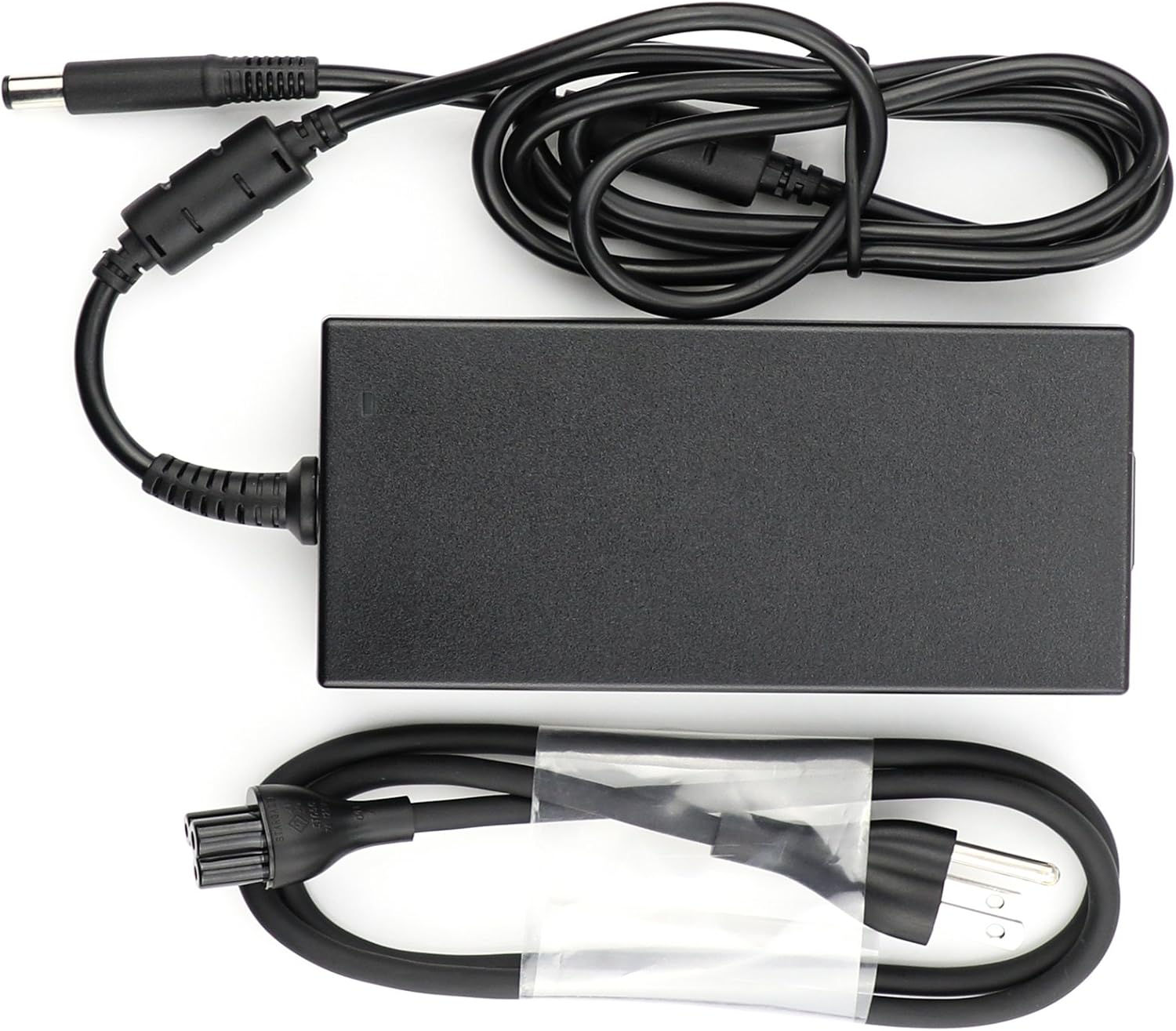
Look at the external power supplies and the packaging thereof in the box to see the difference in ethos and approach.

Even these “nice” PC laptops still come with a PSU that has ugly plastic-coated white wraparound paper stickers and labels on the black cords with meaningless unimportant shit on them (leaving oily adhesive residue on the cord even if you cut it off), bricks in the middle of the cable (AC and DC lines out opposing ends), plastic twist ties, in plastic baggies covered in meaningless production stickers. Apple doesn’t even do that on the cheap AppleTV.

This is to say nothing of the ugly metallic stickers they slap on the wristrests to spam you for the life of the machine.

The janky plastic trackpads are one of many issues with the approach that most of the industry takes. There are very few machines that even remotely aspire the level of care Apple puts into their each and every product.

Apple also just overhauled the speaker system in the 16” rMBP, making it easily 50% better than any laptop I’ve ever heard. It’s startlingly good, sound I never thought I’d hear out of a laptop.

I’m at a place in life where I have broken my iMessage dependency and find KDE to be delightful; I would absolutely love to pay a premium for an equivalent quality PC laptop, but there aren’t any in the ballpark, even. There are ones that are merely “good” (Razer Blade), none “great” (though the Pixelbook Eve comes close!), and zero have ever been insanely so, AFAIK.

Happy to be corrected if I’m wrong!

> bricks in the middle of the cable (AC and DC lines out opposing ends)

Huh? That's a feature. Apple's are awful without the AC extension cord. They're way too short (with the packaged USBC cable) and they eat a couple outlets on a power strip, rather than one. Bricks that don't have both, or at least the option for both (as Apple's do, though last I saw the AC cord is an add-on these days while it used to be included, which is bullshit on a laptop that expensive) are inferior, unless they're very small and for a device rarely used very far from an outlet while plugged-in (the newer, small-style iPhone charger bricks are OK)

EDIT: in general though I agree that even "high end" PC laptops are so terrible that Apple can repeatedly fuck up and dawdle on upgrades and raise prices for years on end and still not really have any competition.

Why do you need such a comically long power cable? I appreciate the compact nature of the Apple brick. I don't understand why you think they take up more than one outlet. It doesn't for me.

I mean it's just an absolute joke how ugly they are.

https://www.amazon.com/adapter-Dell-Precision-M4800-Serie/dp...

Why are they covered in so much writing that doesn't matter to me? Just have a discrete model number that I can look thing up from. Why are there so many icons? It's noise. Why do they have those massive ferrite cores on the cables? Twice even! Apple seem to manage without them. Why do they have those boots on the end of each cable? Apple manage without them.

Why are they so ugly?? Does nobody at Dell ever say 'hang on why are Apple able to do without all this _stuff_?'

> Why do you need such a comically long power cable?

The USB-C cable in the box is, what, one meter? That won't even reach through a cable-hole in a desk down to the floor. Maybe they've fixed it but I distinctly remember receiving a brand new MBP shortly after the all-USB-C shift that had a uselessly short included cable and no AC cord included.

> I appreciate the compact nature of the Apple brick. I don't understand why you think they take up more than one outlet.

If your power strip's ports are arranged sideways I guess it might be OK, though then they're prone to "tipping" out of the port if bumped. Otherwise they're definitely the length of two ports on a power strip, at least with US-style plugs. I don't understand how you could look at it and not think it takes up two since it just is for sure longer than one port, unless plugged into the one on the very end. And I'm looking at one for a 2014 Magsafe model right now—the ones on newer MacBooks are even larger (I have those, too)

[EDIT] even my iPad Pro charger is longer than one outlet and blocks the second, and it's smaller than any MacBook Pro or even Air brick I've seen.

The XPS 13 power supply is a pretty comprehensive Apple-esque ripoff (but in black), and doesn't have any of the stuff, so we know Dell is capable of it.

https://youtu.be/pRuDoJx8Rv4#t=22s

They did shit-up their included usb-c to usb-a adapter though with a pointless ugly hang tag. (To be fair, Apple doesn't give you one at all, but I'd rather buy a non-ugly one out of pocket than use the Dell included one for free.)

> Why are they covered in so much writing that doesn't matter to me?

I don't get it. Just turn it over. https://images-na.ssl-images-amazon.com/images/I/81I5aA2rwtL...

That cable may be ugly, but I know that the insulation isn't going to disintegrate within a year, which is a known problem with Apple's PVC-free devices.

Wow. I guess you can honestly criticize strain relief on cables if no Apple power cable has ever failed due to fraying.
I kinda love the apple charger situation. They never changed the long cord, so I have like half a dozen accumulated over the years tucked around my house, be it by the desk in a power strip or behind the couch in some hard to reach outlet. If I want to plug in, I just slap on the brick to the nearest convenient long cord, and there are plenty. If I am out and about, I'll throw the nub on the brick and tuck the whole thing in my sleeve. Then again with modern battery life, rarely do I need the charger when I'm out and about (nor is there much of that going on right now with the pandemic).

My biggest gripe, other than the lack of magsafe, is that they removed the cord wrapping arms from the brick. It really kept things tidy in the bag.

> This is to say nothing of the ugly metallic stickers they slap on the wristrests to spam you for the life of the machine.

What is up with these? I bought a Win laptop recently to test it out, and one of the first things that struck me at the store was that all of them had literal ads on the inside front of the lap top.

This might have just been Marketing team fucking it for everyone else, but my gut feeling was that any company that stoops that low is certainly not above severely cut corners.

I think Intel makes them do it, and it has become such a tradition/standard that everyone just expects their computer to have ugly-ass nearly-impossible-to-remove stickers there now. High end, low end, whatever. They all do it, and I think PC users have just tuned it out, like non-cordcutters with the 17 minutes per hour of commercials.

It’s utterly gross.

TBH, the lack of it was so surprising on the Pixelbook (Eve) that it caused me to take a longer/deeper look at the hardware, and it's actually top-notch. I own about 5 of them.

Is ChromeOS really enough for everything that you do? Or do you end up installing Linux applications?
> labels on the black cords with meaningless unimportant shit on them

Legally mandated in many regions, and Apple applies the stickers in those regions.

> This is to say nothing of the ugly metallic stickers they slap on the wristrests to spam you for the life of the machine.

I agree those stickers are ugly. I wish they'd stop putting them on. They're really easy to take off though.

No, not the large curved shiny ones that show the specs that you are expected to remove immediately after purchase.

The small square ones made out of little metal plates that are glued on there like there’s no tomorrow, the ones you are never intended to remove, like the intel one you’ve now seen so many times it’s invisible.

They’re anything but easy to remove: you have to pry them up with a tool like a spudger, being careful not to scratch the case with either the tool or the opposite edge of the metal plate, and then use a solvent to get the 0.5mm thick glue pad off the case, then use a cleaner to get the solvent off. Years back before I resolved to stop buying cheap plastic computers, some of the solvents I used to remove the glue actually permanently damaged the surface finish of the wrist rest.

Now I just don’t buy computers with ugly spam on them. I was impressed and amazed that my iPhone 11 actually has no writing whatsoever anywhere on the case, which is a regulatory feat I didn’t think was even possible (they put the required regulatory markings behind the info button on the pre-activation screen), and I think a first for the whole mobile phone industry.

> The small square ones made out of little metal plates that are glued on there like there’s no tomorrow, the ones you are never intended to remove, like the intel one you’ve now seen so many times it’s invisible.

I've never had a problem removing those smaller rectangle stickers, and it's something I do to any computer I buy. For second hand computers there is a problem that you'll be left with a small discoloured patch.

> some of the solvents I used to remove the glue

A tiny drop of oil is usually good to get the glue off.

> Now I just don’t buy computers with ugly spam on them.

I definitely agree! I really do wish they'd stop using those stickers.

You're wrong, I owned an XPS 13 before my MacBook and the power supply was small and well designed.
Thinkpads.
Which of the OP's points don't apply to thinkpads? The points about trackpads and speakers certainly apply.
ThinkPad speakers are terrible to the point of being basically unusable even in a quiet room for most video calls.

I can live without the trackpad (once you learn to love the trackpoint you'll never go back to a trackpad) but the speakers and display are the two lacking points. Even though it's a 1440p display, it just doesn't look as nice as a "retina" display and getting a 4k display on a 13" laptop is in my mind an absurd waste of battery and money.

The good ones aren't much more reasonable than a MacBook Pro. Premium laptops tend to cost the same no matter who makes them.

And most of them have shitty touchpads. Apple excepted, of course.

That's not really accurate; a similarly specced XPS 13 is several hundred dollars cheaper than my laptop. But Apple is certainly winning the touchpad game, you're right about that.
You've proved his point. Similar spec with some components, but the Apple machine costs a few hundred more because other components are better than the XPS.
The XPS 13 isn't much cheaper than a MacBook Pro once you opt for the high res screen.
Yeah, but almost nobody opts for the super high resolution display because the screen is so small that the difference is basically unnoticeable. A similar configuration to my laptop is several hundred dollars cheaper, and that's a not insignificant difference.

Edit: I owned both.

The high res screen is the reason I switched to macbooks after a lifetime of windows laptops in the first place. I still have and use my 2012 macbook pro retina which is about 6 more years of functional life than I've gotten out of any windows laptop, and it cost the same then as the base XPS 13 does now.

The prices between manufacturers aren't really all that different; but, if they happen to be important for you, Apple has a few features and components that others haven't been able to replicate at any price point, which is why paying the Apple tax is worth it to some.

The standard res screen on the XPS isn't high DPI at all. It's clearly inferior to a retina display for text and image rendering.
I'm not going to engage in some arcane debate about the particularities of random windows laptops vs. apple ones. The fact is that there are comparable windows laptops at this point when it comes to "bezels and ports," in particular, but also when it comes to most things that make a laptop nice to use.
I'm so getting downvoted for this, but let me just say it: the iPhone IPS not-even-FullHD displays are sad. The exact same inferiority you mention, in reverse -_-
I guess some people see better... I like 17 inch displays, and while 4K looks great, FullHD is better for actually working. Maybe my eyes are going bad...
> the screen is so small that the difference is basically unnoticeable

At the same scaling, maybe. But I use the high resolution display on my work-provided MacBook at 125%, which means a massive virtual screen estate gain.

Presumably the vast majority of people are not going to want to scale their 13-inch display so that everything is significantly harder to read for the sake of increased screen real estate. But I'm glad that the MacBook works well for your specific use case.

I currently work on a MacBook Pro 13 and I switched from a XPS 13 with a 4k display. They're largely comparable, and the only difference I notice or care about is the OS. It seems that is how it is for most people.

> stuffed full of ports

Imagine thinking this was a bad thing.

How long were VGA ports commonplace in laptops? Few, if any, laptop OEMs were interested in trying to refine the mobile experience until just a few years ago.
Not that I’m a fan of those (haven’t owned a non Apple laptop in over a decade) but the reason they had those is that a VGA is the only way you’re gonna be sure that the projector in whatever random Fortune 500 meeting room you’re in can connect to your laptop. They’re kind of compensating for corporate IT being absolute garbage.
But I don’t need them! I just need USB-C! Nothing else! Get rid of the legacy junk and give me simpler, lighter, thinner, better sealed laptop.
You're not the target market.
So what should I buy if I want a powerful, long-life Windows laptop but don't want umpteen silly ports down the side?
I'm not your personal shopper. I'm sure if you want a machine with no ports someone is willing to oblige you.

Or you can go back to one-size-fits-all Apple-land.

Like apple cares about a good keyboard?
Obviously they do care, as you can see by their investment in numerous attempts at in-house proprietary designs. They of course fucked up a few times, but you can’t say they haven’t tried. Otherwise they’d just be using some off the shelf keyboard assembly from a 3rd party supplier.
I love the typing experience of the butterfly keyboard. The reliability issues obviously suck, but Apple cares enough about those to have switched to a new design. That being said, I have a MacBook Air and MacBook Pro with 4th gen butterfly keyboards and haven't personally experienced any reliability problems with them. I suspect that the 4th gen pretty much fixed the reliability issues, but Apple recognized that the PR battle had long been lost.
I find typing on the butterfly keyboard strange but pleasant. It made me change the way I handle the keyboard though due to the nearly nonexistent travel in the switches.
Well people make mistakes. I guess they got it wrong if so many people don't like it. But they were trying to improve it, even if it failed. Other companies aren't trying to improve anything.
What nonsense is this? It is very clear that Dell has tried to improve the XPS 13 over the years and it has gotten better. They figured out a way to have the webcam on top and super thin bezels, something Apple hasn't been able to do.
If Apple didn't care they'd use some junk off-the-shelf keyboard, like PC laptop manafacturers use. They're trying to build something better themselves. A lot of people think they got it wrong this time, ok, but they're trying. Nobody else is!
They do care. Sure, they've made a few big mistakes, but they worked to correct them.

PC laptop manufacturers? With a few exceptions their keyboards are just garbage.

Lenovo probably does the best keyboards at this point. Their old 7-row keyboards were even better though.
I really don't care for their keyboards now. They used to be the best out there, but now they're... just... mediocre.
What's wrong with PC laptop keyboards?

I have a £200 Linx14 laptop and the keyboard is identical to my Apple keyboard (the wireless white keyboard, external). Sure, the Mac one bounces a bit more but there's no difference.

What is wrong with PC laptop keyboards?

Most of them are just garbage. At least that one doesn't have a numpad.

Have you tried an actual MacBook Pro keyboard? The external keyboards aren't quite the same.

Yes, I have a 2012 and a 2016 MacBook Pro. The 2016 keyboard feels horrible and loud and the backlight on it is very bad. The 2012 is very good.

The 2016 keyboard actually feels worse to me than my £200 laptop keyboard. The cheapo laptop has decent travel and isn't deafening to use.

This makes no sense whatsoever, firstly you have to ignore the thing less than a centimetre away from the trackpad - the keyboard that Apple completely fucked up for half a decade. Does Apple just not care about a good user experience?

Secondly, non-Apple laptops aren't cheap-feeling plastic junk. This is the classic "Let me compare my iPhone 11 Pro to this Alcatel 1" - well the iPhone 11 Pro is 25x the price. The Dell XPS 13 isn't cheap-feeling plastic junk, nor is the Thinkpad X1 carbon, nor is the Microsoft Surface Laptop. They're all premium products.

As an open source developer, it is very hard to support hardware that I don't actually own and can't test on.

It is also very hard to support obscure hardware that only has obfuscated closed-source drivers, or has no Linux drivers at all. This requires lots of trial-and-error and workarounds (in addition to the normal level of hardware-specific tweaks that have to go into something like libinput) and takes up a disproportionate amount of testing time. Some input devices fall in this category, such as those built into newer apple laptops.

Microsoft tried to compete with Apple by dictating to hardware vendors how they should write drivers for their touch input devices (the Microsoft HID guidelines). Of course, none of the hardware vendors could actually write drivers that fully conform to this standard, and the standard itself was not wholly adequate to compete with Apple. It causes problems.

Linux slavishly adheres to the published Microsoft HID guidelines. Since neither Microsoft nor any of the hardware vendors do, it causes problems.

The Microsoft HID guidelines dictate how packets of information are reported to userspace. That is information like touch id, touch size, velocity, and direction. The userspace then has to integrate the various data into touch and gesture recognition. A thousand different software developers do that a thousand different ways, mostly badly.

The end result in the Windows and Linux world is a thousand different developers produce touch and gesture recognition software a thousand different ways of hundreds of different devices that work in completely different ways. A sort of orchestrated chaos like an ant colony.

Apple dictated to its hardware vendors exactly how to write drivers that work with its software, and it has centralized software embedded in the OS to handle touch. A dozen expert developers do touch and gesture recognition for all apps using strictly controlled drivers from a select few vendors, all centrally controlled like a massive flock of starlings swooping and gliding and conducted by the ghost of Steve Jobs standing on the ground.

If old Surfaces had problems, the new ones don't. I've used a new MacBook and Surface daily for the last couple months, and the tracking performance and latency are indistinguishable. Haptic clicking is better on the Mac though.
I think it’s due to the organizational structure of Apple which gives them a huge advantage over everyone else. In the Linux world, people point the finger at the driver developers who in turn point the finger at the hardware makers and firmware developers. Apple, on the other hand, has all of these folks working together, all the way up the stack to the UI toolkit and application layers.

I fear that Linux touchpad support is a victim of Conway’s law [1] which means this problem can’t be solved by one specific team. It may mean rewriting the whole stack (and rewriting applications as a result).

[1] https://en.wikipedia.org/wiki/Conway%27s_law

except the culture of secrecy where you can't see your own bug reports after you file them [1].

[1] https://news.ycombinator.com/item?id=21218413

This is not generally true.
The exact opposite of an ELI5, but a very well written and in-depth overview on why touchpads suck outside of macOS: https://pavelfatin.com/scrolling-with-pleasure

the tl;dr is that when touchpads were added to windows, they used the legacy APIs which made assumptions about them being mouses with notched scroll wheels. And while microsoft has since released APIs which support high precision scrolling, applications have been slow to adopt them (sometimes because of wanting to be compatible with windows 7 and older).

Still atrocious touchpad experience? If you discount the constant jumping around, which I experienced on every precision driver touchpad I have used (about 4, including a Macbook. Are MS complete idiots or is this another one of the problems normal people don't notice?!?!?!?!) my experience with them has actually been very good. The response is way more direct than on Linux and quite precise as well. Application support for scrolling is not great, but not horrible either (browsers, more popular MS apps and JetBrains IDEs work).
Nope, I also have that problem. The same touchpad on Linux works flawlessly though.
It is mostly software, but it's not Microsoft's fault, because they do not make the hardware and are not expected to write the drivers for it.
Surface trackpads feel very close to Apple ones these days so it's down to OEMs.

Although at this point I'd argue Microsoft should be forcing a minimum level of experience on all Windows devices and providing the software tools and hardware guidance needed to get there.

The only way that works is for Microsoft to refuse to license Windows to manufacturers that don't meet those standards, and you're not going to catch them refusing to make a sale.
Windows is providing more of the touchpad software now, but you still have to depend on manufacturers to be compatible with it:

https://www.howtogeek.com/286905/what-is-a-precision-touchpa...

I guess that's our answer. They'd rather say "not our fault" than even try to solve it?