|
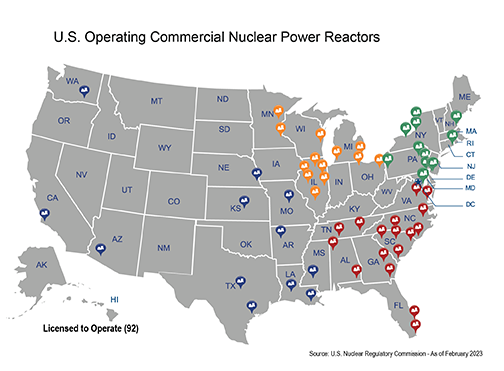
Interestingly, South Carolina produces most of its energy using nuclear already... It is too bad the broad public perceives nuclear as a 'risky' energy source. It is in fact the safest energy source we have ever developed, in terms of deaths per kilowatt hour. Its just that when something goes wrong, it goes REALLY wrong. That makes more of an emotional reaction in the general public than the scattered and sporadic deaths in other industries, in which there are sadly many, many more. So, it seems it is hard to get support to invest in newer, safer technologies in the industry. I do understand the short term economic incentives. Nuclear is expensive to build. However it is very cheap to operate, and relatively environmentally friendly. It takes long term planning on timescales of many years, and looking at safety data rather than focusing on the disasters on their own. Neither of which humans are any good at. The one thing that turns me off nuclear power is how to store nuclear waste. The collapsed storage tunnel at the Hanford site this year is an example of how poorly this can be done. The waste will remain dangerous for thousands of years. How do you build a storage facility that keeps it contained for that long? |

I don't this explanation really holds true. For example, there is a single failure with a hydroelectric dam [1] that has killed more people than have died as a result of all nuclear-power related deaths, and in more spectacular fashion.
I think it has something to do with the expense and scale of nuclear power, but also something to do with nuclear energy being a thing far outside the natural experience of most people. Nuclear power is also connected to nuclear weapons, which, understandably, has a strong negative connotation to most people.
Better science education might resolve some of the emotional problems connected to nuclear energy.
[1] - https://en.wikipedia.org/wiki/Banqiao_Dam