Hacker News new | ask | show | jobs
by biofox 3679 days ago
I find these reports both exciting and deeply reassuring.

As research in the west becomes more politicised and regulated (the biosciences especially), having serious Chinese investments in science, with aspirations to become world leaders, is precisely what we need to promote competition and drive progress.

Another example is the use of CRISPR gene editing in human embryos. While we are dragging our feet ruminating over the ethical implications (largely ignoring the prospect of curing countless diseases), the Chinese have used the opportunity to get a head start.

As China continues to progress, it won't be long until we have another "Sputnik moment". If we won't fund and regulate science rationally, hopefully fear and national pride will motivate us instead.

2 comments

Really? I've been waiting for over a decade for China and India to step onto the world stage. We should encourage and help more. These two countries with a combined 2.6 billion people should be able to easily outpace the research in the west. Does it matter if basic research is done in the US, India, or China?

Imagine if China and India could each double the amount of research done by the US.

Four bully's instead of two surely make for a nicer school yard.
Well one reason for us dragging our feet is our collective memory of eugenics.
I think a lot of the issues come from conflating positive and negative eugenics.

Promoting and enabling people to have healthier progeny is in no way comparable to forcibly removing people from the gene pool through sterilisation or murder.

People are going to have children regardless. If there's an option to reduce suffering, I think we have an imperative to follow it.

How do you know that enabling people who happen to have resources in one of the current political regimes to edit their embryos will reduce suffering? It could just as easily increase it.
It's not a matter of enabling this at the regime level. Regimes get to make their own laws. We in the west may not be able to stop clearly unethical embry editing, so whether we can do that or not is completely orthogonal to whether we should consider some uses of the technique to be ethical and allowable.
Do you know what Tay-Sachs is?
How is that relevant?
It's a source of suffering that can be solved through genetic engineering of embryos that some group of people with resources will be inclined to address.

It is relevant because it precisely fits your criteria.

Thank God for the Chinese. They must think we're insane.

Bioethicists I've watched debate are seemingly unconcerned with the present day. I've never seen it emphasized (as it used to be once) that the potential for mental and physical handicaps goes up very dramatically as a woman ages. There exists a fairly narrow window to produce children optimally. I am confident no school children are aware of this through sex education. It is sort of brushed under the carpet in favour of 'right to choose'.

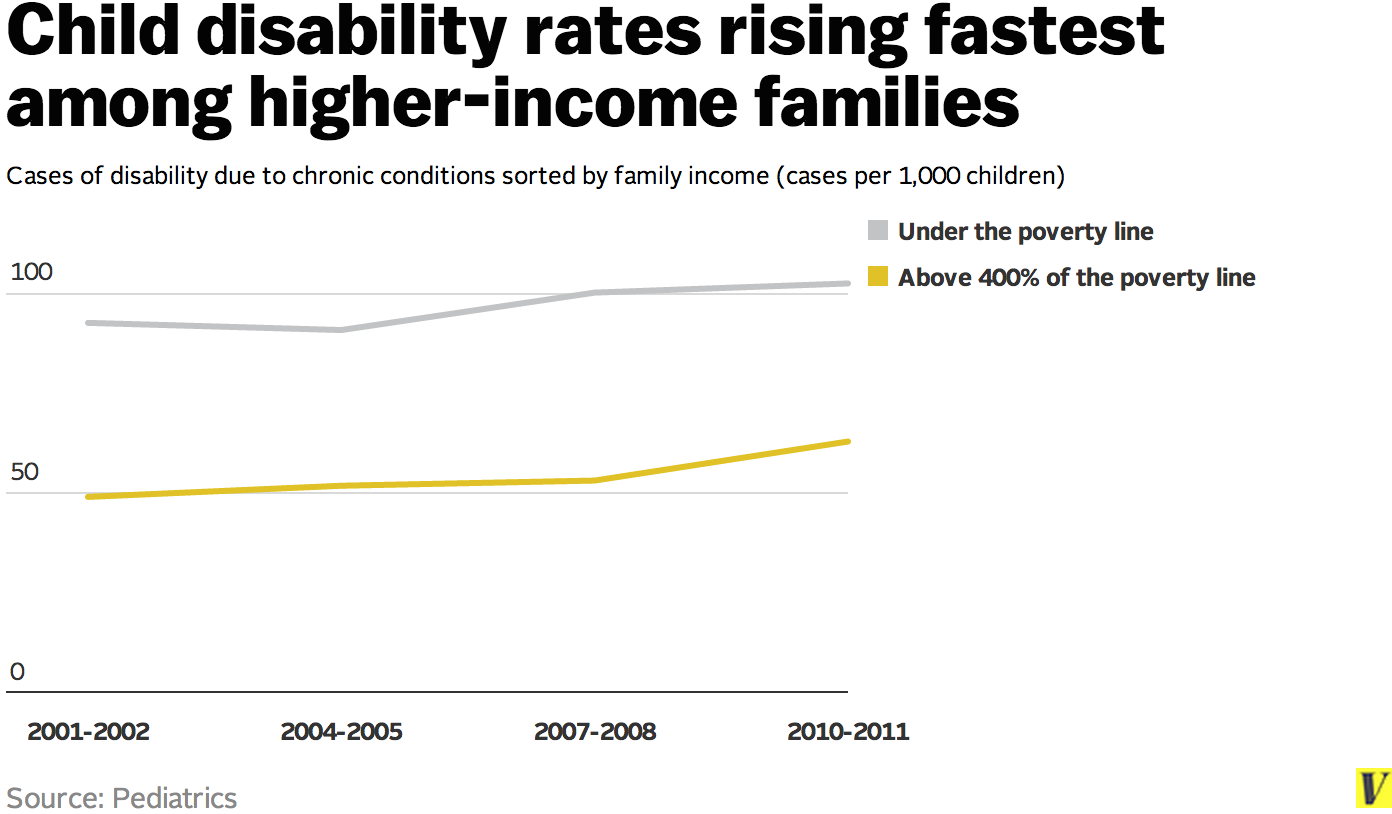
You would not believe the rate of deformed children that exist. In my small town there are six or seven special centers for children with mental and physical handicaps. I am convinced this is because the parents got to the idea of having children late. This is a failing of society.

"http://www.ivfne.com/content/editor/Fertility Age Graph.jpg"

http://cdn2.vox-cdn.com/uploads/chorus_asset/file/1331118/di...

http://www.cdc.gov/ncbddd/birthdefects/downsyndrome/images/p...

It may depend heavily on the country. In Poland, which is arguably a western nation, we were taught about the "optimal childbearing age" in biology classes, and the women I know are acutely aware of the concept. Maybe what you're describing is a US thing?
Poland, along with the eastern European countries doesn't have this hangup about human biology.

I believe what I was saying mostly applies to the US and western European countries.

For all their faults, communist countries at least took science education seriously. The idea that a woman and man have a finite amount of time to produce healthy offspring is a 'bad culture fit' for the kind of egalitarian orthodoxy that is not taken seriously in ex-communist countries.

If you're in the US or western Europe, try asking random average people what the age limits are before the natural fertility rate is 1% per month (it is age 45).

http://www.huffingtonpost.com/2014/02/19/age-female-fertilit...

Ironic that it advises education. Most IVF clinics don't accept eggs after 42 because the probability of an IVF cycle working is less than 5%.

Here's a study showing the contradiction between what women/men have the impression of being true, with the facts.

http://humrep.oxfordjournals.org/content/27/5/1375.abstract

"Even though participants generally perceived themselves as being educated about fertility issues, both men and women vastly overestimated the ages at which female fertility shows a slight and a marked decline. The discrepancy between their perceived knowledge and what is known regarding the science of reproduction is alarming and could lead to involuntary childlessness if men and women's reproductive decisions are based on inaccurate perceptions."

I don't find it alarming that people make mistakes. I do find it alarming that this was well known in the past, even when people couldn't read and now university students are less educated than their grandparents.

Come to think of it, maybe the canard about education reducing the reproduction rate in developing countries is correct after all...

If we prevent certain kinds of people from even being born in the first place, how is that not as bad as murder or sterilisation?
If you're not spending every minute of your life trying to get laid, how is that not as bad as standing by and letting innocents die? Every choice you make has an impact on the life of your (or someone else's) hypothetical future offspring. Is fighting poverty tantamount to genocide? Richer societies tend to have less children and healthier children on average - which means disproportionately less of the certain kind of people that suffer from various poverty-related diseases.

Doing moral calculations on people who have not yet been conceived is tricky, and you can't simply equate them with living and breathing ones.

can you answer the converse? It's not at all clear to me how excising genetic dead ends is anything even remotely related to murder or sterilization, so I feel like the burden is on you to actually put something forth.
You're still erasing people from the gene pool.
Under that argument - choosing not to mate is erasing people from the gene pool. Choosing who you mate with is also erasing people from the gene pool and denying people the possibility of mating with you at all is also erasing people from the gene pool. With the safe assumption that sperm and eggs have variations from one another - masturbating erases thousands if not millions of potential people from the gene pool and every period a female has without fertilization is another person missing from the gene pool.

Given the number of people on the planet - resulting in trillions (and trillions) of DNA combinations between mating pairs - millions of possible people are erased from the gene pool on the grounds of "not everyone can mate with everyone in a given lifetime, even if we wanted to". Not to mention all the potential genes that die each day.

I'm not sure I see your point.

When a couple uses gene therapy to ensure their children don't get stuff like mitochondrial myopathy, how is that bad?

Do you really think it's better for that couple (and society) that they do it the "natural way" and only have children who won't live to see their eighteenth birthday?

Gene pool is not made of sentient beings. It has no inherent moral value in itself.
The issue cannot be as absolute as you have framed it. For example, laws agains consanguinity (having a child with a close relative) "prevent certain kinds of people from even being born".