Hacker News new | ask | show | jobs
by vincheezel 315 days ago
Good to see I’m not the only person that’s been thinking about this. Wedging gargantuan GPUs onto boards and into cases, sometimes needing support struts even, and pumping hundreds of watts through a power cable makes little sense to me. The CPU, RAM, these should be modules or cards on the GPU. Imagine that! CPU cards might be back..
6 comments

It is not like CPU aren't getting higher wattage as well. Both AMD and Intel have roadmap for 800W CPU.

At 50-100W for IO, this only leaves 11W per Core on a 64 Core CPU.

800 watt CPU with a 600 watt GPU, I mean at a certain point people are going to need different wiring for outlets right?
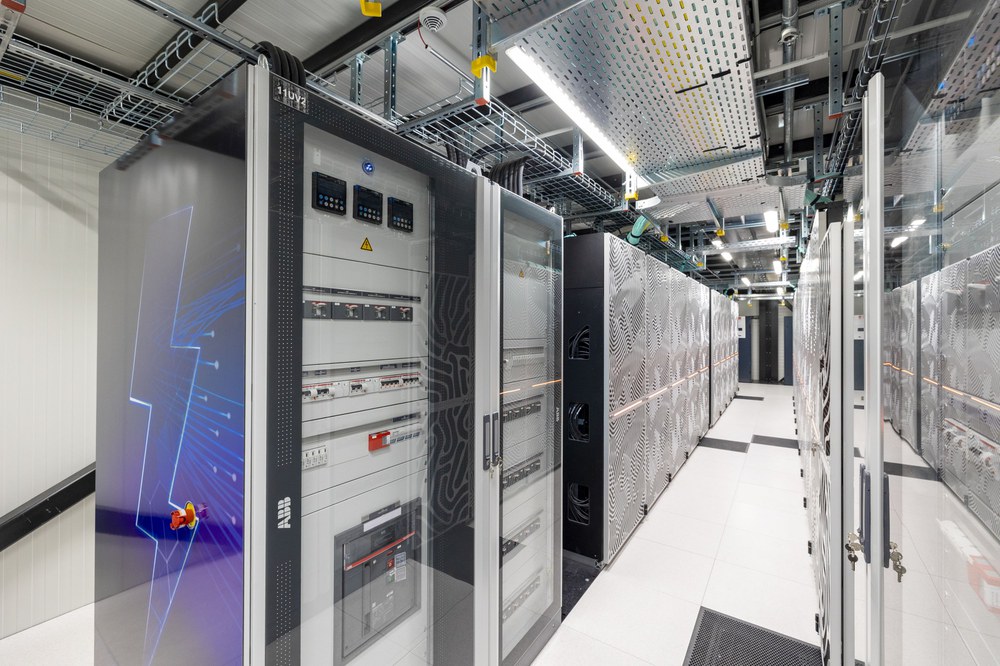
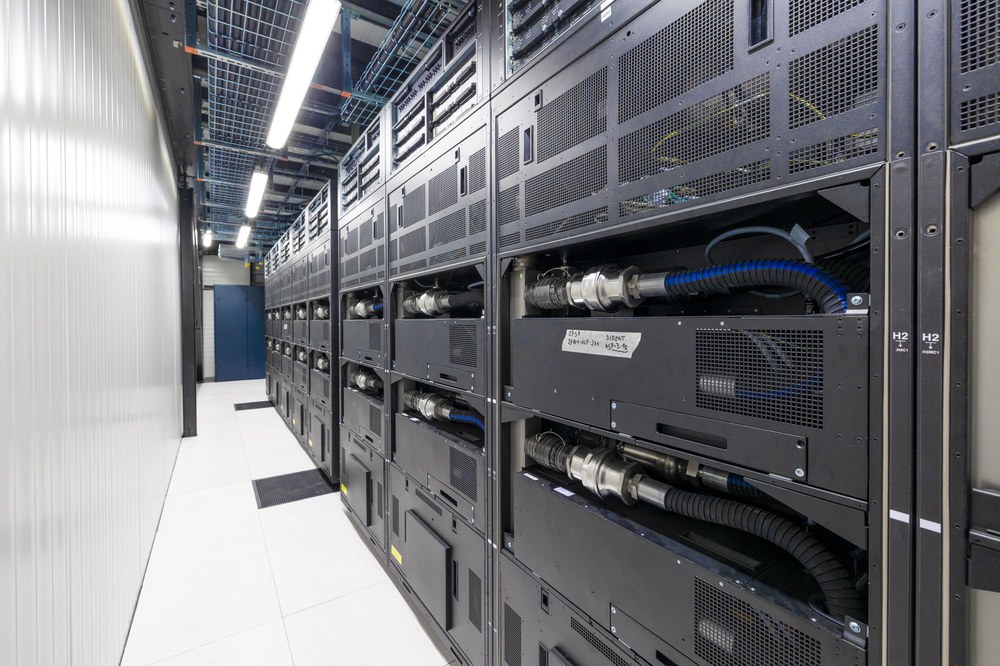
This is a legitimate problem in datacenters. They're getting to the point where a single 40(ish)OU/RU rack can pull a megawatt in some hyperdense cases. The talk of GPU/AI datacenters consuming inordinate amounts of energy isn't just because the DC's are yuge, (although some are), but because the power draw per rack unit space is going through the roof as well.

On the consumer side of things where the CPU's are branded Ryzen or Core instead of Epyc or Xeon, a significant chunk of that power consumption is from the boosting behavior they implement to pseudo-artificially[0] inflate their performance numbers. You can save huge (easily 10%, often closer to 30%, but really depends on exact build/generation) on energy by doing a very mild undervolt and limiting boosting behavior on these cpus and keeping the same base clocks. Intel 11th through 14th gen CPU's are especially guilty of this, as are most Threadripper CPU's. you can often trade single digit or even negligible performance losses (depends on what you're using it for and how much you undervolt/underclock/restrict boosting) for double digit reductions in power usage. This phenomenon is also true for GPU's when compared across the enterprise/consumer divide, but not quite to the significant extent in most cases.

Point being, yeah, it's a problem in data centers, but honestly there's a lot of headroom still even if you only have your common American 15A@120VAC outlets available before you need to call your electrician and upgrade your panel and/or install 240VAC outlets or what have you.

0: I say pseudo-artificial because the performance advantages are real, but unless you're doing some intensive/extreme cooling, they aren't sustainable or indicative of nominal performance, just a brief bit of extra headroom before your cooling solution heat-soaks and the CPU/GPU's throttle themselves back down. But it lets them put the "Bigger number means better" on the box for marketing.

It's not just about better numbers. Getting high clocks for a short period helps in a lot of use cases - say random things like a search. If I'm looking for some specific phrase in my codebase in vscode, everything spins up for the second or two it takes to process that.

Boosting from 4 to 5,5.5 ghz for that brief period shaves a fraction of a second - repeat that for any similar operation and it adds up.

Yes, I figured that much would be obvious to this crowd. Thus the "pseudo" part.

The point isn't that there isn't a benefit, it's that you start to pay exponentially more energy per 0.1GHz at a certain point. Furthermore, AMD and Intel were exceptionally aggressive about it in the generations I outlined (AMD would be 7000 series ryzens specifically), leading to instability issues on both platforms due to their spec itself being too aggressive, or AIB partners improperly implementing that spec as the headroom that typically exists from factory stock to push clocks/voltages further was no longer there in some silicon (some of it comes down to silicon lottery and manufacturing defects/mistakes (Intel's oxidation issues for example) but we're really getting into the weeds on this already)

And to clarify: I'm talking specifically of Intel turboboost and AMD's PBO boosting technologies where they boost where they boost well over base clocks, separate from the general dynamic clocking behavior where clocks will drop well below base when not in (heavy) use.

> They're getting to the point where a single 40(ish)OU/RU rack can pull a megawatt in some hyperdense cases.

Switch is designing for 2MW racks now.

unless it’s an Apple data center, populated by the server version of the latest ultra chips…
What makes you think that?

They're small and efficient, that means they can pack large numbers of those into small spaces, resulting in a similar large power draw per volume occupied by equipment in the DC. This is especially true with Apple's "Ultrafusion" tech which they're developing as quasi-analog to Nvidia Grace (Hopper) superchips.

Because I worked on them, before retiring. Yes they’re packed in; no they still don’t draw the same levels of power.
at that point, they're powered by a bicycle.
How safe is undervolting? Can it cause stability issues?
Far safer than overvolting.

Changing settings can lead to stability issues no matter which way you push it frankly. If you're don't know what you're doing/aren't comfortable with it, probably not worth it.

At least with U.S. wiring we have 15 amps at 120 volts. For continuous power draw I know you'd want an 80% margin of safety, so let's say you have 1440 Watts of AC power you can safely draw continuously. Power supplies built on MOSFETs seem to peak at around 90% efficiency, but you could consider something like the Corsair AX1600i using gallium nitride transistors, which supposedly can handle up to 1600 watts at 94% efficiency.

Apparently we still have room, as long as you don't run anything else on the same circuit. :)

You can always have an electrician install a larger breaker for a particular circuit. I did that with my "server" area in my study, which was overkill cuz I barely pull 100w on it. But it cost nearly zero extra since he was doing a bunch of other things around the house anyway.
> You can always have an electrician install ...

If you own the house, sure. Many people don't.

You need to increase the wire diameter as well if you go that route. Running larger breakers on 10A or 15A wiring is a recipe for bad stuff.
In older houses, made from brick and concrete, that can be tricky to do. The only reason I can have my computer on a separate circuit is because we could repurpose the old three phase wiring for a sauna we ripped out. If that had not been the case, getting the wires to the fuse board would have been tricky at best.

New homes are probably worse than old homes through. The wires a just chucked in the space been the outer and inner walls, there's basically no chance of replacing them of pulling new ones. Old houses at least frequently have piping in which the wires run.

Larger breaker and thicker wires!
I thought you only needed thicker wires for higher amps? Should go without saying, but I am not a certified electrician :-)

I only have a PhD from YouTube (Electroboom)

Without upgrsding the wiring to a thicker gauge? That's not code compliant and is likely to cause a fire.
Sorry just to specify, it was more like a 20 amp I think (I will verify), it wasn't like I was going way higher.

I don't remember whether he ran another wire though. It was 5 years ago. Maybe I should not be spreading this anecdote without complete info.

He was a legit electrician that I've worked with for years, specifically because he doesn't cut corners. So I'm sure he did The Right Thing™.

Where things get hairy are old houses with wiring that’s somewhere between shaky and a housefire waiting to happen, which are numerous.
As an old house owner, I can attest to that for sure. In fairness though, I suspect most of the atrocities occur in wall and work boxes, as long as your house is new enough to at least have NM sheathed wiring instead of ancient weird stuff like knob and tube. That's still bad but it's a solvable problem.

I've definitely seen my share of scary things. I have a lighting circuit that is incomprehensibly wired and seems to kill LED bulbs randomly during a power outage; I have zero clue what is going on with that one. Also, often times opening up wall boxes I will see backstabs that were not properly inserted or wire nuts that are just covering hand-twisted wires and not actually threaded at all (and not even the right size in some cases...) Needless to say, I should really get an electrician in here, but at least with a thermal camera you can look for signs of serious problems.

Yeah, but it ain't nothing that microwaves, space heaters, and hair dryers haven't already given a run for their money.
Hair dryers and microwaves only run for a few minutes, so even if you do have too much resistance this probably won't immediately reveal a problem. A space heater might, but most space heaters I've come across actually seem to draw not much over 1,000 watts.

And even then, even if you do run something 24/7 at max wattage, it's definitely not guaranteed to start a fire even if the wiring is bad. Like, as long as it's not egregiously bad, I'd expect that there's enough margin to cover up less severe issues in most cases. I'm guessing the most danger would come when it's particularly hot outside (especially since then you'll probably have a lot of heat exchangers running.)

That's still not much for wiring in most countries. A small IKEA consumer oven is only 230V16A=3860W. Those GPUs and CPUs only consume that much at max usage anyway. And those CPUs are uninteresting for consumers, you only need a few Watts for a single good core, like a Mac Mini has.
> And those CPUs are uninteresting for consumers, you only need a few Watts for a single good core, like a Mac Mini has.

Speak for yourself. I’d love to have that much computer at my disposal. Not sure what I’d do with it. Probably open Slack and Teams at the same time.

> Probably open Slack and Teams at the same time.

Too bad it feels like both might as well be single threaded applications somehow

I could use KVM and open a bunch of instances of each.
So Europe ends up with an incidental/accidental advantage in the AI race?
All American households get mains power at 240v (I'm missing some nuance here about poles and phases, so the electrical people can correct my terminology).

It's often used for things like ACs, Clothes Dryers, Stoves, EV Chargers.

So it's pretty simple for a certified electrician to just make a 240v outlet if needed. It's just not the default that comes out of a wall.

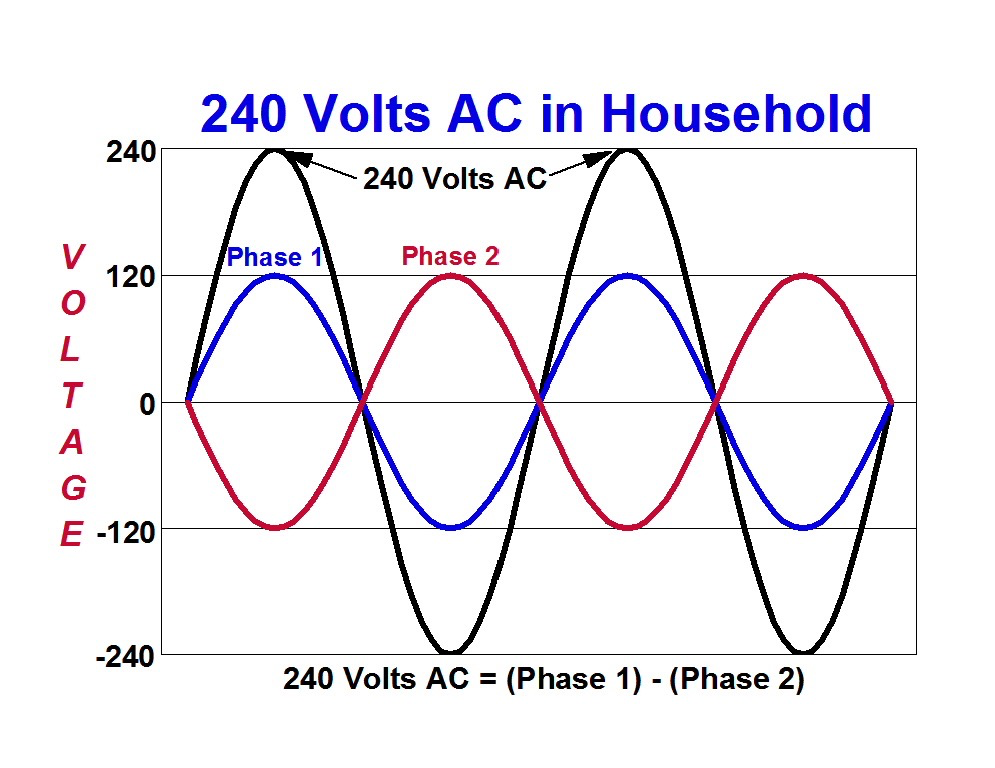
To get technical -- US homes get two phases of 120v that are 180 degrees out of phase with the neutral. Using either phase and the neutral gives you 120v. Using the two out of phase 120v phases together gives you a difference of 240v.

https://appliantology.org/uploads/monthly_2016_06/large.5758...

Relevant video from Technology Connections:

"The US electrical system is not 120V" https://youtu.be/jMmUoZh3Hq4

> So it's pretty simple for a certified electrician to just make a 240v outlet if needed. It's just not the default that comes out of a wall.

It'd be all new wire run (120 is split at the panel, we aren't running 240v all over the house) and currently electricians are at a premium so it'd likely end up costing a thousand+ to run that if you're using an electrician, more if there's not clear access from an attic/basement/crawlspace.

Though I think it's unlikely we'll see an actual need for it at home, I imaging a 800w cpu is going to be for server class CPUs and rare-ish to see in home environments.

If we're counting all the phases then european homes get 400V 3-phase, not 240V split-phase. Not that typical residential connections matter to highend servers.
Well yes its possible but often $500-1000 to run a new 240v outlet, and that's to a garage for an ev charger. If you want an outlet in the house I dont know how much wall people want to tear up and extra time and cost.
Consumers with desktop computers are not winning any AI race anywhere.
In residential power delivery? yes

In power cost? no

I'm literally any other way? also no

In the Nordics we're on 10A for standard wall outlets so we're stuck on 2300W without rewiring (or verifying wiring) to 2.5mm2.

We rarely use 16A but it exists. All buildings are connected to three phases so we can get the real juice when needed (apartments are often single phase).

I'm confident personal computers won't reach 2300W anytime soon though

In Italy we also have 10A and 16A (single phase). In practice however almost all wires running in the walls are 2.5 mm^2, so that you can use them for either one 16A plug or two adjacent 10A plugs.
In the Nordics (I'm assuming you mean Nordic countries) 10A is _not_ standard. Used to be, some forty years ago. Since then 16A is standard. My house has a few 10A leftovers from when the house was built, and after the change to TN which happened a couple of decades ago, and with new "modern" breakers, a single microwave oven on a 10A circuit is enough to trip the breaker (when the microwave pulses). Had to get the breakers changed to slow ones, but even those can get tripped by a microwave oven if there's something else (say, a kettle) on the same circuit.

16A is fine, for most things. 10A used to be kind of ok, with the old IT net and old-style fuses. Nowadays anything under 16A is useless for actual appliances. For the rest it's either 25A and a different plug, or 400V.

Let's rephrase: 10A is the effective standard that's been in use for a long long time, if you walk into a building you can assume it has 10A breakers.

On new installations you can choose 10A or 16A so if you're forward thinking you'd go 16 since it gives you another 1300 watts to play with.

There already are different outlets for these higher power draw beasts in data centers. The amount of energy used in a 4u "AI" box is what an entire rack used to draw. Data centers themselves are having to rework/rewire areas in order to support these higher power systems.
You can up the voltage to 240 and re-use the wiring (with some minor mods to the ends), for double the power. Insulation class should be sufficient. That makes good sense anyway. You may still have an issue if the powersupply can't handle 240/60 but for most of the ones that I've used that would have worked. Better check with the manufacturer to be sure though. It's a lot easier and faster than rewiring.
A simple kitchen top water cooker is 2000W, so a 1500W PC sounds like no big deal.
Kettles in the US are usually 1500W, as the smallest branch circuits in US homes support 15A at 120V and the general rule for continuous loads is to be 80% of the maximum.
Ah, 16A at 230v (3680W) is a normal circuit here. Most appliances work with that, the common exception is electric cooking (using two circuits or 380v two-phase) and EV charging.
True but kettles rarely run for very long.
But computers do, which was why I included that context. You don't really want to build consumer PC >1500W in the US or you'd need to start changing the plug to patterns that require larger branch circuits.
Kettles and microwaves are usually 1100 watts and lower, but space heaters and car chargers can be 1500 watts and run for long periods of time.
You don't keep the kettle constantly running, unlike a PC.
Laughs in 230V (sorry).
ʰᵉₕₑheʰᵉₕₑhe in 400V
It is mostly an issue in countries with 120V mains (I know that in the US 240V outlets exist though). In France for example it is required that standard plugs must be able to deliver at least 16A on each outlet, at the 230V used here, we get 3600W of power, that’s more than enough.
Yes and this is something I've been thinking about for awhile.

A computer is becoming a Home Appliance in the it will need 20A wiring and plugs soon, but should move to 220/240v soon anyway (and change the jumper on your standard power supply).

But all of the most-ridiculous hyperscale deployments, where bandwidth + latency most matter, have multiple GPUs per CPU, with the CPU responsible for splitting/packing/scheduling models and inference workloads across its own direct-attached GPUs, providing the network the abstraction of a single GPU with more (NUMA) VRAM than is possible for any single physical GPU to have.

How do you do that, if each GPU expects to be its own backplane? One CPU daughterboard per GPU, and then the CPU daughterboards get SLIed together into one big CPU using NVLink? :P

GPU as motherboard really only makes sense for gaming PCs. Even there SXM might be easier.
No, for a gaming computer what we need is the motherboard and gpu to be side by side. That way the heat sinks for the CPU and GPU have similar amounts of space available.

For other use cases like GPU servers it is better to have many GPUs for every CPU, so plugging a CPU card into the GPU doesn’t make much sense there either.

It’s always going to be a back and forth on how you attach stuff.

Maybe the GPU becomes the motherboard and the CPU plugs into it.

And the memory should be a onboard module on the cpu card intel/amd should replicate what apple did with a unified same ringbus sort of memory modules. Lower latency,higher throughput.

Would push performance further. Although companies like intel would bleed the consumer dry with, a certain i5-whatever cpu with onboard memory of 16 gigs could be insanely priced compared to what you'd pay for addon memory.

That would pretty much make both intel and amd to start market segmentation by CPU Core + Memory combination. I absolutely do not want that.