I've got to say, pretty frustrating seeing answers like this. It just completely ignores all the real, valid difficulty that people have in fighting obesity. If you "just" follow this diet, that requires discipline, strong will, buying correct supplies, 2h of cooking a day, measuring, counting, adhering to strict eating timeline, for months (years for some people), you'll be golden! There is plenty of research into behaviour changes with obesity and mechanisms that prevent good decision making etc - apart from just the practicality of all of the above in one's daily life with work, kids...
I see in other replies that you've had success in losing weight, and congratulations - but that doesn't mean it can work for everyone else.
I don't look at any kind of "pill solution" lightly, and absolutely think lifestyle changes should be made as well - but I can definitely see how medication like this can help get people on track and get back control. It's very encouraging to hear about psychological effects in terms of self-control, decision making etc. I'm just worried that we'll discover serious negative side-effects before too long, as with previous attempts.
Cutting carbs only helps to the extent you’ve reduced calorie intake.
People drop their calories too low, and then they take a cheat week after a year or so where they eat pasta, and suddenly they feel a lot better and they’re back to eating more calories and back to gaining weight, leading to yo-yo dieting, which may even be worse than just having a higher than healthy but static weight.
That’s not true - the ketogenic diet is not a calorie restriction diet. It was invented early last century by a medical doctor to simulate fasting and treat epilepsy in children. Low calorie diet lead to yo-yo dieting which is not the case for keto were you are allowed to eat enough calories to be satiated. The binge eating comes for the oscillating glucose and insulin levels driven by the consumption of refined carbs. Carb addiction is the problem and that’s the root cause we should be addressing to stop the metabolic health epidemic that has only been getting worse despite all the pharma profits.
I’ve done keto a couple times in the past, even back when it was called Atkins. It absolutely was a calorie deficit diet since it was difficult to eat that many calories consistently to go over my BMR for more than a few days at a time.
Friends doing it also had the same experience as I did.
Not saying it isn’t as advertised, but everyone on it I knew (n=14 or so) was getting results from fewer calories after we all decided to start carefully logging food intake.
It’s a great diet that works, but via other mechanisms for many vs ketosis.
It’s still a restriction diet that poses a lot of challenges for most to remain consistent with on a long term basis.
This is about as useful as telling someone who's obese to just eat less. Factually yes, it might help them, but practically they're clearly unable to implement it, probably for a plethora of underlying reasons.
Go see what people are eating in real life. There are a lot of studies.
Americans eat way more meat, almost no fruits and vegetables, and a lot of carbs.
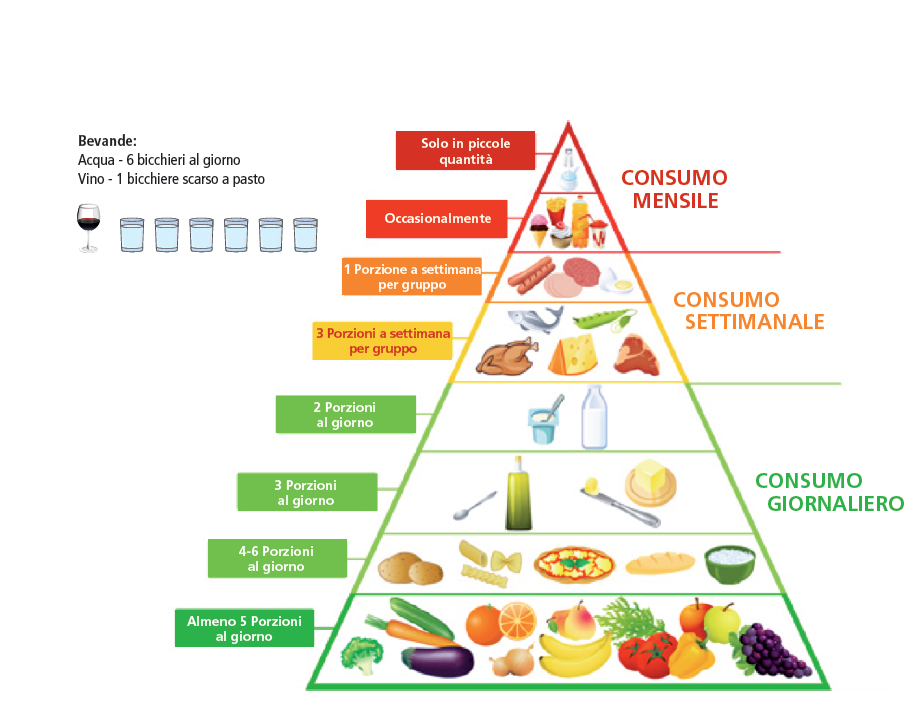
The point is that the food pyramid has absolutely no impact and pointing to it and making correlations with it is like doing astrology to explain why you broke your hand while playing basketball the other day.
Edit: you do a great job to illustrate how little anyone knows about these food guidelines.
It took you 17 years to even learn they’ve changed.
> Edit: you do a great job to illustrate how little anyone knows about these food guidelines.
> It took you 17 years to even learn they’ve changed.
I gave an age range for a very specific reason: That's the age group this food pyramid was pushed hard on kids. I didn't know it changed because I was finishing gradeschool as the change happened.
You don't have to memorize and precisely follow it to have internalized generic things like "lots of carbs = good". They are supposed to be our bodies' main source of energy and there's really no way you can have too much (or so we were taught at the time).
Implementing a ketogenic diet is not the same as a caloric restriction diet - it’s an inversion of the macronutrient pyramid - heavy on fat, moderate on protein and low on carbs.
Even if you consume the same calories as in a traditional diet you’ll likely lose weight. Check the https://metabolicmind.org site for more insightful information.
I read your experience and it is indeed pretty incredible and I'm happy for you. I've used ketosis strategically for athletic reasons, to cut weight. So we both had strong motivations to use it. But for your typical obese person, it is a tremendous challenge to stick with it and at the end of the day, it's adherence that matters.
Put simply, it's easier to adhere to a drug than to a specific, somewhat anti-social diet.
It really helps if you use some LLM tool like ChatGPT or Claude to generate the keto recipes (sometimes with the ingredients you have available).
If you stick to cooking keto recipes for a few weeks you end up internalizing the recipe patterns and you start cooking without even thinking about it.
I also recommend taking a look at this Joe Rogan interview to understand at a deep level all the problems with a drug like Ozempic - https://www.youtube.com/watch?v=G0lTyhvOeJs
Check the https://metabolicmind.org site then - you’ll find plenty of research based evidence on the usage of the ketogenic diet as a metabolic therapy.
This is true, but fat people have a hell of a time cutting out all carbs. For many of them, they'll eat the "low carb" option, and then have an occasional binge and it negates any benifits of low carb, and doesn't put them in ketosis, etc.
I strictly maintain my weight. If I catch it going over over 155# (I'm a 5'10" 61 year3 old male) I'll do a strict cut. And I know that either strictly counting calores OR going to as close to zero carbs will have the same net effect.
But a person who has obesity or is overweight will not be able to follow a diet. They are just incapable of doing so, or will lie to themselves or others about it and claim it's their "metabolism" or a medical condition, etc.
I’m 1.78m, 50 years old, my initial weight 2 month ago before I started the keto diet was 154kg and two months later I’m almost 130kg. Eating the same amount of calories as before.
Yes. But a real keto diet, where you are in ketosis, is impossible for most fat people to follow. They will inevitably cheat (“tee hee hee! It doesn’t count if it’s birthday cake! I’m so naughty”) and be in ketosis.
You can just cut ultra-refined foods i.e. junk foods. No one is getting obese from lentils, broccoli and apples. Even so, avoiding weight gain is one thing and losing weight is another. While it helps to increase ratio of protein and fiber intake for satiety, that in itself does not guarantee a caloric deficit, which is what is necessary for weight loss.
If your primary macro consumption is fat, your body will enter a state of ketosis burning fat instead of glucose. As long as your calorie intake of fat is less than your basal metabolism corrected by some factor, you will lose weight and feel satiated - you do not need to follow a calories restriction. Believe me - I tried both ways and the ketogenic diet never left hungry - always satiated.
I'm aware of how keto works. In fad diets focused on composition, short run WL is typical followed by stagnation. What's one going to do when they stop losing weight, eat negative carbs?
> you do not need to follow a calories restriction.
Weight loss comes down to energy balance. People tend to consume fewer calories at the outset when going low-fat or low-carb (in large part because protein is afforded a higher fraction, and it is more satiating), but clearly that does not mean that you'll always have a caloric deficit. Eventually, you'll need to reduce intake to continue losing weight.
Yes I actually used ChatGPT to calculate what would be the required daily amount of calories to achieve my target weight in 6 months - the big difference is I always feel satiated and that the body being in ketosis ensures I’m not accumulating but burning fat.

I see in other replies that you've had success in losing weight, and congratulations - but that doesn't mean it can work for everyone else.
I don't look at any kind of "pill solution" lightly, and absolutely think lifestyle changes should be made as well - but I can definitely see how medication like this can help get people on track and get back control. It's very encouraging to hear about psychological effects in terms of self-control, decision making etc. I'm just worried that we'll discover serious negative side-effects before too long, as with previous attempts.