Different people have different preferences. This is something I never see brought up in these debates. There is no definitive better option. This comment section demonstrates that.
Some people are motivated by a sure thing for less reward while others are motivated by risk and greater reward. In my view America caters to the risk takers while much of the EU caters to the play-it-safe crowd.
There’s nothing wrong with either approach. We need both types of people to keep a healthy and balanced world.
To /really/ extrapolate I’ve wondered the same about economic systems. Is this solution A vs. B or are some individuals motivated differently? If so, can we create a world where different motivation systems can peacefully interact?
>In my view America caters to the risk takers while much of the EU caters to the play-it-safe crowd.
And the opposite group in each region suffers. They live in hell. In the US you are left to die on the street if you don't hustle. In the EU its evidently clear that you will not be in good company if you are a risk taker.
This brings to mind a concern that's closer to home for me, which is the similar dynamic in the US between urban and rural populations.
I grew up in a rural area, and different people will of course have had contrary experiences, but I recall people having more "free time" (which I understand to be time we choose how to use). That time wasn't always used in the most constructive of ways, perhaps, but the choice was there. People were busy, but how they were busy was largely (not always) a reflection of choice.
I don't recall ever seeing someone manifest the adage "hurry up so you can wait" until I moved to urban settings (including Manhattan). It was a huge weirdness to me then, and is now as well. Is waiting a choice? Perhaps, but only to some degree as the necessities of life are in more demand and queued. I moved to cities for the most commonly expressed reason: opportunity. Or, plainly, money. And it worked.
I moved away from cities to my current rural oasis to gain space and time (and greenery), having become tired of the constant need to be on time, and in the right place, competing with masses of other people at every turn -- that is, not having a choice about my time. This move also worked.
Not sure I have a point other than it isn't always obvious when time is traded for money and vise versa, perhaps be intentional about it if the opportunity presents itself (and respect those that choose differently).
I think America used to have a closer relationship with agency. We were part of building the world around us, making businesses, homes, farms, whatever. Having role models around who did visible clear work was a powerful way to see & experience the world, was a lesson in how we could shape ourselves.
Now that America is more scut jobs at impersonal chains or other far off companies, or being lost in some small sector of the massive organizational chain of command, I truly fear for Americans. The advantage of being work based comes with none of the fulfilment, leads to far far fewer people becoming community role models. We've been swallowed by the beast, are in the belly of the giants, many go which we have created (and let endlessly consolidate/amass in size).
The question supposes an individual balance, of what's better for a person. But what's good for a society, what happens to a society over time: I think there's an interesting and very strong virtue America used to get, that helped grow our people, helped keep us agentic, that kept us engaged with & shaping the world about us in a really powerful & amazing way. And losing that fire, and now just being anonymous & low agency in a huge grind, that's a brutal & scary new path for us, one where yeah of course if this is so pointless we'd pick time & leisure.
"...the US produces more innovation, some of it beneficial. There is no European Google, Tesla or Facebook."
But what about infrastructure? Roads, public transport,health insurance - or better health industry, pensions?
I think the implication is that Tesla Google and Facebook contribute to American wealth, whereas roads, public transportation, health insurance consume European wealth.
I think it's questionable whether theres a valid point in there somewhere.
American wealth of how many? Apple - and others I presume - park their cash abroad https://www.wsj.com/articles/apples-250-billion-cash-pile-en....
Thus avoiding taxes and borrow against it so they can even use the interest for tax write off. The billionaire founders are known not to pay taxes (or VERY little) anyway. So, who's wealth is it?
You can choose how much to doom scroll or not, but you can't individually dictate the price of rent. That's dictated by the earnings of those around you.
the problem with EUropeans is not work ethics. is lack of ambition, dreams, drive. the existing work ethics is perfectly fine for this, why work more for no reason.
we can also discuss the causes for this lacking. it's probably a mix of coasting and entitlement but lately I just think it's due to the mud, the institutional and social swamp that EUrope has become. you can observe paralysis at all levels.
to the question: which is better? my view: the one that lets you have more of the other.
European here. I agree with lack of ambition, at least if were talking about averages and comparing to America.
> due to the mud, the institutional and social swamp that EUrope has become
But this, I'd like to know what you're talking about. I've lived in the US, the US gov is worse than the average EU government at least from the pov of a citizen having to interact with it. When people complain about EU institutions I wonder if they're just regurgitating talking points they've heard somewhere. And don't tell me about gov efficiency either - how many hundreds of billions does the Pentagon "misplace" every year?
Assuming Americans live forever and get to enjoy their life, kids, family, and friends, and to live for decades youthfully after retirement, obviously the second!
Another question - would this answer be different if Europe did not have access to innovations that have come out of America? To what extent is more time “enabled” by good relations and mostly free trade with America? And in the reverse, to what extent is America’s money enabled by having access to European markets?
You narrow your question down too much. Because the answer is mostly "neither".
The actual question would be "would this answer be different if Europe did not have access to cheap labor that have come out of Asia, South Americas and Africa" or "To what extent is more time “enabled” by externalising many costs?". And consequentially "to what extent is America’s money enabled by having access to cheap labor, cheap manufacturing and externalising costs to Asian, South American and African markets".
Should be interesting in the years ahead. Europe appears to be getting poorer and that may accelerate as these European governments have to spend more on defense to counter Russian ambitions. The French are pretty adamant about retirement age tampering by the government.
"European states will go bust, the argument goes, and then Europeans will have to work like Americans. The facts suggest otherwise. The US has a higher government debt-to-GDP ratio than almost all European countries: 123 per cent, nearly double that of work-shy Germany, and triple Norway, Sweden and Denmark, reports the IMF."
> "The facts suggest otherwise. The US has a higher government debt-to-GDP ratio than almost all European countries: 123 per cent, nearly double that of work-shy Germany, and triple Norway, Sweden and Denmark, reports the IMF."
Not if your spending all the time to make the money. Lots of folks can't go on vacation because their job will throw them under the bus when they are away.
You could look at money as condensed time - you've worked for the money and saved it up. At some point if you save enough you can stop working and live off that savings. And then you have time.
Fallacy. With money you can avoid working. You cant buy time. Those are two very different things. You know who benefits from you being confused on that point? Your employer. "work hard and then you'll be able to buy time. Not now of course, now you're working hard. But later you'll buy time trust me bro"
What is "enough" and how much guarantee is there that I'll reach that?
It's rather similar to what investing calls the DCF - but with time: time I have today is worth more than time I might have in future. For several reasons:
Time I have today is guaranteed. The future is unknown. But rather known, is that in the future I'll be older, my health and energy lower and therefore my options limited. The quality of "time" is potentially much higher when you are 20 than when you are 83. And then there's the risk that I don't even make it far beyond my 70ies.
I find that people tends to do this more and more, the little smug sentence with "double entendre" that no one but they seems to get (i guess that's where dogwhistling came from, but usually those are obvious), and with nothing else.
Is it a superiority complex? Why does it seems more prevalent now than 10 years ago? Even back when forums were a thing and that people trolled the "PC vs Mac" boards, this smugness weren't as prevalent.
People should go back and see the "smug alert" South park episode to understand what they sound like to random observers.
It's more prevalent now because toxic social networks have eaten away at our collective civility (see meta-example below), and also, the contradictions of capitalism* are more apparent and requires ever-growing amounts of justification. See, growth is good!
(*To anyone who wants to reply with big akschually energy, call it crony capitalism or captured capitalism or financialization or whatever the fuck you want, I'm not having this stupid argument because it's quibbling over a technicality.)
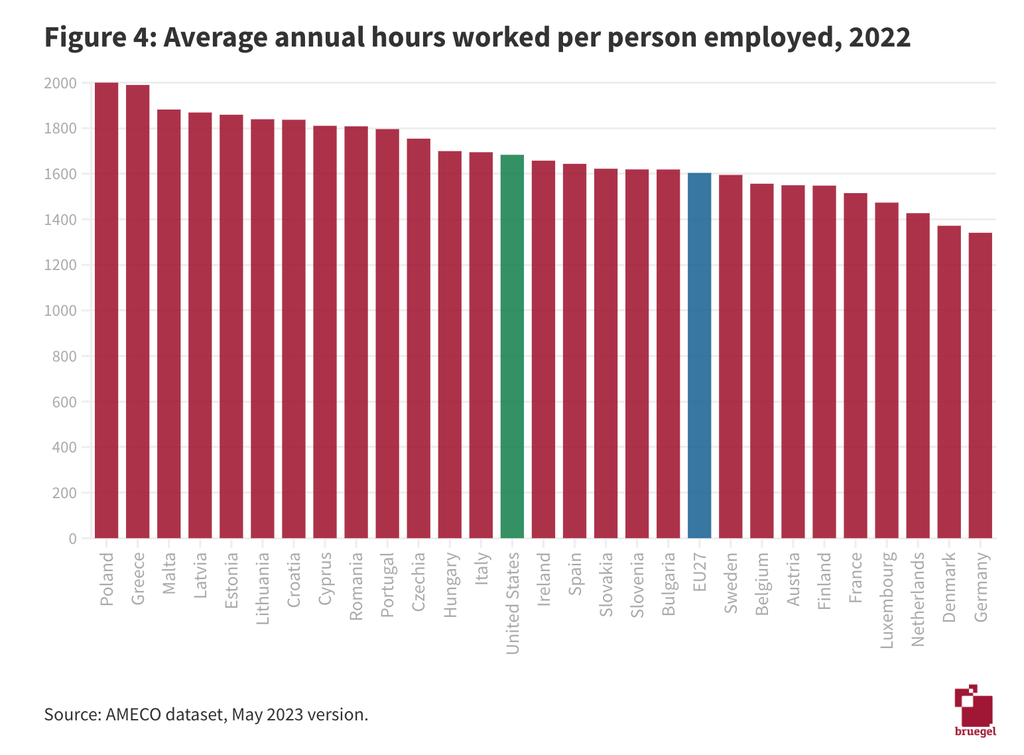
Some people are motivated by a sure thing for less reward while others are motivated by risk and greater reward. In my view America caters to the risk takers while much of the EU caters to the play-it-safe crowd.
There’s nothing wrong with either approach. We need both types of people to keep a healthy and balanced world.
To /really/ extrapolate I’ve wondered the same about economic systems. Is this solution A vs. B or are some individuals motivated differently? If so, can we create a world where different motivation systems can peacefully interact?