What I don't get is why people are not using seatbelts. The only time I'm not using it is when I'm on the way to and from the bathroom. If I'm seated I'm using the seatbelt.
This. Clear Air Turbulence can strike at any time, and you - as in your body - can get seriously damaged even with moderate turbulence. Few people have ever seen severe or extreme turbulence, including the flight crews, but that can happen as well.
When I was 5 or 6 years old I was flying-sitting with my dad, as passengers, though he was an airline pilot, when we hit a pocket of "dead" air. Meals and drinks were just served. For what was at least 3-5 seconds all of the meal trays floated up, hovered and then thankfully relatively gently settled back down. My dad estimated we dropped 200 feet or so.
But by that argument neither is floating around in the ISS - you're still being accelerated by gravity, you're just in the fortunate position that you have enough velocity not to hit the earth.
If the colloquial term "zero gravity" applies to someone in the ISS, then it also applies to someone in a suddenly dropping aircraft.
I was under the impression that seatbelts are basically mandatory at all times. On my recent turkish airlines flight the safety video requested you put it on and leave it on, ans the staff would come by and ask you to put your seatbelt on, even when theres no turbulence.
The "seat belt" indicator light should actually be changed to "dont get up and walk around"
Well, it may be recommended, but if the attendants constantly nag you to put them on, then that's the same as required, no?
Only the obnoxiously hard headed folks would argue back and go "since it's a recommendation and not a requirement I will not sit with my seatbelt on, and there's nothing you can do about it."
I’ve never seen anyone be nagged over seat belts mid flight. The messaging from Australian airlines at least is very much that you are free to take your seatbelt off but that it’s suggested to keep it on while seated.
Except as provided in this paragraph, each person on board an airplane operated under this part shall occupy an approved seat or berth with a separate safety belt properly secured about him or her during movement on the surface, takeoff, and landing.
Absolutely at takeoff, but the emphasis is often missing for the remainder of your time onboard. It's noticeable when crew add extra reminders.
I've never looked for stats on these incidents involving clear air turbulence. The impression I got as a European was that this was a transatlantic and transpacific problem. It's obviously not, but those were the incidents reported on.
There are occasionally "air holes" happening near my local airport. A friend onboard a particularly severe one told me that the captain said that they'd "fallen" some 160 meters.
I also have another friend who, a long time ago, didn't use the seatbelt on a domestic flight - sudden turbulence made him hit his head and injure his neck badly. That's very dangerous. Personally the "worst" I've seen was just enough to break wine bottles in the overhead in front of me. Flight attendants gave out blankets for all of us nearby, as protection for dripping wine..
Its expected that crew will light seat belt signs when they asses its required. Its literal on/off or yes/no, lets not add some 3rd state to it that will confuse people.
This of course doesn't mean one shouldn't wear it as often as possible, but ie with small kids thats nigh impossible, or for some folks on 10 hour flights (I still used to put it on me when I slept, but mainly to not be woken up by crew when they switch it on and check everybody).
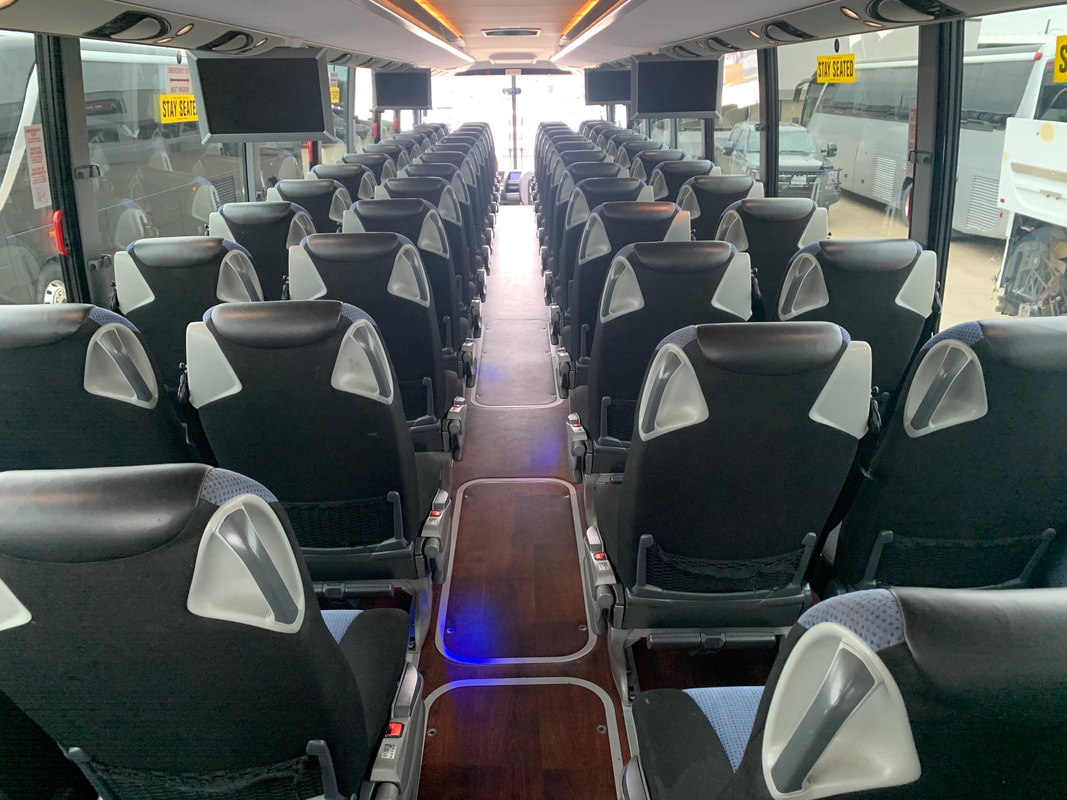
Very similar topic is bus seat belts. All intercity buses (at least in Europe) have them, nobody clips in (apart from driver). I think at this point everybody knows about some horrible bus tragedy which would be a set of minor scratches if all folks had seat belts on. Yet our subconsciousness keeps changing perceived risks and consequences to keep us happy/content instead of worried about everything all the time (makes some sense, cluttered mind ain't best performing in life & death scenarios of bygone era).
In my town only the intercity ones used to have them, but these days all the city buses have them too. I don't mind using the seatbelt, but their design isn't optimal - they're hard to put on, particularly if you're wearing a large jacket. A lot of fumbling is required.
In Germany at least it depends on the type of bus. Long distance / travel busses (Google translates it to "coach") are required to have seatbelts, regular "city busses" don't.
I'm a worrier about things like these. I always imagined that's why the roof in the bathroom is lower and curved. A lot less room for gaining vertical speed. So you'd be temporarily stuck to the ceiling and perhaps a bit dirtied, but less hurt than getting double struck by first the lockers and then the higher ceiling in the aisle.
They should install a gravity switch. A simply contact that uses gravity to either remain normally-open or normally-closed, and then when the opposite is true, automatically flush.
Same here, but most passengers don't understand the issue. They think turbulence means "a bumpy flight" when it really means "you will -- without warning -- be slammed against the ceiling and then against the floor, and then against the ceiling again for good measure."
I wear masks in public and I use seatbelts on airplanes, but that's not the shortest path to the boss ape of the town status, and I would guess a lot of people care more about that than their own life.
Bathroom, stretching legs, getting something from overhead locker, and of course the cabin crew. I could see at least 20 people at a given time doing one of those things.
I think the seatbelt-sign is outdated. Somehow it should be made clear that if a sign is on, it is not allowed to stand up and move around, and the general rule is that the seatbelt must be locked while sitting.
It needs to be safe and clear by design, not confusing to the point where systematic PA announcements are needed to clarify the fact that "seat belt sign is off" actually means "you should wear your seatbelt".
Nowadays what they announce on European and Europe-Asian flights (the ones I have any recent experience with) is that, when the seat belt sign is turned off there's always an immediate announcement which says something like "The captain has now switched off the seat belt sign, however it is recommended to use the seat belt whenever seated".
And maybe on new planes they'll change the iconography (which would probably require FAA rules to be rewritten), but let's not downplay the role of just having common sense.
> What I don't get is why people are not using seatbelts.
The terrible UX doesn't help. There is a seatbelt icon on the sign, they announce it as "fasten seatbelt sign", which makes it sound like when it is off you don't have to have it fastened. But it really should be "remain seated" sign.
Also some people don't wear seatbelts in cars as some idiotic macho thing. I assume there is no helping those.
It's my understanding this was mid flight and not a situation where the seatbelt sign was lit. I believe the original commenter is suggesting that people wear their seatbelt at all times, if possible, seatbelt sign lit, or not.
(Which, as once a very frequent flyer, I do, others don't like to if they don't have to).
My point was the fact the "fasten seatbelt sign" was not lit in the middle of the flight makes people think it is OK to not have it fastened. Which isn't true.
Yes, maybe. I was on an international flight last week and they said, over the intercom, that they suggest you keep your seatbelts fastened all the time where possible.
Maybe they should play some in flight video of one of these events.
Every single flight I've ever been on except LATAM says to keep your seatbelt fastened when seated even when the seatbelt sign is off. UX isn't the issue, people ignoring common sense things like "maybe my seatbelt should be on when I'm flying through the air at 500mph" is.
There are also cases when you should not be wearing a seatbelt -- if you have just got on a plane and it's still being refilled the seatbelt sign is off and sometimes the crew will tell you not to put your seatbelt on while it's being refilled.
After the recent incidents, I’d love to see zip line style safety lines in planes. When you get up to use the lavatory, you’d connect your carabiner to the aisle ceiling and floor lines to keep you level in case of a sudden movement.
This idea wouldn’t actually solve most of the biggest problems during turbulence, which is people hitting their heads on the ceiling, and people getting hit by luggage falling out of the overhead storage.
I think having a cable flying around would actually be dangerous in itself. Wouldn’t want to get it caught around your neck…
> This idea wouldn’t actually solve most of the biggest problems during turbulence, which is people hitting their heads on the ceiling, …
It’s two cable lines, one on the ceiling and one on the floor. Each would be separately attached to the passengers harness so the freedom of movement is only up and down, limited to the amount of slack in the short length that connects the passenger to the plane.
> … and people getting hit by luggage falling out of the overhead storage.
This is a great point, I've often wondered why there are no seat belts on airplane toilets. Yes, there would be many obstacles to overcome (please, no course jokes) but there have been several times when I was using the facilities on a plane and turbulence ensued and I almost panicked thinking about all the possible bad things that could happen.
Latam is Chilean. I am not as well traveled in all SA countries but the exposure I have had suggested that seatbelts in cars are fairly optional still, I suspect on a plane you have less incentive.
NH doesn't get enough credit for how weird it is. Between the state motto, the lack of sales or income tax, and stuff like this seatbelt rule it's like we're talking about a totally different country.
I also like their Automated License Plate Reader (ALPR) record retention period (3 minutes):
> Records of number plates read by each LPR shall not be recorded or transmitted anywhere and shall be purged from the system within 3 minutes of their capture in such a manner that they are destroyed and are not recoverable, unless an alarm resulted in an arrest, a citation, or protective custody, or identified a vehicle that was the subject of a missing person or wanted broadcast [...]
This seems absolutely reasonable. Keep the data about people who have committed or you can reasonably suspect might be committing a crime, get rid of the identifiable information for law-abiding citizens and maybe keep the aggregated metadata.
It's also often incorrectly thought of as heavily democrat or liberal, perhaps due to association with neighbors like Massachusetts and Vermont. It's somewhat true, but the balance is much closer to 50/50 than those neighbors. And the largest newspaper is very Republican centric.
The other thing about cars in NH is that insurance is optional. I'm not sure what happens if someone legally driving in NH without liability insurance drives over the border into a neighboring state. I asked a lawyer friend once and he mumbled something about interstate commerce making it legal. I'm not how that debate would go when stopped by a cop in MA and asked to show proof of insurance.
"New Hampshire motor vehicle laws do not require you to carry auto insurance, but you must be able to demonstrate that you are able to provide sufficient funds to meet New Hampshire motor vehicle financial responsibility requirements in the event of an at-fault accident."
While there was most definitely South Americans on that journey, having made that flight myself I can honestly say it would have been well over 50% Aussies on their way to NZ, Santiago, Buenos Aires etc.
Certainly but I am not suggesting its entirely on the passengers but the culture of safety in a given region. In the US you have a before flight belt check and sometimes mentions during flight. In a lot of other countries I notice that flights are not as concerned about those belt checks.
I'm also from Chile, I travel intercity pretty often, and most times, I'm the only person on the bus that I see wearing a seatbelt.
It's technically mandatory, but I've traveled like 12 times in the last year, and only twice the assistant has done his nag-round checking that passengers are wearing their seatbelts.
In BsAs it's common to hop in a cab and find, as a courtesy, that they've tucked the safety belts in-between the seat cushions so you have a comfortable ride.