Hacker News new | ask | show | jobs
by viraptor 851 days ago
Google mainly knows how to display ads. The raise of Chrome wasn't so much about features at the time as about people being bombarded with "install chrome" ads. On Google results, in Gmail, in Adsense, everywhere. There was an absurd amount of money sacrificed (not really spent since the ads were internal) to gain the users. I'm not sure any other aspect can be reliably compared in that scenario.
2 comments

Do you have any data to back that narrative? I know Mozilla is pushing that explanation, but from how I remember it Chrome gained market share because it was technologically superior to Firefox when it was released. It had a much more modern UI, much faster JS implementation, sandboxed tabs, etc. All features that it took Firefox years to copy. Some would say that Firefox has never caught up.

I find the ads narrative pretty hard to believe. Back in the days, Firefox could compete with IE, which was the default in Windows, by being technically superior. It seems very likely that Firefox's users, who had gone out of their way to install Firefox, would also be very willing to go out of their way to install a new better browser even in the absence of ads.

Ehh... UI was comparable. Chrome was a bit faster.

For the ads, see some snapshots of what that campaign looked like at the time https://searchengineland.com/googles-jaw-dropping-sponsored-... It was a massive push of basically spammy links all over the internet.

To be clear, I'm sure some people switched for the features. But given the scale of the sponsored push to every internet user, we can't really say features were the reason for most people. There's no way to run the experiment the other way.

Thanks for the link. That certainly shows that Google was sponsoring an aggressive and fairly ugly ad campaign.

> UI was comparable.

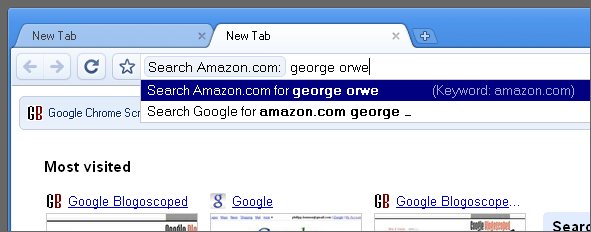
They were not at all comparable. Here is an image of what Firefox looked like when Chrome was released [1]. Here is an image of what Chrome looked like at release [2]. Barring some design tweaks Chrome looks roughly like any modern browser whereas Firefox looks ancient by modern standards. It has the app menu, no integration with window decoration, a separate search box, tabs below the address bar, etc. Lots of things that Firefox would copy over the coming years. There's a reason Chrome was named after its Chrome–the UI was a huge selling point.

1: https://user-images.githubusercontent.com/25581533/141687681... 2: https://blogoscoped.com/files/google-chrome-browsing/search-...

The bookmarks could be turned off in FF and many other things changed with extensions. Overall... I can see how someone could say they're different, but it's a "meh" for me. Yeah, they're different but not in a meaningful way for me.
it also really helped that in difference to today wen Chrome was new it's performance gain over FF was often quite significant (same for security)

while that isn't really true anymore in any relevant way it's still stuck that way in many peoples heads

And sure part of the perf issues where quite often not well behaving FF extensions, toolbars etc. also often installed by unrelated programs preexisting installed on the same computer and that FF needed some major refactoring/rewriting just because it was quite a bit older (which are done by now but had inevitable but sad effects like XUL extensions being gone).