Hacker News new | ask | show | jobs
by ChuckMcM 854 days ago
Nice article, the comments here are kind of amazing for a nominally technical audience. It is almost as if people have no idea how difficult automatic page layout and formatting is. There are literally PhD thesis topics on it[1]. And to expect that complexity to be abstracted away into some sort of simple "do-what-I-mean" expression? That just isn't going to happen.

Go look at Gwern Branwen's web site[2]. That is art. But the trick is decide how you want the site to look and then constraining your written material to be expressible in that style.

I've been looking at web page layout since 1995 when I joined a startup that was doing the "first magazine on the web about Golf!"[3] When the Zen Garden folks did their web site and started the 'A List Apart' mailing list which is now a website[4] it really helped me understand just what one was up against if you wanted to produce web content that rendered nicely on a wide variety of projections. And yes, the term projection is intentional because the function of going from semantic content to presentation on a screen or paper or other flat surface of finite size, is a mapping (or projection) from a native space into the rule set of the destination space. That rule set consists of both physical constraints (pixels per inch, total pixels horizonally and vertically, color capability) and software constraints (how much of the underlying capability can the browser software that is currently running express). Not to mention that every browser wants to do their own special thing.

So yes, CSS is a "hot mess" for people who decide one day "I'm going to build a web page from scratch." And yet, that mess is really just an abundance of choices rather than constraints on what you can do. The process is the same for everyone, find the tools that help you achieve the results you want and then package your material into a form that you can easily convert that into that look.

[1] https://scholar.google.com/scholar?hl=en&as_sdt=0%2C5&q=thes...

[2] https://gwern.net/

[3] It was called Golfweb and eventually ended up being part of CBS Sports apparently (golfweb.com sends you there)

[4] https://www.alistapart.com

7 comments

Hi Chuck, Great points. FWIW, your tenure with web layout has me beat by about 3 years (1998). In all my relevant experience, the materials at "Every Layout"[1] remain unparallelled. Highly recommended.

[1] https://every-layout.dev/rudiments/boxes/

I don't know I spent a year using "Hotdog" and another three using "FrontPage" so those really don't count as years spent "getting better" :-)
Huh! Yes, yes, Hotdog[1] was what got me started with HTML. It came in a CD with a magazine that was about a month late to a town with no Internet in mid 90s.

1. https://en.wikipedia.org/wiki/HotDog

Haha, I remember being really, really excited about ditching FrontPage for DreamWeaver.
Dreamweaver and Fireworks, oh my.
Finally, someone else on the internet that remembers using Hotdog! Good old Sausage Software… Thanks for the nostalgia hit.
The problem with css is almost entirely self inflicted, though. Yes, layout is hard. Why make it harder by aiming for the model we now have? Specifically, why aim for one major model that will fit all pages? Usually done with another sysipheon aim of automatic layout recalculated every page.

Combine this with the amusing goal of targeting any and every size of window. Why would anyone think that is doable?

it is not only doable (trivially so for most static sites) but also the only appropriate model for delivering websites/software.
Most static sites don't have hard layout concerns?

More amusingly, most static sites did absolutely fine using tables.

Why don't we have completely separate styling systems for mobile devices, widescreen devices, vertical monitors, tablets, and billboard displays? Because that would be a bigger nightmare to deal with than CSS.

I like that when I visit a web page on my mobile phone, it loads regardless of whether or not the site owners hired someone to build a completely separate interface. And I like that when I design interfaces for phones and for large screens, I don't need to learn 2 languages to do it. And I like that when I stack two browser windows next to each other on a 1920x1080 monitor they resize and I can read both of them.

When people say that they don't want to worry about multiple screen sizes in their layout, they mean that they want an interface that works on one screen size and ignores everything else. And that would be a huge loss for accessibility and innovation if the web pushed developers in that direction. The reason it would be simpler for people to work with a more targeted language is because they wouldn't build the other interfaces at all. They'd learn one language, target one device that their most predominant customers used, and then we'd have a mobile Internet and a desktop Internet and they'd be separate things with no expectations that sites would work on both devices.

----

And I think this sort of gets to the complaints about complexity in general, because the complexity of this UI design is reflecting a reality that good interfaces are adaptable and people have multi-faceted needs from their software. Even on desktop, people use different screen resolutions, they scale fonts, they mess with layout. And there's this subtle idea behind complaints about complexity that when you dig into it is not actually "why do I have to target so many devices" but is really "why do people use so many devices? Why isn't the world more uniform, why on earth are people changing their screen resolutions, what's wrong with them? Why can't they just decide on a device and stick with it?"

But good UX design is about designing for the real world, not for a hypothetical standardized human, and in the same way that cars need adjustable seats and can't just say "well on average everyone is this height and width", good UX acknowledges and responds to the idea that software and content are delivered in multiple contexts.

Of course that's a balancing act, it does make interface design more complicated, and it's not something we can do perfectly. But it is a balancing act, it's not a problem we can solve by saying "heck it, everyone needs to stop buying HDPI laptops." I mean, we're not all Linux developers, we can't all just pretend that touchscreens don't exist ;)

The same exact complaints show up with the extensible web and with progressive fallbacks in general. It is real annoying to build software that degrades nicely depending on what hardware support someone has and what features they've turned on and off in their browser. But it's also a better way to build software that better reflects how software is used in the real world by real people.

A problem is that none of the arguments you are offering are bad, logically. It feels very appealing to think you can build a system that would solve "laying out text" for all time.

For me, what they lack is evidence that stands any stronger than video games. Specifically, I've played different games on various screen sizes and orientations that largely work as you would expect. They are not perfect, of course, but they work better than most web pages seem to. And they do that, largely, without the same reliance on something like CSS that web pages need.

More, it isn't like we weren't laying out billboard displays long before the web came to be. Nor is it realistic that billboards have at all the same concerns that a pocket sized phone will have. At large, you shouldn't even use the same fonts between those options. Heck, taken farther, a billboard can hold a slogan, that is about it.

This would be the same as if you tried to use HTML/CSS to make a poster for a movie. Which, sure, you can make a bit of an effort with it. I just don't see it being any better than letting a designer or probably an automated system layout several standard sizes with the standard type in the standard locations.

Pulling it in, I'll be delighted to get proven wrong and find that we have converged to a great abstraction for laying out content. I, of course, do not /know/ that it can't be done. I do pull my hair out at the amount of effort people will go to in order to have the system layout a set of divs, when most designs could probably have done a lot of that math up front and worked with far fewer nested elements than we seem to typically see.

Good layout is simple. But can it be flexibly done without a good sense for abstraction and math? No. I mean, just look at the hot shit that is Tailwind, that's what people come up with while fighting abstraction.

CSS was a mess, but together with React is now the best language for building GUIs. You can build up any abstraction you want in React, even

    <FullScreen><Center>Hello World!</Center></FullScreen> 
In fact, that's what I did over the weekend for my Electron desktop application, writing my own little library of components, including tabs and treeviews, using only CSS and React and no third-party libraries apart from that.

You already have been proven wrong. You are just not ready to accept the proof.

> CSS was a mess, but together with React is now the best language for building GUIs.

People should stop saying this lie. To di so, they should try and look outside of the web for even a nanosecond.

Even Turbo Pascal from 1990s is a better language for describing UIs.

The "best language for building UIs" chokes on less than 1000 elements on a static page: https://pbs.twimg.com/media/GF__tHjXgAAZGUA?format=jpg&name=...

Compare that to an actual UI: https://cdm.link/app/uploads/2023/11/CleanShot-2023-11-15-at...

So, a couple of issues:

A) Out of curiosity, is that "actual" UI screenreader accessible and does it work on mobile devices? Does it work with touchscreens? Can I scale the text? Maybe it does, I don't recognize the program off the top of my head. But I don't assume that by default.

And very often this is just the same argument over and over again. "Check out how cool the thing is that I can build when I assume that you'll be using a widescreen desktop monitor with a mouse and keyboard in the full screen." I mean, great, that's very cool, but I'm glad the the web doesn't allow you to make those assumptions. It's a better platform for forcing you to care about more stuff.

B) You can absolutely get more than 1000 elements on a static page, it's not that big a deal unless you're doing something weird. Of course, if you are putting 1000 elements on a page, you might take a step back and ask yourself why you're doing that because giant pages with thousands and thousands of nested elements are hell for screenreaders. You want to update a thousand pieces of the DOM at the same time. Well, OK, let's ask for a second whether that's actually good interface design. I would argue maybe it's not?

I make this point a lot on HN, but if you can't describe your interface using pure text, you don't have an accessible interface, period. And to rephrase point A, you're correct that if you don't worry about that, you can make very complicated interfaces that are extremely performant, and wow am I glad the web forces you to worry about that.

C) People have a fundamental misunderstanding of what the DOM is and how it should be used, in part influenced by treating the DOM as a markup tool rather than as a render target -- but suffice to say, there is nothing about the interface you're showing me that makes me think it's not doable on the web. Some of these visual components you might jump out and use canvas for -- that's not violating the spirit of the web, the DOM is your user interface, and a bunch of nested DOM elements that simulate a slider using div soup is not more accessible or semantic or maintainable than an actual native browser slider with accessible controls that you throw a canvas element in front of.

The thing that would be hard about building this interface on the web is I would have to care about what happens if the font size changes, and I would have to care about what happens if the user opens the app on a phone, and I would need to care about tab controls and turning this interface into an actual hierarchy, and I would have to think about touch screens, and I would need to have higher standards for my interface design than just "how many elements can I fit on a screen at the same time?".

And again, I am grateful every single day that the web forces designers to think about that stuff.

Where was I proven wrong? Does that example compile down to something that isn't several dozen nested divs using react?

As stated in my post, happy to be proven wrong if that is the case. I am fairly far removed from a lot of this nowadays, and it would not be the first time that the world moved on without my noticing rapidly. (My favorite example of this is just how good battery technology has gotten. A decade ago, a battery powered lawn mower was a laughable idea. )

Does it matter if it does compile down to that?

A lot of abstractions are complicated under the hood -- the high-level graphics formats that are used in engines are under the hood doing a ton of complicated tradeoffs and tricks to try and get the same sprites to render on Metal, Vulkan, OpenGL, and DirectX.

I tend to avoid over-abstraction when I can, but I still have to ask -- it a problem that those abstractions are complicated under the hood if they work for the developers that use them? Pipewire is pretty complicated under the hood to maintain compatibility with multiple setups; does that mean we can't have a universal audio interface for Linux and every device should be programming separately for ALSA and PulseAudio?

> Where was I proven wrong? Does that example compile down to something that isn't several dozen nested divs using react?

Why do you care about what it compiles down to? What does that have to do with anything?

As I said, your proof is here, it's just that you refuse to accept it.

> For me, what they lack is evidence that stands any stronger than video games. Specifically, I've played different games on various screen sizes and orientations that largely work as you would expect. They are not perfect, of course, but they work better than most web pages seem to. And they do that, largely, without the same reliance on something like CSS that web pages need.

Video game interfaces are a ton of work, and porting between different control schemes and devices is a ton of work and that's why a lot of games don't do it. Look at the work required to handle devices like the Steam deck and the amount of work Valve has put into trying to make mouse-controlled games usable on the device. It's not easy, it's significantly more work than building for the web.

Of course it's helped by the fact that Valve does have general abstracted concepts of input that games can hook into that are shared between different controllers. Modern games don't do input per-controller, they use abstraction libraries like SDL that are designed to allow them handle a lot of different input schemes with a single codebase. And even that is a crapshoot, if you're playing indie titles on a PC you are going to be rolling the dice on whether Xbox controllers and Dualshock controllers are supported or whether only one of them works. I like that when I use the web, even weird keyboards still type into webpages. We still don't have a standardized way to do controller rebindings in games -- Valve's Steam Input works by emulating a second controller for games that aren't using Valve input APIs and pretending to press the buttons the game expects to see.

So even with all of the advantages of cross-platform frameworks, the games industry still doesn't have a great track record for building games across devices. You're pointing out that there exist games that do build separate interfaces for different devices. Sure. And agreed, when devs put in the extra work, you can have great results that are far better than the average website.

The difference is that basically every website works on my phone. Games aren't even close to that level of compatibility and most teams don't have the resources or time to put in the work to support every device and control scheme. The world of games is exactly what we don't want on the web, because if having a website interface for mobile and for desktop means that everyone needs to design and program two separate interfaces using two separate languages, we will have about the same number of websites on both mobile and desktop as we have games on both mobile and desktop -- ie, very, very few of them.

It's a blessing for compatibility that engines like Unity and Godot allow targeting multiple platforms and form-factors with a single codebase. I wish I had to work less to get that same level of abstraction in my video game interfaces.

And all of this is before we even get into all of the other problems of game interfaces -- the all-too-common lack of ability to do anything with text sizes, the lack of accessibility controls, the inability to resize windows in or out of games. My goodness do I not want my web pages to act like video games, that would be a miserable experience. It's not uncommon for me to see video games that literally won't allow changing resolutions without restarting the game. Imagine if your browser forced you to close and re-open the webpage in order to resize your window.

----

> It feels very appealing to think you can build a system that would solve "laying out text" for all time.

We have not built a system that can solve laying out text for all time. That system doesn't exist and can't be built, it is impossible. That's exactly what we're saying: we are trying to build a system that does the best possible job of universally solving that problem, but it's incredibly difficult and necessarily results in complexity and tradeoffs.

But the only belief more naive than thinking we can have one universal layout system for everything is the belief that we don't need a universal layout system and that it's possible to reduce user needs into a finite list of use-cases that can be individually supported. That reduction isn't possible, the use-cases for end users are arbitrarily large and constantly growing and it is not possible for anyone to sit down and build a single list of formats that need to be supported on the web. That's just fantasy, people are too diverse.

I use both a 1920x1080 monitor and a 3840x2160 touchscreen monitor hooked up to the same computer. Every single website I visit handles both, fluidly, when switching windows between them. A lot of games have no idea what to do and a nontrivial number of native apps struggle with it as well. But the web works, and then people show up like, "well, I shouldn't need support that." Well, I'm glad you're forced to use CSS then because I know what the web would look like if you weren't forced to.

Yes, getting an interface to work is a ton of work. If you felt that I was claiming there are easier ways that are not a lot of work, my apologies. I did not intend it that way.

My point would be more that the work Valve has put into the Deck has enabled far more than the work the standards committees have done with CSS. You can correctly argue these are solving different problems. But my assertion is that I have seen more impressive content layout and interactions from the Steam Deck than I have really with the web. I'm curious what you'd offer as the reasoning there?

You seem to be taking it that the games industry isn't very cross device focused. But, that is missing that current gen games are usually at the absolute bleeding edge of what the absolute best devices are even capable of. It is not at all surprising that those do not work cross device that well.

You are, of course, correct that there are some generic engines that allow better cross device development now than have existed in the past. Do any of them use something like CSS for laying out a menu screen? If not, why not? How about the inventory or character creation screens of games? Would you think those should be designed in the same way that something like a character builder webpage would use?

I also have large monitors, and it is ridiculously amusing how many websites do not work well when I have my windows tiling. My favorite is just two windows side by side on the main monitor, but parts of the menu of many sites will not load due to confusion over what my window width should be. To my absolute annoyance, I have found this will often not be consistent between browsers.

Now, is it fair that "bugs mean the entire thing is nonsense?" No. And I do apologize that I can see how my post read that way. Realistically, the amount of manpower that has gone into CSS has landed on something that is quite capable. But we gave up on "user stylesheets" ages ago. And the cascading nature of how things interact is almost certainly not well understood by a large portion of the practitioners. My annoyance is far less on what is capable with CSS nowadays, and much more annoyed at the rube goldberg machine that is how the vast majority of websites are layed out.

> My point would be more that the work Valve has put into the Deck has enabled far more than the work the standards committees have done with CSS.

Citation very, very much needed. Valve's work on Steam Input absolutely pales in comparison to the web. The number of supported games is minuscule. If the Steam Deck is our standard for cross-compatibility on the web, that's just really low standards. That's not the world I want to live in, CSS is better.

> But, that is missing that current gen games are usually at the absolute bleeding edge of what the absolute best devices are even capable of. It is not at all surprising that those do not work cross device that well.

No, the opposite. I'm talking about indie titles and AA titles and the average games put out by normal studios. Ironically, the giant AAA studios often have much better accessibility controls and cross-platform support. If you buy a AAA game, you're much more likely to have access to something like text scaling or dyslexic-friendly fonts or multiple input schemes, because those studios have the resources to care more about diverse use-cases, those studios have the money and developers to ask questions like "what happens if the user's TV is far away from them?"

Indie studios don't. And the fact that there's a divide between indie and AAA games on something as basic as resizing text, something that is supported on every single website -- that should be enough to show you that this "individually supported device" concept is just not workable in the real world. The games industry can't even get universal text scaling and you think that's a success story?

> But we gave up on "user stylesheets" ages ago. And the cascading nature of how things interact is almost certainly not well understood by a large portion of the practitioners

Sure, training is difficult and the web is counterintuitive to UI designers that are used to working in Photoshop, but I would still maintain that I have far fewer interface problems on the web than I do on native devices and in games, and that's not even taking into account that I see websites put up by far worse developers and far smaller teams with far smaller budgets than any of the native apps on my computer or phone.

We're never going to be perfect at this. One issue is that ironically many UI problems on the web when you dig into them often end up being due to concessions to developers on device-specific breakpoints. The web allows you to decide that you aren't going to care about being responsive and to act like you're building a video game that will only ever be displayed full-screen. If you really want to, you can design your interfaces like you're an indie developer using Unity and you can absolute position all of your divs. And there are problems with having those escape hatches, but the concessions are important because this is an unsolveable problem and sometimes devs need those escape hatches. So we add even more complexity onto an unsolveable problem to help cover use-cases that we can't cover any other way.

But solveable or not, complex or not, ignoring the problem is not the solution.

And it still is just very clearly the case to me that if we're looking at what platform does responsive design the best and which platform has the best compatibility stats between multiple devices, the web is going to win every single comparison with every other platform. It's not even close.

Yeah, things could be better, and yeah, CSS has problems, but the alternatives are just so, so much worse for actual end-users. Getting the vast majority of content on a platform to work across every single device from voice assistants to desktops to tablets to phones to VR is an achievement that no other platform can point to. And CSS does that without requiring you to have a AAA game budget when you build a website.

All that said, there’s still no way to just make a layout and it be compatible with all screens. You still have to do mobile, tablet, pc modes. (And there’s enough sites that are pc-only or mobile-only.) You still have to make 2-3 layouts, but in one source. Well, what’s the argument against gp’s point again? Sorry, but this statusquoism and rationales that essentially change nothing drive me mad sometimes.
The web and CSS make it reasonably feasible to support most of those layouts well with at most 2-3 layouts in one source.

My point is that it is impossible to get the same level of results doing fully device-specific and domain-specific languages without considerably more work -- more work than would ever be undertaken by the majority of people building for the web today. If you want an indie web, if you want websites that aren't just built by corporations and professional development teams, HTML and CSS is what enables those indie websites to exist and to work across every device you own.

The proposal of using interface-specific languages and abstractions wouldn't work. Doesn't work, in fact, when you look the places where it's being attempted as a UI strategy.

Like democracy, universal design abstractions such as CSS are the worst way to design interfaces that work in the real world for real users across diverse devices and configurations -- except for every other way. If we asked devs to actually use separate domain languages for mobile devices and desktop devices, the web would be a lot smaller and a lot more limited and a lot less flexible and a lot worse for end users.

I don’t think our common ancestor in this subthread suggested separate languages for different screen sizes. Did they?
> The problem with css is almost entirely self inflicted, though. Yes, layout is hard. Why make it harder by aiming for the model we now have? Specifically, why aim for one major model that will fit all pages?

It's possible I interpreted that incorrectly? But if their problem is just making different layouts then I don't see what the issue is. CSS has breakpoints. You can already make different layouts for different screen sizes. You're not required to have one set of rules that apply to every page size.

The only criticism that makes sense to me as a reading is that they don't want a common set of UI paradigms and language features that allow targeting multiple devices and they want a more specific language targeted at describing a subset of those interfaces -- because that's what CSS is. That's the only thing that CSS is, it's just a universal rules-based language.

You can design different layouts for different page sizes, you can even on the serverside serve entirely separate HTML pages for mobile and desktop devices. The only issue I can think of left to complain about with CSS being too general is that CSS is a common language designed to be used in all of those situations instead of in only one of them.

Did they mean that they wanted CSS to have separate terminology and paradigms and ways to tackle those problems built into the language? It does! And that's exactly what people complain about, that's exactly where the "why are their 5 ways to do this" complaints come from, they come from CSS having lots of different ways to achieve the same effects based on the individual unique needs of the specific interface being created. What's the alternative, have one way of doing everything for every interface? The original commenter I was replying to said that they didn't want that.

They want multiple models for different formats, and CSS has that and lets you use them and target as many interfaces as you want, and there are ways to detect and serve different CSS and HTML based on device agents, and so... I don't know, if they don't want different languages, then what is the complaint?

You can just make one layout that works totally fine on all screens. Problem is you're basically just making a mobile layout and scaling it up so it'll be shit on larger screens
Heavy, heavy disagree. Tiny example, but just because it's on my mind that I need to rewrite it soon: https://danshumway.com/resume.

This is almost per-pixel identical to the resume layout that I used to have laid out in a normal editor exclusively for PDF and print, but without making a single concession with my normal print layout, it also seamlessly collapses into single columns perfectly fine on mobile devices, doesn't require Javascript, and the entire layout is ~160 lines of CSS.

And to be clear, this is bad CSS. This is not CSS I'm proud of, this is CSS I wrote ages ago that I'm going to be tackling very differently whenever I get around to rewriting the resume. But it's still perfectly reasonable to have document layouts that feel like normal print layouts that collapse down well on mobile devices.

And sure, this is a trivial example, but I think the same principles scale up. I don't believe that applications are different. Most application UIs can be represented as trees, and trees are well-suited for multiple-column layouts and collapsing rules based on width. That many sites work on mobile and don't scale up is a result of developers designing primarily for small screens and not thinking about large screens at all.

Even here, this resume should handle wider screens better, it doesn't take enough advantage of available width. But the other thing about the web compared to native is that with native toolkits if a developer designs for mobile and then doesn't think about desktop, the app just doesn't work on desktop at all and you can't use it.

On the web, if a developer designs for mobile and doesn't think about desktop, at least the interface is still usable on desktop. And vice-versa: there are desktop interfaces on the web that are miserable on mobile devices. But they work. None of the alternatives that people are proposing have that advantage.

I don't really see how this disagrees with me at all. Yeah, you can make a layout what "works" on all sizes, I said that. For something trivial it can even be great on all sizes.

But a more complex website like let's say amazon.com is much better with thought-out styling for different widths.

The world invents resizable windows in the 1980s (or perhaps 1970s).

People in the web bubble: oh it's impossible to do layout for different sizes.

Noting your comment, I couldn't resist linking to some more CSS art:

https://css-art.com/the-girl-with-a-p-e-a-r-l-css-earring/

Not sure how many centred divs are in it though...

I always found Stuart Nicholl’s CSSPlay site fun. It’s been through a lot of changes, over the years: http://www.cssplay.co.uk/

Some of the demos are jaw-dropping, if not always practical.

Thanks for that link, that is a pretty amazing demo site!
I recently spent a few days hacking flow-based layouts and pages into a flex-box-based layout system, and I can confirm that layout and formatting is hard. Figuring out how and when to shift elements to the next page, especially when you have a table with columns containing text and objects of different sizes, is a challenging exercise in picking good heuristics.
How to make sure it’s not self-imposed problem and not in-there research? In my experience, I never thought “layout hard” before joining web dev. And yes, we had scrollable resizeable windows back then. I hear that the status quo is the best way from everywhere. But then I remember my custom appkit, gtk controls and even my own (unreleased) lua-based toolkit, where centering content or wrapping and aligning elements wasn’t an effing deal, and wonder what am I missing.

And yet, that mess is really just an abundance of choices rather than constraints on what you can do

Also known as TMTOWTDI, long forgotten and buried for good.

What you wrote at the beginning is: "It is almost as if people have no idea how difficult automatic page layout and formatting is."

However, the rest of your text is: "look how difficult it is on the web, and look at all these amazing things people do despite this being so difficult on the web".

All the complexity on the web is 100% self-inflicted. It started as a simple system to display a couple of paragraphs of text accompanied by a couple of images in one rendering pass. That's it. And then it grew haphazardly, with no roadmap or plan, through a series of hacks bolted on top to give it more capabilities.

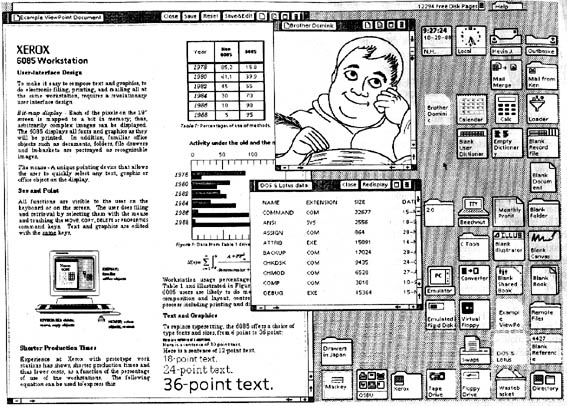
We could do the "near-impossible PhD-level stuff" in 1970s [1]. The Mother of All Demos from 1968 arguably had more capabilities than the web even today: https://www.youtube.com/watch?v=yJDv-zdhzMY

For some reason you took "it's difficult to do on the web" as an inviolable axiom of "it's difficult to do, period". The entirety of "impossible layout on the web" is about as complex as what WordStar could handle in mid-1990s

[1] This screenshot is from 1981: http://www.catb.org/~esr/writings/taouu/html/graphics/starsc... (from http://www.catb.org/~esr/writings/taouu/html/ch02s05.html)

> Nice article, the comments here are kind of amazing for a nominally technical audience. It is almost as if people have no idea how difficult automatic page layout and formatting is.

It's nuts that this is true after so many years of HTML and CSS.... software sucks any way you look at it.

Why we still can't get a bug-free OS is beyond me.