Hacker News new | ask | show | jobs
by TrackerFF 890 days ago
Norwegian here.

Nynorsk, or "New Norwegian", is really just used by a people on the south-western part of Norway. Other than that, it is merely a formality.

You'll have to take the obligatory classes in Jr. HS and HS, but that's it for most people.

A certain percentage of texts published by state agencies have to be in Nynorsk. The vast majority of Norwegians will never use it.

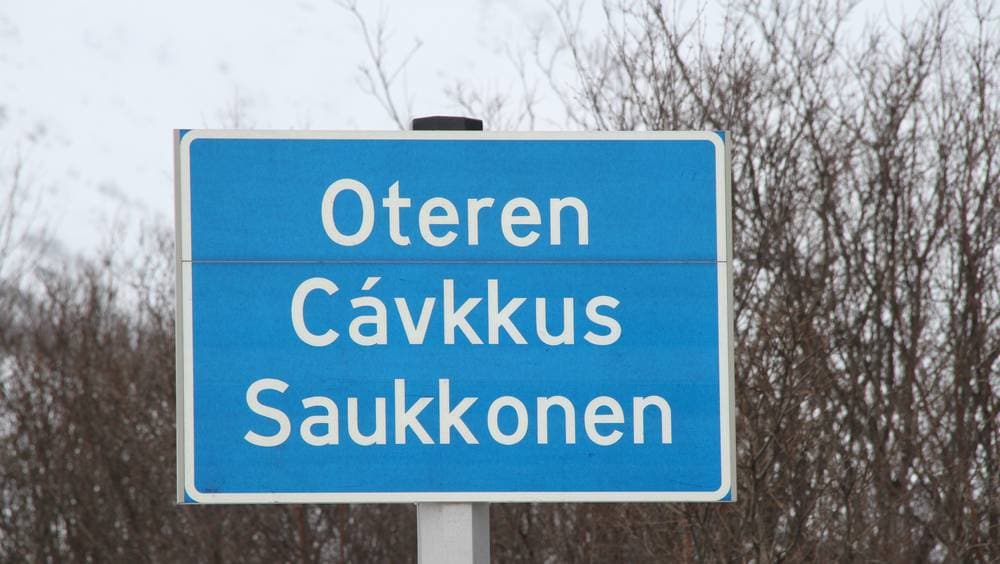
We also have two other languages used here - Sámi, which is the language of the Sámi people - the indigenous people in Norway, and Kven, which is used by Kven people. A Finnish dialect/language use by a small number of people in Northern Norway. That is why you can sometimes see three different signs when traveling up North (example: https://gfx.nrk.no/zDih8cbMibUfJJo4xiPqRQvkcy07eBhmSISFaS0Sc... )

EDIT: And if you travel far enough north-east, to Kirkenes, you will also find some Russian/Cyrillic signs

2 comments

The reason Nynorsk isn't so widespread is because it's been under attack, for the obvious reasons and in the obvious ways you'd expect a lower prestige/more rural language to be under attack. It used to be the norm in a lot of places you might not have expected, such as most of Trøndelag (Olav Duun, anyone?).

I think it's a bit of a double standard to praise the Sami language and lament the fact that most Sami stopped speaking it to their children a couple of generations ago, and yet cheer on the death of Nynorsk.

Small nitpick: Sámi people aren't more indigenous to Norway than just about anyone else, it's just that the various people tended to live in slightly different places. Norway's always been a place where people came from everywhere as soon as the ice started to retreat. Though of course the ancestors of people today, anyone and everyone, aren't really those who arrived 11k-12k years ago.

As for Nynorsk - it was more common in the past. My mother had Nynorsk as main writing language, and she's from Senja (in the north). That wasn't really a bad choice. It's not entirely similar to how she spoke (but parts of it was), but then again Bokmål is also vastly different from how she spoke. It's compromises and problems whatever you do. For myself, when I write (I write bokmål) it's just a different language. I write completely differently from how I speak, both for vocabulary and to a certain extent grammar.

Nynorsk is a perfectly fine written language. After I came over my hatred for it (which was 100% caused by my teacher in middle school) I've learned to appreciate it for what it is. Whatever you say about Bokmål it isn't exactly poetic.

Well, the Sami arrived at the scene quite some time before the Norse though.
As vintermann said - there's no evidence for any group arriving earlier than any others. We know that the "Norwegian" population in modern Norway are a mix of the original European population and the Yamnaya and others, we don't know exactly when that population overtook the earlier one (what's certain is that people who lived along certain parts of the coast 11k-12k years ago didn't have any Yamnaya connection, obviously). We don't really know much, except that the Sami languages haven't diverged enough from related languages elsewhere for them to have been there that long ago. The Sami came much later than the post-glacial original population. When the ancestors of modern Norwegian and Sami groups (and others) arrived we simply don't know for certain. If you look at the very oldest writings you'll find that there were a great many different groups of people in Norway, including in the far north-east, and there was trade. That lasted all the way up to the arrival of Christianity, after that this (if related, or just a coincidence) became more of a "take, don't trade" business.
Maybe opening a can of worms here, but no... actually they/we didn't.

19th century scholars were happy to declare that the Sami were the original inhabitants of the north, but that had more with the fact that they preferred seeing themselves as the superior, colonizing culture, than with archeological and linguistic evidence. Being a native was not cool at all. It was awkward for these scholars to become gradually aware of Sami's relationship to Hungarian and languages from further east, and even more such things as the -anger names core Sami areas Porsanger, Varanger, Malangen etc.

Angr is a proto-Nordic word that means bay. -Angr names are common all over Norway. We know that the word went out of use before 800 though, because around that time Icleand got settled, and there are no -angr names in Iceland.

There are even proto-Norse words preserved in Sami place names such as Máhkarávju - Avju is a proto-Nordic/proto-Germanic word for island. Máhkarávju is quite clearly related to the modern Norwegian name for the island, Magerøya, but that means they must have borrowed the name more than thousand years ago.

It may seem that the many proto-Norse borrowings in Sami may come from that in at least some parts of the country some of the time, it wasn't Norse culture and language that supplanted the Sami, but vice versa! Very awkward for scholars who would rather stake their nationalistic claims on manifest destiny than being first.

Now, Sami activists say any of this doesn't matter, because the Sami were a minority people with their own established culture and languages who were around when the formal borders of Norway were drawn up (as late as 1750 in Finnmark). And that's the ILO 169 definition.

This is completely true. It's also true that Sami activists were actively involved in writing that definition so that it would include them. I totally respect why they did that piece of lobbying work - the Sami certainly have legitimate interest to defend, and for that purpose being classed with native Americans is much more useful than to be seen as just another quarrelsome European linguistic minority like Welsh, Basque or Catalan people - or, say, people who use Nynorsk! (just see the hate they get in this very thread).

I didn't know that about the loan words, super interesting. I will read up on this topic. One thing I do know is that when adding genetic studies, it's also very complicated. The now Sami population at some point adopted a finno-ugric language. It wasn't only migration. (By the way the ILO 169 definition makes a lot of sense to me, because if you create a state entity, you now also have responsibilities towards the governed.)
There are hundreds of loanwords (e.g. a University of Oslo article "NAMN OG NEMNE 37 – 2020" (Nynorsk, except for the introduction)), though it's rather complicated. That particular article includes discussion about a word which was thought to be borrowed from proto-Norse, but probably isn't, though it seems to not be proto-Sami either. Well, enough of that, what I wanted to add was that (which is mentioned in the same article), re the claim: "The now Sami population at some point adopted a finno-ugric language. It wasn't only migration.". This seems to be about the hypothesis that what is now the Sami population were residents who originally spoke a different language and simply adopted proto-Sami from someone. That hypothesis is pretty much abandoned as extremely unlikely. Instead, the people who spoke proto-Sami moved in from elsewhere, as did the proto-north-west-Germanic speaking people.