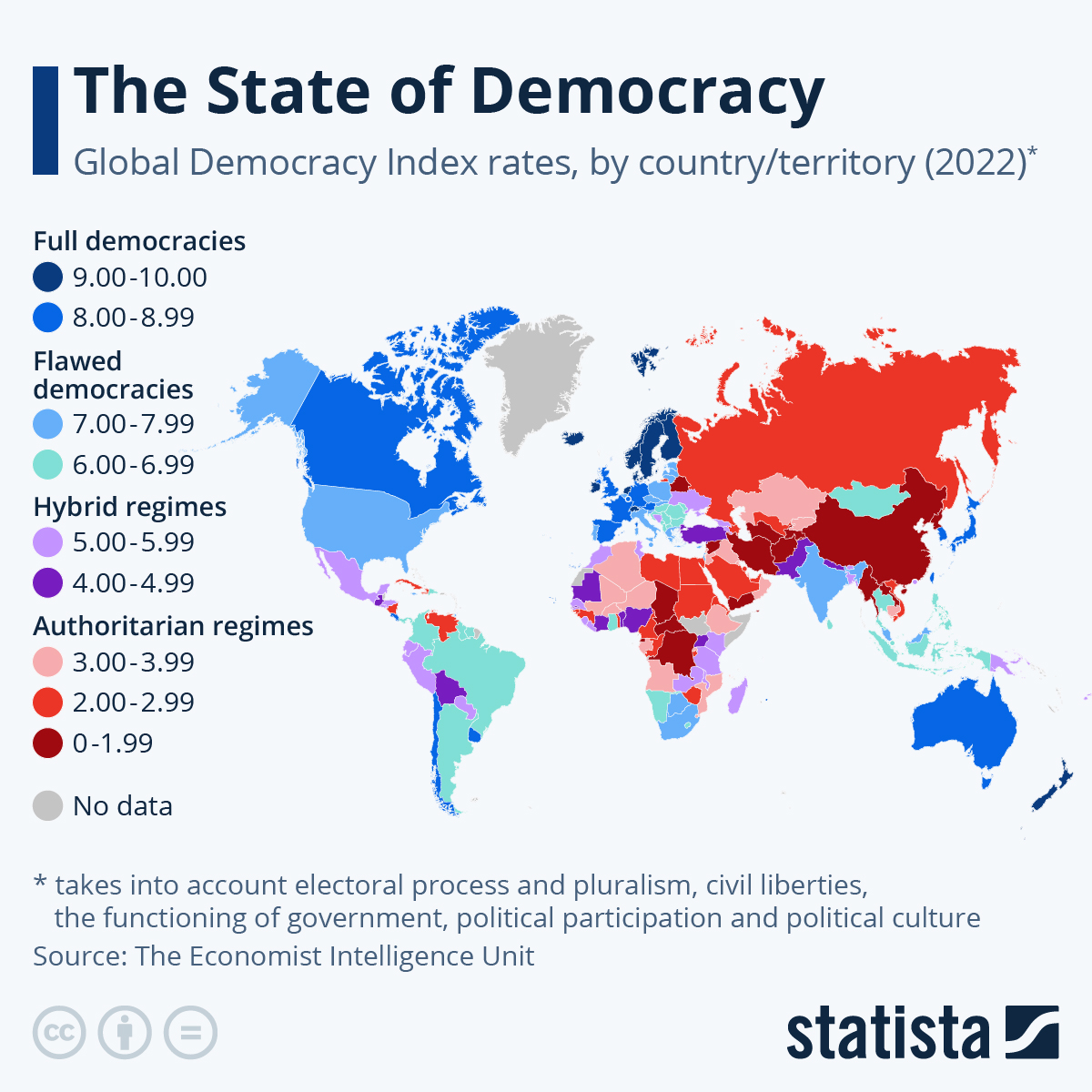
| "Dictatorships are bad" is not the game-over argument that it once was, maybe 20 years ago. The Chinese aren't just competing against the US for control of some islands and sea lanes here and there, they are putting their political system -- which is de facto a dictatorship selected periodically by a small ruling clique -- as an alternative model to democracy. One that can compete with and defeat democracy, in fact. And to be blunt, it's not clear to me that they are losing. We in the US have put ourselves at a disadvantage w/r/t China over and over again, relying ostensibly on the magical power of democracy to always win the day. As far as I can tell, it's straight-up magical thinking. If we do not take China seriously as a threat to democracy, not just internally to Asia but as an aspirational model of society and the basis for legitimate government, I think we risk losing. Why we would allow a propaganda outlet of what is effectively an enemy state to operate in the US, and why we would allow technology transfers and other advantageous trade arrangements, is mind boggling to me. Sure, the 'marketplace of ideas' sounds great on paper, but not when the other people don't believe in the same things. That sort of treatment -- access to the US market, both economically and that of ideas -- should be reserved for polities that at least have signed-on to the basic concepts that the US is built on. |

Then again, by the same token, why should the EU allow Meta to operate on its territory?