Hacker News new | ask | show | jobs
by MichaelZuo 1027 days ago
I wouldn't say they are intentionally spiteful, just that modern electronics are complex enough, especially highly integrated stuff like smartphones, that the OEM's suppliers would be unhappy if detailed schematics were released. Since they would not be willing to guarantee on the record that they are correct, nor would they want stuff impinging on actual trade secrets to be revealed.
4 comments

That wasn't less true for any other appliance that's ever existed, largely because of the availability of the schematics.

People have a right to know what they're buying. Companies are testing legal and cultural boundaries, silently changing functionality and usability by altering software or access to required services after sale.

It's not "too complex", it'd just be a hassle if people knew.

Speaking of access, if you own minecraft with a mojang account you need to migrate it to a Microsoft account by September 19th.

If you don't Microsoft, one of the wealthiest corporations in existence, will steal your copy of minecraft that you purchased elsewhere.

Sorry if this isn't on topic, I'm very salty over the migration.

Microsoft showing it's totalitarian real character again. So happy that Minetest[1] exists and gives that warm Open Source glow, just knowing that your using Microsoft free software and it works fine on Linux too.

[1] https://www.minetest.net/

> "It's not "too complex""

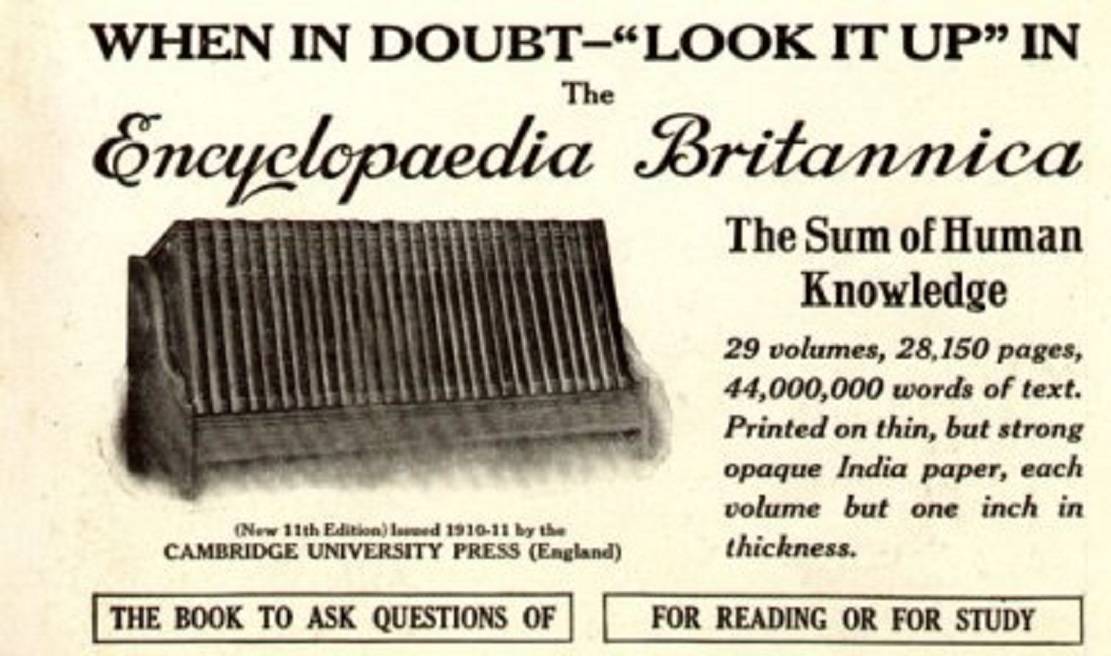
A valve radio had ~50 discrete components[1]. The first semiconductors had triple that number of components in a square millimeter in 1971[2], a modern CPU is in the tens or hundreds of millions of transistors per square millimetre. That's more components than the Encyclopedia Britannica had words in 29 volumes[3]. How are you going to 'know what you're buying' if you don't know anything about the bit which makes up most of the complexity and does most of the work? How are 'people' going to know anything about the CPU by getting lumbered a dozen bookshelves worth of schematics?

[1] One 1960s valve radio schematic found from Google: https://1.bp.blogspot.com/-Is9qxCCu2S8/VmZ44qHP1nI/AAAAAAABQ...

[2] https://en.wikipedia.org/wiki/Transistor_count#Transistor_co...

[3] https://patricktreardon.com/wp-content/uploads/2016/06/Encyc...

All this means is that you move one level up on what it is you are diagramming and replacing. I don't expect to replace the integrated circuit on my instant pot, but I do expect to be able to replace the control board or the thermal fuse. And instructions on how to do these things would be great! A simple diagram showing how the larger things are connected is all that's necessary. I don't need a map of all the traces, or a list of the surface mount components.
Not to say it wouldn't be useful to someone, somewhere, or save you 10 minutes, but I suspect if you are capable of replacing the control board and thermal fuse, willing and motivated to do so, have the equipment and workspace to do it, willing to spend almost as much on a replacement control board as you would on a new Instant Pot, and don't need a map of all traces or list of components, you can likely find the fuse yourself without much bother.

But that's still a different argument to the one I was responding to which was "People have a right to know what they're buying" - and the claim that products are "not too complex" for that. At the point we turn it to a diagram which says "fuse connects to System-on-Chip blob ground pin 0 and data pin 7. Button board connects to blob ground pin 0 data pin 8" are we any closer to "knowing what we're buying" in a meaningful way?

Yes the practical aspect of schematics logistics would prevent this even if everything else was in an ideal world.

Even a fairly old ARM based CPU such as in the Pi 4, has billions of transistors. And miles of wiring.

Trade secrets are not secret once in the wild, and are immediately invalidated as a result.

Schematics for things sold, are never trade secrets.

This is false, there are thousands of examples of products 'in the wild' containing trade secrets that are difficult enough to figure out by reverse engineering that they are effectively considered such, even by industry experts.

e.g. Apple's fixed glass trackpads

Also by definition they cannot be 'invalidated' since trade secrets are never 'validated' in the first place, unlike patents, copyrights, or trademarks.

This is false, there are thousands of examples of products 'in the wild' containing trade secrets that are difficult enough to figure out by reverse engineering that they are effectively considered such, even by industry experts.

That's not how trade secrets work. If you give me a device, and I figure out how that part of it goes together, the trade secret dies. There is no protection except an attempt at secrecy, and once someone is retail sold hardware, they may do anything they choose with it, thus the idea of trying to maintain a secret, when it is in someone else's hands, is silly.

Also by definition they cannot be 'invalidated' since trade secrets are never 'validated' in the first place, unlike patents, copyrights, or trademarks.

Trade secrets are valid, until they no longer are. Copyright (in many jurisdictions) require no validation either, they're merely valid upon creation.

There is no validator for the 'validity' of trade secrets, it's simply nonsense to say that they can be 'validated' or 'invalidated'.

You can't dodge this point, which you appear to be doing as I never claimed copyright law is uniform in all jurisdictions worldwide, nor was that implied.

If you don't understand how these things work, it's better to not make bizarre claims.

I never claimed copyright law is uniform in all jurisdictions worldwide, nor was that implied.

What on earth are you even talking about?

Regardless, you can invalidate anything. EG, one can make a claim "Hey, that manufacturing process is my trade secret!", and that claim can most certainly be invalided. It can also be validated.

> What on earth are you even talking about?

This:

> Trade secrets are valid, until they no longer are. Copyright (in many jurisdictions) require no validation either, they're merely valid upon creation.

Some types of copyright requires approval via some organized entity in many jurisdictions, that is easily discoverable via a quick Google search by any passing reader. The prior comment appears like a deflection from the main point, since the fact that some jurisdictions operate differently is simply irrelevant as I never claimed otherwise, nor was that implied anywhere in the preceding comment chain.

Like I said you can't avoid the fact that 'invalidating' trade secrets makes no sense. They can be revealed, they can become so widely known that the label no longer applies, and so on.

But 'validity' whether legal, logical, etc., can not apply to them.

And in any case there are many real world products which so far have not been reverse engineered to a sufficient degree to recreate, such as the fixed glass trackpad previously mentioned. If you can prove otherwise then I would welcome a link.

Both can be true. It may be a happy side effect that you can’t easily repair your device and it’s hard to give schematics
Fuck their trade secrets.