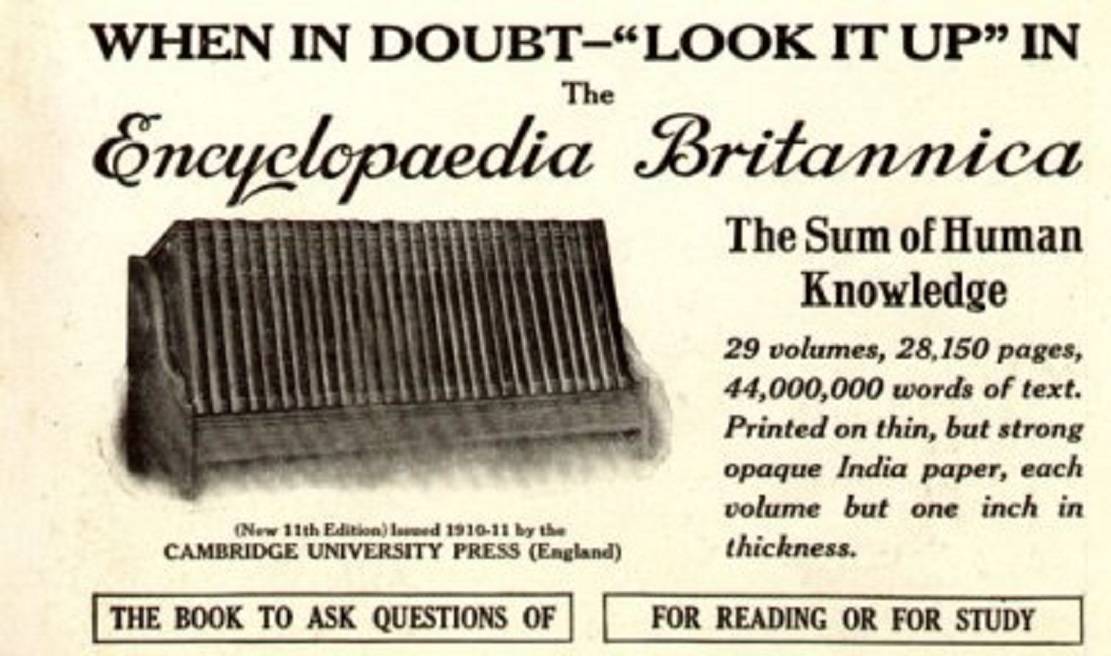
A valve radio had ~50 discrete components[1]. The first semiconductors had triple that number of components in a square millimeter in 1971[2], a modern CPU is in the tens or hundreds of millions of transistors per square millimetre. That's more components than the Encyclopedia Britannica had words in 29 volumes[3]. How are you going to 'know what you're buying' if you don't know anything about the bit which makes up most of the complexity and does most of the work? How are 'people' going to know anything about the CPU by getting lumbered a dozen bookshelves worth of schematics?
All this means is that you move one level up on what it is you are diagramming and replacing. I don't expect to replace the integrated circuit on my instant pot, but I do expect to be able to replace the control board or the thermal fuse. And instructions on how to do these things would be great! A simple diagram showing how the larger things are connected is all that's necessary. I don't need a map of all the traces, or a list of the surface mount components.
Not to say it wouldn't be useful to someone, somewhere, or save you 10 minutes, but I suspect if you are capable of replacing the control board and thermal fuse, willing and motivated to do so, have the equipment and workspace to do it, willing to spend almost as much on a replacement control board as you would on a new Instant Pot, and don't need a map of all traces or list of components, you can likely find the fuse yourself without much bother.
But that's still a different argument to the one I was responding to which was "People have a right to know what they're buying" - and the claim that products are "not too complex" for that. At the point we turn it to a diagram which says "fuse connects to System-on-Chip blob ground pin 0 and data pin 7. Button board connects to blob ground pin 0 data pin 8" are we any closer to "knowing what we're buying" in a meaningful way?