|
|
|
|
|
|
by smaddox
1026 days ago
|
|
|
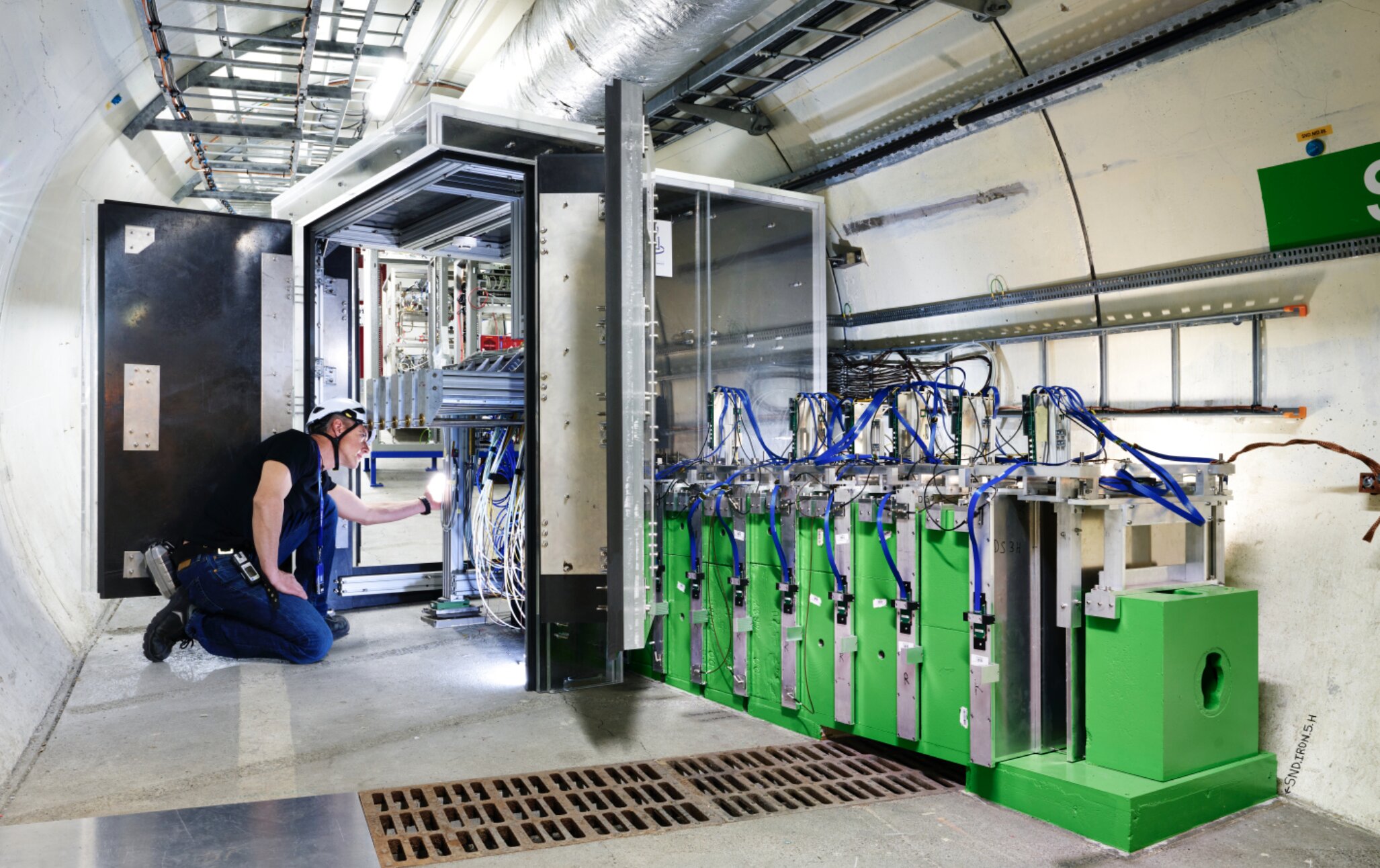
This appears to be the reason: > Until now no neutrino produced at a particle collider has ever been directly detected. Colliders
copiously produce both neutrinos and anti-neutrinos of all flavors, and they do so in a range of
very high energies where neutrino interactions have not yet been observed. Nevertheless, collider
neutrinos have escaped detection, because they interact extremely weakly, and the highest energy
neutrinos, which have the largest probability of interacting, are predominantly produced in the
forward region, parallel to the beam line. In 2021, the FASER collaboration identified the
first collider neutrino candidates 13 using a 29 kg pilot detector, highlighting the potential of
discovering collider neutrinos in LHC collisions. |
|
|
Is this considered different from e.g. the OPERA experiment because in that they dump the proton beam from the SPS into a target? So what you're observing here are neutrinos from the actual beam crossing? And is this interesting because you could conceivably start to correlate the actual collision that creates the neutrino with its eventual detection?