|
|
|
|
|
|
by gjm11
1118 days ago
|
|
|
I don't think "generally being right" is the same thing as "literally never getting anything wrong". Not every specific claim in "An Inconvenient Truth" was correct. That doesn't tell us much about whether Al Gore was "generally right" about climate change. His opponents at the time were mostly claiming that it either wasn't happening at all, or wasn't largely the result of human activities. What do you think is the current credibility of those claims? I don't quite see how "everything will be solar in 30 years" is a prediction of global doom, by the way. If Nader said that and it's false, doesn't that mean things are worse than Nader thought? |
|
|
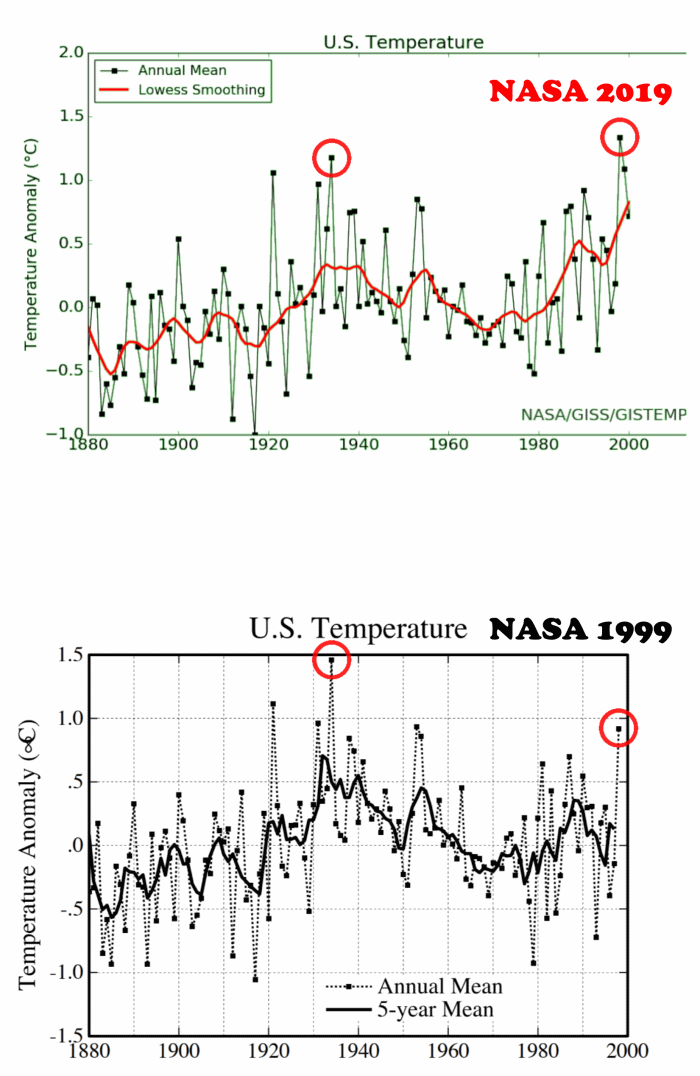
This thread is really a perfect demonstration of my point. Our society is so in thrall to self-proclaimed intellectuals that you can literally make a movie presenting falsifiable claims with 100% confidence, people can say at the time "this is absurd and will not happen", you can spend years attacking those critics, it can then not happen and still you will have an army of defenders who dodge behind weasel-words like "generally right".
Of course the usual trick is to express only 95% confidence. Then when it doesn't happen you say, well, I never said for sure it would, just that it seemed likely at the time.
See? It's a winning playbook. Why would anyone not deploy it?
> His opponents at the time were mostly claiming that it either wasn't happening at all, or wasn't largely the result of human activities. What do you think is the current credibility of those claims?
Pretty high, having looked at the evidence. The usual rebuttal is to express disgust and displeasure that anyone might decide these claims via any method other than of counting "smart people". But those "smart people" are who Al Gore was listening to when he made that claim about Kilimanjaro, so they can't be that smart can they?