Hacker News new | ask | show | jobs
by galgot 1403 days ago
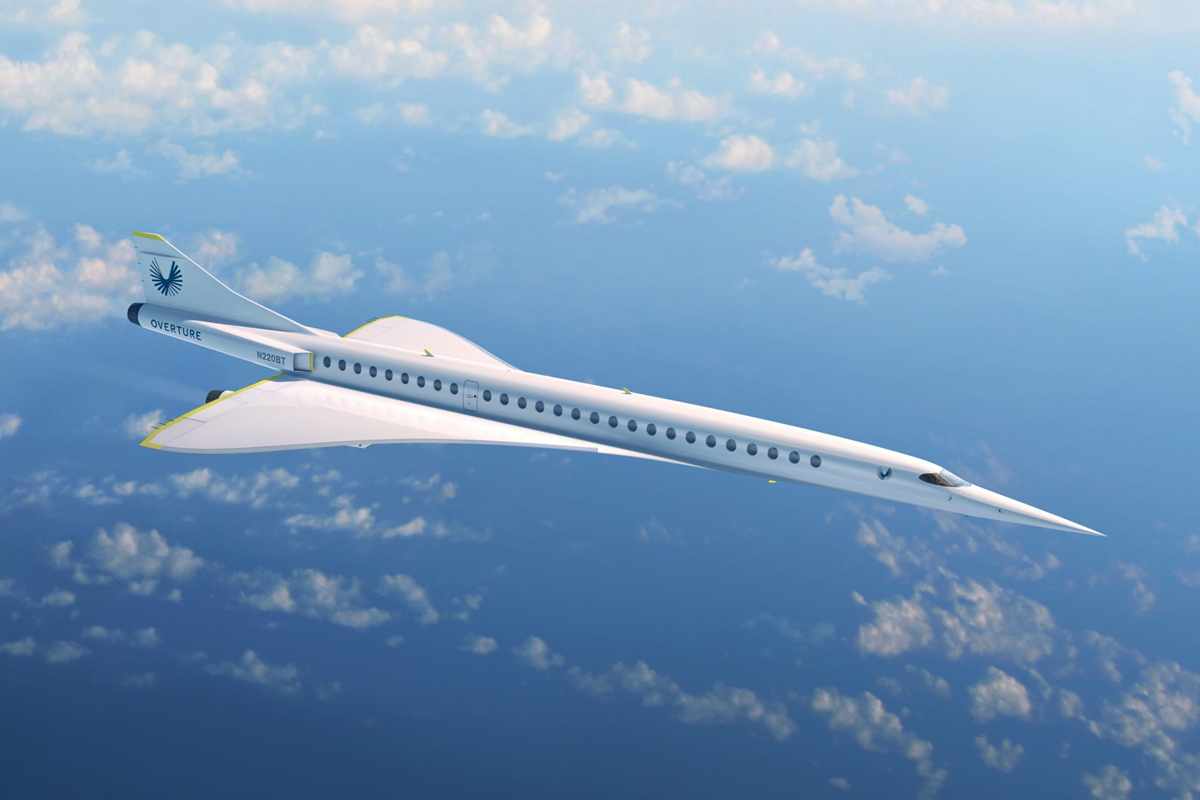
So they went from scaled down Concorde configuration :

https://www.airway.com.br/wp-content/uploads/2020/10/Boom_Ov...

to a very scaled down Boeing 2707-300 configuration :

https://en.wikipedia.org/wiki/Boeing_2707

(that tiny fin tho...). While reducing cruise speed to 1.7 mach. I see no visible changes to deal with the sonic booms problem. So operation would be like Concorde I suppose, subsonic (or hi-subsonic) over land and Supersonic over ocean only. Unless the super-rich manage the regulation to change.

EDIT : ah yes :) "2x FASTER OVER WATER" and "20% FASTER OVER LAND"...

Also : Maybe good to remember that 18 airlines had once placed orders for Concorde, with only the 2 national carriers flying it in service eventually. And that The Boeing 2707 was ordered by 27 airlines before the program being canceled…

2 comments

And they still have not solved the problem that ultimately sunk the Concorde. Fuel costs made it unprofitable to operate whenever the price of oil went up.

The small niche of customers willing to pay a significant premium in order to save some travel hours is not big enough to sustain an entire industry of specialized mechanics, parts suppliers, pilots, etc... Basically you need a critical mass of people riding these aircraft every year before the relatively high fixed costs eat you alive, and it's very hard to get a lot of people to buy into a high priced luxury service.

They seem to have dramatically reduced fuel consumption, but fuel wasn't the issue for the concord the limited number of viable routes where.

Going from the Concrods 3550nm range to 4250nm should help with that as it opens up several new routes and longer routes see a more significant drop in travel times.

Still there are not much other routes you can go supersonic in one flight but trans-atlantic, which Concorde could do. Trans-Pacific which could have been the big money making route, like LAX to Tokyo, you need to be able to do 4737 nm... which makes the 4250 nm just short to make it. They would face the same problem the Boeing 2707 team had (or even Lockheed with the L-2000 project), no matter how they tried, too short range for trans-pacific in one Hop. So they would have had to make a stop to Hawaï, but then what's the point if you can take first class in a B777 and make the journey shorter in one subsonic flight. All other routes would be over land, and there again you can't go supersonic (for time being).
Seattle to Tokyo is only 4144nm so that might be a viable route especially for routes that would have already had a layover in LAX and/or Tokyo.
In part that will depend upon its ETOPS capabilities, i.e. how far it can be trusted to fly after an engine fails. The Great Circle mapper is fun for playing "what if" games with potential routes: e.g. here's the direct Seattle-Tokyo routing with dark shading showing parts where flying for 60 mins at 410 knots wouldn't reach an airport. So if that was the ETOPS performance for a Boom aircraft (and I've no idea; I just picked a B777 as an example) then the route would have pass a little closer to Alaska and Sakhalin to keep the possibility of a safe diversion at all times, and that in turn might make the route too long.

http://www.gcmap.com/mapui?P=KSEA-RJAA&MS=wls&DU=mi&E=60&EV=...

For those who don't know, ETOPS = "Engines Turn or Passengers Swim"

j/k, it stands for "Extended Range Twin Operations"

https://www.caa.co.uk/commercial-industry/aircraft/operation...

Quad-engine jets are automatically ETOPS-180

https://www.boeing.com/commercial/aeromagazine/articles/qtr_...

Going to North America via Dubai or Qatar is a big route industry.
Fuel prices were absolutely an issue for Concorde. BA struggled immensely with the Arab oil embargo and the per-seat cost for the Concorde shot up into the stratosphere and ticket sales collapsed.
We can easily model this in a sheet. Like this one: https://docs.google.com/spreadsheets/d/1JhvGd6iVWNweMM-PYk3z...

At todays Jet 1 A US fuel price of $3.07 per gallon it would cost $108k to fill the Concord. Which holds 120 passengers. That comes out to a cost of $900 per person passenger on a full fight.

If the cost of fuel were double like a few months ago then that cost would be $1,800 per flight.

Compared to a Boeing 737 which has a fuel cost of ~24k at max capacity of 7,878 gallons at todays prices. A passenger limit of 177 and a fuel cost as low as $136.64 per passenger on a full fight.

Meanwhile a one way ticket cost US$975 in 1977 or inflation adjusted about 4,700$ today. Which increased faster than inflation so by mid 90’s your talking around 6,000$ which is something like 12,000$ today.

Thus fuel while expensive wasn’t a deal killer over most of it’s history as long as they could keep most seats filled.

The "as long as they could keep most seats filled" was a deal killer though.

There was enough demand for one return flight a day carrying a small proportion of the overall passengers on the immensely-popular with wealthy people JFK-LHR and JFK-CDG routes. That wasn't enough to utilise the 14 production aircraft properly, never mind enough demand for it to have been viable as an airframe programme ...

The Arab Oil Embargo was 1973-1974 and the Concord didn't go into commercial service until 1976. While it sounds like the oil crisis had an effect on airlines placing Concord orders it didn't overlap with the commercial service being offered to the public. See:

https://en.wikipedia.org/wiki/Concorde

The oil embargo hit the entire industry hard, but Concorde continued operation into 2003. Over time as other aircraft became more efficient the efficiency gap grew much larger but it was still profitable up to Air France Flight 4590.
Concorde survived on government subsidies, especially with the R&D costs, but also the maintenance chain. It was a point of national pride for the UK and France, but also a money pit for both countries.
> Concorde survived on government subsidies, especially with the R&D costs, but also the maintenance chain.

Yes, and this was mostly necessary because of the small unit counts and small number of routes, not because of fuel costs (though the latter certainly did not help.

Both could be significantly better with Boom: more routes, and lower fuel costs.

From what I've read, the Concordes had preferential landing treatment on westbound flights into JFK and Dulles, due to their shortage of fuel, and the controllers would often allow them to land before other planes that had been queuing for a while. (They used a separate controller radio frequency apparently for the initial request, and then switched to using the main frequency).
I wonder how much larger the population of people is today (vs Concorde's era) that are willing to pay for these supersonic ticket prices. 3x? 10x?
This could be a very important enabler. As you can see in other "luxus" industries, the amount of affluent people on this planet has ballooned. I don't know any numbers, but I got the impression that the private airplane industry had a strong growth in recent years. And flying supersonic with an airline for sure is way cheaper than any private flight.
Will that also be the case if they actually have to pay for the carbon they emit in the process?

Currently airline passengers don’t have to pay for their carbon emissions, but I doubt that’s gonna last for much longer (we are in an emergency after all). And I’ve seen elsewhere in this thread that the emissions are likely gonna be somewhere between 5x and 10x of normal sub-sonic flights. The price of this extra carbon emission will probably be something that even affluent passengers will want to skip.

Good question. Currently fuel for international flights isn't taxed at all, as far as I know. Which explains the popularity of flying. Fuel for cars costs several times more, at least here in Europe.

Starting to tax airplane fuel would be an important step towards reducing the CO2 output. Possibly that would trigger a switch to synthetic and carbon neutral fuels.

It’s less than 2% of global CO2 emissions. If your tax scheme shaved off 15% of demand, you’d be saving 0.3% of global CO2 emissions—equivalent to a few months of global emissions growth.
No, of course not. This is for us, the plebe.
It’s like 2–5 million people with more than $10 mm. Regionally correlates with real estate and equities.
I’m not sure that it would even be larger now than before.

Subsonic flight has become much more efficient, cheaper and when paying for higher class, more comfortable. This is one of the reasons often mentioned for the economic demise of the concorde. The audience willing to pay $6000 on a concorde ticket, could now spend $4000 on first class subsonic with a seat that fully reclines into a bed. They can fly a little longer at night but sleep the whole journey.

Wendover did a good economic analysis of the concorde: https://youtu.be/n1QEj09Pe6k

The number of people who will pay--or can make their companies pay--$500+/hour for a handful of saved hours on a flight which mostly won't go into incremental productive work is miniscule. Most business travelers aren't international lawyers or consultants flying across the Atlantic for a quick get together. But pay a bit more to fly a bit more comfortably to be more rested/as a perk and maybe even save on a hotel room night? Quite a few people, even if not the typical traveler.
I wonder how much larger the population of people is today (vs Concorde's era) that are willing to pay for these supersonic ticket prices. 3x? 10x?

At least.

Even if you think price is a barrier, think about how many more millionaires and billionaires there are in America and Europe today than there were just 20 years ago.

Tack on our society's rediscovered fascination with conspicuous consumption ("influencers"), and I don't think filling seats will be the problem today that it once was.

Sounds like a 1970's mindset that is wildly underestimating how much air travel has changed and how many more hundreds of millions of people can now afford semi-frequent air travel, with hundreds millions more in the pipeline.
Most of whom have demonstrated, time and time again, that price is the primary factor by which they decide who to fly with.
Business travel, which continues to explode between the West and Asia, is far less price sensitive and far more time sensitive. And of course the number of wealthy air travelers continues to increase rapidly as well.

Plus, it's just f*cking exhausting to fly 10-18 hours, so people may well be willing to spend more on those extra-long-haul flights just to spare their mind and body. I don't believe any commercial supersonic jets were even able to fly trans-Pacific in the past, and ties between those regions were a tiny fraction of what they are today anyway. Faster trans-Pacific transport simply seems inevitable.

Agreed - if it could stroll right across the Pacific it would be compelling. But unfortunately Boom needs to stretch its legs a further 25% to manage LAX - China, or about 10% for Tokyo. An A350 takes about 9 hours to fly as far as Boom's range, which is a longish but not utterly brutal flight.
Didn't the founder say he envisions supersonic tickets to be $100? I can't even buy any subsonic tix for less than $120.
I can envision teleportation.
This is hilarious, if true. I flew on a shitty subsonic flight from the midwest to Utah earlier this year and it was $450/ticket when I bought them 6 months out.
I flew on a shitty subsonic flight from the midwest to Utah earlier this year and it was $450/ticket when I bought them 6 months out.

I flew 2,000 miles between the Midwest and the west coast last week. $109 each way, with checked baggage, booked three weeks out.

I like Utah, but let's not pretend that your flight (or mine) is representative of anything.

Still, you have to admit that 100 USD is in no touch with reality (if it was actually said).

We are talking about a plane that will burn much more fuel (which they claim will be carbon neutral) and fly a fraction of the passengers per trip, on routes that are already very competitive. 100 USD will only be a heavily subsidized fare at best. In reality the cost per route will much more likely be far higher.

Here in south-eastern Canada it used to cost $800 to fly 180km to fly from my town to Halifax. Now I see it's only around $300 to $600.
The other big problem here is that it would only be useful for trans-oceanic trips (i.e., international). This is American Airlines.

Who in their right mind wants to spend top dollar to fly internationally on an American airline, worst of all AA, one of the two worst airlines on the planet?

Anyone with some money who wants a nice international flight is going to take one of the Asian or Middle Eastern airlines, not one of the shitty American-run airlines. The level of service is so far superior it's not even funny. AA is infamous for their horrible service in First Class.

Isn’t that the point of the purchase? A differentiator for this market?
Maybe, but I don't see how it could work. It's like Walmart trying to sell luxury products to billionaires. The regular customers won't afford these luxury products, and the billionaires sure as hell aren't going to shop at Walmart. AA is the Walmart of airlines (or worse); anyone with good taste isn't going to buy a ticket from them for any price, no matter how fast the plane is. These planes aren't going to be that much faster; why bother with shitty AA service when you can get a ticket on one of the Asian airlines or Emirates instead and enjoy high-quality service?
>>> Miami to London in just under five hours

I know I would pay a premium for this experience. Simply because it fits into my imagined jet set lifestyle phenomenally well. Maybe once every two years for a special occasion or treat ;)

I also think the economically limiting term is still the turbine blades. Lifetimes for commercial service turbines run 100k+ hours. Supersonic is maybe 1/10 that. And have higher rates of oxidation, cavitation, catastrophic fatigue, etc. We need a new Alphafold! For phase stability of alloys exhibiting high strain resistance at high temps and fast cycles...

We now live in an era of conspicuous consumption and wealth concentration. Maybe the right time for overly expensive air travel
Over water isn't too bad a problem as many major routes (e.g. US - Europe, US - Asia, US-Australia, Asia - Australia) are over long stretches of ocean.

But will the range be there? Concorde was severely range limited, which somewhat defeats the purpose of faster travel (if it only works on medium length routes).

Cutting a 14hr SYD-SFO flight down to 8.5hrs is just more impactful than cutting a 7h LHR-JFK flight down to 4.2 (when taking into consideration significant time at the airfields for taxi, boarding, security checks etc)

Concorde didn't have the range for long haul and once you need to land to refuel you lose all time savings.