| This comment section itself clearly shows how crazy dependency and environment management is in Python. In this thread alone, we've received instructions to... - poetry - "Just pin the dependencies and use Docker" - pip freeze - Vendoring in dependency code - pipreqs - virtualenv This is simply a mess and it's handled much better in other languages. I manage a small agency team and there are some weeks where I feel like we need a full-time devops person to just help resolve environment issues with Python projects around the team. |
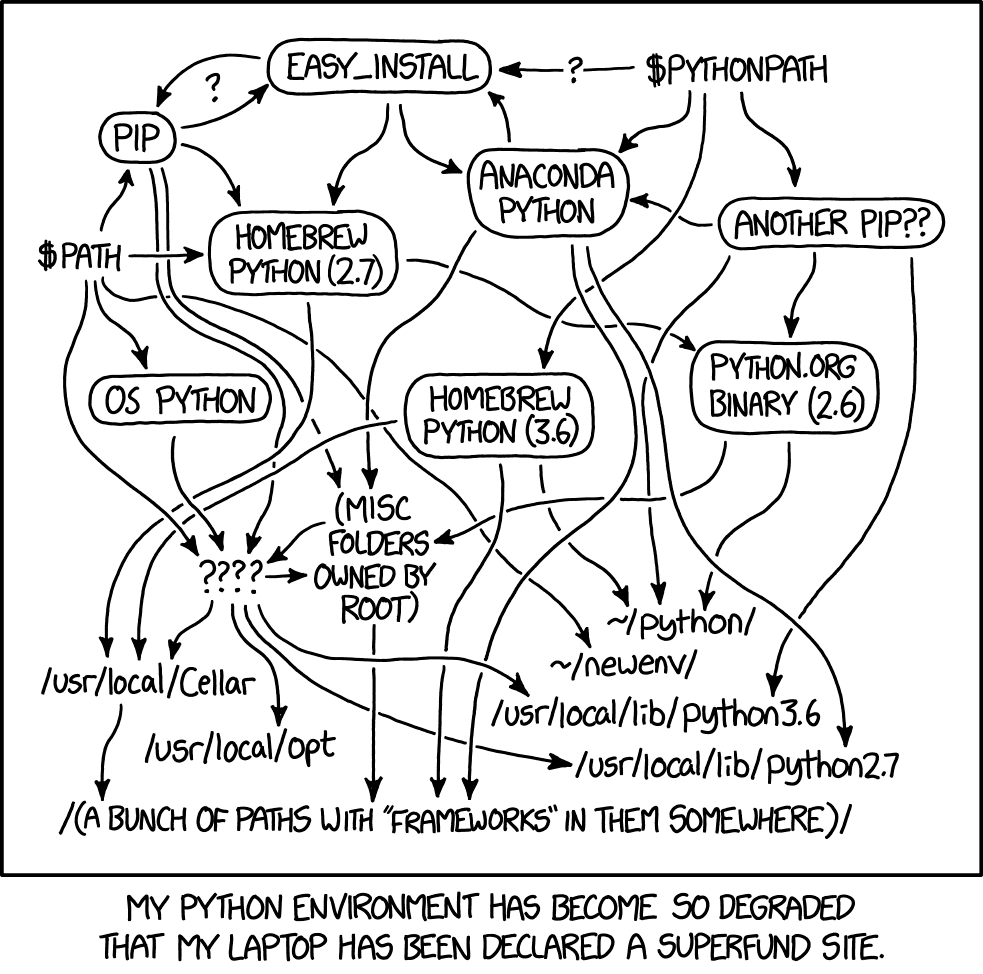
What you described are multiple tools that also target different areas:
> - poetry
from what you listed this seems like the only tool that actually takes care of dependency management
> - "Just pin the dependencies and use Docker"
this is standard fallback for all languages when people are lazy and don't want to figure out how to handle the dependencies
> - pip freeze
all this does it just lists currently installed packages in a form that can be automatically read by pip
> - Vendoring in dependency code
this again is just a way that applies to all languages, and it is still necessary even if there's a robust dependency management as there are some cases where bundling everything together is preferred
> - pipreqs
this is just a tool that scans your code and tells you what dependencies you are using. You are really lost if you need a tool to tell you what packages is your application is using, but I suppose it can be useful for one offs if you inherit some python code that wasn't using any dependence management.
> - virtualenv
this is just a method to have dependencies installed locally in project directory instead per system. This was created especially for development (although it can be used for deployment as well) as people started working on multiple services with different dependencies. It's now included in python so it's more like a feature of the language.