All I can say as a 47 year old who lived most of his life in Germany is that the summers when I was a teen, so 30 years ago were considered hot when they were over 25°C. This year in May we had 32°C.
Deny or criticize all you want cherries blossoming on Christmas in Berlin is NOT normal. And neither is the absence of snow in winter and mild temperatures.
Those graphs don't impress me at all, because I remember what it was like and see what it's like now.
I'm in Croatia right now and remember where the sea level was back when I was little and also see where it's at now.
If you lived on this planet for a while and are not ignorant to your surroundings you see the change, you feel it.
Cold places are hot now and warm places are hotter for longer periods of time.
I wrote it before and I'll repeat myself, if you look at what changed in the last 100 years or thereabout, it's mass burning of fossil fuels, the cars, fabrics, planes etc. Yes, I know don't jump to conclusions, scientific method and all.
The not ignorant person just being observant and applying some common sense can see it bright as day.
I do think the global temperature is rising, but you can't say things like 'what I considered hot as a kid is different than what I now consider hot' and be taking seriously scientifically. Its an interesting anecdotal point but that's about it. I'm sure the data for where you grew up as a kid is available for the last 50 years, so get the data and give a real numbers to numbers comparison.
I have actually done this in terms of snow. I said to myself, it seems like there were bigger snow storms (in termps of inches of snow) when I was a kid. so I got the data to verify it, and yes, not only were the snow as a kid much higher, they were also historical high - a couple record snowfalls when I was a kid. The point of this story isn't meant to tie anything to climate change, but rather be more curious and get data to back up your thoughts.
That's extremely context specific. You can imagine something like in social sciences where people have quite finely tuned but subjective personal awareness of human behavior and some data makes a coarse but objective measurement of it. It's hard for the data to be as "accurate" as the personal experience, so it can easily be wrong. But "it was colder when I was a kid" vs temperature measurements is the other way around.
I mean, we're looking at an example where the anecdotes and data are fairly in agreement. But the point is that when you encounter a metric that's at odds with recurrent anecdotes, you should strongly consider that you aren't measuring the right thing. You can get incredibly accurate measurements of a doorframe's height but if people keep telling you they're having trouble getting packages in, it might just be that they don't fit the width.
Local anecdotes are great if you are old enough to have seen changes, because they are simple and relatable examples.
In Christchurch, New Zealand, a notable example for me is that the snow line has receded since I was a child. Low lying ski fields are struggling to stay open. My parents have noticed less snow on the ground during winter at their rural place (they have been there ~30 years).
> remember where the sea level was back when I was little and also see where it's at now
I am a bit skeptical of that claim! Then again, sea level changes would be difficult to notice in Christchurch because we had fast uplift locally: “these events caused ground motion at the Lyttelton TG [tide gauge], the largest single vertical [earthquake] displacement was >50 mm (cumulative displacement ~110 mm)”[1] and slow uplift probably has occurred too “slow slip events has uplifted sites by up to 0.8 mm/year on average in Wellington and Dunedin”. 150km away the coastline uplifted 2 metres (2 yards)[2], boy was that stinky.
I think this quote is interesting: “At interannual and decadal time scales TG records typically show variations in annual means on the order of 5–10 cm and a possible 60-year oscillation of up to 3 cm. Although to estimate the long-term trend in relative sea level (RSL), five to six decades of reliable and essentially complete TG records are typically required, techniques exist that can use sparse data sets. A TG measures the RSL trend or the change in sea level relative to the adjacent land. Independent estimates of the vertical land motion (VLM) are required to estimate the absolute sea level (ASL). Such motion may occur due to tectonic movements, ice mass loading, glacial isostatic adjustment (GIA), or local site instabilities due to, for example, compaction, sedimentation, or water, oil, or gas extraction (Carter et al., ). The stability of a TG site is a critical issue that requires verification (Bevis et al., ) and needs to be considered at both local and regional scales. Historically, many TGs are located in shipping ports where harbor infrastructure is often developed on reclaimed or modified land.”[1].
I told my kids yesterday while cleaning up when we found their sled that they are probably the last generation of Dutch kids to have used one, they don't have skates because there never is a winter long enough to make the ice safe (when I was a kid you could skate on IJsselmeer, and the ice would be 20 cm thick at the end of the winter).
yes, in my hometown there is no more snow in winter while 40 years ago i was happily cross-country skiing there. On the positive side - the peaches, apricots, cherries, etc. - the stuff of my childhood dreams sold back then only at farmers markets at astronomical prices by the traders from South - is now easily growing there in people's backyards/gardens. Though not oranges/mandarins nor watermelons yet - seems needing a bit more warming which looks to be just a matter of [pretty short] time.
In Christchurch we are also getting a lot more mosquitoes than I recall as a child*, which you may get with a warmer climate, so it definitely isn’t all wins.
* Lots of possible reasons for apparently more mosquitoes: perhaps they are evolving to match the environment here?
That reminds me of this article I've read about the River Thames Frost Fairs... The last of which was done in 1814, with people preparing for one in 1870s or so but was cancelled.
The sea level has "dropped" where I grew up because they upgraded the beach. Are you sure you're not seeing the effects of artificial changes, natural erosion, or earthquakes? Those can easily completely dominate any climate change induced sea level rise in one area. Or perhaps when you went to the sea as a kid or adult, it was in some way connected with fishing or other activities that people timed to match the tides, which also completely dominate any lifelong changes in sea level.
This comment reminded me of when Tuvalu's foreign minister stood in the water while giving a speech, to give the impression that the land was lost due to rising sea levels caused by climate change, but then it turned out it was really just due to erosion.
I'm a little bit younger than OP (~10 years) - I grew up on an island in Croatia and I noticed no difference in beaches that I visited when I was a kid. The shallow rock peers are all in the same place, beaches are the same size.
Only difference I see is a slew of tourists packing every cm2 where there were far fewer while I was growing up, a lot of them getting off on how they are participating in "sustainable tourism" because their hotel has solar panels or whatever bullshit is trendy these days.
Not everywhere has the same beaches. Do a GIS for, say, Mont-Saint-Michel in France at low tide, and you'll see the water receeds miles. It'll be more apparent in these locations; a 10cm difference might mean hundreds of feet less beach at low tide.
This is why "climate change" is a better term than "global warming."
Weather is really really complicated. More greenhouse gases in the air results in more of the sun's energy staying in our atmosphere as heat, but how that affects the ground-level temperature in a specific city can be very, very complicated. Some areas might even become significantly cooler as climate change affects the weather. Plus, many of the worst effects of rising greenhouse gas levels (droughts, hurricanes, wildfires, flooding, algal blooms) are not a direct result of rising temperatures.
A climate change indicator with fewer confounding factors than "ASOS temperatures for pseudo-random airports" is ocean acidity level [1] [2] (CO2 gets dissolved in our oceans and changes the pH, affecting marine life). Another one is sea level [3].
> This is why "climate change" is a better term than "global warming."
Indeed. The way I currently tend to think about the difference in my head is this: human activity has caused a large amount of extra energy to remain inside the atmosphere. Some of it is in the atmosphere itself, some in the oceans and lakes, some in ice, some in land. You can't trivially predict what a lot of extra energy will do when it ends up in such different storage "media". The obvious conclusion is "global warming", but there's no inherent reason for that to be correct. The extra energy could, for example, all go it into generating humungous sized and crazy fast storm systems, which would result in little change in temperature but very noticeable changes in weather and safety.
Of course, it is unlikely that all the extra energy will be directed into a single phenomena, but the example is enough for me to remember that it's really non-trivial to understand what it could do, let alone predict what it will do.
I enjoyed this and respect citizens who feel motivated enough to look at underlying data..
This type of discourse ("here is what I did and here is what I saw") leaves room to comment and make progress. People can discuss measurement methods, statistical analysis, and other objective things about a tightly scoped project like this.
This is very clear reading the comments in the substack. A comment exchange that reminded me of my days in grad school:
commenter:
"What I think can be taken conclusively from this survey is that temperature is quite regionally variable, and there are a variety of different trends over time in these locations. Do you feel that there is some more significant conclusion that can be drawn from this?"
author:
"I am hesitant to draw any conclusions. I am more in a state of examining the data itself and asking questions."
You can't really draw climate change conclusions from the input data though, that's the fallacy that breaks this whole article at the foundation.
Let me rephrase that to make it even more clear: if climate change to date would be such that it would show up in datasets like these then we would not have needed any climate research to begin with. We're talking about 1 degree average change over a 60 year period across the globe. So that includes the oceans, the poles and a ton of other places where you won't find airports (or thermometers, for that matter).
"I don't have the data or tools at my disposal to do this properly" Should not prevent you from trying, sharing, and learning. However, it definitely should prevent you from trying to change other people's minds.
More complete datasets, a better understanding of how that data was collected and how to interpret it, solid statistical foundations, etc. etc.
People who go out to change minds should be versed in all this and more. But I don't believe they are required to roll up your sleeves and play with some data! :)
Counterpoint. Most of the catastrophic predictions from al gore era have not come to pass so this should cause you to doubt the quality of models at hand. If you cant predict anything reliably then its not science.
Counter counter point: Al Gore is not a climate scientist so why would we really listen to his predictions. His most well known movie did have a lie/fault in it (he moved the data to try and show that increased co2 always predates warming if I remember correctly). That does not make climate change fake though and if you listen to the real science most of the predictions has come through. It is just that news media does not always present the predictions accurately.
I don't know or care who provided him with his information but parts of it clearly didn't pass scientific rigour. Since it seems the claims done by Al Gore was here used to discredit the actual climate science, I felt I needed to comment on that some of those claims by Gore would clearly not been possible to publish in a paper, making it not science.
Yeah sorry, realised later that I had read your comment wrong and missed the "era".
I do still disagree though with that most of the scientific predictions has been wrong. I think a lot of what was pushed as scientific predictions were not really what was said by the scientific community.
As much as I respect people coming up with analysis like this, there is definitely scrutiny needed everywhere. However, there can be flaws in analysis when not done by experts.
For example, I find the chart #3 misleading a little.
> The global median temperature (of the entire dataset) is uniformly subtracted from every data point, to keep things relative to an arbitrary x-axis of 0.
This only means that relative to the median, the temperatures do no fluctuate crazily on an average. This says nothing about the overall trend in global medians, nor does it say anything about the frequency of extreme temperatures. These need to be accounted for because in data visualization, you can use the same data to tell a different story depending on the design choices you made in you viz.
I honestly think he must have messed up in his data processing or understanding the data because his graphs don't match what official climate stats show:
For instance for his Palm Springs example consider
This is just a bunch of plots with no effort to engage with the existing literature and study. Frankly, it is a waste of time trying to draw conclusions about global warming from this.
I don't think the author adequately considers changes to the local environment of the thermometer, changes in the equipment itself (eg replacement, movement) possible changes in recording methodology and so on.
There was no real effort to understand the possible sources of noise or error in the measurements.
Also, 1920 is a very arbitrary starting year. Why then?
In 1920 the Industrial Revolution has been going on for over 100 years, the US petroleum industry was already big enough to have been affected by antitrust action, and Henry Ford's assembly line has been enabling mass motorization for the better part of a decade.
That would be a testable hypothesis that you have not tested. Anybody can do whataboutism but it isn't a meaningful argument. If it's your belief that the literature is biased by 'green' funding, prove it.
Engaging with the existing literature would be a good start.
If you were interested in studying the relationship between bias and funding you might do a survey of published papers and articles on the subject.
If you can identify some measurable criteria that can be used to rate how "green" a paper's funding is then you can use that as an axis and compare the surveyed papers to reveal trends.
I think one of the issues here is that the plots just arent setup right for this kind of thing. The main take away plot of the least squares fit goes from -6 to +6, when a -1/+1 change is HUGE. The change only looks small because the plots vertical axis isn't formatted correctly.
There are many additional areas of analysis you could do with this dataset, for example, although the temps may be in the same range, how have those temps changed seasonally? A warmer January and a cooler September can average out to what looks like no change annually, but a couple degrees warmer in January can have huge environmental affects.
Why would the median temperature be a useful measurement here?
Quick, what is the median of these numbers: -2,-1,0,1,2
And what is the median of these numbers: -7,-1,0,1,2
Of course the average and median are identical for a perfectly distributed normal distribution. But part of science is supposed to be reducing the noise from your signal. Why are you adding noise in your quest to investigate the average temperature of the earth?
In the presence of outliers the median is a better predictor of underlying long-teem trends. Subtracting the median gives the delta from zero-median. The delta would be non-zero if there is a long term effect. Here the delta is zero in a number of cases.
What is the concept of an outlier when you’re trying to measure if the earth is hotter than it used to be over a fixed length of time?
If your hottest temperature 500 degrees, then sure, you may have an outlier that needs exclusion. But if all your coldest days are the same and your hottest days are 10 degrees warmer, your median might not move much. But that doesn’t make it look good for life on earth.
Outliers are likely to drag the averages down, not up. The only really substantial global outlier events are volcanic eruptions, which cause a net cooling. Everything else (hurricanes and the like) is just heat moving around
And that means their measurement contributes to the noise when attempting to identify the long-term causal trend. Taking the median is the correct step. One doesn’t measure the output and assume it’s the input.
Given the massive lack of trust in media, and to a lesser degree the popular science community, we need a more formal system of information similar to the justice system.
In america the justice system has the judge (representing the state) and the jury (representing citizens). other countries have similar tribunals , each member with a different allegiance.
For science, we need a strong and formal amateur tier to review and corroborate results. Though this exists now, it's not formally engaged with science reporting. and there's no method to compare amateur results to professional.
What OP is doing here is bolstering amateur observation and he should be praised for that. I'd like to see research like this given more resources and exposure to build trust in scientific findings.
I find this really cool, kudos to the author for trying to build up an understanding from the actual data.
I find it interesting to see that the median temps in these select cities don't seem to be wandering up that much. I wonder if there is some statistical tool to analyze the slight upward angle on the linear regressions of the medians.
I am surprised that these data do not show a more extreme departure. I believe that we are getting hotter temperatures, etc etc. But perhaps my observations are colored by the media on this - if I were a lizard, would I see climate change?
> I find it interesting to see that the median temps in these select cities don't seem to be wandering up that much.
I can think of three possibilities:
1. The cold days have been getting colder, and the hot days have been getting hotter. The median temperature could still be somewhat constant in this scenario if the not-too-cold and not-too-hot days have temperatures that haven't changed much.
2. Even if the cold days have stayed roughly the same temperature, spikes and outliers in the hotter temperatures could still fail to move the medians that much. Consider that the median is often used to actively reduce the contribution of outliers to the data. Then it becomes a question of whether or not those spikes and outliers are meaningful or important.
3. Climate change is just a hoax (not something I believe, but it's certainly a "possibility").
Why not produce an aggregate across all locations?
I appreciate the value of getting up-close with the data to see quality issues, put things in context, etc. But the lack of an overall analysis leaves the most relevant question unasked, leaving us only with the author's biases (as they themselves admit.)
Summary: I spent a few days making graphs and now I am more qualified to opine on the existence of climate change than people who have been studying climate for decades using actual science and supercomputers.
I think that this has good intentions, at least. Science should be easily reproducible. But using the median for this is very very silly, and I don't think the results from this are very meaningful.
Well, the goal is fair: It would be nice to have science reproducible.
There are simply a lot of pragmatic (and ethical, and legal ...) reasons why it often is not.
The issue with this piece of work is that the author hasn't even attempted to think of reasons for results he/she plotted. Simply presenting provocative data without adequate attempts to explain the results is irresponsible. People will take this data and say, "See global warming isn't happening!" but that is not the right takeaway.
One possible explanation for the data is that, regardless of whether or not the Earth is getting warmer, cooler, or staying the same temperature, you would always expect some places to be getting warmer over a given time period, some places to get colder, and some places to stay the same. That's just a property of a random system. Without sampling enough points, you can't say how the global temperature is changing because you don't have enough data. Another issue is that the author largely chooses cities. It may be that cities are more likely to be built in an area if that area has a stable climate. As other have mentioned, even a 1 degree change is temp is significant, so the scale of the graphs is wrong too.
In this simulator, 55 "participants" are given $45 and at each step in the simulation, each participant randomly gives another participant $1. Even though all of the action in this simulation is random, some participants typically acquire much more wealth than others. If you sampled random participants after N steps, some would gain money, and others would lose money. Rarely would the wealth of a participant stay the same. If you didn't understand the rules of the simulation, and were only presented with the data, you'd need to analyze data from all of the participants to conclude that total wealth had stayed constant.
The scientific consensus is more than clear, doing your own "research" isn't going to make a difference except to engage with the people that are already happy to ignore science. If anything you'd have to begin to wonder in what ways airports are going to be different from global averages and I can think of a whole pile of reasons why the two would diverge (such as the presence of a large chunk of asphalt or concrete nearby).
For someone who worked at NASA and has a whole pile of claims to his name I would expect a far better researched piece of work. Thermometers placed randomly with a certain goal (to provide temperature data to pilots) and read out by people on irregular times during the day are a rotten source to extract climate change data from anyway.
It's comments like this that serve as a reminder of how we can't have valuable discussions about a topic of importance without it degenerating into name-calling and allegations of disloyalty to "science". Too many have become so fearful of climate change they are no long in the realm of a scientific discussion. They are worshipping a religion. The author of the article made a good faith effort to simply look at the data.
FWIW, the author Michael Crichton encountered much the same phenomenon in his novel "State of Fear" for which he was castigated for doing the same thing. Just looking at the data.
Comments like these are a _part_ of the discussion, though? They provide rebuttal of the methods used in the article. Why do you want to shut _them_ down?
If one wants to redo all the scientific research that has led to the consensus about Climate Change again, they can do so over and over again.
But in 2022, most of us are past the 'discussion' phase. We really, really, need to be in _Action_ phase. The discussions have been had for decades now - I implore you to find a new argument - almost every objection to climate change has multiple scientific papers published.
He belittled the blog post as not worthy by attacking his credibility. Without knowing anything about him. Science is not about consensus, it is founded on skepticism.
Worship your idol at your own pleasure, but don't call it science.
I’d say opposite! He pointed out flaws in the argument and then suggested that his arguments weren’t up to the standard that people with his credentials usually keep!
Michael Crichton isn’t a scientist, though, why should we care about or even acknowledge his opinion on global warming as if there is some scientific merit to it?
you completely missed the point of what the parent comment was saying. parent comment did not say "what Michael Crichton wrote about climate change in 'State of Fear' is the Truth." in fact, in a way your comment demonstrates the very phenomenon parent comment was referring to. it might be helpful to read it again a bit more carefully.
It may all be people, but some of those people have spent an inordinate amount of time learning the current state of the art in a particular field, and contributed new information to help advance the state of the art in (mostly microscopic) ways. We call those people “scientists.”
(People without that monomaniacal background and focus still write about science, but they’re prone to making basic errors. We call them “journalists.”)
True. But they still need to come out of their labs and talk to normal people by persuading them. Their scientific perch doesn't give them the right to be a dicatator. We are still free to reject their conclusions. That is our right.
Oh, please. He was capable of conveying complex topics in a way most people can understand. Not just as a novelist, but his past education in medicine and many different fields. He was truly a renaissance man, if that has any meaning today. Not saying he's always right, but he is just as capable as anyone else to weigh in. Science does not thrive when its confined to just a group of experts talking to each other.
You're not criticising any of the author's methods or findings, only the fact that she dared to do her own research. Therefore, your argument would be just as valid or invalid regardless of her research substance. Therefore, it's only valid if you make an assumption that no private person can do any relevant and good research on climate science whatsoever.
If it's not the case, and you allow for a possibility that a private person could do useful data analysis, you would have to prove why her analysis isn't that.
Doing raw data visualization and being very careful about not making conclusive comments seems like a proper way to step in the subject without pretending to know more than anyone else. Also he didnt cherry pick what would have been the most convenient ones to make a point.
Compare that with typical media science reporting which is often much worse and misleading at best when not grossly wrong.
Quality work starts with data exploration and data mining. I see this article as an invitation to check the actual data thats available, if anything.
The number of people here saying "I know it's warmer because I feel it!" is funny, and perfectly demonstrates why these discussions are futile, even among so-called "smart people".
Don't you think it is weird that people who try to do their own research end up in the "happy to ignore science" camp, as you put it? I don't think they "ignore science", they just realize it is a lot more complicated and messy than the narrative of the scientific consensus wants us to believe.
We rely on a scientific consensus _because_ it's complicated and messy. The fact that climate change is complicated and messy is a given. Every talk on climate change starts out with it's super complicated and…, but then people get mad that it's not simple, try to make it simple themselves and get mad when other criticize them for trying to explain it in 3 pages. Then all of a sudden they don't believe in science.
Also, the IPCC put out a like 1000 page report, it's not like this information is being hidden.
I did not get the impression that "it's complicated" is the usual way to introduce it. The usual way is to claim billions of scientists allegedly agree and it is supposedly settled science.
"Also, the IPCC put out a like 1000 page report, it's not like this information is being hidden."
Yeah that is actually more fishy than convincing. They should be able to present it in a digestible manner. A 1000 page report is just spam, created with billions of funding. It is also not all hard science afaik, it is a lot of bla bla "this and that will become an issue because of climate change", difficult to find the meat.
Scientific consensus does not mean the average of all opinions (i.e. "scientists on average believe in 2 degrees warming"), nor does it mean the average of all possible values of opinions ("there are people that believe in 2 degrees, and there are people that believe in 0 degrees"). These heuristics are wrong.
It's a summary that needs to include reputation, credibility, trajectory of findings and a lot of structural knowledge of how the field has evolved over time. All of these are not things that an outsider can easily know to even look for.
You are merely constructing an idealized authoritarian elite of scientists whom nobody can question because allegedly their craft is too complicated for mere mortals.
Sorry, but no.
A lot of people have an academic education, for example, and are capable of reading scientific papers. You have to be able to make a solid point that other people can verify. The last couple of years have already shown that institutions are also of little use.
Don't confuse science with scientific institutions.
Sorry, but I disagree, and my point is even simpler.
Take the evolution of temperature measurements through proxies (although that is not my field). If at some point it becomes known that some method of measurement is biased, then that implies a re-evaluation of past research.
Every time such adjustments happen, there is a meta-learning regarding the pace of adjustments and the severity, and also regarding which people andinstitutions prefer to stick to "old" or perhaps more conservative interpretations in some sense.
When you try to summarize the scientific consensus, you need to do so by literature because (1) the composition of the field is always changing to some degree and (2) you will never get all scientists to tell you their opinion at the same point in time.
But when you do this - summarize the literature - it is crucially important to adjust for historic biases, drift in methods adoption and interpretation and so on.
And this is just the measurements part: There is also the problem of predatory journals etc etc. - all of these can skew the "consensus" if you don't account for them.
So I'm pretty convinced that your argument of a pure, "individually verifiable" science is desirable, but has never existed and never will.
"And this is just the measurements part: There is also the problem of predatory journals etc etc. - all of these can skew the "consensus" if you don't account for them."
But doesn't this very sentence from you imply that there is no such consensus as you claim? Apparently there are lots of publications that disagree, so where do you get your consensus from?
" the composition of the field is always changing to some degree and (2) you will never get all scientists to tell you their opinion at the same point in time"
That is why I don't care about a "consensus" - science is not a democracy. I care about verifiable facts, and open discussion.
"So I'm pretty convinced that your argument of a pure, "individually verifiable" science is desirable, but has never existed and never will."
I am not saying that science should output 100% true facts only. Everything only has probabilities. I am saying that scientific output should be verifiable by other people. Scientific facts are not determined in a democratic way, they already exist and are only being discovered.
But that does not mean that when there are two possible outcomes that these carry equal weight: the evidence for human influenced climate is so vast and so well researched that it would take an absolute miracle to displace it at this point.
> I am saying that scientific output should be verifiable by other people.
It is. Reproducibility and peer review are part and parcel of science and it is always done by other people than the ones involved in the original research.
But to you 'other people' may include people that have not studied the subject matter and that are not capable of following the arguments. Those people will end up having to pick a side, just like you have done, you are on the side of the 0.1% versus the 99.9%, likely because that decision works better for you in some way or other. But that does not make you a scientist any more than it makes me one. And I'll throw my lot in with the 99.9%, not because it makes my life any easier but simply because that makes good sense.
My wife is an expert gardener, able to do wonders in Arizona at 5500'. She's been working the same plot of land for 25 years. The advance in the last frost day has been quite noticeable. For our plot (up on a ridge, so lows are warmer by up to 10F than the valleys below), it's usually about two weeks earlier. She's still wary, though, as she's lost entire beds of seedlings to outlier cold snaps in late May.
Interestingly, there are animations of the changes in the hardiness zones over time:
Interesting, thanks! It shows there has been significant change in the central part of the United States. Not much where I live in NH. And, I would have expected to see more change in California.
Needless to say, this is not global climate change, which is what all the discussion is about.
Temperature changes are only a small part of climate change.
The majority of the concern has to do with ocean temperatures, sea levels, melting of permafrost, etc. how these cause changes in climate patterns, chemical changes to the oceans and atmosphere (besides GHG, water vapor affecting the ozone layer and UV) among many other factors, including extreme weather patterns- all of which affect the ecological balance in ways that may be disastrous as fauna and flora are not able to adapt at a fast enough pace to survive. Each of these things causes a domino effect of simultaneous chain reactions that also directly impact human life.
Additionally these temperature readings don't factor the specific location of the thermometers, correlating variables specific to airports, the reality that climates of different regions are affected differently by climate change, among other considerations not explored.
This seems like an overly simplistic "I am skeptical of scientists and science", when in fact climate change is much more complex than "temperatures are higher everywhere"- just looking at thermometers in airports isn't going to bring clarity or disprove the science that has been repeatedly warning about the impact of releasing excess greenhouse gasses for over a century now.
I think it's great for someone to download the data and try to do some analysis. However I would have wished he would have gone into the details a bit more. Separating between daytime/nighttime and summer winter temperatures would have been nice for example to dig doen into the data.
Uh. Paper records of measurements made to unspecified procedures are unimpeachable, while physical records available for laboratory inspection are not?
From that somewhat unusual assessment of source data, he arrives at somewhat unusual conclusions.
This is a poor analysis. There's no justification for binning hourly temperature data into 3-year intervals and comparing the _median_ over time (an aggregate metric which ignores outliers, in a system where outliers drive the behavior of interest). Nor does this article perform any systematic test to confirm or deny a global trend - just pointing to some cherry-picked graphs with questionable assumptions and saying "hmmm" does not make an interesting analysis. Sorry, just don't publish shit like this unless you have something to say and viable data to back it up.
Looks like the hourly temperature plot graphs tend to get darker / "denser" as you look from left to right. Is that more data being available, more fluctuation, less fluctuation? What is that?
I can also see some trends like the variation increasing.
What's different when using another temperature data source? It would be nicer if the R source was just public without having to ask for it.
The author is clearly a knowledgeable person, they still might benefit from asking themselves what they don't know before drawing any strong conclusions.
Has anyone found credible research around mean, min, max, average vis-a-vis climate change? Quick search didn't surface anything beyond lots of average temperatures and median forecasts, but less about the distribution of climate.
Edit: trying to understand the decomposition of average temperatures increasing (more hot days, hotter hot days, etc)
Is median the appropriate thing to look at here, even? A big reason why you might use a median value when analyzing data is to reduce the effects of outliers. But when we're talking about climate change, aren't the outliers actually important to consider?
What is the delta-T in the graphs? I took that to mean delta from the average temperature, but then some of the graphs don't make sense. For instance, the fitted line for delta-T in the Stockholm data is entirely < 0, which wouldn't make sense if 0 represented the average temperature.
"The global median temperature (of the entire dataset) is uniformly subtracted from every data point, to keep things relative to an arbitrary x-axis of 0."
Seems a bit irresponsible to publish this analysis which seems to contradict an enormous body of scientific work (the public perception of which is quite crucial for human survival) without making any consideration of apparent discrepancies. It’s fine to observe something that seems off and write about it, but I think it would be appropriate to add “This most likely doesn’t disprove climate change, but I’m curious to dig deeper into the discrepancies”. If I wrote an article with data suggesting that drinking bleach is healthy, I’m obligated to add a disclaimer that says not to take this to heart just yet.
Yeah it’s exactly the same except instead of the church its decades of data from thousands of satellites processed by scientists all over the world that are trying to suppress my unsustainable lifestyle because they just want everyone to suffer.
Not really, the overall tone of the article is more like “my weekend project failed to produce results that agree with established ideas, everyone in that field are idiots because they have ‘science’ in their name”.
“More than 99.9% of peer-reviewed scientific papers agree that climate change is mainly caused by humans, according to a new survey of 88,125 climate-related studies“
I looked into the source of the 99% claims before, and in general, they don't say what you claim they say. They may find that most scientists agree that humans have an impact on climate, but that doesn't mean they agree on the doomsday scenarios.
    cher·ry-pick
    /ˈCHerēˌpik/
    verb
    choose and take only (the most beneficial or profitable items, opportunities, etc.) from what is available.
    "the company should buy the whole airline and not just cherry-pick its best assets"
the author did not cherry pick. in order to cherry pick, the author needs to have had a predetermined thesis such that cherry picking only certain data points would bolster said thesis. instead, the author was looking to see what the deal was with long-term observed weather in specific places relevant to the author, then later expanded to include a few other locations as well. therefore, unless you are accusing the author of being dishonest, the author did not cherry pick.
How do you know he didn't cherry pick these weather stations? One thing to say that it's not clear whether he did, another to claim - as you have in your post - that he did not.
I went to primary school in the Netherlands in the 70's. From those 8 years (2 years 'kleuterschool' (preschool) and 6 years 'lagere school' (primary school), a few high points:
- we had 'tropenrooster' (tropical schedule) several times when the temperature went above 30°C, this entailed an early start to the school day so we could go home around noon. The main reason was that the heat in the class rooms was too much to bear.
- roads were closed several times because of the asphalt melting from the heat
- ...while at the same time I skated (as in ice skates) to school several times, once even over the roads when they were covered in a few cm of ice
We had some hot summers and some cold winters, this was in the same period when there were warnings of "a new ice age". That ice age did not materialise just yet [1], nor did those hot summers mark the beginning of a trend.
During my first years at university I lived in a little house on a farm somewhere in the countryside. The first winter I was snowed in for a week. The toilet froze, there was a snow ledge on the inside of the front door. The "Elfstedentocht" - a 200+ km ice skating marathon between 11 cities in Friesland - was held twice during my time at university after a hiatus of several decades. It has not been held since.
All of this is anecdata but the story it tells is clear: it was hot back then, it was cold back then. It was hot in between, it was cold in between. It can be hot now, it can be cold now. It would be possible to draw a regression line in an attempt to show some trend but whatever it would show would be misleading, the period is too short and the data points too few. Have a look at the temperature graph for the Holocene [2] to see a trend line over a somewhat longer period, in this case about 11.800 years. Even there it is necessary to even out the bumps over several hundreds of years to get at the real trend which was a stark rise from ~11.800 years ago culminating in a maximum around ~8500-4000 years ago followed by a slow decline. Looking closer the "Little Ice Age", the Viking age warm period and the Roman warm period can be recognised, all of which had a large impact on human activities and development. As to whether the "Little Ice Age" never saw hot summers or the Viking/Roman warm periods never saw cold winters we can only assume they did, just like the supposedly cooler 70's saw some hot summers while the supposedly warmer 90's and early 2000's saw some cold winters.
[1] ...or rather we are still in the same ice age as before, to be more specific in the Holocene interglacial period which is probably running on its last legs if previous interglacials are something to go by, just a few thousand years from now there will most likely be a new glaciation - https://en.wikipedia.org/wiki/Holocene
Abstract: Non-expert who uses scare quotes liberally ("scientific consensus", "data science") finds that he's the only one who's figured out that the world is, in fact, cooling.
These plots, of these specific points of this dataset don't show extreme effect.
These are just arbitrary cities.
Not to mention that, most climate change stuff looks at the start of the industrial revolution, so a starting point of around 1920 is going to necessarily look a lot different.
My hypothesis is that blogs that may possibly be mistaken for climate change denial are often associated with a recent or an impending purchase of an ICE vehicle and a need to rationalize the same.
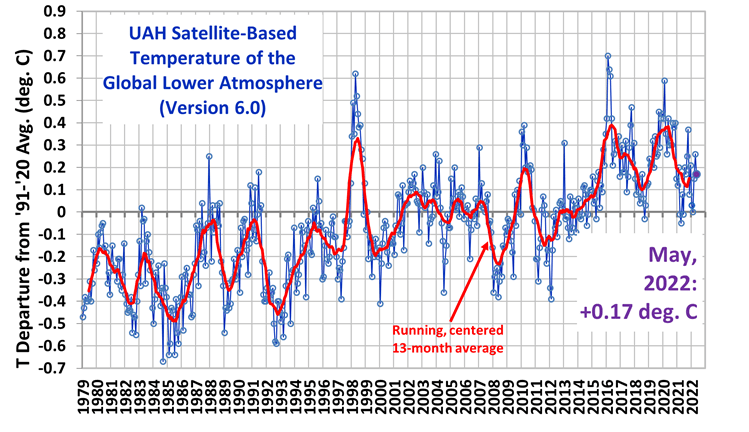

I wrote it before and I'll repeat myself, if you look at what changed in the last 100 years or thereabout, it's mass burning of fossil fuels, the cars, fabrics, planes etc. Yes, I know don't jump to conclusions, scientific method and all. The not ignorant person just being observant and applying some common sense can see it bright as day.