Hacker News new | ask | show | jobs
by dionidium 1548 days ago
The problem here is that there are something like 3.5 million housing units in New York City and Billionaires' Row is like 5 buildings. It just simply doesn't matter if every single one of those units is empty. We're not talking about enough units to matter.
1 comments

Billionaires row is hardly the only home sitting empty as an investment. Further they represent an outsized share of housing space even if the total number of apartments isn’t that high.

So even if 5 buildings out of 300 skyscrapers are at 50% occupancy on their own don’t matter much they still impact the market when combined with similar investments. Worse they prime the bubble by convincing more people to invest without putting them up for rent.

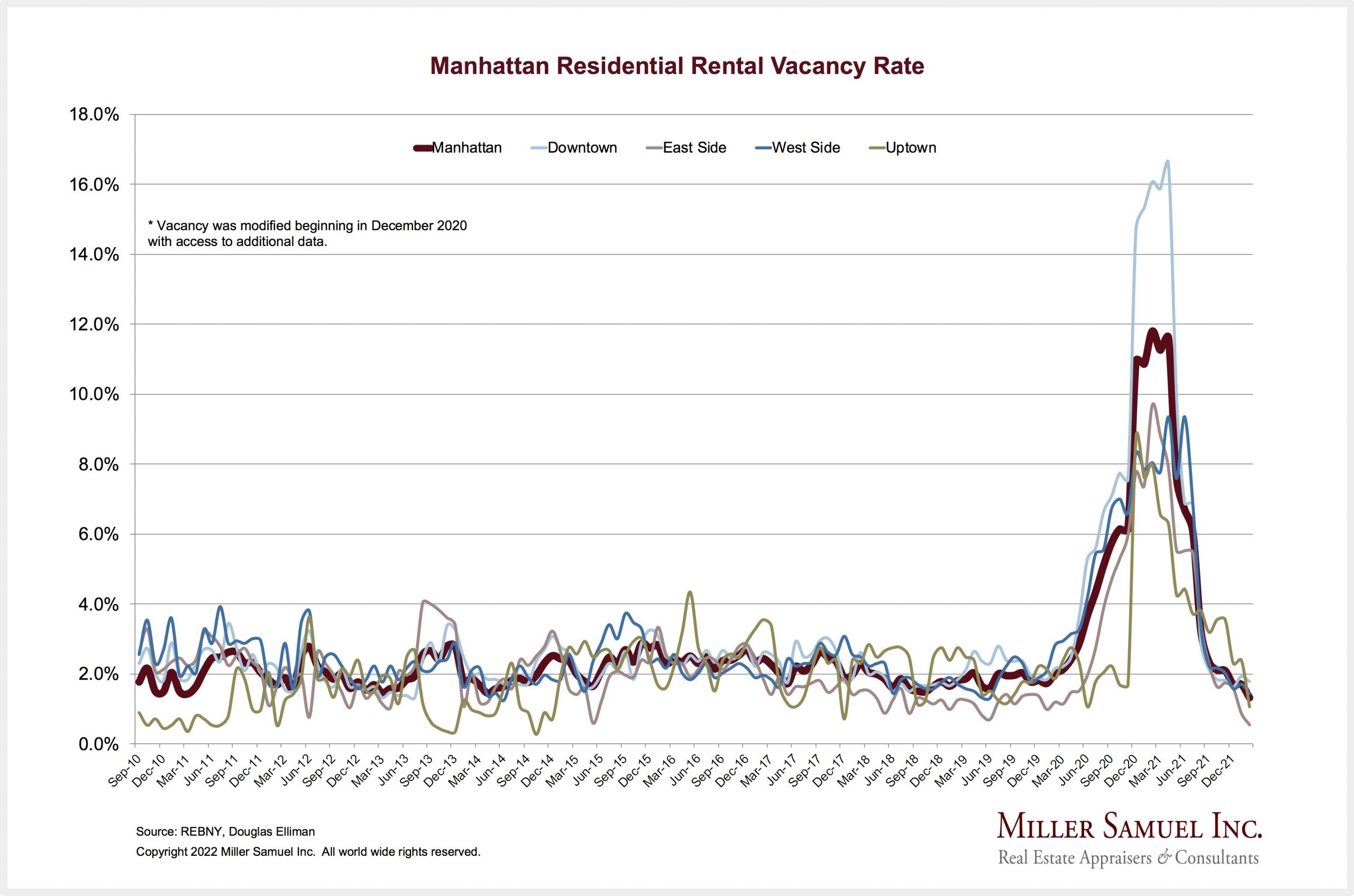
There's no evidence for this claim. It's a popular thing to say, so I think it must feel true for a lot of people, but there's no evidence for it and simple arithmetic suggests that it's a red herring. The fact is that vacancies in NYC are historically very low and reached new all-time lows in Manhattan at the end of last year.

People love the "investors and billionaires are buying up the market" story because it suggests a convenient villain, when the truth is that the millions of ordinary Americans who oppose new housing in their neighborhoods are a much bigger factor. Of course, that's not as satisfying as blaming a Disney villain.

We've been under-building for decades. We have a massive shortfall of new units, far beyond the number of empty luxury apartments. Frankly, at this point I'd support a meaningless vacancy tax just so we could put this objection to bed and focus on things that matter.

https://www.cnbc.com/2021/12/09/new-york-city-rents-jump-22p...

That’s an odd takeaway from an article speaking of a 22+ rent from increase due to COVID bounce-back. Ultra short term trends aren’t particularly relevant compared to long term trends.

One clear the example of the outsized impact is these buildings bought up air rights from multiple properties. So, they reduced the legally available space. When the city makes space for ~100,000 apartments and actually gets less than 1/10th that it’s a problem.

Another is the extreme cost of the associated tax breaks for affordable housing for minimal gain. The city set the tax break based on price while the number of affordable houses was based on the number of apartments. A seemingly obvious problem looking back, but still a problem for city residents.

What we're seeing is a return to the long-term trend. Vacancies in Manhattan have hovered around 2% for a long time.

See: https://www.millersamuel.com/files/2022/02/Feb22QNSrent-nyVA...

Which shows how important a seemingly small number of long term unoccupied apartments are.

Another way of looking at 2% vacancy is over 20 years an apartment is vacant less than 5 months. People move, die, go to prison etc, so there is some inherent friction represented in a 98% occupancy rate. Dropping to 1% long term takes more than just higher demand it would require increases in transaction efficiency.

the air rights are a bit of a red herring, because if the people in the city chooses to, they can easily abolish air rights, and allow buildings that previously sold their air rights to build it again!

And a couple of tall buildings in manhattan isn't gonna be making any difference. The difference would come from building denser everywhere.

That's not how property rights in America work.