|
|
|
|
|
|
by dionidium
1596 days ago
|
|
|
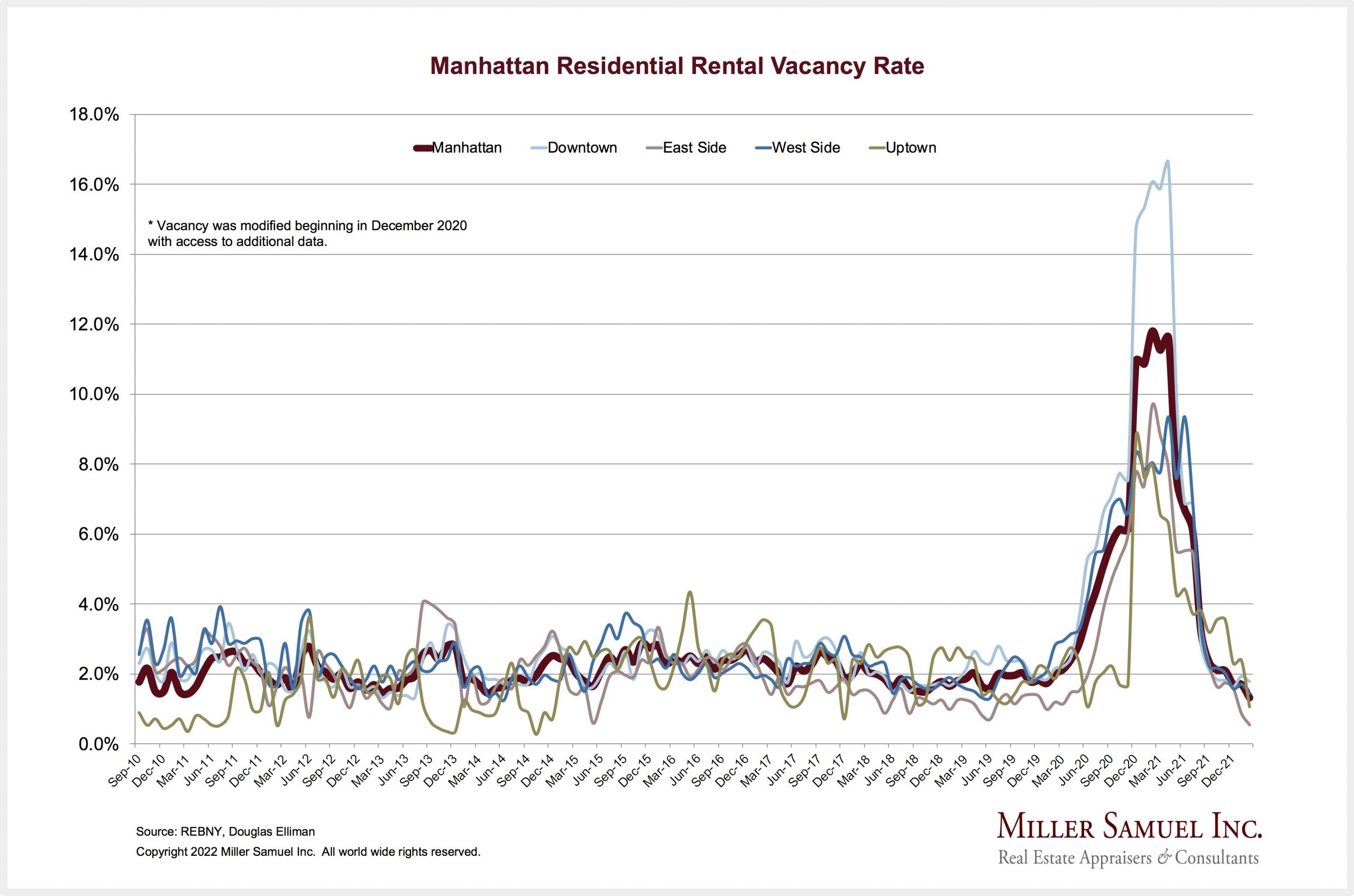
There's no evidence for this claim. It's a popular thing to say, so I think it must feel true for a lot of people, but there's no evidence for it and simple arithmetic suggests that it's a red herring. The fact is that vacancies in NYC are historically very low and reached new all-time lows in Manhattan at the end of last year. People love the "investors and billionaires are buying up the market" story because it suggests a convenient villain, when the truth is that the millions of ordinary Americans who oppose new housing in their neighborhoods are a much bigger factor. Of course, that's not as satisfying as blaming a Disney villain. We've been under-building for decades. We have a massive shortfall of new units, far beyond the number of empty luxury apartments. Frankly, at this point I'd support a meaningless vacancy tax just so we could put this objection to bed and focus on things that matter. https://www.cnbc.com/2021/12/09/new-york-city-rents-jump-22p... |
|
|
One clear the example of the outsized impact is these buildings bought up air rights from multiple properties. So, they reduced the legally available space. When the city makes space for ~100,000 apartments and actually gets less than 1/10th that it’s a problem.
Another is the extreme cost of the associated tax breaks for affordable housing for minimal gain. The city set the tax break based on price while the number of affordable houses was based on the number of apartments. A seemingly obvious problem looking back, but still a problem for city residents.