Hacker News new | ask | show | jobs
by surrealize 1683 days ago
Demand growth is what we want. Our economy has been largely demand-limited for a while. Demand growth boosts GDP growth.

Corporations are sitting on huge piles of cash, so they're not investment-limited. Any labor market tightness raises wages, which have been mostly stagnant for a long time (until very recently). Wage growth is also good.

If wage growth squeezes profits, then that's also good from a wealth inequality point of view.

6 comments

Organic demand growth is what we want, not this Frankenstein economy that's been created since at least 2008 if not earlier. Demand doesn't boost GDP, producing real goods and services boosts GDP. You can't spend your way to prosperity despite what any of the insane MMT economists might say.

I agree that wage growth is good but not in the manner it's happening right now, through insanely easy money policies creating massive inflation that's easily outpacing any of those wage gains. Again, you can't print and spend your way to prosperity. Maybe some of these tools would work if they'd ever let off the gas and removed them but that's not what's happening.

> Demand doesn't boost GDP, producing real goods and services boosts GDP. You can't spend your way to prosperity despite what any of the insane MMT economists might say.

I appreciate that you feel strongly on this matter. However, the strength of your feelings are less relevant than the fact that different people (who all know quite a lot about this sort of thing) do not agree with you (or with each other). Calling MMT folk "insane" may make you feel good, but it neither refutes their arguments nor substantiates yours.

MMT does sound like those radio commercials they had back in the 90s saying they would teach you how to "borrow your way out of debt" though.
Only because you haven't taken the time to understand what is being said - just the twisted version that isn't actually the case.

Every financial debt has a corresponding financial asset. Why follow the 'debt' and not the 'asset'? Because you have a psychological anchor on the word 'debt' that causes an emotional reaction?

All money is somebody's debt. That's how the accounting works. Rather than looking at the books from the 'credit' side, why not look at it from the 'in credit' side?

What I find amusing is how the bank borrowing from you so you are 'in credit' with the bank is a good thing, but the government borrowing from you so you are 'in credit' with government is a bad thing.

Given those are identical propositions in accounting terms, rationally the view about them should be the same.

Because at some point the credits and the debits need to be settled with real goods and services and when they can’t be someone has to take a loss. The loss either comes through default or inflation but allocating those costs are extremely painful politically. In many cases those costs end up being paid in blood.
> Because at some point the credits and the debits need to be settled with real goods and services

If that happened all at once, for every credit and every debit, it would indeed be a problem. But that doesn't happen, ever.

Money and stuff are inductively connected, like reactive power and active power in electrical engineering.

Assuming the 'power factor' of the economy is one is a category mistake.

When you go to the casino and change your cash for chips you are in credit with the casino. If that casino started handing out more chips without taking in cash, those people would be in credit with the casino too. Would you want to be in credit with that casino? You can create an accounting "asset" with the stroke of a pen but not a real one.
You get your chips in order to play in the casino. Without chips nobody can play.

What is a 'real asset', when nothing exist outside the casino? At most, you could change your chips for another casino's chips.

And when the country requires that you pay the taxes in casino chips - and only those casino chips - what then?

And when the banks decide to peg their liabilities to casino chips to leverage that drive from taxation, what then?

Once you are required to get casino chips, or else, you will offer up real goods and services to get them.

Cash isn't real. It's an accounting fiction.

I dont agree with the previous poster but I think you should recognize that the bank and the government in your example are not playing symmetric games. The incentives for each are different, even though at a point in time accounting principles can describe their respective balance sheets.
MMT is just the credit theory of money plus the realization that the government runs its own bank.

I don't know what you are talking about.

Your comment added nothing of value to this discussion. Replying and telling someone that you appreciate their "feelings" while ignoring the points made may make you feel good, but it neither refutes their arguments nor substantiates yours... if you'd even care to make any.
how would MMT work in a pre-industrial economy? Technological progress that boosts efficiency is what drives real growth, not economists printing money
Boring answer: MMT says boost production.
> not this Frankenstein economy that's been created since at least 2008 if not earlier

For what it's worth the US has economically out-competed the European Union in that time-frame, with the US basically following Keynes and the UE going the austerity route most of the time (and only at times, begrudgingly, also following Keynes as a result of the Americans doing it first). There's also China that has out-competed the US and the UE both, but that's another story.

Both the US and China have paid the costs as that liquidity has flooded into speculative assets such as land which has increased wealth inequality. In addition it likely has resulted in misallocation of capital and a future tidal wave of bad debt.

While households are typically cash constrained economies operating in a fiat system rarely are because cash is essentially created at will by the banking industry. Economic constraints are largely due to the ability to identify, fund and execute in good investments that will provide a reasonable return on capital given the risk.

Is there any investment area in the economy that is currently constrained by the lack of cash?

That's just the nature of imbalanced trade. The US reserve currency mandates permanent trade imbalances. It's a double edged sword.
Corporations and capital class had huge piles if cash, that douubled while real Economy stuttered during the pandemic. Noone is talking about the fact that share price and real estate is inflating. But for once there is pressure on wages, and suddenly people are running for the hills
5 year SPY chart is hillarious. Covid was seemingly a blip only a tad bigger than the blip in december 2018, we've been right back into the bull market trend for like a year now. The positive slope from march 20 2020 alone to today has just been insane, just a straight line up with hardly any deviation. So amazingly bullish. Fear doesn't exist in the markets anymore, we've seemed to have abandoned it. Just buy your leaps and profit indefinitely until the end of time. Not even a global pandemic could tear it down as it were.
The 1920s have something to say about markets that climb without reference to underlying production.
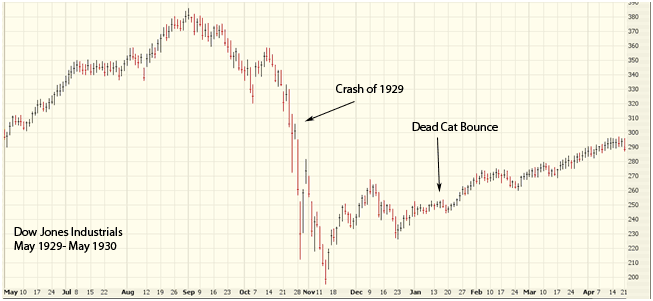
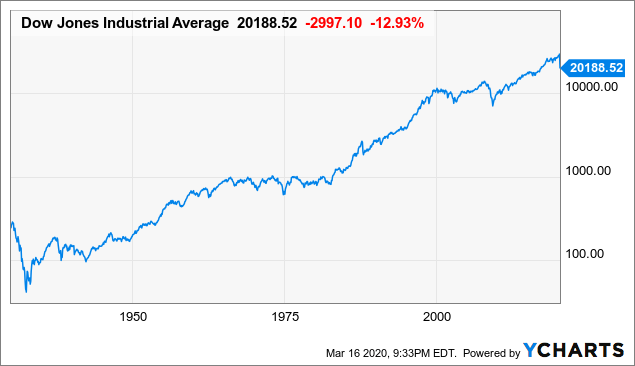
If anything the great depression supported this thesis of stocks always going up, and you can safely forget sweating the actual underlying economics. If you held through the crash or bought at the bottom you'd obviously be doing fine. Look at this chart (1). Seem familiar? Looks a lot like the great recession or March 2020 to me: a big plunge that took headlines followed by an unstoppable bull trend, in this case one that kept advancing for decades and decades to today (2).

Keep in mind what is key with this thesis is not some fantastical belief that stocks always go up out of magic. It's the understanding that the actions undertaken by the federal government and major banks that run the global economy will always generate increasing stock prices no matter any local blip or bloop or crash or fall in that moment. Buy the dip and take advantage of the sale price, then enjoy the guaranteed ride upwards supported by every major financial institution and first world government on earth, is what the past 100 years of macroeconomics have taught us.

1. https://static.seekingalpha.com/uploads/2011/8/4/763684-1312...

2. https://static.seekingalpha.com/uploads/2020/3/16/saupload_b...

Japans stock market would like to have a word with you. (https://asia.nikkei.com/Spotlight/Datawatch/30-years-since-J...)

Yes, the US stock market has had a wonderful hundred year run during a time the market went from a backwater developing market to a global hedgemon and through a one-time demographic dividend where it halved its non-working population (children) and doubled its workforce (women) and had an extremely open immigration policy for working age adults.

Of course past performance is no indication of future concerns.

You're misinterpreting the situation completely. China is running a trade surplus vs USA which means China has lots of dollars. Because of foreign exchange policy it will not use the dollars on imports. The only thing the money can be spent on is financial assets. All the Fed does is lower interest rates in response to this "savings glut" and that is the right thing because oversupply should result in lower prices for anything including money.

Because of the reserve currency status almost every country on earth is running a surplus vs the US and buying their financial assets.

With every government in the world buying US finantial assets that should lend even more support to the idea of loading up on assets yourself and riding the wave indefinitely, if the whole entire world is so overleveraged in American markets they will also do nothing to rock this boat since everyone around the world has been eating well betting on the market.
USA losing its status as the world leader might change that trend though. Before the pandemic it could be a few decades away, but now? Possibly within even just a few years, if that happens I wouldn't want to be among those having my savings in American stocks.
Where would you even put your money? There is no alternative. The NYSE and the NASDAQ have a combined market cap of 50 trillion dollars. The next largest exchange, In Shangai, has a market cap of 7 trillion. Euronext is also 7 trillion. JPX is 6.7 trillion. It's clear the world is parking their money here. They aren't going to put it elsewhere. We are the global marketplace.
My good man, stock prices have reached a permanently high plateau!
They have been saying this every single year since 2010. If you bought into that mentality you'd be broke. If you ignored it you'd be up hundreds of percentage points today.
I was riffing off of irving fisher's quote right before the great depression :^)
Personally, I don't want any more growth. Infinite growth is not sustainable. Developed countries are way past what's necessary for a good life.

I'd like to advocate for a slow controlled de-growth so we can reach climate agreement goals, and sustain humankind for a few more centuries, in decent living conditions.

We are far from infinite growth, no reason to worry. Maybe 10x or 100x should be enough to get everybody to stop worrying about food, housing, working? Then we can argue about slowing down.
I suspect the second half of this is where a lot of the cheap money will flow towards:

> Addressing this imbalance will mean placing upward pressure on wages to entice more workers to work longer as well as requiring investment to improve productivity.

Exactly, this is what a functional economy that is not crippled by financial logjams looks like. It's possible to overdo it but that is much less damaging than under doing it like in the 2010s.
You are wrong, 2010 wasn't enough, and now it is back to worse than 2007, USA is currently consuming goods from other countries and doesn't produce enough to sustain it, and it hasn't produced enough to sustain its consumption for 50 years now. USA is just continuing to borrow from the rest of the world (printing a reserve currency is the same thing as borrowing/taking), shipment after shipment of goods gets sent to USA but little is sent back. This includes services like ads, what you are seeing now is just the effect of USA leeching of the rest of the world.

At some point the rest of the world will tire at working for USA's consumption, I wouldn't be surprised if that crash gets much worse than the great depression.

https://tradingeconomics.com/united-states/balance-of-trade

>little is sent back.

The rest of the world gets US stocks and other assets. The US as been better than average at producing them. It's true that this might not continue forever and there might be corrections at some points but this does not mean a crash.

I'll give it to you that it's probably not an optimal time for more government debt right now but the monetary stimulation and slightly above average inflation had been desperately needed for a long time. Undershooting inflation was causing gridlocks in private markets everywhere.

Most of the economy isn't tradeable though, including major sectors like housing, education, health care etc.

If other countries get sick of buying US bonds, the relative value of the currency might depreciate. But as long as it doesn't happen all of a sudden that might not be catastrophic - other countries having stronger currencies might reduce US imports and increase exports (narrowing the trade deficit). Plus increasing automation might mitigate the cost of manufacturing in the US vs overseas.

But the cost of all of those things are tied to trade prices. Lets say we halve the value of a dollar, then we effectively halve the salary of every American worker relative to the rest of the world, and also halve the value of the American consumption market. That would massively reduce the stock value of all companies that mainly sells to the American market, which includes most big American companies. It would also mean that skilled workers would no longer be incentivised to move to USA to work since the salary is no longer better.

Or in other words, it could end the American dominance that has lasted since WW2. If it happens slowly enough it wont be a crash, but the American dominance will still end. I see no scenario where USA will maintain its current dominance, the living standards of Americans will get massively reduced and stocks will massively go down, it could happen quickly or slowly but either way it will happen.

I agree that it would affect the US's relative dominance but I don't see why the living standards of Americans would be massively reduced. For things like medical care, housing, education etc those costs are mostly domestic so it seems like the cost of buying foreign currency wouldn't make a huge difference there. The stock market is denominated in USD so at least nominally you'd think it would be OK (although exporters would benefit over importers). Of course it would raise the price of imports, and it looks like imports average around 15% of GDP [1] and exports are around 12% of GDP [2].

So we'd need to manufacture a few % of GDP more in the US for it to balance out. That might make certain things like TVs more expensive, but technology trends have often made those sort of things dramatically less expensive, so overall (and with increased automation) hopefully that wouldn't affect the standard of living too much.

Certainly it might make it harder to attract foreign talent. But hopefully that would mostly be because of increases to the standard of living elsewhere rather than decreases to the US one.

[1] https://www.statista.com/statistics/259096/us-imports-as-a-p...

[2] https://www.statista.com/statistics/258779/us-exports-as-a-p...

Those are pre pandemic numbers though, US imports just ballooned after they printed money to pay for the stimulus packages while exports dwindled. Without the pandemic things could have been fine for a few more decades, but now things looks way worse. At the moment the deficit is 80 billion a month, or a trillion a year, and the deficit is strongly trending upwards rather than improving as the pandemic ends.
Yes I was wondering why economists would think this was a bad thing. To someone like me who knows nothing, this seems like an obvious good thing.
There is no increase in productivity.

Inflation can be very costly, especially for the most disadvantaged who do not have investments to hedge against the rise in prices. It may have a positive first order effect in the short run, but it is an elusive one.

Inflation, if out of control, has the potential to bring the interest rate to levels that would turn borrowing extremely costly --therefore making acquisition of capital more expensive, affecting productivity.

Another side effect is that the government debt could become extremely burdensome, which would force the government to essentially print money to pay its debts. That is effectively a tax (called _seignorage_) on the population. In order to pay its debts, the government prints money, which in turn makes goods and services more expensive --i.e. _seignorage_. High inflation can affect consumer behavior and depress economic activity, which would lead to unemployment, it happened many times, and it is called stagflation. A slower economic activity coupled with increase in prices could then make production more costly, which would push inflation even higher but also increase unemployment.

The key here is whether inflation would get out of control. The Fed seems to banking on the idea that this high inflation is transitory, which means that despite its current high levels, there will be some accommodation in the medium run and things would go back to a stable and acceptable target level. Some, like the article above, does not think so. If that's the case, then the Fed will need to act soon.