Hacker News new | ask | show | jobs
by olalonde 1704 days ago
It's strange to see this upvoted on HN of all places. Some marxist inspired ramblings with no clear conclusion. Fact is that the free enterprise system works very well when you let it work and this is backed by a lot of empirical data.
4 comments

Common misconception, examples are the 40hr work week and banning of payment in scrip in the 1800s.

Another example is that monopolies require legislation or they have the effect of “seizing up” the dynamics of a functioning marketplace and turning toxic.

Semiconductor patents being made public and telecom copper being made open to use by other companies are both pretty well understood examples of legislation that helped bring about the computer era we live in now. Not free market in a pure ideological sense, but a kind of curated open market dynamic.

Markets are created by governments and don’t just spring from anywhere whole cloth. Markets are useful for many many things but need to be gardened, in effect.

In our current world labor “markets” are really not that at all— if a participant does not have the ability to withdraw their offer of labor then price signaling doesn’t work.

I’ve been reading the book Freedom From the Market, it’s well-researched and a literature review of sorts. Would recommend.

> Markets are created by governments and don’t just spring from anywhere whole cloth.

ok, then what of the cryptocurrency drug markets? those were created by govt?

no. there’s so many instances of unorganized humans doing trade. markets are just a more organized form of trade, and goverment is but one way to achieve that organization.

> ok, then what of the cryptocurrency drug markets? those were created by govt?

Indirectly yes, right now one of their biggest selling points is not being in the legal realm of government regulated markets.

If the government were to legalize drugs/endorse crypto that dynamic would heavily change, the black variants of these markets would lose quite a big part of their appeal and thus the demand for them and ultimately their market share.

> goverment is but one way to achieve that organization

There has to be some form of authority enforcing rules, or else you end up with a very anarchistic form of "market" where everything goes. That "everything" ranges from mundanities, like making a "business model" out of cheating people, to selling people like property because when there's a buyer, who has the right the stop me from selling?

> There has to be some form of authority enforcing rules, or else you end up with a very anarchistic form of "market" where everything goes. That "everything" ranges from mundanities, like making a "business model" out of cheating people, to selling people like property because when there's a buyer, who has the right the stop me from selling?

Your anarchy already exists, and they fight with lawyers to decide the winner. Businesses with exactly the vision you describe exist everywhere. Government enables this kind of trickery.

> Your anarchy already exists

I never disputed that, but there's a difference between embracing it as a "true market" vs setting the kinds of limits that governments can set and enforce.

Because contrary to your claim;

> Government enables this kind of trickery.

There is no "trickery" going on and equating the modern day state of things, with let's for example 200 years ago, it's very easy to show how things have gotten all around better.

Selling people used to be a very wide-spread, and even government endorsed, practice. Now it's generally considered very bad thing to do and criminalized by most nations.

Sure, that does not mean it completely stopped, but claiming it only exists because governments regulate it, is just backwards logic that makes no sense: The practice of slavery was there first, it's regulation and ultimately criminalization were acts of regulation that could never have happened without some form of authority enforcing them.

Cryptos are interestingly the one example of this, and they’ve been around for a really short time.

One of the fundamental reasons this is the case is because trading requires enforcement of property ownership, whoever is doing the enforcing is de facto the government. Private keys and smart contracts allow for ownership which need not be defended, though admittedly only over things in a limited sense. Your keys mean you own your wallet, but an NFT of a bridge doesn’t mean shit.

Most crypto volumes aren’t drugs at all, but are people buying and selling other cryptos using cryptos.

It’s going to be interesting to see if web3 bears fruit but so far that has largely not happened

I mean, they kind of were created by the government.
The truth is that government is fully capable of being exploitative and abusive, but so is private enterprise.

We dont want either to be exploitative or abusive, but the ideology that the “free market” is our savior and that “government bad” is just played out un-nuanced propaganda at this point

What do you mean by the 40h work week as an example? Example for what? It was an idea by Ford, but I guess then the unions jumped on it?

Who is forcing you to work 40h? I personally don't do that. You are free to negotiate your own contracts.

Sure! The work week and similar working legislation is a form of negotiating for one’s own contracts. It’s just that people got together and negotiated for their contracts in a group, and then wrote down that rule so that we don’t have to go on strike like they did.

It’s all part of the history of people getting together to negotiate for their own contracts, worth reading about: https://en.m.wikipedia.org/wiki/History_of_labor_law_in_the_...

People getting together to negotiate is not incompatible with capitalism. It is actually forming monopolies, which socialists usually try to make illegal.

So I am still not sure what that example is supposed to demonstrate?

> Who is forcing you to work 40h? I personally don't do that. You are free to negotiate your own contracts.

This is such a privileged and arrogant stance to take. The VAST majority of people are NOT free to negotiate.

Of course they are. Why wouldn't they be free to negotiate? Of course if you have few skills that are in demand, you are in a worse negotiating position compared to people who are in demand. You can try to acquire skills that are in demand, though.
very well when you let it work

When you make it work. They aren't free by magic; if the freedom isn't enforced and maintained, they rapidly become unfree, and that's what appears to be happening (or has already happened).

I haven't noticed any Marxist rambling here. People have right to write their opinions, even if dreamful
Actually Marxists are the best. They tend to express somewhat coherent viewes as Marxism have quite strong philosophical roots. Lots of others are just “views”, that is a pile of incoherent whims that should be realized somehow.
I was referring to the "class struggle" theme.
I believe that David Graeber was an Anarchist not a Marxist.
>I believe that David Graeber was an Anarchist not a Marxist.

Anarchism can be capitalist or communism. Anarcho-communism for example.

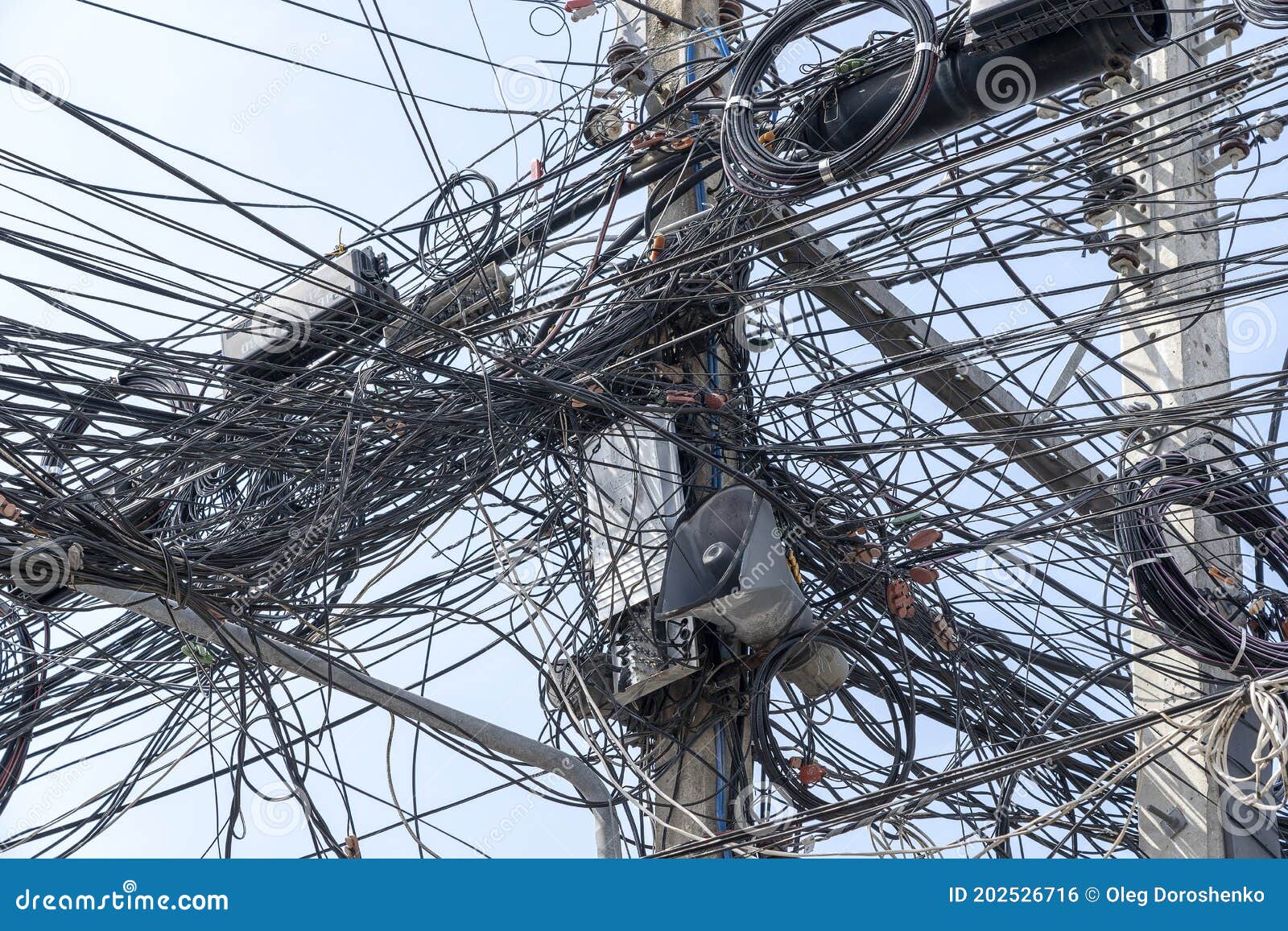
In a proper free market, the telephone poles would have 50 wires, most of which wouldn't be functioning. Afterall, how would anyone provide you internet? Without government regulation any startup has to put their own wires up. This leads to rats nests of wires. Tons of expensive wires being put up for customers you used to have. Free market obviously doesn't work, you must come in and fix that.

Communism on the otherhand is misuse of people. Everyone must be employed full time in communism. In the USSR, there would be multiple cashiers you would have to go through. Just to ensure people have something to do. You also have to have government slaves. USSR had the gulags. China has the uyghurs. Vietnam has their slaves in forced labour centers.

I don't see what communism has to do with everyone needing to be employed full time. That's just what they made of it in the USSR etc.

> Communism: a theory or system of social organization in which all property is owned by the community and each person contributes and receives according to their ability and needs.

I concur, there's nothing "communistic" about the idea of full employment, if anything it strikes me as something rather capitalistic in its nature: Full employment would mean there's an oversupply of labor, which means labor would be dirt cheap and easily replaceable.

That would be the dream for anybody trying to exploit others labor for their own gains, something that's generally seen as a very capitalistic mindset.

The USSR attempting to have full employment was yet another misplaced attempt at trying to "Beat the capitalistic West at their own game".

>I concur, there's nothing "communistic" about the idea of full employment, if anything it strikes me as something rather capitalistic in its nature: Full employment would mean there's an oversupply of labor, which means labor would be dirt cheap and easily replaceable.

There have been nobel prizes on labour participation rate and unemployment rates. The reality is that you have so much population, you have requirements of productivity to produce things for your population.

Cuba is an exception, they do still have government owned slaves. Mostly political prisoners, you can't say anything negative about the government. However, only 30% of their population has a job.

What's the consequence? You only get about 1lb of meat a month. Literally I will eat 1 month's of food in a single meal.

Also what's up with other consequences? Doctors are forced to work ~65hours/week while 2/3rds of the population stays home? Wow. While taxi drivers who work less hours earn more than you.

>That would be the dream for anybody trying to exploit others labor for their own gains, something that's generally seen as a very capitalistic mindset.

Not capitalistic at all, what capitalist society has enforced near full employment? I don't know of any. This is a communist thing. Only communism has ever done this. It's something Marx never said needed to happen. It's just the reality of productivity and how society works.

>The USSR attempting to have full employment was yet another misplaced attempt at trying to "Beat the capitalistic West at their own game".

The even more interesting thing. Graeber obviously says that communism is where you typically get all the bullshit jobs. Yet here they are in capitalism. The reality is that he's right. The reason for the rise of bullshit jobs in capitalism is all the socialism/communism being introduced.

Japan isn't communist and yet they also have government slaves, 99.9% of people accused of a crime are forced to work in a gulag. Why? They implemented loads of socialist policies and blew up their debt. Their public debt to GDP is 266%. That's actually worse than Greece during their collapse. The only thing holding Japan together is the government slaves.

Why does communism(or whatever name) always seem to come with full employment and government slaves in gulags? I actually don't fully understand why, but that's not a capitalism.

I think almost everything you say about Japan is wrong.

"99.9% of people accused of a crime ..." -- this is a reference to the fact that the Japanese criminal system's conviction rate is a startlingly high 99.9%. But what's going on here is that about 60% of criminal cases in Japan get suspended without going to court; prosecutors only proceed in cases where they are nearly certain of getting a conviction, so their 99.9% figure isn't comparable to (say) the US's 93% (that's a figure from 2012; I couldn't readily find anything more recent).

(It may also be true that that 99.9% is artificially high, that substantially fewer than 99.9% of accused criminals who go to trial in Japan are actually guilty despite prosecutors' attempts to proceed only when sure of conviction. But even if say 10% of those convictions are wrongful, that's a much smaller effect than the fact that 60% of cases are abandoned without going to trial.)

"... are forced to work in a gulag" -- so the claim here is that literally every person convicted of a crime in Japan then does forced labour. This is not true, for the simple reason that the great majority of people convicted of crimes in Japan (just like everywhere else) don't go to prison. Only about 15% do.

(It is true that most prison sentences in Japan are imprisonment-with-labour. I'm not sure whether it's all of them; I've seen explicit claims that it is and explicit claims that it isn't. I shall not try to adjudicate whether "in a gulag" is a reasonable description of the life of those prisoners. Incidentally, they are mostly paid for the work they do in prison.)

"Why? They implemented loads of socialist policies and blew up their debt."

The Japanese debt-to-annual-GDP ratio hovered around 50% or so until about 1993 and then started rising rapidly, reaching its present level (the figure I've seen is 225%, not 266%, but in any case it's rather high) around 2012. But they had a policy of prison labour before their debt was large; e.g., here's http://www.jca.apc.org/cpr/kaido.html someone complaining about it in 1997 (debt-to-annual-GDP ratio about 70%) using prison labour figures from 1994 (debt-to-annual-GDP ratio about 60%).

(I shall not try to adjudicate whether Japan's big increase in public debt is the result of "socialist policies".)

"The only thing holding Japan together is the government slaves."

About 50k people are in prison in Japan. The population of Japan is about 125M. That 0.04% of the population would have to be incredibly productive for their labour to be "the only thing holding Japan together".

>The only thing holding Japan together is the government slaves.

I'm not even going to dispute any other weird claims. But this is such easy to refute by basic statistics.

Japan has ~50k prisoners, for 125m society. USA has 2000k for 325m population. That's 20x bigger rate.

But yes, Japan is the pristine example of socialism, that's why our prime capitalistic USA has only 20x less constitutionally permitted slaves.

> Mostly political prisoners, you can't say anything negative about the government.

Have you ever heard about the US UNICORE program [0]? In some US prisons participation in UNICORE is mandatory for parole review and sometimes even part of the course to pre-release for prisoners.

The UNICORE program consists of inmates manufacturing equipment for the US military for a pay that no free human being would ever accept for the work.

Now, imagine you are somebody who opposes the US military, who's aware of the MIC, and thus part of your political convictions is not supporting an expansionist and aggressive military.

What do you think is gonna be the outcome there? Exactly, people who will stick to their political convictions will be denied a way to be released early, and sometimes even released at all. Something that has been going on for literally decades, yet US Americans will gladly regurgitate the claim how "There are no political prisoners in the US!". [1]

> You only get about 1lb of meat a month. Literally I will eat 1 month's of food in a single meal.

That's not something to brag about, particularly when looking at what lengths US producers go to get the "meat" even cheaper, involving such tasty sounding additives like "pink slime", which is just rotten meat freshened up with ammonia or feeding the livestock questionable additives like Ractopamine.

None of that is good or a reason to brag about, particularly as the US beef sector is heavily subsidized by the US government, so it's not even a good example for a "free market" [2].

> Why does communism(or whatever name) always seem to come with full employment and government slaves in gulags?

It doesn't [3], but when you decide to label anything "communism" you don't like, while then projecting problems the US has on those places, it's no surprise that you end up seeing "communism" everywhere.

While ignoring realities that don't fit into your definition. Case in point: The country with the most and biggest gulags, some of them even privately owned and operated, locking up people at higher rates than any other place, is not Japan, Cuba or Greece, it's still the United States of America [4].

[0] https://www.bop.gov/inmates/custody_and_care/unicor_about.js...

[1] https://digitalcommons.law.yale.edu/cgi/viewcontent.cgi?arti...

[2] https://plantbasednews.org/lifestyle/animal-food-industry-ta...

[3] https://www.theguardian.com/world/2013/oct/20/marinaleda-spa...

[4] https://eji.org/news/united-states-still-has-highest-incarce...

>I don't see what communism has to do with everyone needing to be employed full time. That's just what they made of it in the USSR etc.

Like your definition says:

and each person contributes and receives according to their ability and needs.

That equates to everyone working. There's very few exceptions, usually like you lack arms and legs or something extreme to allow you not to work.

Afterall, how do you stop 'You work, I'll be at home collecting UBI and watching TV.'

> Afterall, how do you stop 'You work, I'll be at home collecting UBI and watching TV.'

Well, if there's no money (because it's not necessary), there wouldn't be a UBI anyway? Communism is supposed to come after socialism and before anarchy, in theory. First you build an egalitarian society with a mindset of peaceful cooperation, then you get them to all work together for the greater good, and finally you dissolve the 'taskmaster' of the state, as society is perfect and no longer needs it.

>Well, if there's no money (because it's not necessary), there wouldn't be a UBI anyway? Communism is supposed to come after socialism and before anarchy, in theory. First you build an egalitarian society with a mindset of peaceful cooperation, then you get them to all work together for the greater good, and finally you dissolve the 'taskmaster' of the state, as society is perfect and no longer needs it.

Lets put capitalism vs communism aside.

I imagine a world where we have fully automated producing essential things. Why can't we have a factory farm fully automated using entirely robots producing food at cost. The same can be done for widgets. Robot arms can just do everything entirely. Someone just has to build this; I've been to one of those greenhouses. It picked thousands of pounds of tomatoes, delivered them to packaging, packaged, and shipped every day with only 3 people. The 3 people are for 2 functions. Q/A making sure its not picking rotten stuff and making sure the trucker doesnt do anything.

We can get to the point that the payment for your groceries is watching advertisements or whatever. Simply because the cost of those goods are that small.

If I could be assured my family was fed and such. Maybe I'd quit my job and entrepreneur and do something else. That's the appeal of communism. The idea that innovation and such takes off. The reality is that under communism you have societal collapse. Cuba hasn't built anything in forever. They have no factories, nobody would work in them. They also dont automate, their population has been stagnant and thermodynamics is wrecking their country. In order to have that upward push in communism, you need slaves. Gulags get shit done.

> Anarchism can be capitalist

Nope. That'd be neo-feudalism, as the super rich will be our defacto oppressive over lords. Anarchism is against oppression.

There are market anarchists, they like markets but in no case they like unlimited wealth accumulation.

There is a significant school of thought literally called anarcho-capitalism:

https://en.wikipedia.org/wiki/Anarcho-capitalism

Nothing significant about that.

The name is simply internally contradictory: as those subscribing to it are okay with oppression by the super rich, it is not anarchism.

They advocate exclusively for property law, by which the super rich can "legitimately" hang on to their fortunes and thus power. While many of them advocate against laws like "age of consent".

> In a proper free market, the telephone poles would have 50 wires, most of which wouldn't be functioning. Afterall, how would anyone provide you internet? Without government regulation any startup has to put their own wires up.

Seems like a poor example. If there’s all these unused wires owned by people who are losing money, surely a startup could rent capacity on an existing network, or outright buy it if the capital was already available.

>Seems like a poor example. If there’s all these unused wires owned by people who are losing money, surely a startup could rent capacity on an existing network, or outright buy it if the capital was already available.

Real life examples.

https://thumbs.dreamstime.com/z/chaos-cables-wires-electric-...

Thailand doesnt have regulations in which the government picks a monopoly over a media and then forces them to provide near cost access to competitors. Typically, copper telephone vs cable vs fiber.

Therefore you get that utter mess, and there's no way those wires are properly utilized. It's a high cost to society, aesthetics aside, copper is expensive, fiber is expensive. You would be better to manage it so that you can assign those resources more efficiently.

However, this becomes 1 spot where free market no longer exists. Here in Canada we have Bell Canada who lobbied the regulator and effectively gave themselves a monopoly. The regulated market doesnt get near cost access to the wires.

Anarchists, like communists, have a marxist or post-marxist view of the society and its organization.
No, not all communists are Marxists and the predominant tradition, anarcho-communism, is not post-Marxist but derives from a different set of authors who opposed Marx during his lifetime. [1]

1. https://en.wikipedia.org/wiki/Communism#Other_types_of_commu...

Thank you. Some of the comments in this thread are so bizarre I have to wonder if it's down to US educational systems placing everything that's not Reaganomics into a basket marked "Communism BAD".
...because if they had a capitalist view on society, they'd be called libertarians?