Meh. I’ve seen a lot of these short essays about how after the pandemic we either should not or simply will not return to the status quo. It doesn’t really do anything to say “the economy doesn’t work” in 5 paragraphs and then say nothing else.
Yes, lots of poor people are getting screwed. Some jobs don’t pay well despite the higher moral standing of directly assisting others. The environment looks pretty bad. But you can’t just say “rich people bad. New economy plz”.
Did you expect a new country wise economic model to be purposed in this article? I believe the author was trying to say, "Poor people are getting screwed, some jobs dont pay well, the environment is bad, lets do something and not forget it."
It is a solution? No. I don't think it is trying to be though. It's just trying to be a reminder that letting everything go back to the way it was is the easiest route forward and the quickly route to getting back on the shitty path the country has been on for the past 20 years.
Agreed. This article is pretty clear about its intent: don’t be lulled into a false sense of economic security after the pandemic and build this experience into our understanding of our system.
The first step of any solution is convincing people there is a problem. Not just the obvious “things are bad,” but an understanding that these issues are systemic in a way that challenges American ideology. These articles frustrate HN because they aren’t pitching some technocratic reformism, but instead are seeding ideas about the structure of our society that need to be absorbed before we can hope to change it.
I’m honestly surprised to see this pop up at all here, HN isn’t a crowd that is demographically primed to challenge the assumptions of capitalisms.
This doesn't challenge assumptions of capitalism in any meaningful way. In fact my impression reading it was how the author seemed to fundamentally misunderstand finance. I'd love to hear thoughts on how it would be done differently, but he doesn't get that far and rather just makes shallow statements.
It wasn't an insult, it was a critique. Any economy built on promises that can be thrown out at will is just a house of cards. Where do you even start with that? That's just one thing, the article is filled with half thought out premises that when taken to their conclusion fall apart. In reality it is the author making serious accusations that require evidence, not my critique.
It is one thing to say that you are not convinced by his arguments, but it’s pretty clear that he directly questions our conception of financial markets, markets more broadly, and our definition of “economy” that are key components of capitalism.
In fact, he challenges it so directly that you confuse his intentional materialist characterization of finance as a misunderstanding. Mostly, I think this is a result of our ideology being so pervasive under capitalism that we are accustomed to describing our artificial economic structures as borderline laws of physics. Graeber here is simply trying to insert a wedge into that line of thinking, not propose an entire alternative socioeconomic process.
Based on what gets up and downvoted, most of people on HN are ancap or fascists.
I guess it makes sense - startups are gold rush, VC's are the ones giving away shovels for portion of gold should there be any, and founders are people who either found gold or believe they will.
I wonder if most of people have political outlook like this. If they do, it is both sad and comforting, because then the humanity is doomed to kill ourselves via climate change, but we would deserve it.
This sort of generalization is notoriously unreliable and subject to cognitive bias. People are far more likely to notice what they dislike, and to weight it more heavily. This produces false feelings of generality:
That's why users with opposing views to yours make the opposite generalization [1]. It's not that HN is any different—they simply dislike different things. This is one of the most reliable phenomena I've seen on HN. It's so reliable that one can accurately predict people's politics (or other preferences) simply by flipping a bit on the generalizations they make.
Since we are here, Daniel, and also with reference to something I wrote nearby: I think the guidelines should be augmented, in terms of "downvoting without justification should be frowned upon". Otherwise, some would be tempted to just downvote something because they "feel differently": posts are not polls ("how many like strawberry, how many dislike it"). In general, downvoting should be accompanied by posting the underlying reasons - it should take posts evidently inconsistent with the purpose (cheap cheer, cheap joke etc.) to be exceptionally downvoted silently.
I understand HN is pretty conservative in terms of structure and rules, but I believe this should be a general norm that would be consistent with the spirit of the site (intellectuality and promotion of meaningful posts), and beneficial if made explicit.
There are probably quite a few ancaps, and I've seen a fair few communists, but I have yet to see a genuine fascist. That suggests to me your using the term more as a slur than as a word that actually means something.
Upvote and downvote do not work that way at HN and should not be interpreted that way without analysis. Here it is not about how you feel: it is about whether you make sense. Experience mostly reflects the principle (some noise must be expected).
Your claim is fallacious. It is not rooted in any formal study of HN voters or voting outcomes. It is just a story HN members tell themselves to feel special. Reality is, HN is like every other social media platform, and feelings deeply influence voting around here. IMO it is obvious.
> Did you expect a new country wise economic model to be purposed in this article?
No, I didn't, but I'm frankly growing tired of cookie-cutter article like this one that just enumerate problems that have existed since the literal dawn of civilization.
The entire "economy bad" brigade is, as parent comment puts it, "r/im14andthisisdeep". They see problems everyone else sees, but they don't have any actual insight, just empty rethoric.
There are quite a number of solutions on offer - they just have a difficult time gaining traction in our media (and therefor in the public debate). Part of that has to do with the fact that a majority of those with economic and political power - those who have succeeded in the current system - still refuse to recognize that the problems are systematic. They refuse to recognize that the problems are intrinsically caused by our economic and political systems and necessitate systematic change to those systems. And since these people wield economic and political power, they have the ability to prevent the conversations about these problems and their solutions from being held in the halls of media and power. Thus, the solutions are only discussed among fairly niche political and academic communities who have a hard time broadcasting the ideas widely.
But if you go looking for it, there is a wide array of work that has been done divising ideas for the systematic change we need to solve these problems. I have a whole bookshelf of authors proposing alternatives. Projects like The Next System project, and the Democracy Collaborate, have been working on divising ways to grow alternative systems with in the confines of the current one.
The challenge of course, remains funding. Because those with the wealth got that wealth through the current system and continue to benefit from the current system.
So actually making change is going to take either a mass popular uprising (electoral or otherwise) or enough people with enough wealth recognizing the problems and being willing to give up their wealth and power to solve them. Knowing that the solutions will forever disempower them and their peers.
Edit:
To provide some clarity of the sort of solutions on offer, I'll provide my favorite. Stop prioritizing capital, start prioritizing labor. Right now, Capital basically gets to call the shots - because we allow for any kind of contract in business formation and you can't start a business with out capital and we don't restrict what capital can demand. This allows capital to take advantage of that power imbalance at the time of business formation to demand control. If instead, we restricted what capital could demand to say - a reasonable interest on a loan - and legally structured businesses as institutions democratically run by those working in them, this would have the effect of empowering labor and disempowering capital.
People would still have the ability to make money from their money, but it would vastly reduce the current multiplier effects on the growth of wealth, and thus the tendency for wealth to concentrate. It would tend to spread wealth out to a much wider proportion of the population - because the people doing the work would get to vote for the leaders of their businesses, and those leaders then have a much, much strong incentive to take care of the people doing the work. Likewise, the people doing the work would have a much stronger incentive to take care of the communities in which they operate, because they are much more likely to live in those communities than distant investors. It has the effect of reconnecting businesses with their neighbors and communities in a much more real way, and empowering those involved in the business who are most aware of the effects it has to change those effects.
Would this system be perfect? Nope. It's really a pretty gentle refactor of the current sytem (though one with wide ranging effects). Would it be better? Yeah, I really believe it would.
There are many other effects this change would have - I've wanted to write a book on it for years, but haven't been able to find the time or bandwidth. Someday. If I ever get to take a long leave of absence or get to cash out, someday.
Another alternative you could consider, one I've played with as a thought experiment many times, what would happen if we simply banned people from making money directly from their money in all forms? It's a challenging thought experiment, because where do you draw the line? Money is just a representation of property, so how do you define money made from money versus, say, renting a machine you own? But it's a worthwhile thought experiment - could we devise a system where you could only make money by working, and not by simply owning property or holding wealth?
There are many more alternatives out there, from gentle refactors to whole rewrites. Some fleshed out, some just thought experiments. And everything in between. They should really - all of them - be a much bigger part of our public dialog than they are.
Further edit: Many threads are on-going but I've been at this all morning so I'm going to call it a day and go make lunch. I've appreciated the dialogs, and maybe I'll write that book some day. If I do find the time to write that book, I know exactly where to come to harden it against criticism. If I can convince a forum full of capital investors and would be capital investors that making capital investment illegal is a good idea, then I'll be able to convince anyone!
Not one single line of what you wrote is a concrete and actionable thing you would do. It's frankly a whole bunch of rethoric. I'll pick the bits that seem like they mean something real:
> legally structured businesses as institutions democratically run by those working in them
This already exists, they are called cooperatives, many of them actually work pretty great. Try to guess what happens when they grow and they need to hire employees...
> what would happen if we simply banned people from making money directly from their money in all forms?
No banks, no loans, no credit cards. No way to protect against inflation with financial instruments as basic as a target-date fund.
Oh, and 0% public debt, of course.
> Money is just a representation of property
It's not and you know it's not, you're just playing with words.
> This already exists, they are called cooperatives, many of them actually work pretty great. Try to guess what happens when they grow and they need to hire employees...
They continue to operate. Mondragon has 80,000 worker owners. And yes, it has a challenge in recent years where the worker owners have created a class of non-owner employee. But it got pretty big before that started happening, and there's no reason to believe it wouldn't continue to function just fine if that wasn't an option.
There are many other worker cooperatives functioning very well at scale with zero non-owner employees. My proposal is essentially that we make this the requirement. That any business formed must be formed as a democratically run worker cooperative. This is perfectly actionable. Governments define the legal structures under which businesses may form today, and continue to regulate those structures. Right now, those structure enable the investor ownership relationship, and most worker cooperatives have to use those structures and bend them to allow the worker ownership relationship. It's a relatively straight forward legal matter (with wide ranging consequences) to change that structure.
> No banks, no loans, no credit cards. No way to protect against inflation with financial instruments as basic as a target-date fund.
Like I said, this is a thought experiment. Not fleshed out. And it's not the same as the proposal I outlined above for a worker cooperative based democratic socialism. I don't think you actually read my post, I suspect you just skimmed it and then reacted to certain sentences.
Yeah this same thing you’re saying has been tried. Just newer words for the same thing.
Unless you mean it should be an entirely voluntary system? More likely you’re thinking like the Bolsheviks and you’ll cause 20 million people to stave with your ideas.
No, that was centralized state socialism - it was authoritarian and centralized.
What I'm proposing is more akin to distributed democratic socialism. Our government is still democratically run. You still have independent banks (formed as credit unions) or crowdfunding to start businesses. The only difference is that once a business hires that first worker, then decisions start getting made democratically. And they continue from there. The state isn't running any of the businesses and there's no central planning arm.
To my knowledge, this has never been tried as a whole economic system. But worker cooperatives exist and are functioning just fine in the current system. Ever bought Equal Exchange chocolate? That's a worker cooperative. Heard of Mondragon? 80,000 member worker cooperative that's functioned successfully for decades across multiple verticals in Spain.
What I am proposing is that we do away with the traditional investor relationship and mandate that all businesses must be formed as democratic worker cooperatives funded either by regulated loans or some form of crowd funding.
Many states already have usury laws which limit interest rates but in practice that doesn't give labor any more power relative to capital. Lowering limits on interest rates would just result in capitalists ceasing lending to risky businesses.
A better solution would be to increase taxes on income from interest and capital, and use that funding for education and social services.
It would have to be linked to a requirement that all businesses be formed as worker cooperatives, democratically run by their workers. That's what would give labor the power.
The usery laws are just about preventing banks from exercising undo power over those worker cooperatives at the formation stage.
Why would anyone ever try a high risk innovation play to propel society forward if there was no reward? Most businesses fail. This would encourage people to just work at BigCo instead of trying to start new things.
I feel like innovative companies such as SpaceX or Moderna would never happen under that economic model for example.
Yikes. You... uh... must have a social circle that looks very different from mine.
I know any number of people who would eagerly start a high risk innovation play as a worker cooperative, because the money reward isn't what they care about. They care about making change in society or seeing a technical advancement become wide spread.
For most of them, they just need the chance - a floor under their feet so they can't fall too far if they fail and enough funding to get going. And, given how much crowdfunding has succeeded in todays world of concentrated wealth - I believe crowdfunding could provide that in this system where wealth is much, much more distributed.
The other piece of if is, with worker cooperatives every single employee of the company is fully bought into that innovation play. And stands to see the rewards created by it. Not just the investors and company founders. If anything, it increases the effectiveness of these companies, because everyone involved in them is incentivized to give it their all. Everyone involved stands to see the rewards of success.
> still refuse to recognize that the problems are systematic
I think you're reading into other's worldviews too much. Most people likely agree it's systemic. Many would not be convinced by the proposed solutions, because they do not think they would improve the situation. Moreover, large numbers of people do not think the situation can be improved, that this is just the natural state of the world (for which they have thousands of years of evidence to point to).
They don't have thousands of years of evidence. The modern economic system has only existed about 200 years. It's precursor was around a couple hundred years before that. Prior to that, the economic system looked very different. And there was a wide range of economic systems prior to that.
Yeah but it gets tiresome when leftists never bother themselves with any form of practical solutions of even a path forward, always just point out that things are not perfect, and then hint at some vague ideal. What's the point of instigating and persuading people on such grounds, I don't understand
While it is not completely without value, just confirming to readers that a problem they are well aware of already exists is probably the least value you can provide to them. You'd hope for more than just criticism.
> Did you expect a new country wise economic model to be purposed in this article?
Coming from a publication like theanarchistlibrary.org, purporting a new system is implicit. And the following quote: "to create an “economy” that lets us actually take care of the people who are taking care of us. " - with economy in quotes removes ambiguity on that question.
Yeah it kind of reminds me of why I thought Bernie Sanders was once a useful voice. He was willing to point out realities that most political elites wanted to keep hidden.
His solutions though are crap, and he has profited greatly off the misfortune of the poor.
Because he exploits their situation to promise them free stuff by taking from the wealthy. That wealth taken might give some poor a token gift, but mostly it ends up in the pockets of bureaucrats.
Maybe not, maybe he only has one modest home which is still more than the people he appeals to, but not utterly hypocritical.
At the very least we need Federally mandated sick days. My mother caught COVID at the beginning of March of 2020 from a coworker who knew her husband had it but continued to come into work out of fear of losing her job. It's crazy that it would happen again during the next pandemic.
Meanwhile 20 years after 9/11 we're still taking off our shoes to get on airplanes.
Wait, are you saying she was actually threatened with being fired if she didn't come in sick or that she just thought that she might be? If the latter, no federal mandate would change that - I get sick days, but I feel weird taking them, like I'm getting a black mark on my employment record that will come back to haunt me later. No law can change that, that's just how our society (currently) is.
> No law can change that, that's just how our society (currently) is.
Laws can change society, through propaganda. See "Click it or Ticket" campaigns, and the like.
A simple PSA / Propaganda effort of "If you're sick with COVID19, stay at home. Federally mandated leave demands it", would probably go a long way. Maybe something like 'Use your sick days, they're a promised benefit of US Law', or "True Americans stay home when they're sick". (Etc. etc. I'm not good with PSA videos, but give it to some Hollywood artist and have them figure out the details, lol)
The WW2 propaganda levied upon the population was incredibly epic in size and scope, and was key to building US national unity and drumming up support for the war.
--------
There was that Bangladesh mask study, showing that something like 30+% of people would listen to masking advice/propaganda from religious leaders, in that 400+ village study. (200 villages as the control, 200 villages as the experiment. Found a bunch of religious leaders who would push pro-Mask statements and then ran the experiment). 10% of people wore masks before the study, 40% of the experiment-group wore masks after the study (so 30% of people were "affected").
No, that's not 100%. But changing even a fraction of the population would have huge effects.
A law would dissuade corporate cultures that punish workers for taking sick days. It would pave the way for class action lawsuits against companies where this type of thing is a pattern.
I agree. He writes about how we lived in a dream but for me what he writes is also a dream of some sort.
Just stop doing our dream-work.. and then? What do I do to provide for my family? Should we all get a patch of land and grow food for ourselves? This idea does not seem realistic or scalable.
But maybe I am just misunderstanding the essay or my thoughts are just not deep enough.
> Should we all get a patch of land and grow food for ourselves?
A lot of those types would loooove to see lots of people to go back to subsistence.
That is a lot of people but not them, they are way too smart for that and they’ll reluctangly agree to take the job of guiding lights for all those that went back to subsistence.
Reminds me a lot of the meme of the intellectual advocating for communism thinking that they’ll have a nice cultural advisor job instead of either being shot by the thugs that seize power or forced to work 60 hours a week on a collective farm or in a shoe factory.
Add to the fact: nothing prevents them from putting their money where their mouth is and living the life, right now, however which way the communes are envisioned. Hell, even the Amish and Mennonites are still doing their thing.
What is the point of vaguely placing the author in a category of "those types" and expressing your distaste for "them"? It adds nothing, and refutes nothing.
The current system created artificial scarcity which kept many people poor and a few people rich. We didn't actually need to consume until the planet was ruined, but we did. Now we are all screwed because real scarcity is returning and we still don't know how to share.
The current system has been responsible for creating actual abundance that has vastly improved the living conditions of the vast majority of people. Scarcity is the default state, not artificial.
The 'vast majority of people' have not had their lives improved. They were, and still are, given a Squid Game-esque choice to either participate in a status-seeking game to destroy your health for someone else's comfort or exist in total squalor, dependent on other people who are destroying their health so that you can exist on the crumbs they throw your way.
Capitalism seems more or less benign in affluent nations which can afford to value individual life at millions of dollars. You can rest assured that the homeless people you ignore aren't going to starve, that they'll just buy drugs with the money you'd have given them anyway. It's easy to squint your eyes and believe in the system.
It's much harder to look at countries were life is much much cheaper and accept that the system is a net improver of lives rather than one of enforced stagnation. Where getting people fed, clothed and housed is a matter of politics, not logistics. Everywhere you go in the developing world, you see politics, by that I mean rich people preserving their riches, keeping the people willing to do the legwork and work out the logistics, from following through on their altruistic missions.
We need to stop pretending the system designed to make people feel better about exploiting whatever they can in self-interest is the arbiter of human worth.
Scarcity could go away tomorrow if the rent-seekers could just get out of the way.
Your first sentence is absolutely wrong and your second sentence is absolutely absurd. If you want to have a real conversation, maybe keep out the latest thing you watched on Netflix as a source of your bias.
You can look at numbers on reports, or you can go and actually look at some of these run-down areas. It's actually kinda hard to do, my eyes were opened one day when I was trying to get from point A to point B in Colombia and I took a shared cab some 400 miles. Seeing it in person is way different than looking at pictures online, lemme tell you. It hits you that it's not just that part of rural Colombia that looks like that, rural everywhere does. And you'll never unsee it, but you'll never actually see it either unless you go out there and look.
The world isn't much different now than the one that caused the Buddha to leave his princely lifestyle and dedicate his life to teaching and spirituality. Those material gains over the last 200 years, sorry they just don't seem all that germane.
Spoken like a religious tenet, detached from everything interesting.
Which board? What implementation of capitalism? You don't pretend that the States are running a free market or anything absurd like that, do you? The States have a Crony system at best.
Don't get me wrong, I'm all for capitalism. I think humans are a rotten animal at heart and capitalism is the only way to effectively harness that bad nature for good results. But like any technical system, the implementation matters, and the implementation in the States in the last 50 years has been dreadfully short-sighted.
We have gradually whittled away at every collectively positive subsystem for generations now and are left with an inordinate number of miserable people whose day to day life would show up as, 'improved' on the Pinker style charts & graphs.
The subjective is the core of wellbeing.
Objective reality matters, certainly. But all the more so when you apply nuance to your reading of it.
Humanity managed to create an abundance but thus far has failed to distribute the abundance. This is not surprising and I'm very hopeful we will solve the distribution problem over the next two hundreds years. In the last hundred years we have made enormous progress to solving the distribution problem and expanding the abundance.
Solving the abundance problem was the high priority as distribution was purely theoretical concern until we achieved abundance. It took us about 200,000 years develop the ideas, technology and to put the infrastructure in place to achieve post-scarcity for food and water.
Reality creates scarcity. The "current system" produces a modern society with so much abundance that people like you have forgotten that scarcity of everything is the natural state and the "system" is responsible for artificial ABUNDANCE, not scarcity.
Yes, there are edge cases like intellectual property but "no economy please" is the kind of thing someone who is completely ignorant to the nature of reality would say.
Can you explain what you mean by "the natural state"? Your argument assumes an understanding of what that is, but the picture I have in my mind when I read that phrase is not scarcity of everything.
Imagine waking up in a forest with your tribe. One of your cousins has an infected foot after stepping on a branch a few days before and it is known that he will soon die in agony. Everyone is hungry and there is nothing to eat, so you prepare hunting and foraging parties and hope that you will find food before starving to death.
The one on debt or on bullshit jobs? From what I know, the book on debt is indeed quite influential in financial circles, although I find that a third of its content are entertaining passages on tribal societies.
And the bullshit jobs book is a reiteration of the earlier essay. While the essay is concise and straight to the point, the book has dubious assumptions and generalisations that are there for attention-grabbing.
David Graeber would have been the greatest mind of our era if he adopted the writing style of @pg: straight to the point essays that form a cult following.
As much anti-estabilshment as he was, he was trying too much to fit his brilliant mind into XX century academia writing standards.
I have yet to read his latest book, but the reviews seem quite promising. Basically he and his co-author challenge the view that we got more intelligent over time, and they do back their conclusions with extensive references.
First off, @pg actually started Hacker News and was instrumental to its long-term success.
Second, @pg 10 years ago is not @pg today. People change, and while his latest essays many not be exceptional neither in style nor in content, texts like "What You'll Wish You'd Known" and "What You Can't Say" have been highly influential well outside SV or even US.
P.S funnily, shortly after "What You'll Wish You'd Known" I saw a viral video of Joanne Rowling saying the same thing @pg was barred from saying at a commencement address: Stay Upwind.
I do think that when someone is very successful and has a reputation, others are more likely to try to tear them down, maybe from a sense that the success or reputation is not deserved.
With the obscene income & wealth inequality that exists, thanks to our winners-take-all kind of society, there is a lot of resentment towards such people.
If Mr. Graham's essays were written by an unknown, my guess is there would be a smaller proportion of negative reactions, but also far less interest overall.
That and his posts are popular, shared here often. That's really all there is to it. Some appear to believe that writing has to reach the pinnacle of enlightenment to justify popularity.
>Debt: The first 500 years - I found it extremely interesting.
The interesting things are everything Graeber missed. Which fair, he's an anthropologist and not an economist. Interestingly, none of which really contradicts him.
When Jeff Bezos is worth billions, does he really? He doesn't have actual $, he has an abstract # derived from owning stocks in amazon. But how did you even get there? It's fundamentally debt. Every $ he is worth is the debt someone else has. Society owes him for his contribution. He created something that people love to use. Therefore he will be rewarded for that.
The caveat is that he does not get interest for this debt. He's not holding mortgages or whatever. So inflation is the mechanism in which he gets poorer. He is forgiving that debt like Graeber explains it worked in the olden days. However, he obviously is still operating and continuing to earn, so his worth goes up.
Flipside, if you are someone who holds mortgages, you earn the interest. You're not forgiving debt, so long as inflation is lower than the interest rate. Like right now, the market has bond rates well below inflation. The people holding debt are forgiving the debt. Which are often retirement funds and what have you because they are legally required to buy those.
In the USA, even the 30 year bonds are negative. Whoever holds your debt is forgiving your debt in those percentages. Other countries like Germany have negative interest rates, they have to forgive the debt even faster. Why is this? This is the time when baby boomers are retiring. Germany obviously didn't do well in WW2 and it's going to impact them more.
It has definitely changed my view on what money is and how it came to be. And how political money really is, like a king can say from now one 1 gold coin equals 11 silver coins etc. Another one is the book "And forgive them their debts" by Michael Hudson talking about ancient debt jubilee in the middle east. If i'm not mistaken one of the sources for debt: the first 5000 years book.
> This is what happened after the 2008 financial crash. There was a brief moment of questioning. (What is “finance,” anyway? Isn’t it just other people’s debts? What is money? Is it just debt, too? What’s debt? Isn’t it just a promise? If money and debt are just a collection of promises we make to each other, then couldn’t we just as easily make different ones?) The window was almost instantly shut by those insisting we shut up, stop thinking, and get back to work, or at least start looking for it.
yeah, sure, just completely ignore the $2T cryptocurrency industry that’s objectively a response to govt’s handling of 2008 (read Satoshi’s genesis block)?
i’m not really sure what the author’s trying to push for though: that we all don’t go back to working for rich people? well sure, but the valuable part is showing us how to do that…
I'm not sure the $2T cryptocurrency industry is a response to govt's handling of 2008. I think Satoshi cared very deeply about it: I'm not sure all of the $2T worth of participation in the current economy does, nor am I certain that the current crypto industry addresses many of the problems that existed in 2008.
But otherwise I generally agree. The authors paragraph seems to remember occupy Wall Street but forget that most people don’t care at all about finance if/when things return to normal.
The people shouting loudest about how bad everything is are the people who benefit most from things not getting better. So it is hardly surprising that some governments (e.g. US) jump from crisis to crisis.
Except few engage in this sort of work. If left to their own devices, most people would simply consume content produced by the 10-20% of people who would actually do anything useful.
This is my observation. People are so weirded out when I tell them all the stuff I want to do. Most people just laze if left to their own devices and provided food. People have this image of hunter gatherer tribes doing interesting things in their free time, but the data show that, unless they're hunting, gathering, cooking, or doing other biological imperatives, most of their time is spent lazing.
That's fine, but if your argument about not working is that humans are going to engage in 'dream work'... well I think that's just silly.
Ultimately, from what I've seen, people with this mentality, often end up becoming quite well off. Those who want to engage in 'dream work' often have the self-motivating spirit that almost inevitably leads to material success.
"And if we simply stopped, it might be possible to make ourselves a much more reasonable set of promises: for instance, to create an “economy” that lets us actually take care of the people who are taking care of us."
There is a danger in focusing all our attention on utility. I am not disagreeing that humans can be lazy but don't think we should put the useful above the good, which is what I see this argument doing. Not that I know what the good is but I favor questioning or probing possibilities more than doing something "useful"
that whole the great reset and how life will be different after the pandemic was not serious, those of us who know that knew that back when it was said. maybe it sounds negative, but come on, the system did not change for those who were on the front lines. it was a pat on the back for the working man or woman who was risking their lives, and getting nothing in return.
a lot of people who have worked terrible jobs during the pandemic didn't have an opportunity to retrain and rethink about things, they were still working, the whole things are gonna change crowd were those who had the privilege to wait things out from the safety of their computers, they could order doordash or amazon groceries and drink their home made espresso while shopping for a cute new mask to show everyone how much they cared about being safe. the people who made the mask, worked in the food supply chain, delivered your groceries and doordash food kept their 60-70 hour a week job of hopelessness, had zero opportunity to shift away from that. while people were talking about how things are different now, many americans were dealing with the same, except they were now in an extremely dangerous situation (according to the experts) but, in many cases did not receive anything other than "thanks", and maybe a dollar or two more in tips, if they didn't forget anything.
what the pandemic has taught me is that we are not some civilized, future minded society, we are a bunch of naked apes with pitchforks who like to hoard for profit and fight over which candidate sweet talks better but offers zero solutions other than creating race/freedom/whatever division you can think of... culture war. do we have a chance to make things better? yes, when we stop looking at the world through a political lens, and start looking at it from a humanity lens.
It's good to have savings for when times get bad. Then you can afford to buy things like door dash to get through the bad times. Investing in your education is also good, so that you have valuable skills even when money gets devalued.
That some people can not save up for various reasons does not imply the people who did save for hard times are to blame.
If it angers you, don't work for door dash. Odds are, the people who worked for door dash were actually happy they had a job during the pandemic.
Of course a quite short post. But indeed spinns of a couple of questions about our current reality. Going to remote work as one point. Of course this does not help the nurse in your local hospital. But i do hope, that it will have a major impact on our social lives regarding carework for your family. A shame that i found out about the death of graeber through this post…
> just a way of tabulating the aggregate desires of rich people, most of whom are at least slightly pathological,
He lost me here. Guy is just a communist hoping for another Bolshevik Revolution.
Maybe it is true of the uber rich, but the majority of millionaires are just normal people who saved, started a business, and just invested.
If I was to judge someone character strictly off their economic status, you’re likely to find on average that the average rich man is a more moral productive member of society than the average poor one.
If he was talking about the bureaucrats way of getting rich by accepting bribes and funneling taxes to their pockets he might have had me. As it is his ideas would just make it worse.
Graeber is an anarchist, so definitely not hoping for a Bolshevik Revolution, something he always opposed.
> If I was to judge someone character strictly off their economic status, you’re likely to find on average that the average rich man is a more moral productive member of society than the average poor one.
You didn't give an argument as to why you would believe that. Graeber presumably believes the opposite because the poor suffer needing while the rich refrain from helping despite being able to. It can be considered allowing harm[1], introductory trolley problem stuff. Of course I can't speak for him but based on what he's written elsewhere I think he would agree that it's not possible to be rich and moral while people go starving because he believes people have an obligation to help those in need when they can (i.e. when it is not too harmful to themselves.) If you don't agree with that, then it's likely you differ in the assumptions you have rather than the logic here.
I see this recurring theme in things I read from places like Jacobin and other socialist leaning places, they seem to completely ignore the middle and upper-middle class.
In every argument, there seems to be only two groups of people. The "slaves" working their 9-5 jobs making minimum wage and barely getting by, and the uber-rich like Bezos, Gates, etc.
What they never say is there are tons of millionaires, they didn't have spectacular jobs, they drive regular cars and live in regular houses. They just saved for years and years and now they have a nest egg that's worth 7 figures.
I get why no one talks about them, when you talk about the "millionaires and billionaires", you immediately think of a Bezos type, vacationing on their yacht. You don't think about the husband and wife that both drive Camry's and live in a nice suburban home with a net worth of close to $5M because they invested and saved their whole life.
I am hopeful there will be a technological inflection at which adequate nutritious food, clean water, and shelter will be freely self-sustaining for all people. I am not talking about a point at which these things are provided or paid for, but rather a point at which the appropriate technologies are plentiful and self-sustaining, much like plants are today.
It's strange to see this upvoted on HN of all places. Some marxist inspired ramblings with no clear conclusion. Fact is that the free enterprise system works very well when you let it work and this is backed by a lot of empirical data.
Common misconception, examples are the 40hr work week and banning of payment in scrip in the 1800s.
Another example is that monopolies require legislation or they have the effect of “seizing up” the dynamics of a functioning marketplace and turning toxic.
Semiconductor patents being made public and telecom copper being made open to use by other companies are both pretty well understood examples of legislation that helped bring about the computer era we live in now. Not free market in a pure ideological sense, but a kind of curated open market dynamic.
Markets are created by governments and don’t just spring from anywhere whole cloth. Markets are useful for many many things but need to be gardened, in effect.
In our current world labor “markets” are really not that at all— if a participant does not have the ability to withdraw their offer of labor then price signaling doesn’t work.
I’ve been reading the book Freedom From the Market, it’s well-researched and a literature review of sorts. Would recommend.
> Markets are created by governments and don’t just spring from anywhere whole cloth.
ok, then what of the cryptocurrency drug markets? those were created by govt?
no. there’s so many instances of unorganized humans doing trade. markets are just a more organized form of trade, and goverment is but one way to achieve that organization.
> ok, then what of the cryptocurrency drug markets? those were created by govt?
Indirectly yes, right now one of their biggest selling points is not being in the legal realm of government regulated markets.
If the government were to legalize drugs/endorse crypto that dynamic would heavily change, the black variants of these markets would lose quite a big part of their appeal and thus the demand for them and ultimately their market share.
> goverment is but one way to achieve that organization
There has to be some form of authority enforcing rules, or else you end up with a very anarchistic form of "market" where everything goes. That "everything" ranges from mundanities, like making a "business model" out of cheating people, to selling people like property because when there's a buyer, who has the right the stop me from selling?
> There has to be some form of authority enforcing rules, or else you end up with a very anarchistic form of "market" where everything goes. That "everything" ranges from mundanities, like making a "business model" out of cheating people, to selling people like property because when there's a buyer, who has the right the stop me from selling?
Your anarchy already exists, and they fight with lawyers to decide the winner. Businesses with exactly the vision you describe exist everywhere. Government enables this kind of trickery.
I never disputed that, but there's a difference between embracing it as a "true market" vs setting the kinds of limits that governments can set and enforce.
Because contrary to your claim;
> Government enables this kind of trickery.
There is no "trickery" going on and equating the modern day state of things, with let's for example 200 years ago, it's very easy to show how things have gotten all around better.
Selling people used to be a very wide-spread, and even government endorsed, practice. Now it's generally considered very bad thing to do and criminalized by most nations.
Sure, that does not mean it completely stopped, but claiming it only exists because governments regulate it, is just backwards logic that makes no sense: The practice of slavery was there first, it's regulation and ultimately criminalization were acts of regulation that could never have happened without some form of authority enforcing them.
Cryptos are interestingly the one example of this, and they’ve been around for a really short time.
One of the fundamental reasons this is the case is because trading requires enforcement of property ownership, whoever is doing the enforcing is de facto the government. Private keys and smart contracts allow for ownership which need not be defended, though admittedly only over things in a limited sense. Your keys mean you own your wallet, but an NFT of a bridge doesn’t mean shit.
Most crypto volumes aren’t drugs at all, but are people buying and selling other cryptos using cryptos.
It’s going to be interesting to see if web3 bears fruit but so far that has largely not happened
The truth is that government is fully capable of being exploitative and abusive, but so is private enterprise.
We dont want either to be exploitative or abusive, but the ideology that the “free market” is our savior and that “government bad” is just played out un-nuanced propaganda at this point
Sure! The work week and similar working legislation is a form of negotiating for one’s own contracts. It’s just that people got together and negotiated for their contracts in a group, and then wrote down that rule so that we don’t have to go on strike like they did.
People getting together to negotiate is not incompatible with capitalism. It is actually forming monopolies, which socialists usually try to make illegal.
So I am still not sure what that example is supposed to demonstrate?
Of course they are. Why wouldn't they be free to negotiate? Of course if you have few skills that are in demand, you are in a worse negotiating position compared to people who are in demand. You can try to acquire skills that are in demand, though.
When you make it work. They aren't free by magic; if the freedom isn't enforced and maintained, they rapidly become unfree, and that's what appears to be happening (or has already happened).
Actually Marxists are the best. They tend to express somewhat coherent viewes as Marxism have quite strong philosophical roots. Lots of others are just “views”, that is a pile of incoherent whims that should be realized somehow.
>I believe that David Graeber was an Anarchist not a Marxist.
Anarchism can be capitalist or communism. Anarcho-communism for example.
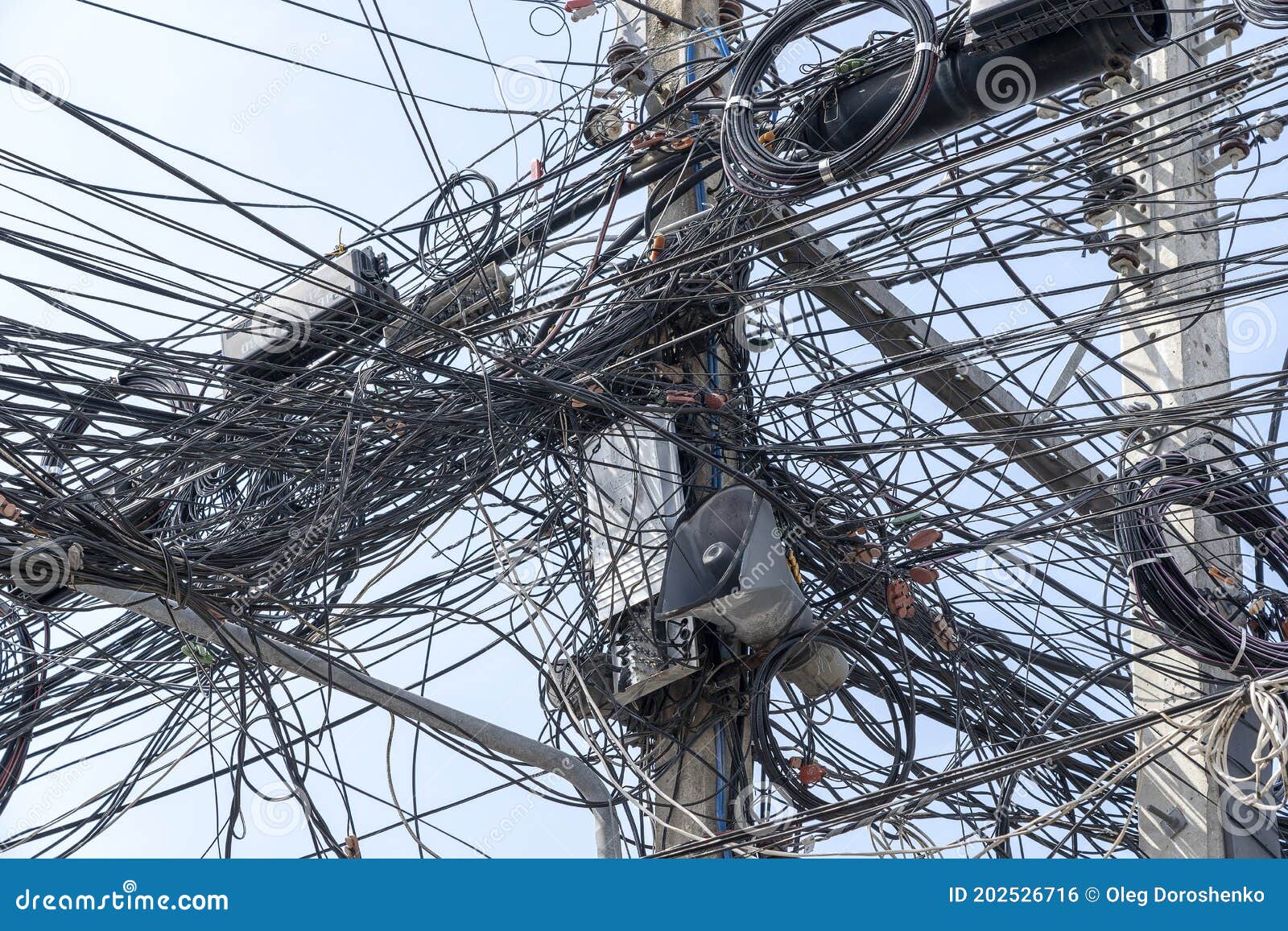
In a proper free market, the telephone poles would have 50 wires, most of which wouldn't be functioning. Afterall, how would anyone provide you internet? Without government regulation any startup has to put their own wires up. This leads to rats nests of wires. Tons of expensive wires being put up for customers you used to have. Free market obviously doesn't work, you must come in and fix that.
Communism on the otherhand is misuse of people. Everyone must be employed full time in communism. In the USSR, there would be multiple cashiers you would have to go through. Just to ensure people have something to do. You also have to have government slaves. USSR had the gulags. China has the uyghurs. Vietnam has their slaves in forced labour centers.
I don't see what communism has to do with everyone needing to be employed full time. That's just what they made of it in the USSR etc.
> Communism: a theory or system of social organization in which all property is owned by the community and each person contributes and receives according to their ability and needs.
I concur, there's nothing "communistic" about the idea of full employment, if anything it strikes me as something rather capitalistic in its nature: Full employment would mean there's an oversupply of labor, which means labor would be dirt cheap and easily replaceable.
That would be the dream for anybody trying to exploit others labor for their own gains, something that's generally seen as a very capitalistic mindset.
The USSR attempting to have full employment was yet another misplaced attempt at trying to "Beat the capitalistic West at their own game".
>I concur, there's nothing "communistic" about the idea of full employment, if anything it strikes me as something rather capitalistic in its nature: Full employment would mean there's an oversupply of labor, which means labor would be dirt cheap and easily replaceable.
There have been nobel prizes on labour participation rate and unemployment rates. The reality is that you have so much population, you have requirements of productivity to produce things for your population.
Cuba is an exception, they do still have government owned slaves. Mostly political prisoners, you can't say anything negative about the government. However, only 30% of their population has a job.
What's the consequence? You only get about 1lb of meat a month. Literally I will eat 1 month's of food in a single meal.
Also what's up with other consequences? Doctors are forced to work ~65hours/week while 2/3rds of the population stays home? Wow. While taxi drivers who work less hours earn more than you.
>That would be the dream for anybody trying to exploit others labor for their own gains, something that's generally seen as a very capitalistic mindset.
Not capitalistic at all, what capitalist society has enforced near full employment? I don't know of any. This is a communist thing. Only communism has ever done this. It's something Marx never said needed to happen. It's just the reality of productivity and how society works.
>The USSR attempting to have full employment was yet another misplaced attempt at trying to "Beat the capitalistic West at their own game".
The even more interesting thing. Graeber obviously says that communism is where you typically get all the bullshit jobs. Yet here they are in capitalism. The reality is that he's right. The reason for the rise of bullshit jobs in capitalism is all the socialism/communism being introduced.
Japan isn't communist and yet they also have government slaves, 99.9% of people accused of a crime are forced to work in a gulag. Why? They implemented loads of socialist policies and blew up their debt. Their public debt to GDP is 266%. That's actually worse than Greece during their collapse. The only thing holding Japan together is the government slaves.
Why does communism(or whatever name) always seem to come with full employment and government slaves in gulags? I actually don't fully understand why, but that's not a capitalism.
> Afterall, how do you stop 'You work, I'll be at home collecting UBI and watching TV.'
Well, if there's no money (because it's not necessary), there wouldn't be a UBI anyway? Communism is supposed to come after socialism and before anarchy, in theory. First you build an egalitarian society with a mindset of peaceful cooperation, then you get them to all work together for the greater good, and finally you dissolve the 'taskmaster' of the state, as society is perfect and no longer needs it.
The name is simply internally contradictory: as those subscribing to it are okay with oppression by the super rich, it is not anarchism.
They advocate exclusively for property law, by which the super rich can "legitimately" hang on to their fortunes and thus power. While many of them advocate against laws like "age of consent".
> In a proper free market, the telephone poles would have 50 wires, most of which wouldn't be functioning. Afterall, how would anyone provide you internet? Without government regulation any startup has to put their own wires up.
Seems like a poor example. If there’s all these unused wires owned by people who are losing money, surely a startup could rent capacity on an existing network, or outright buy it if the capital was already available.
>Seems like a poor example. If there’s all these unused wires owned by people who are losing money, surely a startup could rent capacity on an existing network, or outright buy it if the capital was already available.
Thailand doesnt have regulations in which the government picks a monopoly over a media and then forces them to provide near cost access to competitors. Typically, copper telephone vs cable vs fiber.
Therefore you get that utter mess, and there's no way those wires are properly utilized. It's a high cost to society, aesthetics aside, copper is expensive, fiber is expensive. You would be better to manage it so that you can assign those resources more efficiently.
However, this becomes 1 spot where free market no longer exists. Here in Canada we have Bell Canada who lobbied the regulator and effectively gave themselves a monopoly. The regulated market doesnt get near cost access to the wires.
No, not all communists are Marxists and the predominant tradition, anarcho-communism, is not post-Marxist but derives from a different set of authors who opposed Marx during his lifetime. [1]
Thank you. Some of the comments in this thread are so bizarre I have to wonder if it's down to US educational systems placing everything that's not Reaganomics into a basket marked "Communism BAD".
Wasn’t this guys book on bullshit jobs completely debunked? I mean yeah, filing TPS sheets might seem pointless on their own but in the grand scheme of things someone needs to checkboxes. It might be unglamorous work but it necessary for the whole system to function.
We talk about productivity gains and why we still work 40 hour weeks and my answer is always this - you’re free to trade those productivity gains for free time. Go and find a plot of land 1890 homesteaders would normally claim, grow some food, build a sod house and eschew modern society in all its flavors - technology, healthcare, engineering, etc. i don’t mean to sound like a dick, but that’s why we still work 40+ hour work weeks despite the efficiency gains - because a modern lifestyle costs a hell of a lot more than basic subsistence.
People do this! Ted Kazinsky did it. It is possible. But of course everyone wants their mRNA vaccine technology and 10 hours weeks as well.
I think that's an oversimplification, while I'd agree that modern life costs more to sustain in terms of required input from many different people and industries. There's also issues like the productivity/wage gap, general inertia in cultural change, the glorification of overwork, increasing accumulation of wealth by the already incredibly wealthy, how automation is introduced/managed, etc. that means we shouldn't just assume that people must work 40+ hour weeks or everything crumbles.
While some of the potential solutions I've read on this seem incredibly idealistic, I also believe there is probably a path forward where working time could be reduced significantly without the negative effects on technological, scientific or economic advancements that are presumed
The idea is that many jobs do not contribute to "technology,healthcare,engineering, etc.", rather, salaries and work assignments are regulated to simply force people to spend most of their lives doing meaningless activities as a form of social control.
Even Ted Kaczynski talked about "surrogate activities".
Yeah, how can a narrative book like that be "debunked"? The author wasn't making a logical argument. There is no facts and data. It's an emotional and moral argument. Certain jobs contribute nothing to the world and extract a cost on the psyche of the employee.
The irony is that the socialist system he wished for produces the most bullshit jobs, as in bureaucracy upon bureaucracy. That's also the simple solution to why they exist: governments don't really care about efficiency, as they don't spend their own money. So you have bullshit jobs in bureaucracy, and in people having to cater to bureaucracy.
There are plenty of cases of efficient and inefficient processes in both capitalist and socialist systems, if any can be described as being wholly one or the other anymore. As a direct example to your point, compare the amount of bureaucracy in the US healthcare system to the UK's NHS (and how much extra that costs people per capita), or many other countries that are described as having socialist healthcare systems
> to simply force people to spend most of their lives doing meaningless activities as a form of social control.
This is a human universal. Even uncontacted hunter gatherer tribes spend most of their days doing absolutely nothing useful whatsoever. They sit around and talk shit with their friends. This is not social control. Humans doing nothing useful for most of the day is the norm.
Yes, lots of poor people are getting screwed. Some jobs don’t pay well despite the higher moral standing of directly assisting others. The environment looks pretty bad. But you can’t just say “rich people bad. New economy plz”.
This essay is basically r/im14andthisisdeep